
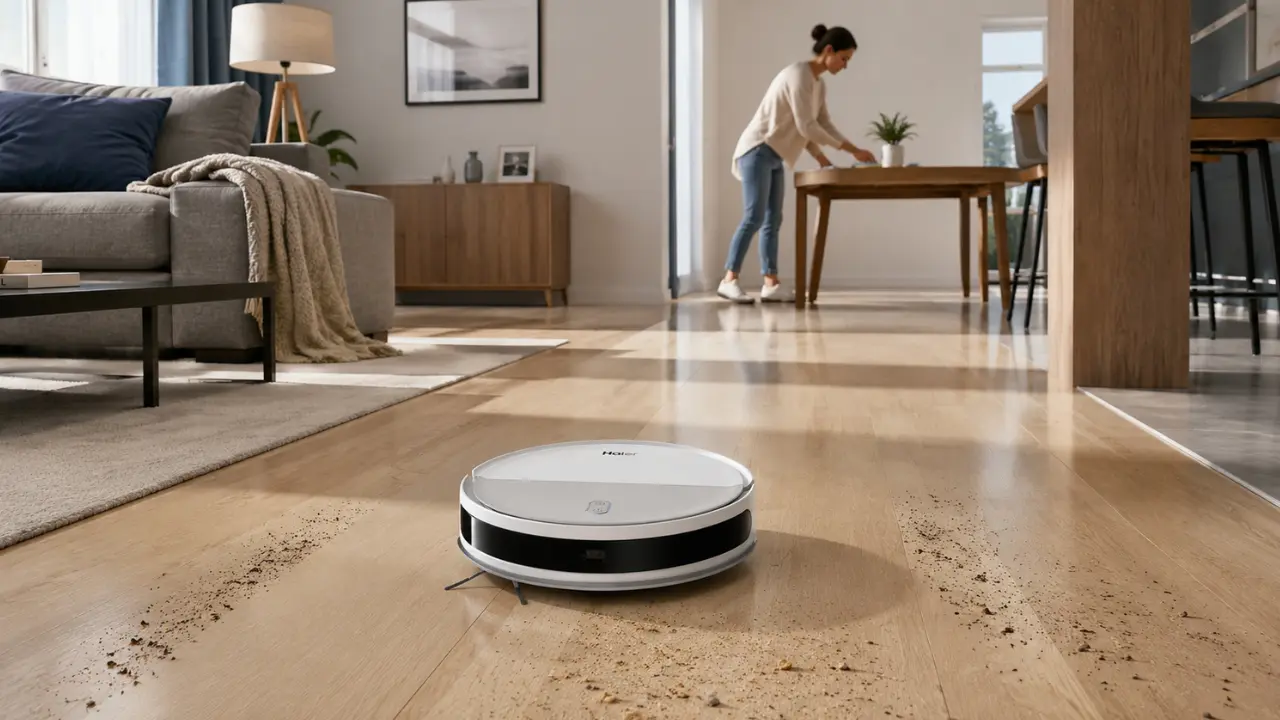

Robot vacuum cleaners can save time, reduce everyday dust build-up, and make homes feel consistently cleaner with less effort. But they are not magic discs that replace every form of cleaning. The smartest way to use a robot vacuum cleaner is to understand one simple truth: automation works best when expectations are realistic.
A good robot vacuum does not replace discipline.
It replaces repetition.
That difference changes everything.
Why do robot vacuum cleaners create such divided opinions?
Talk to five people about robot vacuum cleaners and you hear five completely different stories.
One person says it changed their life.
Another says it got stuck under a sofa and never recovered emotionally.
A third says it misses corners.
A fourth says they now vacuum less than ever before.
All of them are right.
Because a robot vacuum cleaner is not just a product. It is a system that depends on the home around it.
Indian homes are especially complex environments for automation:
- Floor mats near entrances
- Dining chairs everywhere
- Charging cables on the floor
- Pets
- Toys
- Different floor heights between rooms
- Wet kitchen areas
- Carpets during winter
- Guests during festivals
The machine matters.
But the environment matters more.
That is where most myths begin.
Myth 1: Robot vacuum cleaners replace manual cleaning completely
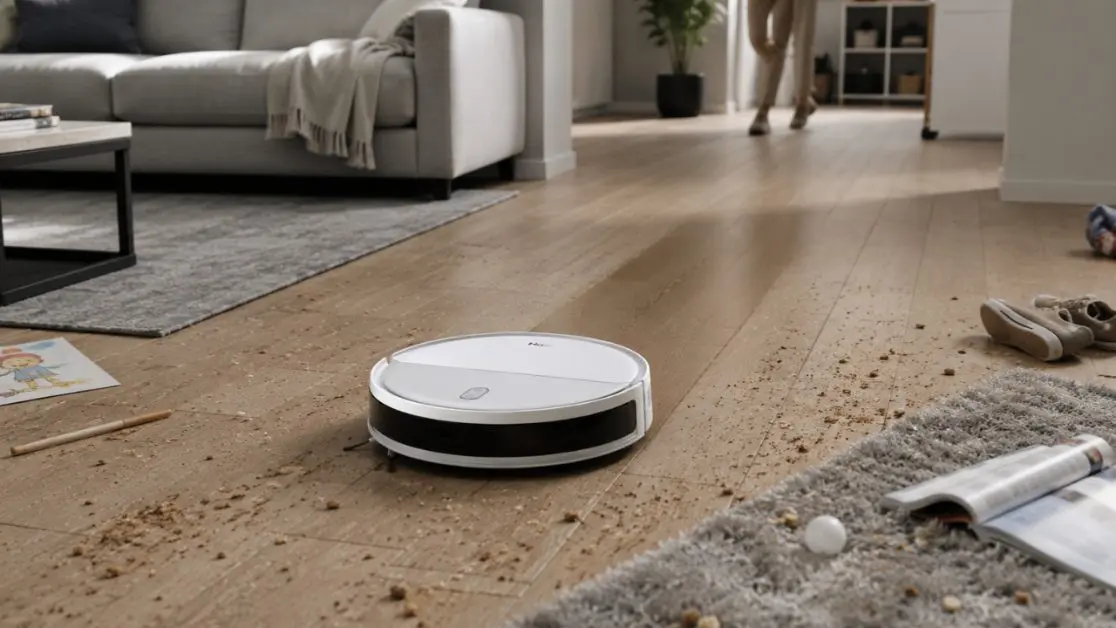
This is the biggest misunderstanding.
Robot vacuum cleaners reduce frequency. They do not eliminate deep cleaning.
Think of it like brushing your teeth versus visiting the dentist.
Daily maintenance and periodic deep work are different systems.
A robot vacuum cleaner handles:
- Everyday dust
- Hair
- Crumbs
- Surface dirt
- Routine mopping
- Under-bed cleaning
- Daily maintenance cleaning
But it does not fully replace:
- Deep sofa cleaning
- Staircase cleaning
- Heavy wet spills
- Detailed corner scrubbing
- Fan and curtain dusting
- Manual bathroom cleaning
That is not failure.
That is specialization.
The hidden advantage is consistency.
Most Indian households do not become dirty overnight. Dust accumulates gradually. A robot vacuum cleaner interrupts that cycle before the mess becomes visible.
A clean home is often the result of small systems repeated daily.
Not dramatic weekend cleaning marathons.
What robot vacuum cleaners actually do well
Here is where modern robot vacuum cleaners genuinely shine.
| Task | Performance Level |
| Daily dust collection | Excellent |
| Pet hair cleaning | Very good |
| Under-bed cleaning | Excellent |
| Scheduled cleaning | Excellent |
| Tile and hardwood floors | Excellent |
| Light mopping | Good |
| Carpet dust pickup | Good |
| Deep stain removal | Limited |
| Corner cleaning | Moderate |
| Stair cleaning | Not possible |
That distinction matters because buyers often expect a robot vacuum cleaner to behave like a human cleaner.
It is closer to a dishwasher.
It automates repetition.
Myth 2: Robot vacuum cleaners constantly bump into everything
That was true years ago.
Not anymore.
Modern robot vacuum cleaners use systems like laser navigation, sensors, mapping memory, and obstacle detection to move intelligently through rooms. The difference between older random-navigation robots and newer mapped systems feels like the difference between a paper map and Google Maps.
For example, the Haier CIVIC X11 Robot Vacuum Cleaner includes laser navigation, obstacle detection, and 5-map memory for structured movement across multiple spaces.
That “5-map memory” feature matters more than people realize.
Indian homes increasingly have:
- Duplex layouts
- Different flooring zones
- Separate living and prayer areas
- Utility sections
- Multi-room apartments
Mapping allows the robot to remember these environments instead of relearning them daily.
Still, myths survive because people confuse intelligent navigation with perfect awareness.
A robot vacuum cleaner can avoid walls.
It cannot always predict a charging cable hidden under a bean bag.
Automation works best in organized systems.
That is true in homes too.
Myth 3: Robot vacuum cleaners are useless in Indian homes
This assumption usually comes from older perceptions.
“Too much dust.”
“Too many obstacles.”
“Indian kitchens create too much mess.”
But that argument ignores how cleaning actually works in Indian households today.
The real issue is not the quantity of dust.
It is dusty.
Indian homes collect dust faster because:
- Windows stay open longer
- Urban pollution levels are higher
- Shoes often move between indoor and outdoor spaces
- Cooking styles create oil particles
- Ceiling fans circulate fine dust continuously
Which means maintenance cleaning becomes more important, not less.
This is exactly where robot vacuum cleaners fit.
Especially for:
- Working professionals living solo
- Families with school-going children
- Pet owners
- Elderly households
- Couples balancing hybrid work schedules
The goal is not spotless perfection every second.
The goal is reducing cleaning fatigue.
That is a very modern Indian problem.
Myth 4: Robot vacuum cleaners cannot handle pet hair
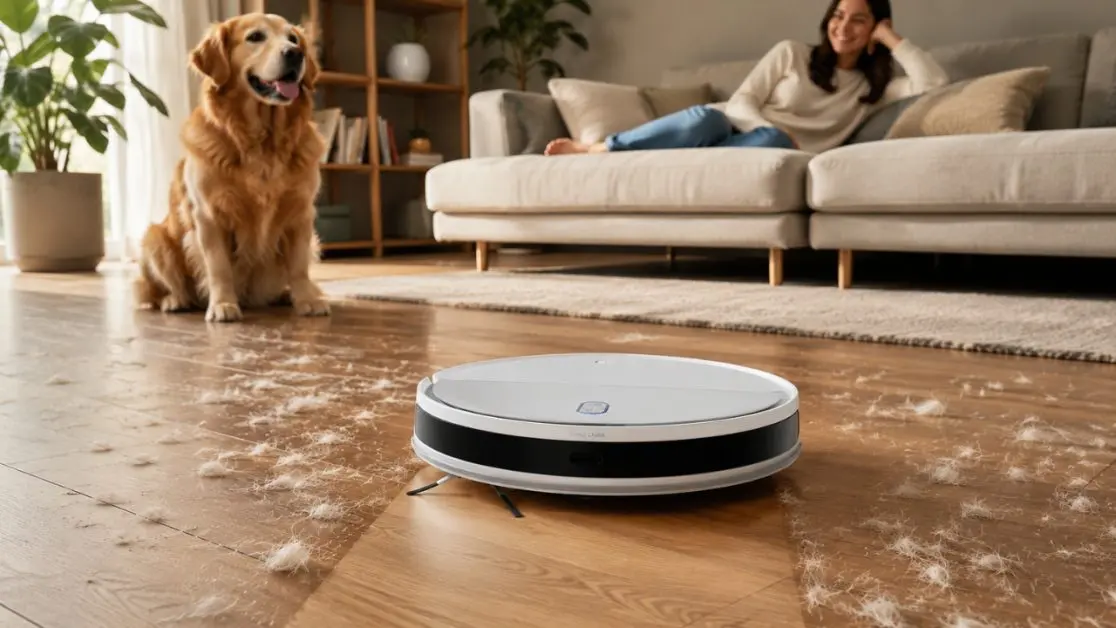
Older models struggled.
Newer high-suction systems perform much better.
Many modern robot vacuum cleaners now use stronger suction motors and brushless systems designed to manage fine hair and dust more efficiently.
The Haier CIVIC X11 and CIVIC X11 PRO models, for example, offer 5000Pa suction power with brushless motor systems.
The CIVIC X11 PRO even positions itself as pet-friendly in its product visuals and usage scenarios.
But there is nuance here.
Pet hair cleaning depends on three things:
- Floor type
- Hair length
- Cleaning frequency
One large weekly cleaning struggles.
Daily automated cleaning works far better.
That is another hidden system people miss.
Frequency beats intensity in home maintenance.
Always.
Myth 5: Robot vacuum cleaners need too much maintenance
This one is partially true.
But people compare them unfairly.
Every cleaning system requires maintenance:
- Washing machines need filter cleaning
- ACs need servicing
- Water purifiers need replacement cartridges
- Dishwashers need salt and rinse aid
Robot vacuum cleaners are no different.
Typical maintenance includes:
- Emptying the dustbin
- Cleaning brushes
- Removing tangled hair
- Refilling water tanks
- Occasionally wiping sensors
The difference is that premium models increasingly automate even these steps.
For instance, the Haier CIVIC X11 PRO Robot Vacuum Cleaner includes an auto-empty dust box system that transfers collected dust into a larger container automatically.
That sounds like a luxury feature.
It is actually a behavioral feature.
Because convenience determines consistency.
And consistency determines whether smart appliances become habits or abandoned gadgets.
What robot vacuum cleaners still cannot do
This matters just as much as what they can do.
A robot vacuum cleaner still struggles with:
- Thick wet spills
- Tangled charging wires
- High thresholds between rooms
- Very dark reflective flooring in some cases
- Deep grout cleaning
- Clutter-heavy rooms
- Stairs
- Very thick rugs
This is not a weakness.
It is a boundary definition.
The smartest buyers understand the boundary before purchasing.
A robot vacuum cleaner works best in homes that:
- Have reasonably open floor layouts
- Need daily dust management
- Value scheduled cleaning
- Want lower cleaning effort overall
- Prefer maintenance automation
That is the actual use case.
Not “replace every cleaner forever.”
The real shift is psychological, not technological
Most people think robot vacuum cleaners are about gadgets.
They are actually about mental load.
There is a quiet exhaustion in constantly noticing dust.
Especially after work.
Especially in cities.
Especially in homes where everyone already feels overstretched.
A robot vacuum cleaner changes the baseline state of the home.
The floor feels cleaner more often.
Dust accumulates slower.
Morning routines feel lighter.
That matters more than spec sheets.
Technology becomes useful when it disappears into routine.
That is why the best smart appliances rarely feel flashy after a month. They just quietly reduce friction.
How to decide if a robot vacuum cleaner is right for your home
Ask simpler questions.
Not technical questions.
Lifestyle questions.
A robot vacuum cleaner makes sense if:
- Your home gathers visible dust quickly
- You work long hours
- You have pets
- You dislike repetitive cleaning
- You want daily maintenance cleaning
- You live in an apartment with open floor layouts
- You already use smart home systems
A robot vacuum cleaner may not fit if:
- Your home has many uneven floor levels
- Rooms stay heavily cluttered
- You expect full deep cleaning replacement
- You rarely maintain appliances
- You primarily need heavy-duty stain removal
The smartest purchases solve recurring friction.
Not imaginary scenarios.
The future of home cleaning is not perfect. It is predictability.
That is the deeper shift happening inside modern homes.
People do not want endless cleaning cycles.
They want systems that quietly maintain order in the background.
Robot vacuum cleaners represent that shift perfectly.
Not because they are futuristic.
Because they reduce invisible effort.
The real myth was never “Can robot vacuum cleaners clean properly?”
The real myth is that homes stay organized through willpower alone.
They do not.
Good homes run on systems.
And increasingly, smart appliances are becoming part of those systems.
Frequently Asked Questions
Can a robot vacuum cleaner completely replace manual cleaning?
No. A robot vacuum cleaner is best for daily maintenance cleaning, not full deep cleaning. It handles dust, crumbs, pet hair, and routine floor maintenance extremely well, but you will still need occasional manual cleaning for sofas, bathrooms, corners, curtains, fans, and deep stains.
What it replaces: repetitive floor cleaning.
What it does not replace: intensive cleaning tasks.
Why do some people love robot vacuum cleaners while others hate them?
Because performance depends heavily on the home environment.
A robot vacuum cleaner works best in homes that are:
Relatively organized
Free from too many loose cables
Designed with open floor layouts
Maintained consistently
People expecting “zero-effort perfection” often feel disappointed. People using it as a daily maintenance system usually love it.
Are robot vacuum cleaners actually useful in Indian homes?
Yes, especially for modern urban households.
They work particularly well for:
Apartments
Working professionals
Families with children
Pet owners
Elderly households
Hybrid work lifestyles
Indian homes accumulate dust quickly because of open windows, pollution, ceiling fans, and cooking particles. Daily automated cleaning helps interrupt that dust cycle before it becomes visible.
Do robot vacuum cleaners clean every corner perfectly?
Not always.
Most robot vacuums are very good at open-floor cleaning but only moderate at:
Tight corners
Edges near walls
Extremely cluttered spaces
That limitation is normal and expected. Their real strength is consistent maintenance cleaning across large visible floor areas.
Do robot vacuum cleaners still randomly bump into walls and furniture?
Older models did. Modern models are much smarter.
Many now use:
Laser navigation
Room mapping
Obstacle detection
Smart route planning
Multi-floor memory
They move much more systematically than earlier “random movement” robots.
What does map memory actually do?
Map memory helps the robot remember room layouts instead of relearning them every day.
This is especially useful for:
Duplex homes
Multi-room apartments
Different floor zones
Utility rooms
Prayer areas
Separate living sections
It improves cleaning efficiency and reduces unnecessary movement.