
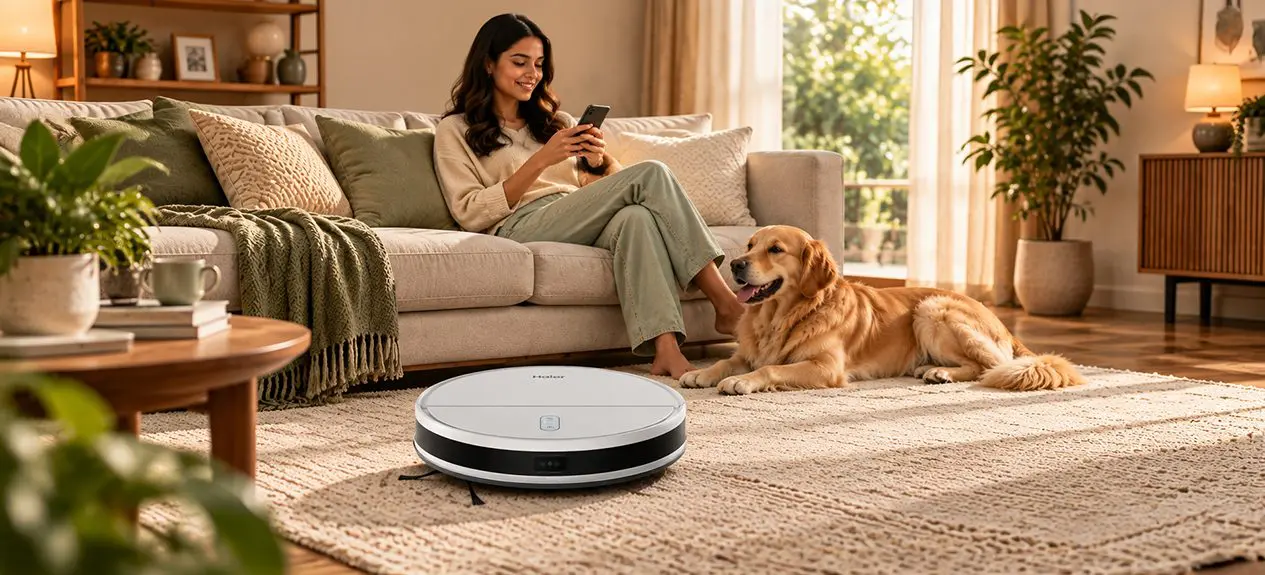

A robot vacuum cleaner is a household appliance you’ll likely own for several years, not a single transaction that ends once the box is opened. Cleaning performance gets most of the attention when buyers compare models, but warranty terms, service access and parts availability shape how the ownership experience actually plays out once the appliance is a few years old.
Before settling on a model, it helps to know what the robot vacuum cleaner warranty actually includes, how a service request typically moves through the system, and whether the parts you’re likely to need down the line remain within reach.
Why Warranty and Service Matter for Robot Vacuums
Inside every robot vacuum sits a cluster of motors, sensors, wheels, brushes, a battery and a charging system, all moving or wearing with use. None of that is built to last indefinitely, and some of it will need attention well before the appliance itself becomes obsolete.
A properly structured warranty covers manufacturing or functional defects for a defined period. What happens after that period ends matters just as much, since ongoing access to authorised support determines how long the appliance stays genuinely useful rather than sitting unused because a part failed.
Buying a robot vacuum, then, is really two decisions at once: choosing the machine, and choosing the support structure behind it.
What a Typical Robot Vacuum Warranty Covers
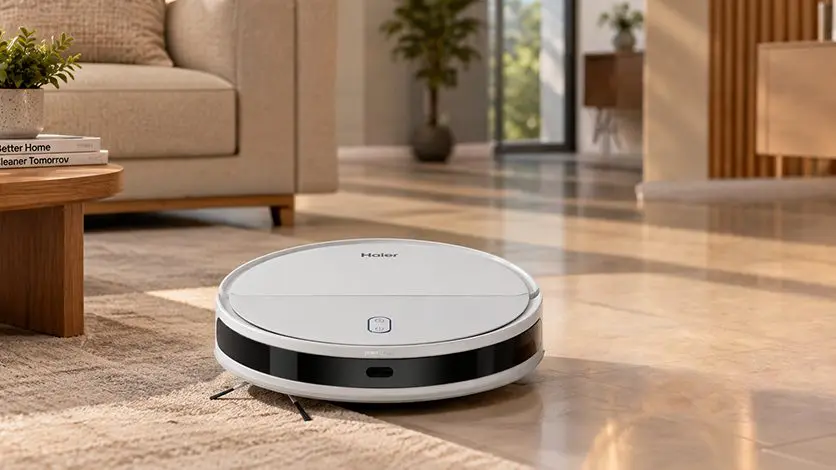
Warranty terms aren’t standardised across the industry, so the fine print for a specific model is worth reading rather than assumed.
Motor, Battery and Main Unit Coverage
The main unit and its internal parts are usually where the strongest coverage sits. Manufacturers typically cover defects that surface during normal use, though the exact wording differs from one brand to another. These are basic coverages of robot vacuum repair India.
Batteries need a closer look than the rest of the unit. They lose capacity over time simply through use, which is a different kind of wear than a manufacturing fault, and a warranty that reads as comprehensive on paper doesn’t automatically extend the same protection to the battery.
It’s worth confirming directly whether the battery, charging system, motor and electronics all fall under one coverage period, or whether any of them run on shorter terms of their own.
Our Haier CIVIC X11 carries a one-year warranty with after-sales support.
What Is Usually Not Covered (Consumables and Wear Parts)
Brushes, filters and mop pads sit in a different category altogether. These parts wear down through ordinary use, and most warranties treat that wear as expected rather than defective, which means replacement usually falls to the owner. That’s why you should check the robot vacuum spare parts availability India before buying.
Coverage also tends to exclude damage from misuse: dropped units, unsuitable cleaning products poured into the tank, repairs attempted outside authorised channels, or simply not following the instructions that came with the machine.
The exclusions in a warranty document tell you more about real-world coverage than the headline duration does, and they’re worth reading before the length of the term.
Warranty Periods to Expect
How long a warranty runs, and what it actually protects, aren’t the same question. A two-year warranty riddled with exclusions can offer less practical protection than a shorter one that covers more.
Before committing to a purchase, it’s worth working through a short list of questions: how long does the main warranty run, which components does it name specifically, is the battery covered on the same terms or separately, what has to happen for a repair or replacement to be approved, what’s explicitly excluded, does a claim require the original invoice, and does the product need to be registered after purchase.
Getting clear answers to these up front avoids surprises later, particularly once the appliance is a year or two old and something inevitably needs attention.
Service and After-Sales Support: What to Check
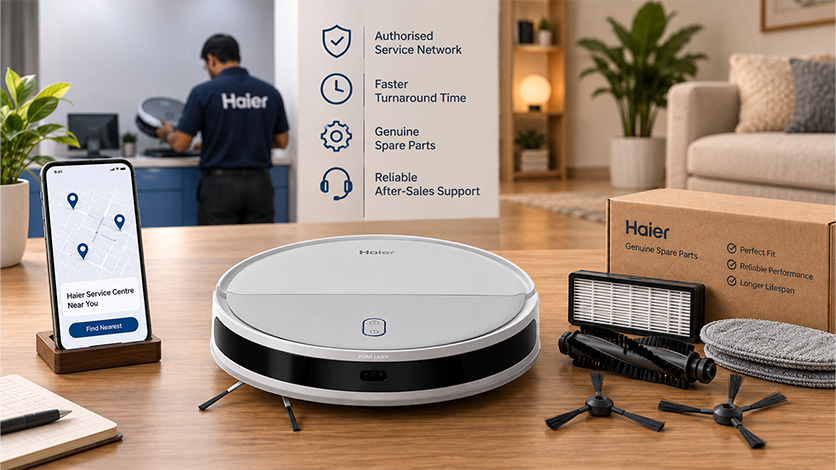
A warranty on paper means little if getting it honoured turns into a lengthy process. This is where service infrastructure comes into play.
Service-Centre Network and Turnaround Time
Whether a robot vacuum cleaner service centre exists near you, or at least within reasonable reach, is worth confirming before rather than after a purchase. An authorised network that doesn’t extend to your city creates delays that a warranty document won’t solve.
Turnaround time deserves equal attention. An appliance that’s part of a daily routine loses its value quickly if it sits at a repair centre for weeks over a straightforward fault.
Spare-Parts Availability (Brushes, Filters, Mop Pads, Battery)
Robot vacuum spare parts availability in India rarely comes up during the buying decision, yet it ends up mattering more than most other factors once the appliance is in daily use.
Filters, brushes and mop pads are in constant contact with dust, hair and moisture, and they don’t last forever. Batteries eventually lose enough capacity that a swap becomes worthwhile.
Confirming that genuine replacement parts are actually available through the manufacturer, rather than assuming they will be, saves a fair amount of frustration later.
Manufacturer-approved components are also the safer choice over unbranded third-party substitutes, which don’t always fit or perform as expected.
On-Site vs Carry-In Service
Not every repair is handled the same way. Some issues get resolved through a technician visit; others require sending the unit to a service centre.
It’s a mistake to assume on-site support applies across the board. The specific terms for a given product are worth checking so there’s no confusion if a repair becomes necessary.
Which Robot Vacuum Brands Offer the Best Service in India?
There’s no clean answer to which robot vacuum has the best service in India, since experience varies by city, by product line, and by the specific issue a customer runs into.
A more useful approach is evaluating the support structure directly rather than relying on general brand reputation. That means looking at whether customer-care channels are clearly published, whether authorised service is genuinely accessible, whether warranty information is easy to find without digging, whether replacement parts are supported, whether raising a service request is straightforward, and whether any help exists once the warranty period has ended.
Judged this way, service quality becomes something a buyer can actually verify before purchase, rather than something taken on faith.
Registering Your Warranty and Getting Support
Once a robot vacuum is purchased, the invoice and any other purchase documents are worth holding onto. Where the manufacturer requires warranty registration, it should be completed as instructed rather than left for later.
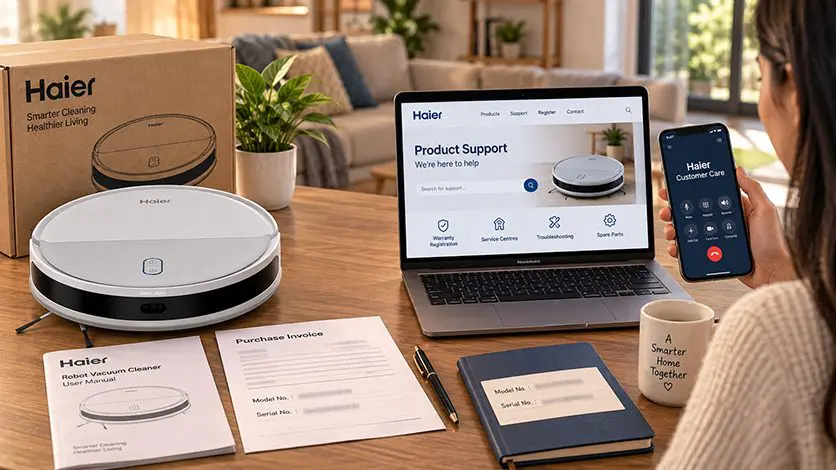
The model number and serial number are also worth noting down somewhere accessible, since most service requests ask for them upfront.
When a fault does need reporting, describing the problem clearly and following the troubleshooting steps provided speeds up the process considerably. Opening the appliance or attempting a repair independently while it’s still under warranty is best avoided, since that alone can void coverage.
For Haier products specifically, after-sales support includes phone support and a dedicated customer-care email address.
Pre-Purchase Checklist: Warranty and Service
A few points worth confirming before finalising a purchase:
- Warranty period: How long is the main unit covered?
- Battery coverage: Is the battery included, and on what terms?
- Motor and electronics: Are these components explicitly covered?
- Consumables: Are filters, brushes and mop pads excluded from coverage?
- Service access: Is authorised support actually available in your area?
- Repair process: Does a fault require carry-in service, or is on-site help an option?
- Spare parts: Are genuine brushes, filters, mop pads and batteries obtainable later?
- Exclusions: What kinds of damage or misuse void the warranty?
- Proof of purchase: What documentation does a claim require?
- Customer support: Are phone, email or online channels genuinely reachable?
Final Thoughts
Cleaning performance is only one half of what makes a robot vacuum worth buying. The other half is whether it can be kept running for years without becoming a hassle, which comes down to clear robot vacuum warranty terms, a service network that’s actually reachable, and dependable robot vacuum repair in India when something eventually needs fixing.
FAQs
How long is the warranty on a robot vacuum cleaner?
Most robot vacuums in India carry a one-year warranty on the main unit, though this varies by brand and model. Our Haier CIVIC X11 PRO, for instance, comes with a one-year warranty.
What does a robot vacuum warranty usually cover?
Standard coverage typically extends to manufacturing or functional defects in the main unit, motor and electronics under normal use. Consumables like filters, brushes and mop pads generally fall outside this coverage, since they wear down through regular use rather than defect.
Which robot vacuum has the best service support in India?
There’s no single brand that wins outright here, service quality tends to shift by city and by the specific issue involved. It’s more useful to check whether a brand publishes clear customer-care channels and maintains an authorised network in your area before assuming based on reputation alone.
Are the battery and brushes covered under warranty?
Brushes are considered wear parts and are usually excluded from warranty coverage. Batteries need separate confirmation too, since they lose capacity naturally over time and aren’t always covered on the same terms as the rest of the unit.
How do I claim warranty on a robot vacuum cleaner?
Keep the original invoice, complete any required warranty registration, and note down the model and serial number. When raising a request, describe the issue clearly and follow the troubleshooting steps provided, since opening the unit yourself can void the warranty.
Are spare parts easily available for robot vacuums in India?
This depends heavily on the brand, and it’s worth checking before buying rather than after something wears out. Genuine, manufacturer-approved parts are the safer route over unbranded alternatives, which don’t always fit or perform reliably.
What should I check about service before buying a robot vacuum?
Confirm whether an authorised service centre is reachable in your city, along with realistic turnaround times for repairs. It also helps to check for published customer-care numbers or email support, since that’s usually a sign of a more accessible service network.