
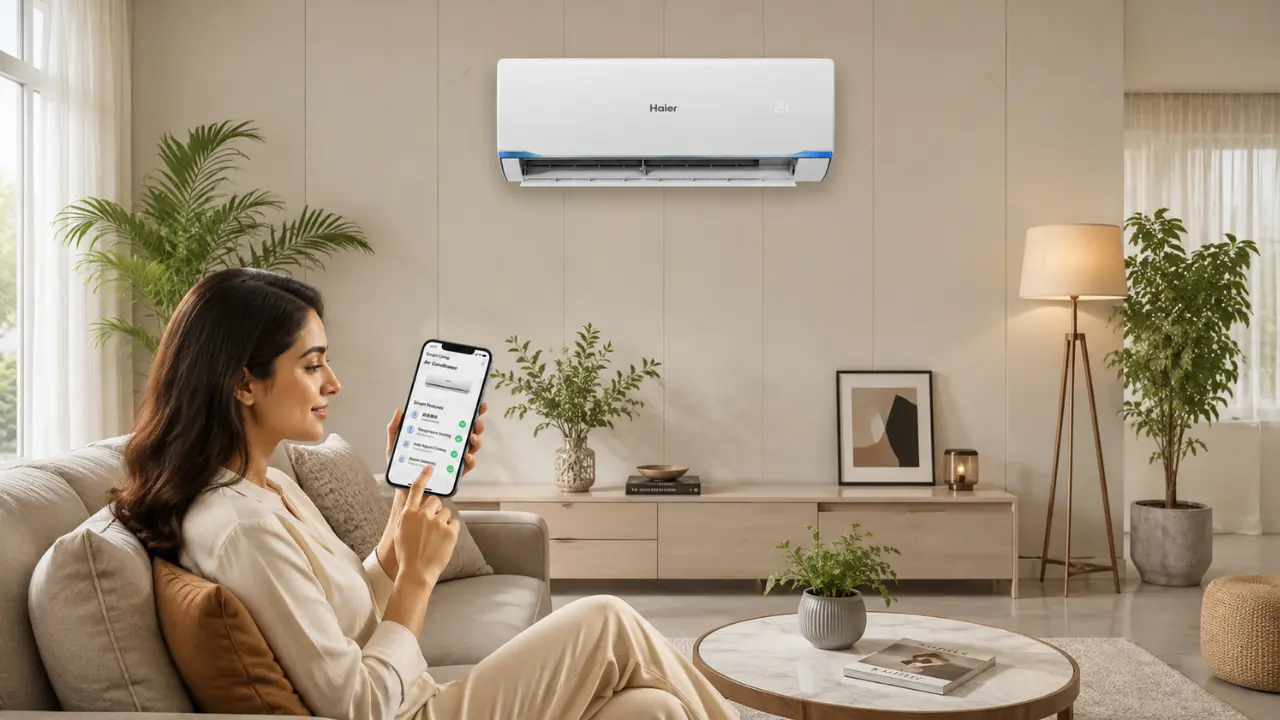

A sensor based AC is not just an air conditioner with extra technology. It is a cooling system that studies your room, understands usage patterns, and adjusts itself automatically for better comfort and lower energy waste.
Before buying one, check sensor accuracy, cooling intelligence, energy optimisation, room compatibility, smart controls, and maintenance support. The smartest AC is the one that quietly improves daily life without demanding constant attention.
Most AC buying mistakes happen before summer even begins.
It is 1:40 am.
Someone wakes up feeling too cold. The remote is missing under the blanket. Half-asleep, they lower the temperature, then raise it again after an hour.
Morning arrives with dry air, uneven sleep, and another promise to “buy a better AC next year.”
Most people think cooling problems start after installation.
They don’t.
They start during the buying decision.
Because modern air conditioning is no longer only about tonnage or star ratings. It is about responsiveness. About systems that adapt instead of simply running.
And this is exactly where sensor based ACs are changing the conversation.
What does a sensor based AC actually do?
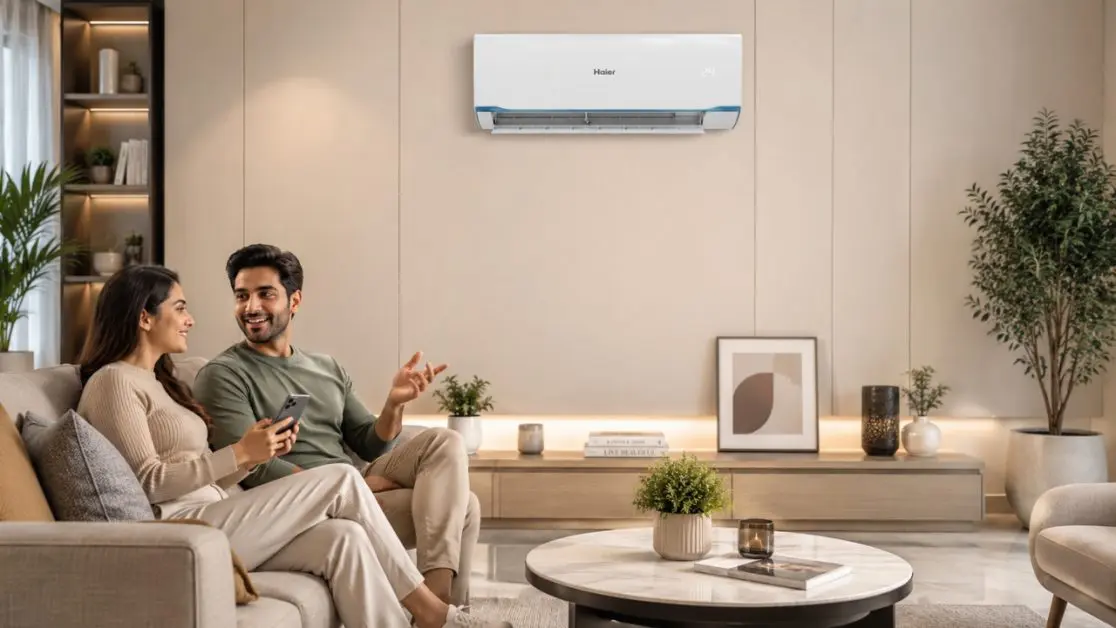
Traditional ACs follow instructions.
Sensor based ACs follow situations.
That is a completely different philosophy.
These systems use intelligent sensors to monitor:
- Human presence
- Indoor temperature shifts
- Humidity changes
- Outdoor weather conditions
- Energy usage patterns
- Airflow direction and room activity
The AC then adjusts cooling automatically in real time.
Not mechanically. Intelligently.
For example, the Haier 1.8 Ton 5 Star Desert Rose Air Conditioner (HSA20DSD-NAI5NB-I) uses AI Human Detection technology for precise presence detection and reduced energy waste.
Similarly, the Haier 1.8 Ton 5 Star Gold Desert Rose Air Conditioner (HSA20DSD-GAI5NB-I) combines AI Climate Control with adaptive cooling intelligence that learns room behaviour and usage patterns.
That changes the role of an AC entirely.
The appliance stops acting like a machine and starts behaving like a responsive environment.
Check #1: Does the sensor improve real comfort?
Many smart features sound impressive during showroom demonstrations.
Very few improve in real life.
The difference becomes obvious during long Indian summers.
Good cooling is felt emotionally, not technically
Think about a bedroom at midnight.
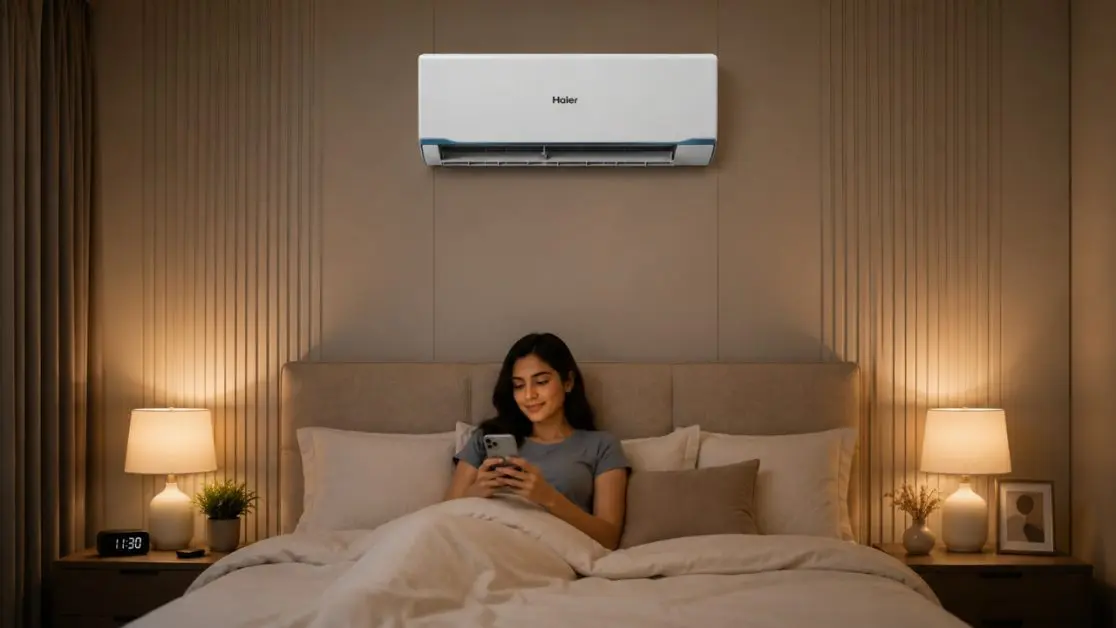
A normal AC keeps blowing cold air at one speed. Eventually someone wakes up uncomfortable.
A smarter system adjusts airflow, cooling intensity, and operating mode based on occupancy and room conditions.
That changes how the room feels over six or seven hours.
And overnight comfort matters more than short bursts of cooling.
Three sensor functions worth prioritising
| Feature | What It Solves | Why It Matters |
| Human Detection | Reduces cooling when room is empty | Prevents energy waste |
| Climate Sensing | Adjusts cooling based on heat and humidity | Improves comfort consistency |
| Intelligent Airflow | Redirects airflow dynamically | Prevents uneven cooling |
The Haier 1.8 Ton 5 Star Gold Desert Rose Air Conditioner (HSA20DSD-GAI5NB-I) uses AI-Atmox Neuro technology that adjusts cooling according to room conditions and user behaviour.
The result feels simple.
Less manual adjustment.
Less temperature frustration.
Less interruption.
And the best appliances always reduce interruption.
Check #2: Can the sensor system genuinely reduce electricity bills?
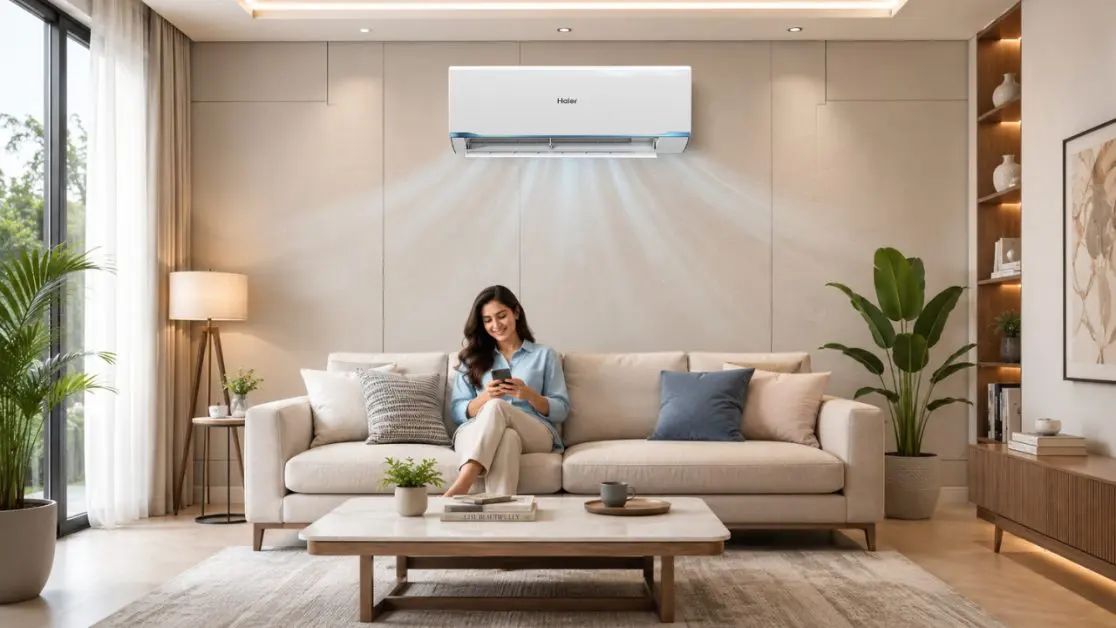
This is where marketing and reality often separate.
Sensors alone do not save electricity.
Adaptive decision-making does.
The hidden problem inside most Indian AC usage
Indian homes rarely use ACs consistently.
People move between rooms.
Doors open repeatedly.
Sunlight changes during the day.
Guests arrive unexpectedly.
Weather shifts suddenly during monsoon evenings.
Traditional ACs continue cooling at fixed intensity.
Smart sensor systems adapt dynamically.
That difference affects electricity consumption every single day.
What to verify before buying
Look for systems that include:
- AI ECO optimisation
- Occupancy-based cooling reduction
- Real-time energy monitoring
- Variable compressor adjustment
- Convertible cooling capacities
The Haier 1.8 Ton 5 Star Desert Rose Air Conditioner (HSA20DSD-NAI5NB-I) includes AI for Savings technology that monitors power usage patterns and automatically shifts to AI ECO mode for reduced wastage and improved efficiency.
The important thing is not the feature name.
It is the logic behind it.
Smart cooling works best when the AC understands when not to overwork.
That is where intelligent savings actually happen.
Check #3: Is the sensor system suitable for your room type?
A sensor based AC behaves differently in different spaces.
Most people ignore this.
Then the cooling experience feels disappointing even with advanced technology.
Bedrooms and living rooms require different intelligence
A bedroom needs:
- Stable overnight cooling
- Quiet airflow
- Sleep comfort optimisation
A living room needs:
- Faster cooling
- Wider airflow coverage
- Occupancy management
- Heat balancing
Different rooms create different cooling pressures.
And smart systems must respond accordingly.
Room-wise buying framework
| Room Type | Cooling Priority | Sensor Feature That Matters Most |
| Bedroom | Long-hour comfort | Human detection + sleep modes |
| Living Room | Fast cooling | Wide airflow + adaptive sensors |
| Studio Apartment | Energy efficiency | Smart ECO optimisation |
| Kids Room | Gentle comfort | Soft airflow sensing |
The Haier 1.8 Ton 5 Star Gold Desert Rose Air Conditioner (HSA20DSD-GAI5NB-I) offers up to 20 metres long air throw using improved airflow engineering and motor systems.
Because sensing alone is not enough.
The cooled air still needs to reach people effectively.
Check #4: Does the AC learn behaviour or simply automate settings?
Automation follows rules.
Intelligence recognises patterns.
That difference defines modern smart appliances.
The future of cooling is fewer decisions
Every Indian household repeats the same summer rituals:
- Lowering temperature repeatedly
- Changing fan speeds constantly
- Switching between modes manually
- Managing electricity usage anxiously
A genuinely intelligent sensor based AC reduces these small decisions automatically.
The Haier 1.8 Ton 5 Star Desert Rose Air Conditioner (HSA20DSD-NAI5NB-I) uses AI-powered climate analysis that studies indoor conditions, weather patterns, and usage habits to optimize comfort dynamically.
That changes how the appliance behaves inside a home.
The AC stops demanding attention.
And every appliance that demands less attention creates a calmer environment.
Smart buying questions worth asking
Before buying, check:
- Does the AC learn cooling patterns?
- Does it support app-based control?
- Does it work with Alexa or Google Assistant?
- Does it optimize airflow automatically?
- Does it support convertible capacity modes?
The Haier 1.8 Ton 5 Star Gold Desert Rose Air Conditioner (HSA20DSD-GAI5NB-I) supports Hai Smart App controls along with voice compatibility through Alexa and Google Assistant.
Because convenience is not about controlling more things.
It is about thinking less about them.
Check #5: Can the AC handle extreme Indian summers?
India tests appliances aggressively.
Heatwaves.
Humidity.
Dust.
Voltage fluctuations.
Long operating hours.
A sensor based AC must remain intelligent under pressure.
Otherwise smart features become meaningless.
Why high ambient cooling matters
Several Indian cities now cross 45°C regularly during peak summer.
Some regions combine heat with extreme humidity. Others experience dry heat that changes room temperatures rapidly.
Smart cooling systems need to respond instantly to these environmental shifts.
The Haier 1.8 Ton 5 Star Desert Rose Air Conditioner (HSA20DSD-NAI5NB-I) is designed to maintain cooling performance even at ambient temperatures of up to 60°C using Hyper PCB protection and conformal coating systems.
This matters more than people realise.
Because intelligence without durability collapses during stress.
And summer is stressful.
Check #6: Does the AC reduce maintenance friction?
Most AC satisfaction problems appear after the first year.
Dust accumulates.
Cooling weakens.
Outdoor units clog.
Power usage rises slowly.
The smartest appliances reduce maintenance problems before users notice them.
Modern smart ACs now maintain themselves better
Advanced sensor based systems increasingly include:
- Auto-cleaning systems
- Outdoor condenser cleaning
- Service monitoring
- Performance diagnostics
- Hygiene-focused airflow management
The Haier 1.8 Ton 5 Star Gold Desert Rose Air Conditioner (HSA20DSD-GAI5NB-I) includes AI for Service functionality that automatically cleans indoor and outdoor units to maintain efficiency and cleaner airflow.
It also features ODU Cyclone Clean technology that reverses outdoor fan movement to remove debris from condenser fins.
That sounds like a technical detail.
But long-term appliance happiness usually depends on maintenance friction, not first-week excitement.
One overlooked factor: Noise changes how a room feels
Cooling is psychological.
Not just physical.
A noisy AC affects:
- Sleep quality
- Work-from-home focus
- Relaxation
- Conversation comfort
Always check:
- Noise levels
- Compressor smoothness
- Sleep cooling modes
- Airflow sound quality
The Haier Desert Rose series maintains a 47 dB noise level while balancing intelligent airflow and cooling performance.
Because real comfort disappears into the background.
You notice bad cooling immediately.
You rarely notice seamless cooling.
And that is the goal.
The smartest AC is the one you stop thinking about
That is the paradox of intelligent appliances.
The best systems do not constantly remind you they are smart.
They simply reduce friction quietly.
They cool rooms faster.
Save electricity intelligently.
Adapt automatically.
Reduce maintenance stress.
Improve sleep comfort.
Handle changing Indian weather better.
And eventually, the appliance fades into everyday life.
That is what good design does.
So before buying a sensor based AC, stop asking:
“How many smart features does this AC have?”
Ask instead:
“What kind of life does this AC make easier?”
Because the future of cooling is not colder air.
There are fewer interruptions.
Frequently Asked Questions
How do I know if a sensor based AC is actually worth paying extra for?
A sensor based AC is worth it if your daily cooling experience feels inconsistent, uncomfortable, or energy-heavy. The value comes from automatic adjustments that reduce manual intervention, improve sleep comfort, and optimize electricity usage over time.
I keep changing the AC temperature all night. Can a sensor based AC solve this?
Yes. Advanced sensor systems monitor room temperature, occupancy, and humidity continuously. Instead of blasting cold air at one fixed intensity, they adapt gradually to maintain comfort during long overnight use.
What should I prioritise first while buying a smart AC?
Focus on:
Sensor accuracy
Real energy optimisation
Airflow intelligence
Room suitability
Long-term maintenance support
Cooling stability during extreme summers
The smartest AC is not the one with the most features. It is the one that reduces interruptions quietly.
Are smart AC features mostly marketing gimmicks?
Some are. Real value usually comes from:
Human presence detection
AI ECO cooling
Adaptive airflow
Humidity balancing
Usage pattern learning
Auto-cleaning systems
Features that only look impressive during demos often feel unnecessary after installation.
Should I buy a sensor based AC for a bedroom or living room first?
Bedrooms usually benefit more because overnight comfort depends heavily on stable airflow, intelligent temperature adjustment, and quieter operation.
Living rooms benefit more from wide airflow coverage and fast adaptive cooling.