
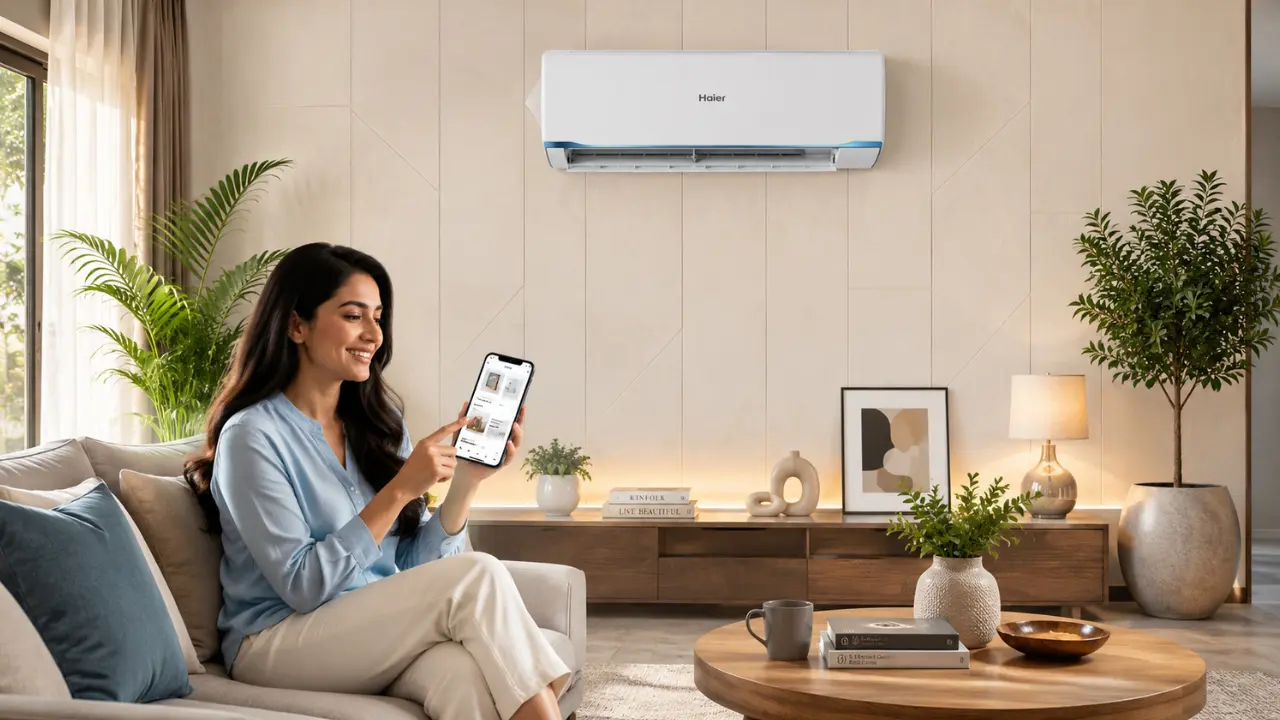

The perfect AC is not the most expensive one. It is the one that understands your room, your routine, and your climate.
A bedroom used for sleep needs a different cooling system than a living room filled with sunlight, guests, and constant movement. The right air conditioner balances tonnage, energy savings, airflow, noise, and real-life usage patterns. When those systems align, comfort stops feeling mechanical and starts feeling invisible.
Summer exposes every weak decision.
Especially at home.
At 2 PM, the living room feels like a greenhouse. By midnight, the bedroom feels too cold. Someone keeps changing the remote temperature. Someone complains about electricity bills. Someone says, “The AC is on, but why does the room still feel warm?”
This is not just about cooling.
It is about fit.
And most AC buying decisions fail because people buy for square footage, not for lifestyle.
That is the hidden system behind choosing the perfect AC for your home.
Most people choose an AC once. Then live with that decision for seven years.
Think about that.
An AC is not like buying cushions or lamps. It shapes sleep quality, work productivity, family comfort, and monthly expenses for years.
Yet most buying decisions revolve around:
- Price
- Brand familiarity
- Discounts
- “This tonnage should work”
But cooling does not work in isolation.
A west-facing apartment in Delhi behaves differently from a compact shaded flat in Bengaluru.
A work-from-home couple uses cooling differently from parents managing school schedules.
The same AC can feel brilliant in one home and frustrating in another.
Because homes are systems.
And cooling systems either adapt to life or fight against it.
Start with the room. Not the product.
A room tells the truth faster than a brochure.
A bedroom needs consistency
Bedrooms are long-duration spaces.
Cooling here is less about power and more about rhythm.
You need:
- Quiet airflow
- Stable temperature
- Lower night-time energy use
- Comfortable humidity levels
An AC blasting cold air aggressively at 3 AM creates discomfort, not comfort.
That is why inverter technology matters. Systems like HEXA Inverter technology focus on adjusting cooling intelligently instead of repeatedly switching on and off. Haier’s Gravity AI Series, for example, combines inverter efficiency with AI-based climate adjustments for more stable cooling patterns.
The best bedroom cooling feels almost invisible.
That is the goal.
A living room needs adaptability
Now shift to the living room.
Doors open constantly. Sunlight enters. Five people gather during cricket matches. Heat builds from televisions, lights, and movement.
This room needs:
- Faster cooling
- Wider airflow
- Strong air throw
- Dynamic cooling adjustment
A fixed cooling system struggles here.
That is why convertible cooling modes matter. Systems like 7-in-1 Convertible cooling allow users to adjust capacity depending on occupancy and heat load.
Because a room with two people behaves differently from a room with eight.
Good cooling responds.
Bad cooling reacts too late.
Tonnage is not about size alone
This is where most mistakes happen.
People think:
“Small room = small AC.”
“Big room = big AC.”
Too simplistic.
Three hidden factors change everything:
| Factor | Why It Matters |
| Sunlight exposure | West-facing rooms heat faster |
| Ceiling height | Higher ceilings trap more heat |
| Occupancy | More people generate more body heat |
A 1.5-ton AC in a shaded room may outperform a 2-ton AC struggling in direct sunlight.
Cooling is about heat load, not just room dimensions.
One option is compact efficiency
For:
- Studio apartments
- Smaller bedrooms
- Single occupants
- Limited usage hours
This setup saves energy and reduces unnecessary cooling.
The second option is balanced cooling
For:
- Mid-sized families
- Hybrid workers
- Homes using AC daily
This is where 1.5 to 1.6-ton inverter ACs become practical.
Especially in Indian summers where temperatures regularly cross 45°C.
The third option is future-proofing
For:
- Larger living rooms
- Top-floor apartments
- High heat exposure
- Long usage hours
Undersized ACs consume more energy because they work continuously.
A struggling AC costs more over time.
That is the paradox people miss.
Energy savings are no longer optional
Electricity bills now shape buying behavior more than upfront pricing.
Because the real cost of an AC begins after installation.
A cheaper AC with poor efficiency becomes expensive every month.
This is why star ratings and inverter systems matter.
For example:
- A 5-star AC typically consumes less electricity than lower-rated alternatives.
- HEXA Inverter systems are designed for up to 65% energy savings through variable-speed operation.
- AI-powered ECO modes can further optimise usage patterns automatically.
But there is another hidden shift happening.
Modern ACs are becoming behaviour-aware.
They learn patterns.
They adjust based on weather.
They track usage spikes.
That changes the relationship between humans and appliances.
Cooling becomes predictive instead of reactive.
Noise changes the emotional quality of a room
People underestimate this.
A loud AC changes how a room feels.
It interrupts sleep.
Distracts work calls.
Kills quiet evenings.
Noise is not just sound.
It is friction.
That is why modern airflow engineering matters as much as cooling speed. Systems using optimised ducts and inverter-controlled airflow are designed to reduce operational noise during sleep cycles and long usage periods.
The perfect AC does not constantly remind you it exists.
It supports the atmosphere quietly.
I like good lighting.
Or good architecture.
Indian summers are becoming less predictable
This changes how ACs should be selected.
Heat waves are longer.
Humidity swings are sharper.
Dust levels are higher.
An AC today must survive environmental stress, not just provide cooling.
That is why durability systems matter more now:
- Copper condensers
- Anti-corrosion coatings
- Hyper PCB protection
- High ambient cooling support
Some modern systems are specifically designed to maintain cooling even at 60°C ambient temperatures.
That sounds extreme until May arrives.
Then it feels practical.
Smart features only matter if they solve friction
A mobile app alone is not innovation.
Real innovation removes small daily irritations.
Like:
- Cooling the room before reaching home
- Tracking electricity consumption
- Voice-controlled adjustments during work or sleep
- Automatic cleaning cycles
These features matter because modern homes run on fragmented schedules.
Nobody lives in a fixed routine anymore.
Haier’s AI-powered systems, including AI-ATMOX climate intelligence and Hai Smart App controls, focus on adaptive comfort and remote management.
And that reflects a larger shift.
Homes are becoming responsive environments.
Not static spaces.
Air quality is becoming part of the AC conversation
Five years ago, buyers focused only on cooling.
Today they ask:
“What about dust?”
“What about allergies?”
“What about indoor air quality?”
That shift matters.
Especially in urban India where closed-window living increases during summer.
Modern filtration systems now target:
- Dust particles
- Pollen
- Odours
- Airborne pollutants
Some models also integrate self-cleaning systems designed to reduce internal dirt buildup and maintain airflow efficiency.
Because dirty cooling systems eventually create unhealthy rooms.
The hidden system is simple:
Clean air improves sleep.
Better sleep improves energy.
Energy changes how families function.
An AC influences more than temperature.
Design matters more than people admit
This is no longer the era of bulky white boxes.
People care how appliances look inside carefully designed homes.
Especially:
- Millennials setting up first apartments
- Young couples designing aesthetic interiors
- Professionals building minimal workspaces
That is why textured fabric finishes and premium colour variants are becoming relevant. Haier’s Gravity AI Series includes finishes like Moonstone Grey, Galaxy Slate, Morning Mist, and Midnight Dream designed to blend with modern interiors.
People no longer hide appliances.
They integrate them into the visual language of the home.
The perfect AC solves tomorrow’s problems quietly
That is the real test.
Not showroom cooling.
Not feature overload.
Not aggressive advertising.
The real question is this:
How does the AC behave during:
- Peak summer afternoons?
- Night-time sleep cycles?
- Sudden guest visits?
- Remote work calls?
- Rising electricity costs?
Because appliances shape routines more than we notice.
And routines shape quality of life.
A simple framework before buying
Ask these five questions:
- How long is the AC used daily?
- How much sunlight enters the room?
- How many people usually occupy the space?
- Is energy saving a priority or a necessity?
- Do you want basic cooling or adaptive comfort?
The answers reveal the right system faster than sales pitches ever will.
The best cooling systems disappear into life
That is the paradox.
When an AC works perfectly, nobody talks about it.
People sleep better.
Conversations last longer.
Afternoons feel lighter.
Work feels easier.
Comfort becomes invisible.
And invisible systems are usually the ones designed correctly.
That is what selecting the perfect AC for your home really means.
Not buying a machine.
Designing a better everyday experience.
Frequently Asked Questions
I’m confused between 1-ton, 1.5-ton, and 2-ton ACs. How do I choose the right one for my room?
Don’t decide by room size alone. Check sunlight, ceiling height, floor level, number of people, and daily usage. A sunny or top-floor room may need more cooling than a shaded room of the same size.
I don’t want to overspend on an AC. What features actually matter?
Prioritise correct tonnage, inverter technology, star rating, airflow, noise level, copper condenser, and after-sales service before paying extra for decorative or rarely used features.
I work from home. What kind of AC is best for long daily use?
A 5-star inverter AC with stable cooling, low noise, and energy-saving modes is usually better for long hours than a cheaper fixed-speed AC.
Should I buy a bigger AC now so it handles future summers better?
Only if your room has high heat load, strong sunlight, top-floor exposure, or frequent guests. Oversized ACs can cool too quickly without managing humidity well.
I have dust and allergy issues at home. What AC features should I look for?
Look for strong filtration, self-cleaning, anti-dust filters, and easy maintenance access. Clean airflow matters as much as cooling.
My room smells stale when the AC runs. Is that normal?
It usually means moisture, dust, or dirt buildup inside the unit. Regular filter cleaning and self-cleaning features can help reduce this.
I keep my windows closed all summer. Can AC affect indoor air quality?
Yes. Poorly maintained ACs can circulate dust and odours. Good filtration and regular servicing help keep indoor air fresher.