
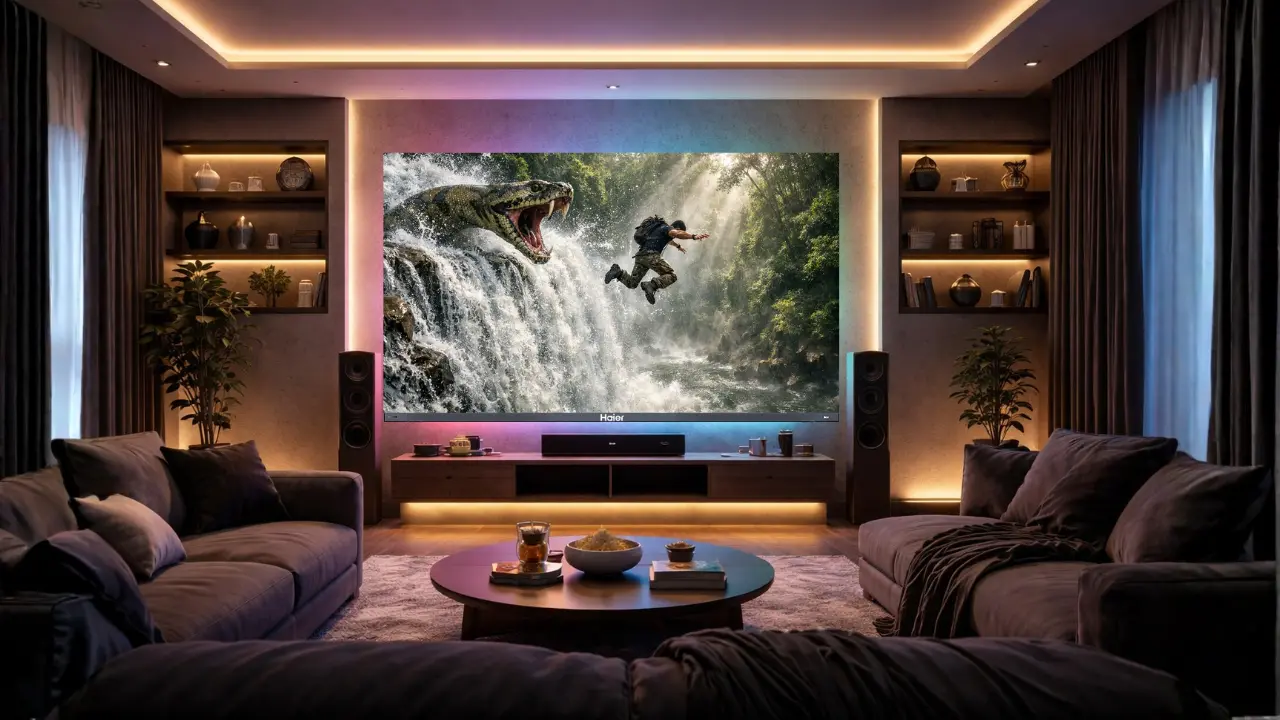

Sound by KEF improves audio quality by making TV sound feel fuller, clearer, and more directional. Instead of flat, boxy audio from standard TV speakers, KEF-tuned sound systems create deeper bass, cleaner dialogue, and more immersive surround effects.
The result is simple: movies feel cinematic, cricket commentary feels alive, and everyday streaming becomes easier on the ears.
There’s a moment most people recognise instantly.
It’s Friday night. Dinner plates are still on the table. Someone opens Netflix. The picture looks stunning. Sharp blacks. Bright colours. Beautiful visuals.
Then the dialogue starts.
And suddenly everyone asks the same question.
“What did he just say?”
Modern TVs solved the picture problem years ago. Sound became the new bottleneck.
That’s why audio technology inside televisions matters far more than people think.
And that’s where Sound by KEF changes the experience.
Most TVs look premium before they sound premium
Walk into any electronics store and almost every television looks impressive.
Ultra-thin bezels. 4K displays. Mini LED panels. HDR brightness.
But sound exposes shortcuts quickly.
Thin TVs leave very little physical space for powerful speakers. That creates three common problems:
- Weak bass
- Muffled voices
- Flat surround effects
The hidden truth is simple.
A great picture pulls you into the scene. Great sound convinces your brain the scene is real.
That’s why cinemas invest heavily in acoustics. Sound controls emotion more than visuals do.
A suspense scene without audio tension feels empty. A cricket stadium without crowd ambience feels artificial. A concert without depth feels lifeless.
Audio creates atmosphere.
And the atmosphere changes how people experience entertainment.
What exactly is KEF audio technology?
KEF is a globally respected British audio company known for high-fidelity speaker engineering.
For decades, KEF has focused on one thing: making sound feel accurate, layered, and immersive.
Their expertise traditionally lived inside premium home theatre systems and audiophile speakers. Now that same engineering philosophy is entering televisions through Sound by KEF integrations.
Haier’s Mini LED and QD-Mini LED TV range integrates this audio system into select premium televisions.
The important part is not the branding alone.
It’s how the sound behaves.
Good audio is less about loudness and more about separation
Most average TV speakers push everything into the same audio space.
Dialogue, music, explosions, background effects. Everything competes together.
KEF focuses on separation.
You hear:
- Dialogue more clearly
- Background instruments distinctly
- Bass with more control
- Positional sound with better spatial depth
It feels less cluttered.
Like walking into a well-designed bookstore instead of a noisy railway platform.
Why Indian living rooms expose weak TV audio faster
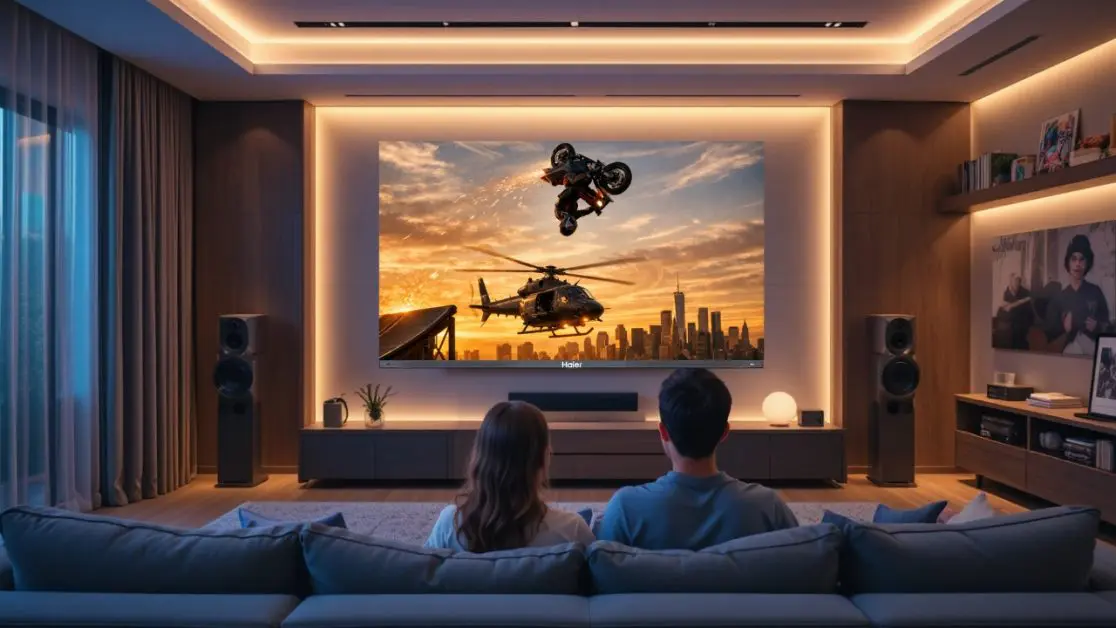
Indian homes are rarely “silent environments.”
Pressure cookers whistle. Ceiling fans run constantly. Traffic leaks through windows. Family conversations overlap. Kids move around.
Which means television sound has to work harder.
That changes the equation entirely.
Three kinds of households experience this differently
1. The family living room
Cricket matches. IPL weekends. Festival movie nights.
Here, clarity matters more than volume.
A 2.1-channel woofer system with KEF tuning creates stronger bass and clearer commentary, helping voices cut through background household noise.
Haier’s M80F Mini LED TVs pair Sound by KEF with 50W 2.1-channel audio systems and Dolby Atmos support.
2. The solo professional apartment
Late-night streaming changes priorities.
People want immersive sound without disturbing neighbours. Richer sound at lower volumes becomes important.
Better audio tuning solves that.
You stop increasing volume just to hear conversations clearly.
3. The gaming setup
Gaming exposes audio lag and weak spatial direction immediately.
Footsteps. Gunfire positioning. Engine sounds.
Haier’s QD-Mini LED models combine Sound by KEF with 144Hz refresh rates, VRR, ALLM, and AMD FreeSync Premium Pro for smoother gaming immersion.
Because gaming is not just a visual reaction anymore.
It’s audio awareness.
The hidden system behind immersive sound
People often think surround sound means “more speakers.”
Not exactly.
Immersive audio depends on three systems working together:
| System | What It Does | Why It Matters |
| Speaker Design | Controls clarity and bass | Prevents distorted sound |
| Audio Processing | Separates dialogue and effects | Makes content easier to hear |
| Spatial Placement | Creates directional sound feel | Adds cinematic immersion |
KEF’s value sits heavily in speaker engineering and acoustic tuning.
That matters because modern TVs are physically thin.
Thin devices naturally struggle with resonance and bass depth.
So brands compensate through intelligent acoustic design.
That’s the invisible engineering most consumers never see.
Why Dolby Atmos and KEF work well together
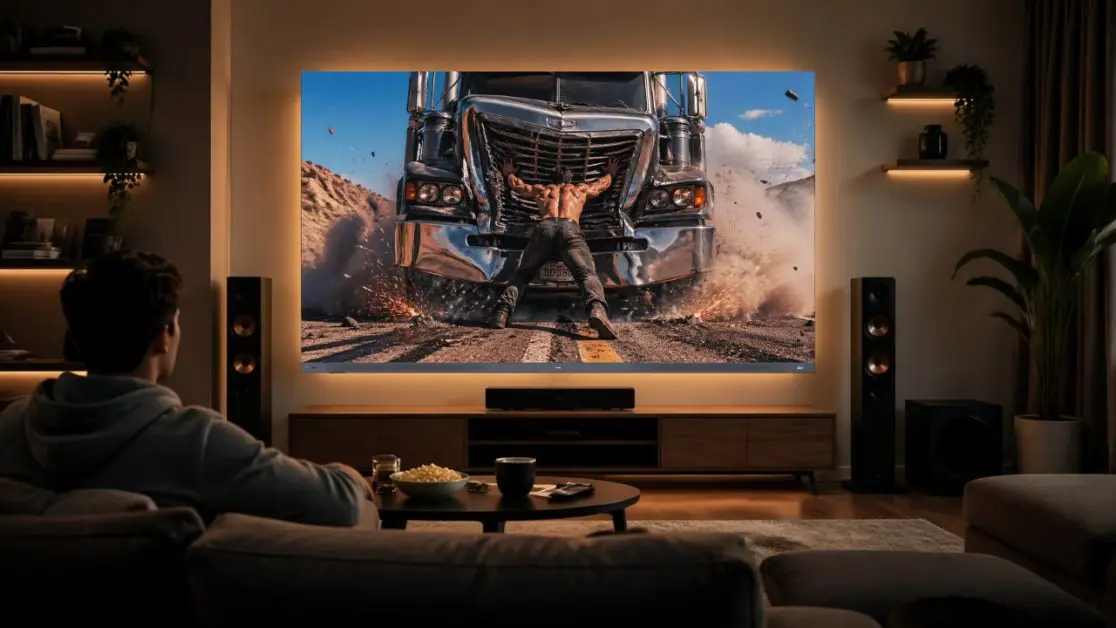
Here’s where things get interesting.
Dolby Atmos creates three-dimensional sound mapping. KEF improves how that sound is reproduced physically through speakers.
Together, they create layered immersion.
Imagine watching a thunderstorm scene.
Standard speakers play “storm noise.”
A better-tuned Atmos system creates:
- Rain above you
- Thunder depth
- Directional movement
- Environmental atmosphere
Haier’s Sound by KEF TVs combine Dolby Atmos support with KEF-tuned audio systems across multiple Mini LED models.
The difference feels subtle initially.
Then you go back to an older TV.
And suddenly everything sounds flat.
That’s how good systems work.
They quietly reset expectations.
Premium audio changes behaviour inside homes
This part rarely gets discussed.
Better sound changes how people use televisions.
Families gather longer.
People stop using subtitles constantly.
Music videos feel enjoyable again.
Sports become communal experiences instead of background noise.
Technology succeeds when it disappears into behaviour.
The best appliances do not demand attention. They improve routines quietly.
Good audio does exactly that.
What to actually look for while buying a TV with better sound
Many TVs advertise “powerful audio.”
That phrase means almost nothing without specifics.
Instead, look for combinations of technologies working together.
One option is basic stereo sound
- Good for casual viewing
- Lower cost
- Limited immersion
The second option is 2.1-channel audio with subwoofer support
- Better bass depth
- Clearer dialogue
- Fuller room-filling sound
Haier’s M80F and M92 series TVs include 2.1-channel speaker systems with KEF audio integration.
The third option is advanced multi-channel systems
For example, Haier’s M96 Series includes a 6.2.2-channel speaker setup with 90W output and KEF-tuned sound.
That creates a significantly larger soundstage.
Especially in bigger Indian living rooms.
Other features worth checking
- Dolby Atmos support
- HDMI eARC
- AI sound optimisation
- Woofer integration
- Audio output power
- Spatial sound processing
Because audio quality is a system, not a single feature.
The future of television is sensory, not just visual
For years, TV innovation focused almost entirely on screens.
Bigger screens. Brighter screens. Sharper screens.
Now the industry is shifting toward experience systems.
Picture. Sound. Gaming. AI processing. Ambient sensing.
All working together.
Haier’s newer AI-powered QD-Mini LED televisions already move in this direction with AI Ultra Sense processors, KEF sound integration, Dolby Vision IQ, and advanced gaming features.
Because consumers no longer buy televisions only for channels.
They buy them for experiences.
Movie nights.
Football finals.
Gaming marathons.
Weekend music sessions.
Late-night YouTube rabbit holes.
The television became the emotional centre of many homes again.
And sound became central to that shift.
The biggest audio mistake most buyers still make
People obsess over display specs and ignore sound completely.
Then they spend the next three years increasing volume endlessly.
Or adding external soundbars later.
Or struggling with unclear dialogue every night.
The smarter approach is simpler.
Treat audio as part of the viewing experience from day one.
Because clarity reduces fatigue.
Immersion increases engagement.
And better sound changes how a home feels.
That’s the deeper story behind Sound by KEF.
Not just louder TVs.
More human entertainment experiences.
And in modern homes filled with distractions, clarity itself becomes a luxury.
Frequently Asked Questions
Do I really need Sound by KEF on my TV, or is it just another premium label?
It helps if you care about clearer dialogue, deeper bass, and a more cinematic feel without immediately buying a soundbar.
I’m already buying a Mini LED TV for picture quality. Should I also care about audio?
Yes. A great display feels incomplete if voices sound muffled or flat.
Will Sound by KEF make a noticeable difference in my living room?
Most likely, especially during movies, cricket, gaming, and streaming where dialogue and atmosphere matter.
Should I buy a TV with KEF-tuned sound or just add a soundbar later?
A KEF-tuned TV gives you better built-in sound from day one. A soundbar can still help later, but it may not be necessary for casual users.
I keep turning on subtitles because I can’t hear dialogue clearly. Can Sound by KEF help?
Yes. KEF tuning focuses on cleaner separation, so voices do not get buried under music, effects, or background noise.
Why do actors sound unclear on my modern TV even though the picture is excellent?
Thin TVs have limited speaker space, which often causes weak bass and muffled dialogue.