

The best home audio setup is not about buying the loudest speaker. It is about matching sound to the way your home actually lives.
A good audio experience balances room size, speaker placement, content type, and everyday habits. Movie nights need depth.
Cricket matches need clarity. Late-night Spotify sessions need warmth without disturbing the neighbours. The best setups feel invisible. You stop noticing the technology and start feeling the moment.
It usually starts the same way.
Someone buys a big TV.
The screen looks cinematic. The colours pop. Netflix finally feels worth the subscription. Then the dialogue starts sounding flat. Action scenes feel thin. Music sounds trapped inside the television cabinet.
The picture was upgraded. The sound system did not.
And that changes everything.
Because audio is not background decoration. Audio is architecture. It shapes emotion, tension, excitement, silence, and memory inside a room.
A living room without good sound feels strangely incomplete. Like a theatre with the lights on.
Most People Optimize Screens. Very Few Optimize Sound.
Walk into most modern Indian homes today.
You will find:
- A large smart TV
- Fast Wi-Fi
- Multiple OTT subscriptions
- Gaming consoles
- Smart lighting
- Maybe even voice-controlled appliances
But audio often remains an afterthought.
That creates an imbalance.
A 165cm (65) screen with weak sound is like serving biryani on a paper plate. The core experience exists, but the immersion breaks.
According to Dolby, immersive audio formats like Dolby Atmos create spatial sound that places audio around the listener instead of pushing everything from one direction. That is why footsteps feel closer, stadium crowds feel wider, and background scores suddenly feel cinematic.
And the shift is already happening.
Modern televisions like the Haier M80F Mini LED 165cm (65) Google TV Sound By KEF (H65M80FUX) integrate Sound by KEF, Dolby Atmos, and 2.1-channel speaker systems designed for fuller sound experiences.
The interesting part is not the technology itself.
It is what the technology removes.
Extra speakers. Audio clutter. Confusing systems. Daily friction.
Good design removes effort.
The Room Matters More Than the Speaker
This surprises people.
A ₹20,000 speaker placed badly can sound worse than a modest setup placed correctly.
Because sound behaves like water. It reflects, bounces, gets absorbed, and spreads unevenly.
Three common home audio mistakes
| Mistake | What Happens |
| Placing speakers inside cabinets | Sound feels muffled |
| Keeping the TV too high | Dialogue feels disconnected |
| Empty echo-heavy rooms | Audio becomes harsh and tiring |
Now compare that to a balanced room:
- Curtains soften echoes
- Rugs absorb sharp reflections
- Sofas reduce sound harshness
- Proper TV height aligns dialogue naturally
Small adjustments change perception dramatically.
A room is not just a container for sound.
It becomes part of the sound system itself.
Choose Audio Based on Behaviour, Not Trends
People copy setups from YouTube without asking one important question:
How does this home actually use entertainment?
That answer changes everything.
One option is the “movie-first” setup
Best for:
- Families
- Weekend binge-watchers
- Large living rooms
What matters most:
- Dolby Atmos
- Strong bass response
- Wide soundstage
- Subwoofer integration
Televisions with integrated Dolby Atmos and 2.1-channel speaker systems already create a more immersive baseline experience compared to standard stereo TVs. The Haier M80F Mini LED 140cm (55) Google TV Sound By KEF (H55M80FUX) includes 50W 2.1-channel woofer audio and Dolby Atmos integration for fuller cinematic sound.
The second option is the “music-first” setup
Best for:
- Solo professionals
- Couples
- Everyday listeners
What matters:
- Vocal clarity
- Balanced mids
- Warm sound profile
- Easy streaming access
This setup works beautifully in apartments because it creates intimacy instead of noise.
Loudness is not quality.
Clarity is.
The third option is the “gaming-first” setup
Best for:
- Console gamers
- Competitive players
- Sports enthusiasts
Priorities shift here:
- Low latency
- Motion smoothness
- Directional sound
- HDMI eARC support
Modern gaming-focused TVs increasingly combine audio and performance together. The Haier New M92 Series 189cm (75) QD-Mini LED Smart AI Google TV (H75M92FUX) and Haier New M96 Series 254cm (100) QD-Mini LED AI Smart Google TV (H100M96FUX) include HDMI 2.1 eARC, VRR, ALLM, AMD FreeSync Premium Pro, and immersive audio systems built for faster response and cinematic gameplay.
Different homes. Different systems.
The best setup is the one aligned with real behaviour.
Speaker Placement Is an Emotional Decision
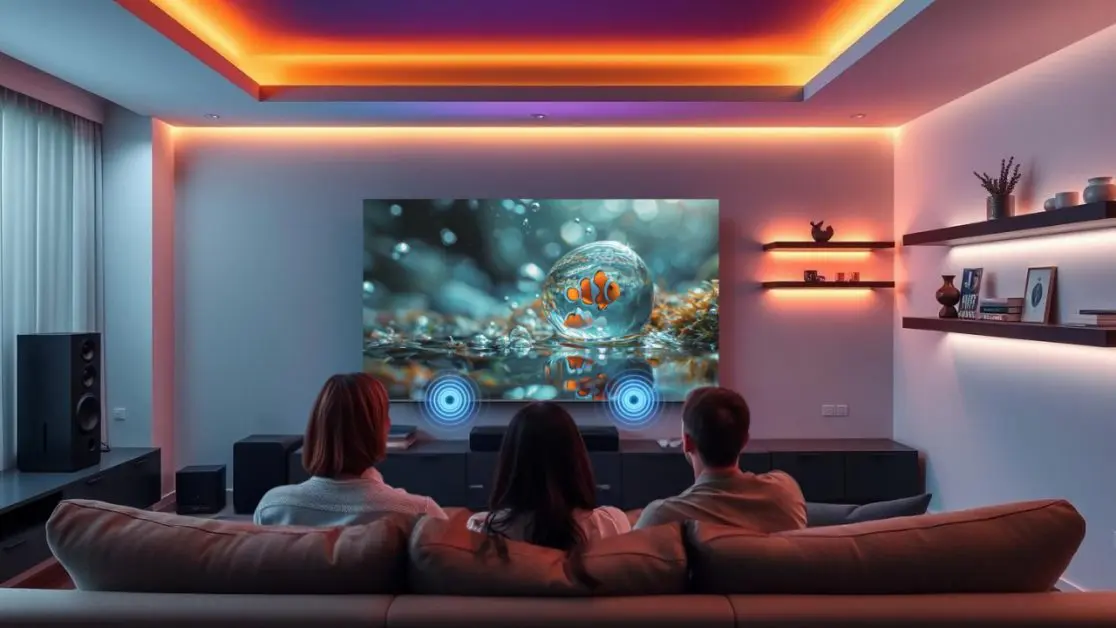
Most people think speaker placement is technical.
It is psychological.
Where sound comes from changes how connected you feel to what you watch.
A simple placement framework
| Device | Ideal Placement |
| TV centre | Eye-level while seated |
| Soundbar | Directly below TV |
| Rear speakers | Slightly behind seating area |
| Subwoofer | Corner-adjacent, not fully enclosed |
Even moving a soundbar forward by a few inches changes dialogue clarity.
That is because sound should reach people directly before bouncing around the room excessively.
Movie theatres understand this deeply.
Homes rarely do.
Bigger TVs Change Audio Expectations
This is one hidden system people miss.
As screens become larger, audio expectations automatically rise.
A 32-inch TV can survive with average sound.
A 215cm (85) screen cannot.
The brain expects scale consistency.
That is why premium televisions now focus heavily on integrated audio systems. The Haier M80F Mini LED 215cm (85) Google TV Sound By KEF (H85M80FUX) and the Haier New M96 Series 254cm (100) QD-Mini LED AI Smart Google TV (H100M96FUX) include advanced multi-channel audio systems and KEF-powered sound engineering for layered spatial audio experiences.
Because once visuals become cinematic, flat sound feels unnatural.
The hidden psychology of immersive sound
Good sound creates:
- Presence
- Tension
- Scale
- Emotional realism
Poor sound creates:
- Fatigue
- Disconnection
- Constant volume adjustments
- Viewer distraction
That last point matters more than people realise.
The best audio systems reduce friction.
You stop increasing the volume during dialogue and lowering it during explosions.
Everything feels balanced.
Quietly.
AI Is Quietly Changing Home Audio
This is where modern systems become interesting.
Older audio setups depended entirely on manual tuning.
Newer systems increasingly adapt automatically.
AI-powered televisions now analyse:
- Room brightness
- Scene type
- Motion speed
- Audio balance
- Gaming performance
The Haier New M92 Series 164cm (65) QD-Mini LED AI Smart Google TV (H65M92FUX) and Haier New M92 Series 189cm (75) QD-Mini LED Smart AI Google TV (H75M92FUX) use AI Ultra Sense Processor technologies to optimise visuals and entertainment experiences dynamically across content types.
Why does this matter?
Because modern homes multitask constantly.
One hour:
- IPL streaming
Next hour:
- YouTube music
Then:
- A late-night thriller
Then:
- PS5 gaming
Different content demands different sound behaviour.
AI systems reduce the need for constant adjustment.
Technology becomes calmer when it starts adapting quietly.
Do Not Ignore Everyday Practicalities
People obsess over specifications and ignore lifestyle friction.
That becomes expensive later.
Questions that matter more than specs
- Will neighbours complain?
- Is the room shared?
- Does the setup look cluttered?
- Can parents use it easily?
- Does the remote system confuse everyone?
- Will wires become messy over time?
A good home audio setup should feel natural inside the rhythm of the house.
Not like an engineering project.
This is why integrated smart TV ecosystems are growing rapidly. Features like hands-free voice control, Google TV integration, and simplified device ecosystems reduce operational complexity for families.
Convenience scales adoption.
Complicated systems slowly get abandoned.
The Best Audio Setup Feels Invisible
This is the real insight.
People think great home audio is about “hearing more.”
It is actually about feeling less resistance.
No constant rewinding dialogue.
No harsh volume spikes.
No confusion between remotes.
No flat background music during emotional scenes.
The room simply works.
The sound feels present without demanding attention.
And that changes how homes feel after work.
A Friday movie night feels richer.
A Sunday cricket match feels communal.
A playlist while cooking dinner feels warmer.
Technology becomes meaningful when it improves the atmosphere, not when it shows off specifications.
That is the future smart homes are quietly moving toward.
Not louder homes.
Better balanced ones.
Because the best audio experience at home is not built around speakers.
It is built around people.
Frequently Asked Questions
Do I really need separate speakers for my 165cm (65) TV?
Not always. Many modern premium TVs include enhanced audio systems with Dolby Atmos and dedicated woofers. However, if dialogue sounds weak or movies feel flat, adding a soundbar can make a noticeable difference.
Should I spend more on the TV or the sound system?
If you already have a good display, improving audio often creates a bigger improvement in immersion than upgrading the screen further.
My budget is limited. What gives the biggest audio upgrade?
Proper speaker placement, room adjustments (rugs, curtains, furniture), and a quality soundbar typically deliver more value than simply buying larger speakers.
Is a soundbar enough for most homes?
For many apartments and family living rooms, yes. A well-positioned soundbar provides better dialogue clarity and wider sound without adding complexity.
How do I know if I’m a movie-first, music-first, or gaming-first user?
Look at how you spend most of your entertainment time. The setup should optimize your most common activity, not occasional use cases.