
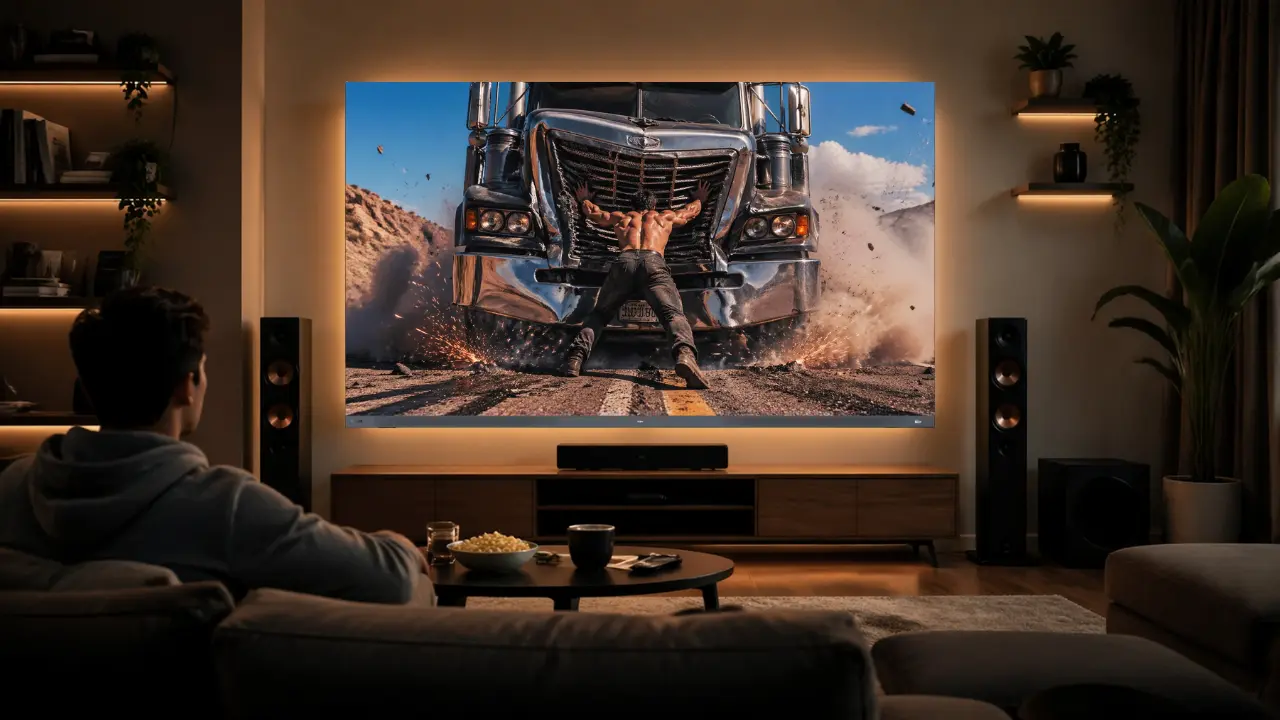

A bigger TV is no longer about size. It is about how a home feels.
The best 189cm (75), 215cm (85) , and 254cm(100) TVs are changing how Indian families watch cricket, host movie nights, play console games, and even unwind after work. A large screen today is not a luxury statement alone. It is becoming the new living room standard for immersive entertainment, smarter viewing, and more connected homes.
A few years ago, buying a 189cm (75) TV felt excessive.
Today, it feels oddly practical.
That shift says something important about modern Indian homes.
Streaming platforms now release films directly online. Cricket matches are watched with entire families. Gaming has moved from bedrooms to living rooms. Even weekend downtime looks different. One person watches Netflix, another mirrors a laptop screen, someone else plays FIFA on a console.
The screen becomes the room’s center of gravity.
And once you experience a truly large display, smaller screens start feeling like reading a novel through a keyhole.
Why Bigger Screens Feel More Natural Today
Indian homes are evolving in quiet ways.
Living rooms are becoming more open. Furniture sits farther from the TV wall. Apartments increasingly prioritize entertainment spaces. And the content itself is now made for cinematic viewing.
A 32-inch TV once solved a problem.
A 189cm (75) or 254cm(100) TV creates an experience.
That difference matters.
The hidden system behind immersive viewing
People assume screen size alone creates immersion.
Not true.
Three things shape the experience:
- Viewing distance
- Picture depth
- Sound staging
If one fails, the entire setup feels incomplete.
This is why premium large-screen TVs now focus heavily on Mini LED technology, Dolby Vision, AI-powered picture optimisation, and cinematic sound systems instead of just increasing inches.
Because bigger screens magnify flaws too.
Poor contrast looks worse. A weak sound feels thinner. Motion blur becomes obvious during sports.
Large TVs demand better engineering.
The 189cm (75) TV Sweet Spot for Modern Homes
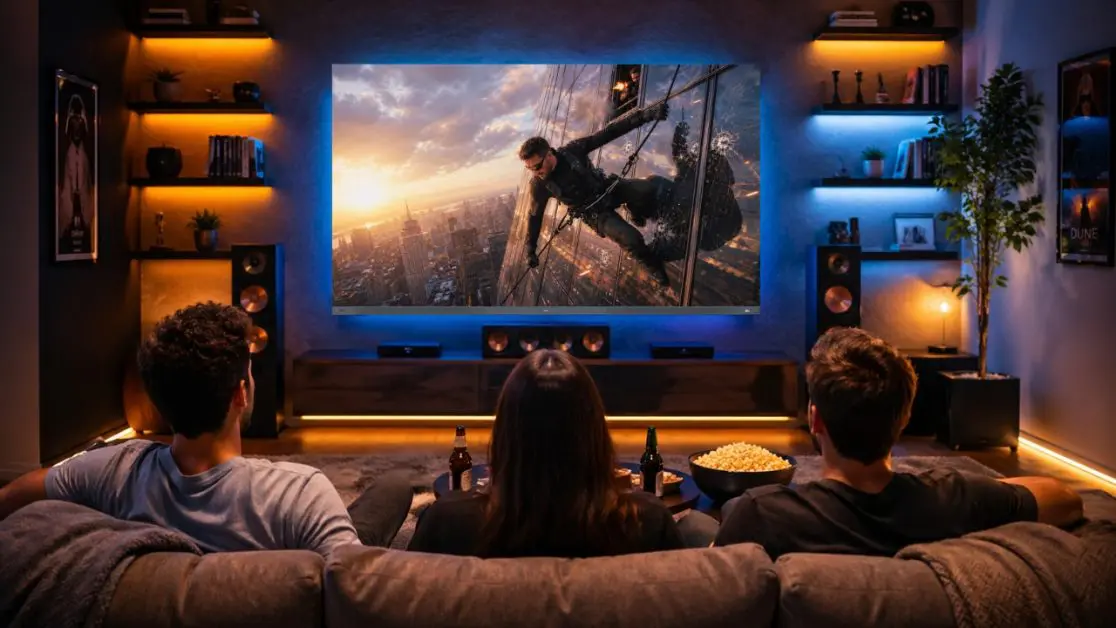
For many Indian families, 189cm (75) sits in the “just right” category.
Large enough to feel cinematic.
Practical enough for apartments.
The interesting thing about 189cm (75) TVs is psychological. They change group viewing behaviour. People stop watching individually on phones and start gathering again.
Cricket becomes social again.
Movies become events again.
Haier M80F Mini LED 189cm (75) Google TV | Sound By KEF (H75M80FUX)
The Haier M80F 189cm (75) Mini LED TV focuses on balanced immersion rather than visual excess. It combines Mini LED technology, Dolby Vision, KEF-powered audio, and Google TV integration into a setup designed for everyday premium viewing.
Some standout features include:
- Mini LED display with 264 local dimming zones
- Dolby Vision and HDR10 support
- Sound by KEF with 2.1 channel 50W audio
- Dolby Atmos support
- Google TV interface
- Hands-free voice control
- Solar-powered remote
- HDMI 2.1 eARC support
- DLG 120Hz gaming enhancement
Why the sound system matters more on large TVs
Most people obsess over picture quality first.
Then they bring home the TV and realise something.
The room sounds empty.
Large screens expose weak audio instantly. That is why the KEF audio integration on the Haier M80F series matters. It creates fuller sound staging that better matches the visual scale.
A massive screen with flat audio feels disconnected.
Cinema is synchronization.
Picture and sound must expand together.
215cm (85) TVs Change the Energy of a Room
There is a difference between “watching” and “being inside.”
A 215cm (85) TV starts crossing into that second territory.
Especially during:
- IPL matches
- PS5 or Xbox gaming
- OTT thriller series
- Dolby Atmos movie nights
- Family gatherings during festivals
The room behaves differently around a truly large screen.
People dim lights instinctively. Conversations pause naturally. Even background content feels cinematic.
Haier M80F Mini LED 215cm (85) Google TV | Sound By KEF (H85M80FUX)
The 215cm (85) Haier M80F model builds on the same ecosystem as the 189cm (75) version but expands immersion significantly with a larger visual canvas and enhanced local dimming performance.
Key features include:
- Mini LED display technology
- 360 dimming zones
- Dolby Vision and HDR10
- KEF Audio with Dolby Atmos and DTS-X
- 2.1 channel 50W speaker system
- MEMC motion enhancement
- VRR and ALLM gaming support
- Google TV operating system
- Solar Remote
- HDMI 2.1 eARC support
One option is cinematic viewing. The second is competitive gaming. The third is hybrid living.
This is where large TVs become interesting.
Different households use them differently.
One option: The cinema-first home
These buyers care about:
- Contrast depth
- Dolby Vision
- Audio clarity
- Dark-room viewing
The second option: The gaming-heavy setup
These buyers prioritize:
- VRR
- ALLM
- HDMI 2.1
- Motion smoothness
The third option: The hybrid family ecosystem
This is now the most common Indian setup.
Parents watch cricket.
Children stream YouTube.
Someone mirrors work presentations occasionally.
A console sits below the TV.
OTT apps run constantly.
The TV becomes infrastructure.
Not a gadget.
The 254cm(100) Shift Is Bigger Than Entertainment
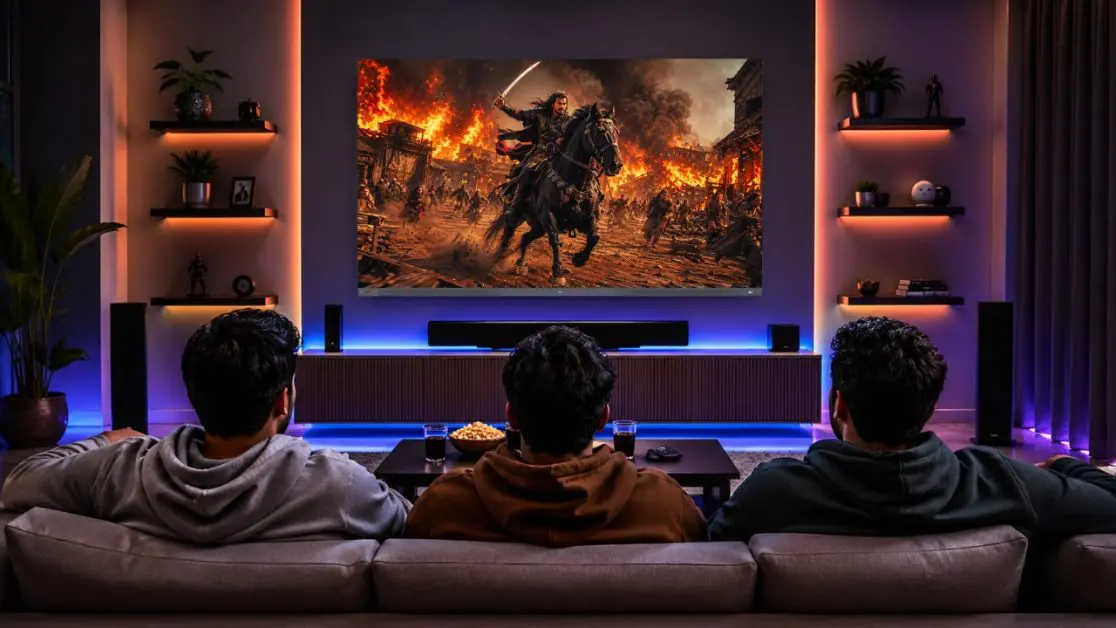
A 254cm(100) TV sounds outrageous until you sit in front of one.
Then something unexpected happens.
It stops feeling like a television.
It starts feeling architectural.
The wall disappears.
Haier New M96 Series 254cm (100) QD-Mini LED AI Smart Google TV (H100M96FUX)
The Haier M96 254cm(100) QD-Mini LED TV moves into ultra-premium territory with AI-driven picture optimisation, 144Hz refresh rate support, advanced gaming features, and a much more powerful audio architecture.
Key highlights include:
- QD-Mini LED display
- AI Ultra Sense Processor co-developed with MediaTek
- 144Hz refresh rate
- Dolby Vision IQ and HDR10+
- 2160 dimming zones
- Peak brightness up to 2100 nits
- Sound by KEF
- 6.2.2 channel immersive audio system
- Dolby Atmos and Total Sonic audio
- AMD FreeSync Premium Pro
- VRR and ALLM gaming features
- Wi-Fi 6 support
- Android 14 with Google TV
Why AI picture optimisation matters on a 254cm(100) display
At smaller sizes, imperfections hide.
At 254cm(100), they become impossible to ignore.
This is why AI processing becomes essential.
The AI Ultra Sense Processor continuously adjusts:
- Contrast
- Motion clarity
- Colour depth
- Brightness balance
- Scene recognition
The hidden system here is adaptation.
Modern TVs no longer just display content.
They interpret environments.
That changes the experience completely.
What Most Buyers Get Wrong About Large TVs
People often ask the wrong question.
They ask:
“What is the biggest TV I can buy?”
The better question is:
“What kind of experience do I want my home to create?”
Because screen size alone solves nothing.
Here is what actually matters
1. Viewing environment
Bright rooms need stronger brightness control and reflection management.
2. Motion performance
Sports and gaming expose weak refresh systems immediately.
3. Audio architecture
Large visuals require room-filling sound.
4. Smart ecosystem
Google TV integration matters because modern homes constantly switch between apps, casting, and voice commands.
5. Long-session comfort
Features like low blue light modes and flicker reduction become surprisingly important during binge sessions or weekend sports marathons.
The Future of Living Rooms Is Already Here
Television buying used to be transactional.
Now it is emotional infrastructure.
Families gather differently around larger screens. Homes feel more connected. Even ordinary evenings become more intentional.
A late-night documentary feels immersive.
A Sunday cricket match feels stadium-like.
A PlayStation session feels cinematic.
Technology works best when it disappears into lifestyle.
That is the real story behind large-screen TVs.
Not bigger pixels.
Bigger moments.
And perhaps that is why 189cm (75), 215cm (85), and 254cm(100) TVs are becoming less about luxury and more about modern living itself.
Because the future of entertainment is not portable.
It is shared.
Frequently Asked Questions
Why Does Mini LED Technology Matter on Large-Screen TVs?
Large screens make imperfections more visible. Mini LED technology improves contrast, brightness control, and black levels, helping images look sharper and more realistic.
Do Bigger TVs Make Poor-Quality Content Look Worse?
Sometimes. Larger screens reveal more detail, which means low-resolution content can appear softer. Advanced AI processing helps improve the viewing experience by enhancing picture quality.
Is Dolby Vision Worth Having for Movies and Streaming?
Yes. Dolby Vision optimizes brightness, contrast, and color scene by scene, creating a more cinematic viewing experience on compatible content.
Why Is Local Dimming Important on Large TVs?
Local dimming allows different areas of the screen to adjust brightness independently, improving contrast and helping dark scenes look more realistic.
Do I Still Need a Soundbar If My TV Has Premium Built-In Speakers?
Not necessarily. TVs with advanced audio systems, such as KEF-powered sound, can provide strong everyday performance. However, dedicated home theater enthusiasts may still prefer an external audio setup.
Why Does Sound Quality Seem More Important on Larger TVs?
As the screen becomes more immersive, weak audio becomes more noticeable. Balanced picture and sound create a more complete entertainment experience.