
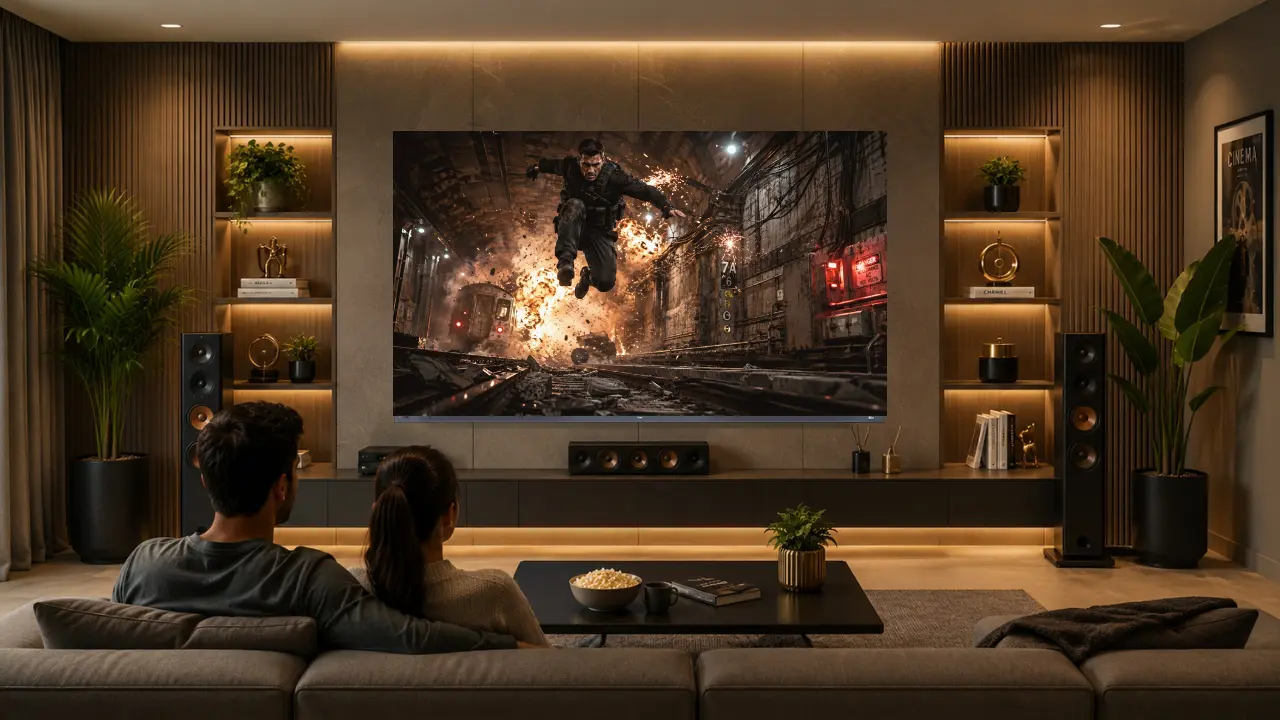

The best large TV installation is not the one that looks impressive. It is the one that disappears into your life.
A large TV should feel natural in the room, not dominant. The right installation reduces neck strain, cuts glare, improves sound flow, hides cable chaos, and changes how families gather. The screen matters. But placement decides whether the experience feels cinematic or exhausting.
A lot of people think buying a large TV is the hard part.
It isn’t.
The real decision begins after the box enters the house.
A 215cm (85) or 254cm(100) TV changes the geometry of a room. It changes viewing angles. Furniture placement. Lighting habits. Even conversation patterns during cricket matches or movie nights.
A poorly installed large TV becomes visual noise.
A well-installed one becomes part of the home.
That difference matters more than most people realise.
Why Large TVs Expose Every Small Installation Mistake
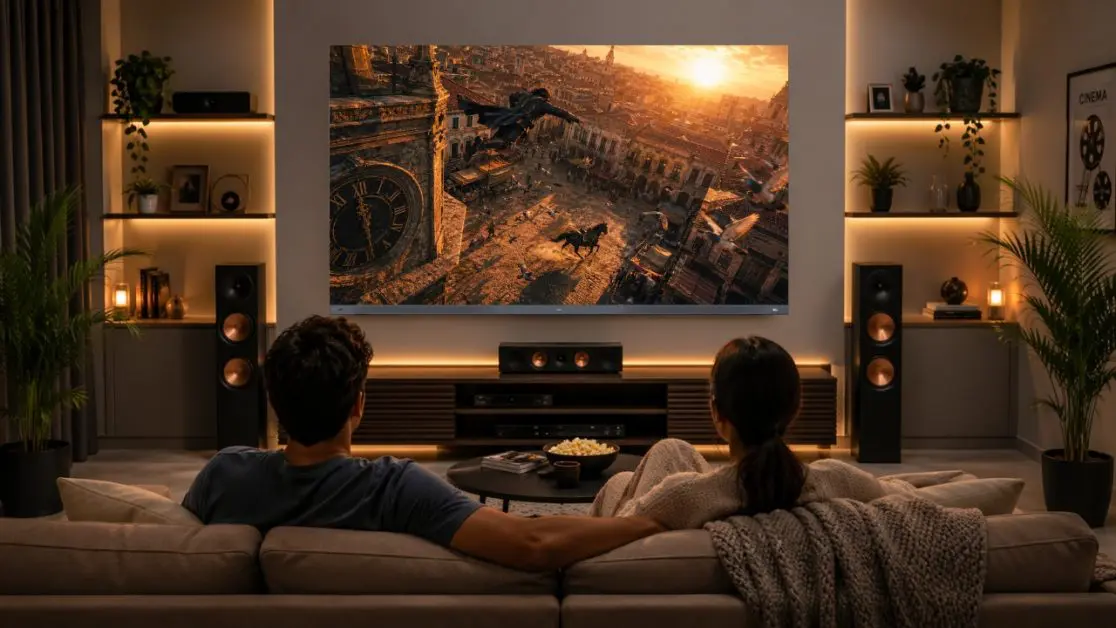
A 32-inch TV forgives bad decisions.
A 254cm(100) TV does not.
The larger the screen, the more visible every installation flaw becomes:
- Wrong height creates neck fatigue
- Bad wall choice creates reflections
- Loose wiring creates visual clutter
- Weak brackets create safety risks
- Poor spacing destroys immersion
- Incorrect sound positioning weakens cinematic impact
Big screens amplify everything. Including mistakes.
That is why installation is not a finishing step. It is part of the viewing experience itself.
Modern Indian homes are also changing.
Living rooms now serve multiple functions:
- Workspace during the day
- Family lounge in the evening
- Entertainment zone at night
- Social gathering space on weekends
A large TV installation has to work across all those modes.
Not just look good in photos.
Start With Distance, Not Screen Size
Most people choose the wall first.
The smarter approach is different.
Choose the viewing distance first.
Because comfort decides whether a TV feels immersive or overwhelming.
A simple rule most homes ignore
For 4K large TVs:
- 215cm (85) TVs work best at roughly 8 to 12 feet
- 254cm(100) TVs often need 10 to 14 feet for comfortable viewing
Too close, and the eyes keep scanning constantly.
Too far, and the cinematic effect disappears.
That balance matters more during long viewing sessions. Especially during IPL seasons, weekend OTT binges, or gaming marathons.
The room teaches the installation.
Not the other way around.
Haier’s large-screen Mini LED TVs, including the Haier M80F Mini LED 215cm (85) Google TV | Sound By KEF and the New M96 Series 254cm(100) QD-Mini LED AI Smart Google TV, are designed for immersive viewing with features like Dolby Vision, MEMC, high refresh rates, and cinematic audio systems.
But even premium picture technology depends on correct room positioning.
Because technology cannot fix poor ergonomics.
Wall Mount or TV Unit? The Better Choice Depends on the Room

There is no universal answer.
Only trade-offs.
Option One: Wall Mount Installation
This works best when:
- Space is limited
- Kids or pets move around often
- You want cleaner aesthetics
- You prefer cinema-like viewing
Benefits:
- Cleaner cable management
- Better space utilisation
- Safer positioning
- Minimal visual clutter
Costs:
- Permanent drilling
- Less flexibility later
- Wall strength becomes critical
Option Two: TV Unit Placement
This works best when:
- Rental restrictions exist
- Furniture layouts change often
- The room doubles as a workspace
- Storage matters
Benefits:
- Easier repositioning
- Simpler installation
- No structural drilling
- Extra storage flexibility
Costs:
- Occupies floor space
- More visible wires
- Less immersive visual alignment
Every installation decision is really a lifestyle decision.
That is the hidden system.
The Ideal TV Height Is Lower Than Most People Think
People often mount TVs too high because they design for standing aesthetics.
But TVs are watched sitting down.
A TV should align naturally with eye level while seated.
Not imitating a sports bar.
The comfort rule
The centre of the screen should roughly align with seated eye level.
For most Indian living rooms:
- Eye level sits between 40 to 45 inches from the floor
- Large TVs usually work best slightly lower than expected
Especially 215cm (85) and 254cm(100) models.
Why?
Because larger screens already occupy more vertical space.
Raising them too high creates constant upward neck movement.
Small discomfort compounds over time.
That is true for workspaces.
And true for entertainment spaces too.
Lighting Changes Everything
A premium display cannot defeat direct sunlight.
Light placement matters more than brightness specs.
One of the smartest things about modern Mini LED TVs is their ability to maintain strong contrast and vivid visuals even in brighter rooms. The Haier M96 Series, for example, includes HDR10+, Dolby Vision IQ, and low reflection screen technology.
But installation still shapes the final experience.
Three lighting mistakes to avoid
1. Installing opposite large windows
This creates constant reflections during daytime viewing.
2. Using overhead spotlights directly above the screen
Bright reflections reduce contrast perception.
3. Ignoring ambient lighting
Complete darkness increases eye strain during long sessions.
The better setup
Use:
- Side lighting
- Soft warm ambient lamps
- Curtains for daylight control
- Bias lighting behind the TV
Good lighting does not compete with the screen.
It supports it.
Cable Management Is Not Cosmetic. It Is Psychological
Visible cables make rooms feel unfinished.
Even expensive setups lose impact when wires spill across walls.
Clutter creates cognitive friction.
Clean spaces reduce mental fatigue.
That is why luxury hotels hide infrastructure.
Not because cables stop working.
Because visibility changes perception.
Three practical cable management options
- In-wall concealed wiring
- Raceway cable covers
- TV units with hidden channels
The best installation often feels invisible.
You notice the experience.
Not the setup.
The ultra-slim design language seen in large TVs like the Haier M96 Series also works best when paired with concealed wiring and minimalistic wall layouts.
Technology looks more premium when the environment supports it.
Sound Placement Matters More on Large TVs
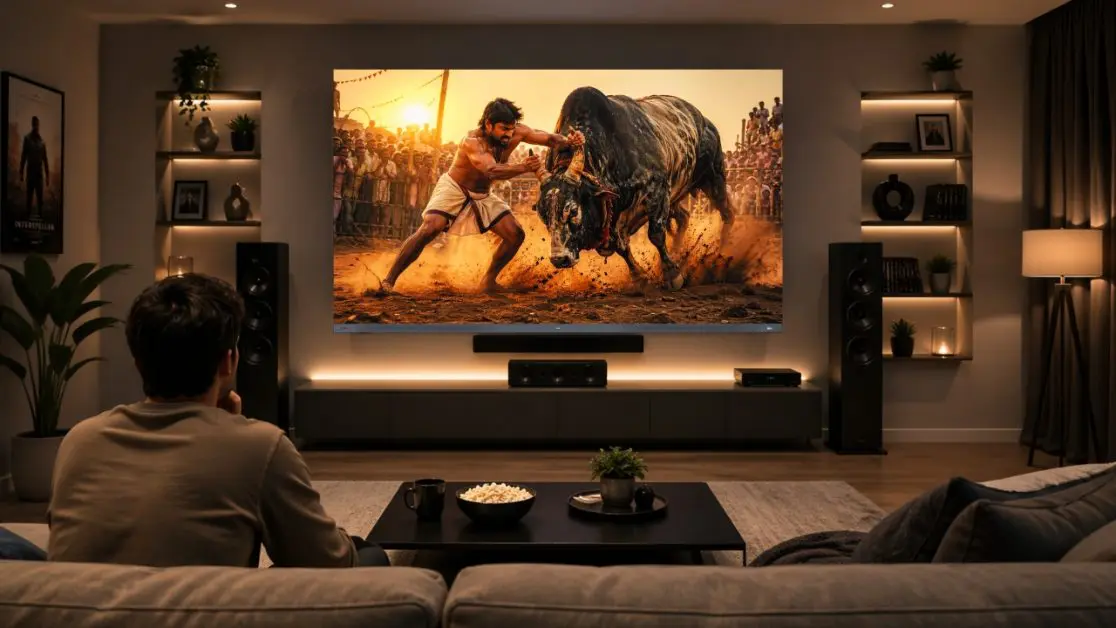
Large visuals demand proportional sound.
Otherwise the experience feels disconnected.
Modern premium TVs increasingly solve this with integrated audio systems. The Haier M80F features Sound by KEF with a 2.1 channel 50W speaker setup and Dolby Atmos support.
The M96 Series goes further with multi-channel audio architecture and KEF-tuned sound systems.
But room positioning still matters.
Simple audio improvements most homes miss
- Avoid pushing TVs tightly into corners
- Leave breathing space behind the setup
- Reduce excessive glass surfaces nearby
- Position seating centrally where possible
Sound reflects differently in every room.
Walls become part of the speaker system.
That is the invisible architecture of home entertainment.
Large TVs Need Structural Planning
A 215cm (85) or 254cm(100) TV is not a lightweight décor.
It is equipment.
The Haier M80F 215cm (85) TV has a gross weight of over 44 kg.
The Haier M96 254cm(100) model reaches over 87 kg gross weight.
That changes installation requirements completely.
Before installation, check these five things
- Wall type and strength
- Stud or anchor compatibility
- Bracket weight certification
- Ventilation clearance
- Power outlet positioning
One weak bracket can destroy a premium setup instantly.
Bigger screens require bigger respect for structural details.
Gaming and Sports Viewing Need Different Setup Logic
Not every viewer uses TVs the same way.
A movie-first setup differs from a gaming-first setup.
For sports lovers
Prioritise:
- Central seating
- Wider viewing angles
- Motion handling visibility
- Reduced ambient glare
For gamers
Prioritise:
- HDMI accessibility
- Console ventilation
- Eye-level alignment
- Reduced input obstruction
Large TVs with high refresh rates, VRR, ALLM, and gaming optimization features create smoother experiences for console users and sports viewers alike.
But performance features only matter when installation supports them.
A Formula 1 car still needs the right road.
The Real Goal Is Not Bigger Screens. It Is Better Evenings
This is the part people miss.
Nobody remembers specifications during family movie night.
Nobody talks about dimming zones during Sunday cricket gatherings.
People remember how the room felt.
Comfortable.
Immersive.
Easy.
That is what a good installation creates.
Not just a mounted screen.
A better rhythm inside the home.
The future of home entertainment is not only about display technology.
It is about integration.
The screen, the sound, the seating, the lighting, the wiring, the viewing angle. Every element shapes the experience together.
Because the smartest homes are not the ones filled with technology.
They are the ones where technology quietly disappears into everyday life.
Frequently Asked Questions
Should I choose the wall first or the TV first?
Neither. Start by identifying your ideal viewing distance and seating position. Once those are fixed, select the wall that provides the best viewing experience.
Will a larger TV make my room feel smaller?
A poorly positioned large TV can dominate a room. A properly installed one often blends naturally into the space and improves the overall entertainment experience without making the room feel cramped.
Should I wall-mount my large TV or place it on a TV unit?
It depends on your lifestyle. Wall mounting offers a cleaner appearance, better space efficiency, and improved safety. TV units provide flexibility, storage, and easier repositioning.
I’m renting my home. Is wall mounting worth it?
If drilling restrictions exist, a TV unit is usually the more practical option. It avoids structural changes while still supporting large-screen viewing.
Are wall-mounted TVs safer for homes with kids and pets?
Yes. Properly mounted TVs reduce the risk of accidental tipping and create a safer environment in active households.
Can I move a wall-mounted TV later?
Yes, but it requires removing and reinstalling the bracket, and may leave visible wall marks that need repair.