
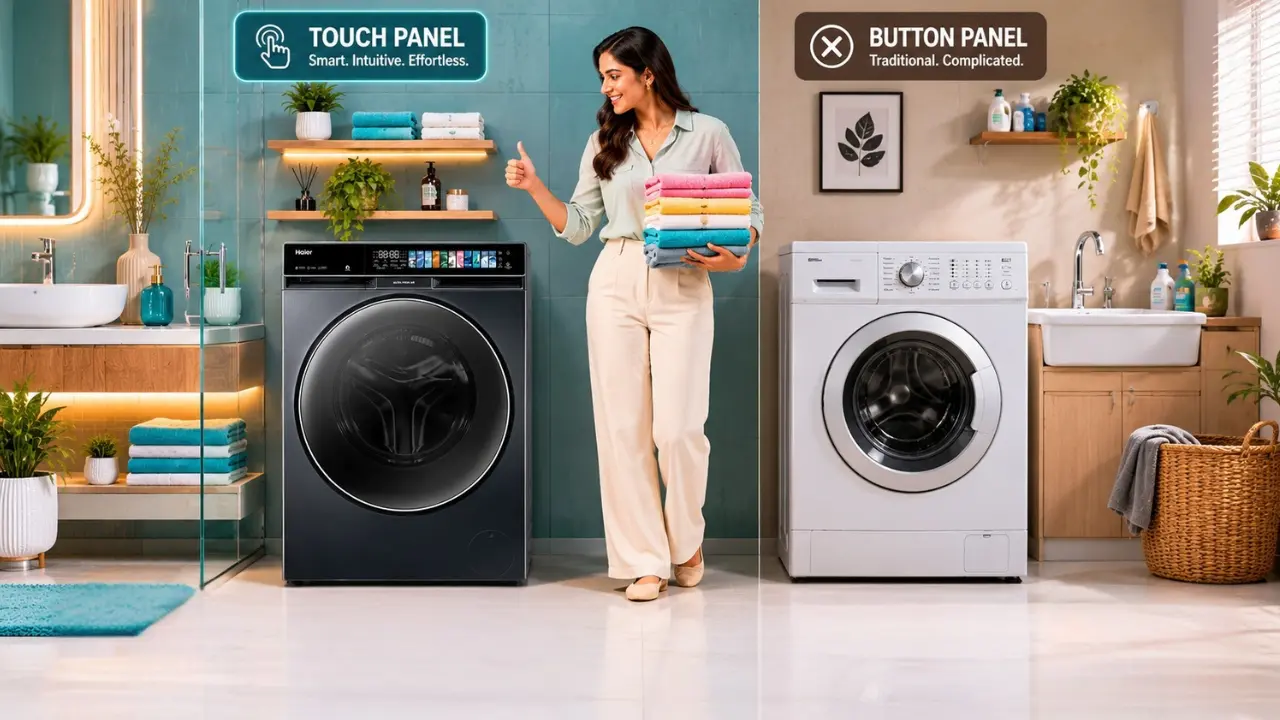

Button washing machines prioritise familiarity, tactile control, and durability. Touch panel washing machines prioritise speed, aesthetics, smart functionality, and easier interaction with advanced wash programs. Neither is universally “better.”
The right choice depends on how your household behaves every day, not just how the machine looks in a showroom.
A washing machine control panel reveals something deeper than technology.
It reveals how a home makes decisions.
One home wants simplicity. Press. Start. Done.
Another wants precision. Fabric settings. Hygiene cycles. AI-based optimisation. Delayed wash schedules after office hours.
And suddenly, the debate between button and touch panel washing machines stops being about controls.
It becomes about lifestyle rhythm.
That is why this comparison matters more today than it did five years ago. Indian households are changing fast. Smaller apartments. Faster routines. More working couples. More solo professionals. More late-night laundry cycles after long commutes.
Appliances are adapting to that shift.
The control panel is simply where the change becomes visible.
Why Washing Machine Controls Matter More Than People Think
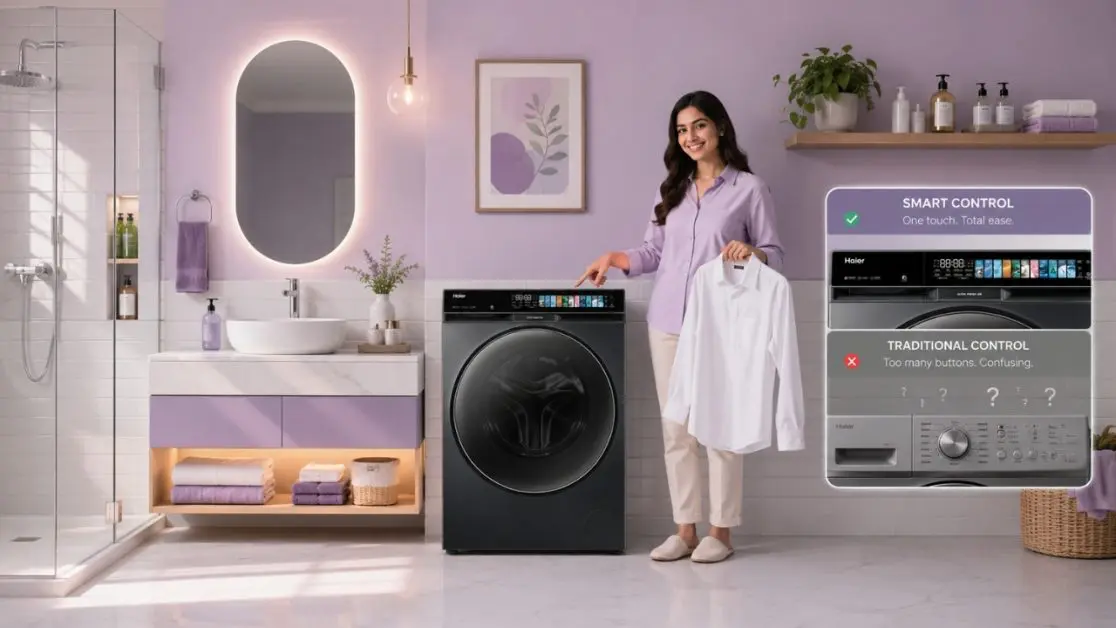
Most people choose washing machines based on capacity, RPM, or energy ratings.
Important? Absolutely.
But control systems shape daily experience.
Think about it.
A refrigerator quietly works in the background. An air conditioner often runs automatically.
A washing machine is different.
You interact with it constantly.
Every load involves choices:
- Fabric type
- Water temperature
- Wash intensity
- Drying preference
- Child lock
- Delay timing
- Hygiene cycles
The control panel becomes the bridge between the machine and the household.
Bad interfaces create friction.
Good interfaces disappear into routine.
That is the hidden system most buyers overlook.
Button Washing Machines Feel Familiar Because They Reduce Cognitive Load
There is a reason physical buttons survived for decades.
They reduce uncertainty.
You press something. You feel it respond.
That tactile feedback matters more in Indian homes than many brands realise.
Especially in:
- Multi-generational households
- Homes where parents or grandparents use the machine
- Busy households managing large laundry volumes
- Users upgrading from older semi-automatic systems
A physical button creates confidence.
You do not need to “learn” the machine.
You operate it instinctively.
The advantages of button control washing machines
Here is where button-based systems still perform strongly:
- Easy operation during rushed mornings
- Better usability for elderly family members
- Physical feedback during operation
- Less accidental input
- Familiar interface for first-time front-load users
- Works comfortably even with slightly wet fingers
That last point matters.
Indian laundry rooms are rarely perfectly dry environments.
Monsoon humidity changes how appliances get used.
Real homes are not showroom floors.
Where button washing machines feel limited
But familiarity has trade-offs.
Traditional button layouts often:
- Occupy more panel space
- Limit interface flexibility
- Offer smaller display systems
- Feel visually outdated in modern kitchens or utility areas
- Struggle to simplify advanced wash customisation
As appliances become smarter, physical buttons sometimes create complexity instead of reducing it.
Too many buttons create decision fatigue.
A control panel should feel like a conversation.
Not an aircraft cockpit.
Touch Panel Washing Machines Reflect How Indian Homes Are Modernising
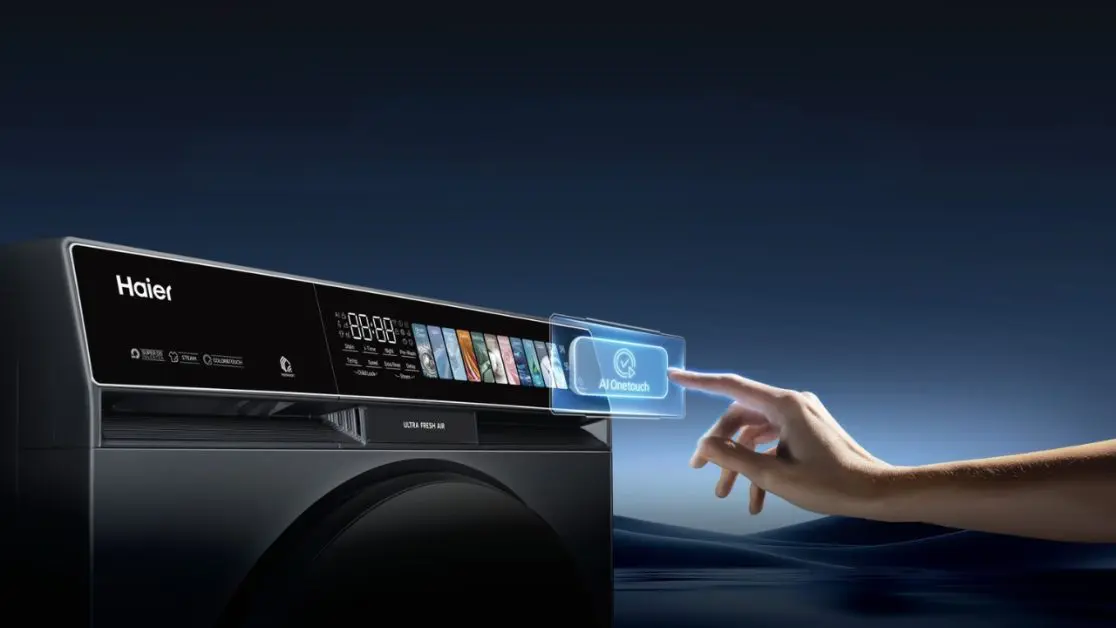
Touch panels are not just aesthetic upgrades.
They reflect behavioural change.
Modern households increasingly expect appliances to behave like smartphones:
- Fast
- Clean-looking
- Responsive
- Minimal
- Intuitive
That expectation changes product design.
Especially among:
- Millennials setting up new homes
- Gen Z renters upgrading appliances
- Young couples prioritising aesthetics
- Urban apartment buyers
The appliance is no longer hidden away.
It becomes part of the visual environment.
A touch panel washing machine often looks calmer because the interface feels less crowded.
Minimalism is not decoration.
It reduces mental noise.
Why Touch Panels Work Well for Smart Laundry Systems
Modern washing machines now manage more variables than ever:
- AI wash optimisation
- Fabric sensing
- Temperature control
- Steam hygiene programs
- Smart diagnostics
- Memory functions
- Delay scheduling
- Freshness maintenance systems
Touch panels simplify access to those systems.
For example, models like the Haier 12 Kg F11 Front Load Washer (HW120-DM14F11BKU1) and the Haier 12 Kg F11 Front Load Washer & Dryer (HWD120-DM14F11BKU1) use modern interface design to make advanced features feel less intimidating.
That matters because advanced technology only works when people actually use it.
A hidden truth about smart appliances:
Most households use only 20% of available features.
Good interface design changes that.
Where touch panel washing machines feel stronger
Touch interfaces perform especially well in:
- Compact urban apartments
- Design-focused homes
- Smart appliance ecosystems
- Tech-comfortable households
- Families managing multiple fabric types
- Homes using advanced hygiene programs regularly
And visually?
They often feel aligned with modern interiors.
Especially alongside:
- Modular kitchens
- Matte-finish appliances
- Smart refrigerators
- Connected home ecosystems
A washing machine now contributes to home aesthetics the same way lighting or furniture does.
That shift is cultural, not technical.
The Real Difference Is Speed of Interaction
People assume the difference is buttons versus glass.
It is not.
The real difference is interaction philosophy.
Button systems optimise certainty
You know exactly what was pressed.
Touch systems optimise flow
You navigate settings faster with fewer physical controls.
One prioritises reassurance.
The other prioritises efficiency.
Neither philosophy is wrong.
But different homes reward different systems.
One Option Prioritises Routine. The Other Prioritises Flexibility.
Here is the simplest way to think about it.
Option One: Button-Control Washing Machines
Best for:
- Traditional households
- Multi-user families
- Elderly users
- Buyers wanting straightforward operation
- Homes prioritising familiarity over experimentation
Benefits:
- Easy learning curve
- Reliable tactile operation
- Lower adjustment time
- Clear mechanical interaction
Trade-offs:
- Less visually modern
- More physical clutter
- Limited interface adaptability
Option Two: Touch Panel Washing Machines
Best for:
- Urban households
- Smart-home adopters
- Design-conscious buyers
- Working professionals
- Homes using advanced wash settings regularly
Benefits:
- Cleaner aesthetics
- Faster navigation
- Better integration with AI features
- More premium feel
- Simplified advanced customisation
Trade-offs:
- Requires slight learning adjustment
- Some users prefer tactile confirmation
- Wet-hand interaction may vary by model
That distinction matters because appliances are emotional purchases disguised as functional ones.
People buy the machine that matches how they want life to feel.
Indian Homes Are Quietly Moving Toward Touch Interfaces
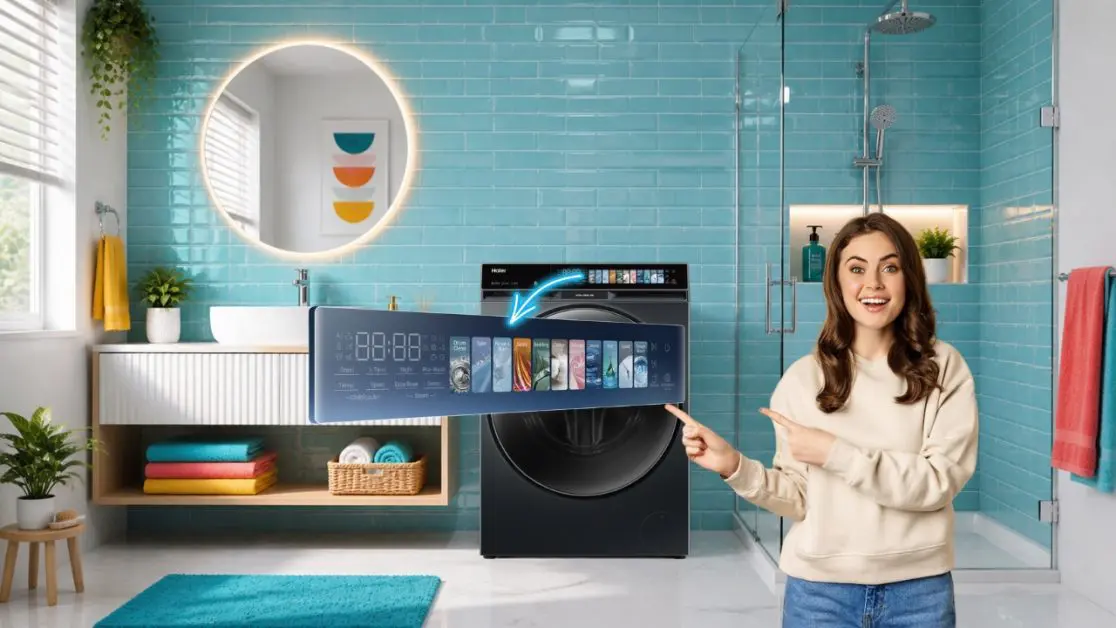
Look around modern homes.
Televisions changed first.
Then smartphones.
Then induction cooktops.
Then air conditioners.
The interface trend is consistent:
Less mechanical.
More responsive.
More minimal.
Washing machines are following the same trajectory.
Not because buttons are “bad.”
Because household expectations changed.
Especially in cities where space is tighter and visual clutter feels heavier.
A smaller apartment magnifies every design choice.
That includes laundry appliances.
A Good Washing Machine Interface Reduces Invisible Stress
The best appliance design does something subtle.
It reduces micro-decisions.
That matters more than raw technology.
A machine that feels confusing creates hesitation:
- Did I choose the right setting?
- Was the cycle activated?
- Should I restart?
- Why are there so many controls?
Good interfaces reduce uncertainty.
That is why modern Haier front-load systems increasingly focus on cleaner interaction design alongside features like AI-enabled washing intelligence, Fresh Air Technology, and fabric-sensitive wash systems.
Because modern appliance innovation is no longer just mechanical.
It is behavioural.
The Future of Washing Machines Is Less About Control and More About Trust
This is where the market is heading.
Not more buttons.
Not bigger touchscreens.
Fewer decisions.
Smarter automation.
Machines that quietly understand:
- Load size
- Fabric sensitivity
- Moisture levels
- Wash timing patterns
- Energy optimisation habits
The interface becomes lighter because the intelligence becomes deeper.
That is the broader pattern shaping home appliances globally.
Technology disappears when trust increases.
A truly smart washing machine should eventually feel less like operating a machine and more like delegating a task.
That is the future modern Indian households are moving toward.
Not because people suddenly love technology.
Because they value calm.
And every appliance that reduces friction quietly becomes part of a better home system.
Frequently Asked Questions
Should I buy a button or touch panel washing machine for long-term daily use?
If your household values familiarity, quick learning, and tactile feedback, button controls often feel easier. If you prefer modern interfaces, cleaner aesthetics, and smart features, touch panels usually fit better.
Which washing machine feels less confusing for everyday laundry?
Button machines reduce uncertainty because every control is physically visible. Touch panels reduce clutter but may require a short learning curve.
Are touch panel washing machines actually easier to use?
They can be, especially for advanced wash programs. Good touch interfaces simplify complex settings better than crowded button layouts.
Why do some people still prefer button washing machines?
Physical buttons create confidence. Many users like feeling a direct response when selecting cycles or settings.
Is a touch panel washing machine worth paying extra for?
It depends on how often you use advanced features like steam hygiene, AI washing, delay scheduling, or fabric-specific programs.
My laundry area is always humid during monsoon season. Should I avoid touch controls?
If moisture is frequent, tactile buttons may feel more reliable day to day.
I often operate the machine while handling wet clothes. Will touch panels annoy me?
Depending on sensitivity, yes. Physical buttons are usually easier in rushed laundry situations.