
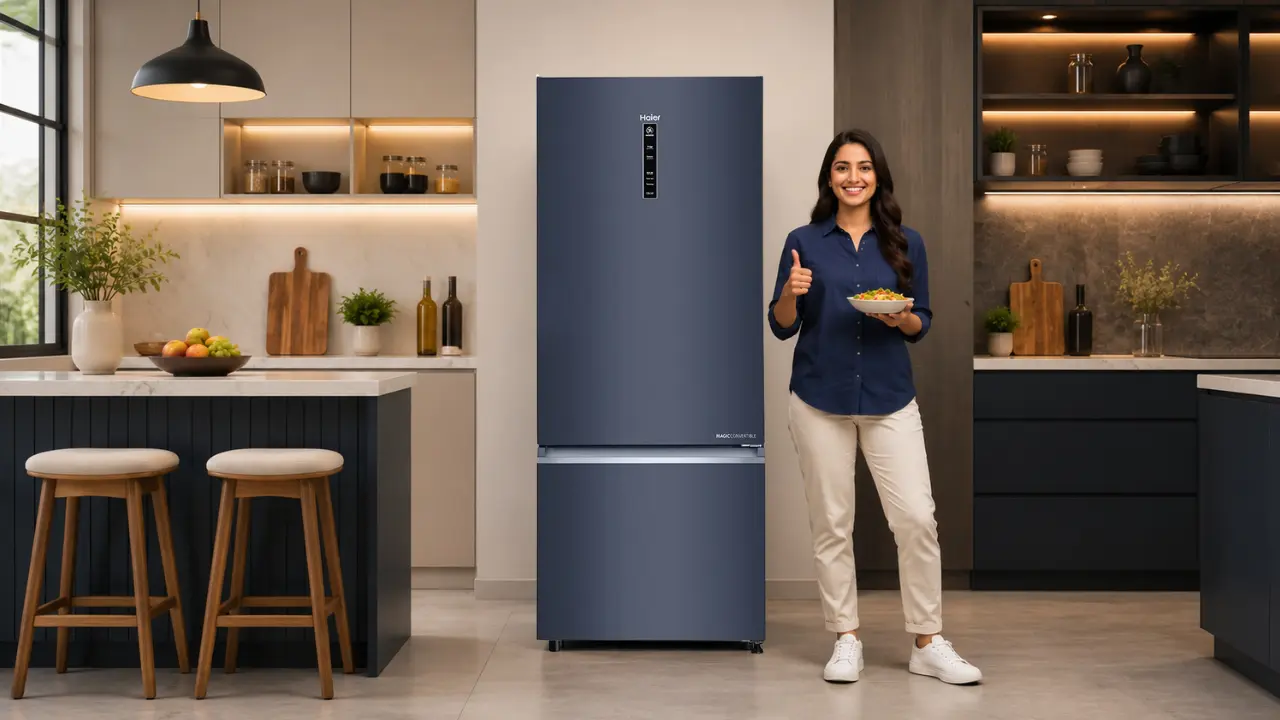

A refrigerator used to do one job.
Keep food cold.
Now it manages freshness, adapts to family routines, survives voltage fluctuations, saves electricity, reduces food waste, speeds up ice making, and quietly reorganises how Indian kitchens function every day.
The modern refrigerator is no longer in storage.
It is infrastructure.
The refrigerator stopped being an appliance. It became a daily decision system.
Walk into a modern Indian kitchen at 9 PM.
Someone is storing leftover biryani.
Someone else is chilling water bottles before guests arrive tomorrow.
A parent is organising vegetables for the week.
A working professional is meal-prepping for Monday.
A teenager is opening the fridge every fifteen minutes without knowing why.
The refrigerator sits at the center of all these tiny routines.
That changes how technology inside refrigerators gets designed.
For years, refrigerators competed on one thing: size.
Bigger capacity. Bigger freezer. Bigger promises.
But Indian households evolved.
Apartments became compact. Grocery habits changed. Quick commerce exploded. Families started storing differently. Energy bills mattered more. People began asking smarter questions:
- How long does freshness actually last?
- Can the fridge handle power cuts?
- Why am I bending constantly for vegetables?
- Can one refrigerator adapt during festivals and normal weekdays?
- Why does cooling feel uneven in some models?
Technology started responding to behaviour, not just specifications.
That is the real transformation.
Cooling is no longer an innovation. Intelligent cooling is.
Traditional refrigerators cool everything equally.
That sounds logical. It is not.
Different foods behave differently.
Leafy vegetables lose moisture quickly. Dairy reacts to temperature swings. Frozen items need consistency. Leftovers absorb odours. Fruits release ethylene gas and accelerate spoilage.
A refrigerator is basically a living ecosystem.
Modern refrigerator technology now treats cooling like traffic management instead of brute force freezing.
Why inverter technology changed everything
Older refrigerators worked like switchboards.
Full power. Then off. Then full power again.
That constant stopping and restarting consumed more electricity and created uneven cooling.
Inverter compressors changed the system.
Instead of operating at one speed, they adjust dynamically based on usage patterns, internal temperature, and door openings.
The result:
- Lower energy consumption
- More stable cooling
- Reduced noise
- Better food freshness
- Longer compressor life
The hidden insight is simple.
Consistency preserves freshness better than intensity.
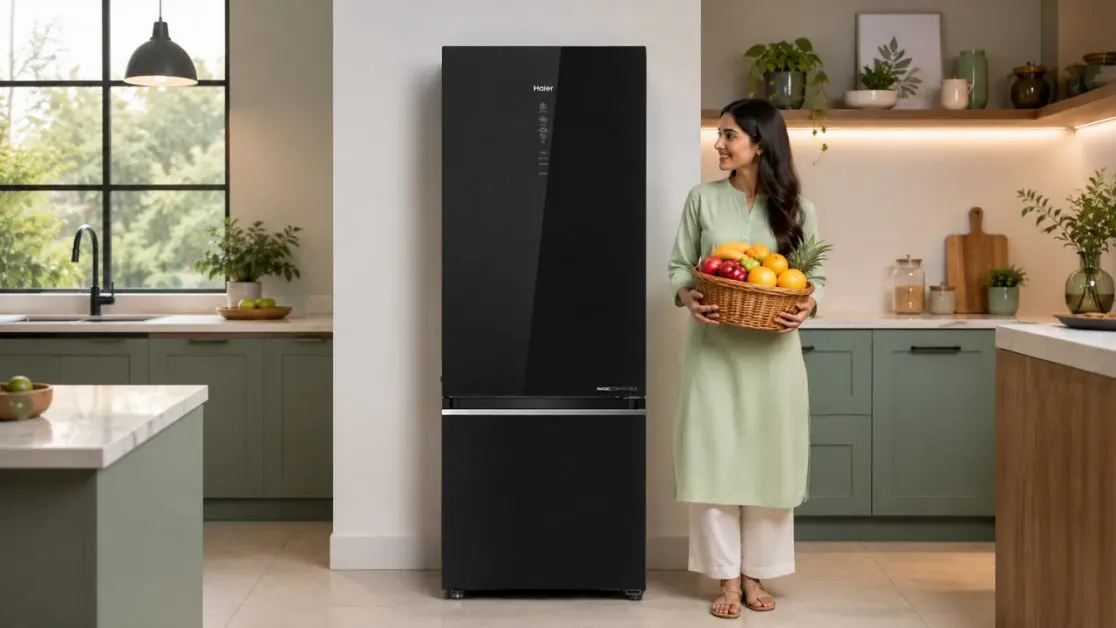
That is why technologies like Triple Inverter systems and Dual Fan cooling have become increasingly relevant in premium refrigerators. Haier’s Bottom Mount Refrigerator range, including the Haier HRB-4952BGKA-P and HRB-4952CKGA-P, uses Triple Inverter Technology designed to maintain freshness while improving energy efficiency.
The biggest refrigerator innovation had nothing to do with cooling
It had to do with bending.
Seriously.
Why bottom-mounted refrigerators reflect a deeper design shift
Most people access the refrigerator section far more than the freezer.
Yet traditional refrigerator designs placed daily-use items at knee level.
Which meant constant bending.
Hundreds of times every month.
Good design removes invisible friction.
That is why bottom-mounted refrigerators became important in modern Indian homes. Fresh food stays at eye level. Vegetables become easier to access. Daily routines feel less tiring.
Haier calls this philosophy “Jhukna Mat” in its Bottom Mount Refrigerator range. The idea sounds simple because the best innovations usually do.
Technology often succeeds quietly.
The best systems reduce the effort people stop noticing.
Convertible technology changed how Indian families use refrigerators
Most refrigerators used to operate with fixed storage logic.
Freezer means freezer. Refrigerator means refrigerator.
But real households do not behave that predictably.
During Diwali, storage demand changes completely.
During weddings, desserts and beverages multiply overnight.
During summer, ice usage spikes.
For solo professionals, half the refrigerator often stays underused.
Static storage creates waste.
Convertible technology solves this by making compartments adaptable.
Why flexibility matters more than capacity
A 500L refrigerator with fixed compartments may feel smaller than a flexible 400L refrigerator.
Because utility matters more than volume.
Modern convertible refrigerators now allow users to switch cooling modes based on changing needs.
One option is extra freezer space during summer.
The second option is more fridge storage during festivals.
The third option is energy-saving modes during low usage periods.
Haier’s 14-in-1 Convertible Modes reflect this larger behavioural shift. Instead of forcing households into one storage pattern, the refrigerator adapts to the household.
That is what smart technology actually means.
Not complexity.
Adaptability.
For more on flexible cooling systems and storage optimisation, explore Haier India Refrigerators
Power cuts shaped refrigerator innovation in India more than people realise
Western refrigerator design priorities and Indian refrigerator priorities are not identical.
Because infrastructure realities are different.
Voltage fluctuations remain common across many regions. Summer electricity demand creates instability. Unexpected outages still affect food preservation.
Technology had to localise.
Why stabilizer-free operation matters
A refrigerator is not useful only when conditions are perfect.
It proves itself during imperfect conditions.
Modern stabilizer-free refrigerators protect compressors from voltage fluctuations while improving appliance lifespan.
Some refrigerators now also support home inverter connectivity, allowing cooling retention during power cuts.
That matters more than marketing language suggests.
Food waste is expensive.
Spoiled groceries create friction.
Medicine storage becomes risky.
Milk spoilage ruins mornings before they begin.
Haier’s Bottom Mount Refrigerator series includes stabilizer-free operation and home inverter connectivity designed for Indian power conditions.
A good appliance understands the country it lives in.
Speed became a modern expectation inside kitchens
People no longer wait comfortably.
Not for taxis.
Not for deliveries.
Not for buffering.
Not for ice.
This behavioural shift quietly changed refrigerator technology too.
The rise of fast cooling systems
Fast icing technology sounds like a small feature until guests arrive unexpectedly during peak summer.
Or someone wants ice immediately after returning from work.
Or a family hosts a cricket screening night.
Small delays feel bigger in modern life because schedules became compressed.
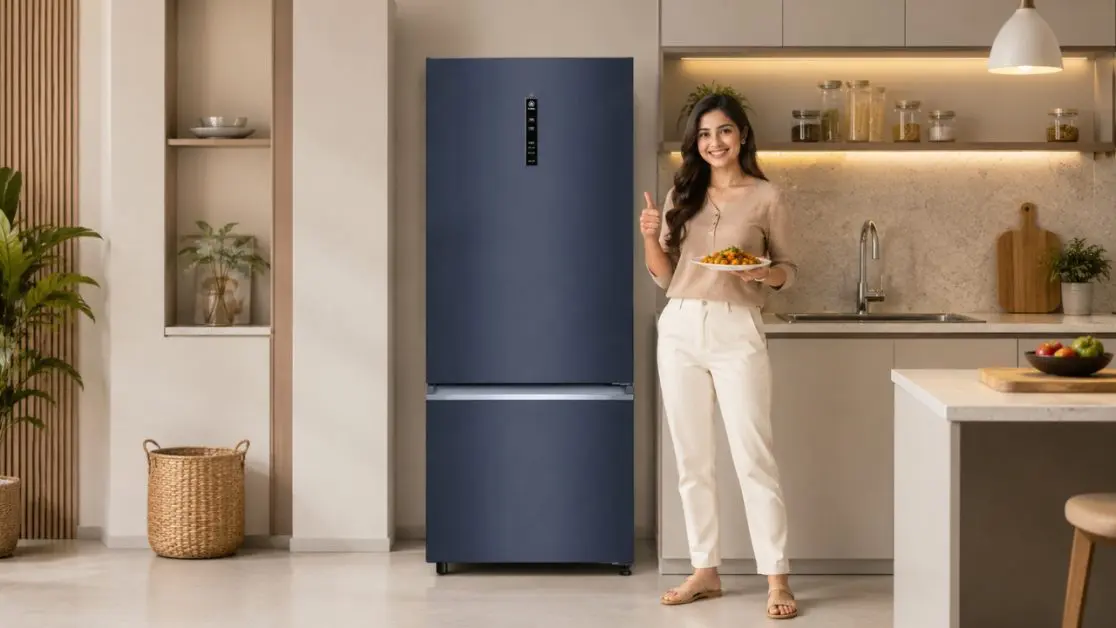
Features like 1 Hour Icing Technology respond to this exact reality by accelerating ice-making performance. Haier integrates this into select Bottom Mount Refrigerator models to support faster everyday cooling needs.
Convenience is rarely about luxury.
Usually, it is about removing waiting time from routines.
The modern refrigerator is becoming digitally aware
The old refrigerator stayed silent.
Modern refrigerators communicate.
Digital control panels, smart sensors, and AI-based cooling systems are changing how users interact with appliances.
Why external digital controls matter
Opening refrigerator doors repeatedly causes temperature fluctuations.
Which impacts freshness.
External digital panels reduce unnecessary door openings while allowing users to adjust modes quickly.
That sounds minor. It is not.
Every repeated behaviour compounds over years.
Modern refrigerator technology increasingly focuses on micro-efficiencies:
- Faster cooling response
- Reduced cold air loss
- Better airflow management
- More precise temperature control
- Improved hygiene management
Even anti-bacterial gaskets and removable cleaning systems reflect this larger trend toward low-maintenance living. Haier’s refrigerator range includes removable anti-bacterial gaskets designed for easier cleaning and hygiene maintenance.
Technology transforms homes most effectively when it reduces cognitive load.
Not when it adds features people never use.
For broader refrigeration energy guidance, the Bureau of Energy Efficiency India regularly shares appliance efficiency standards and energy-saving awareness resources.
Storage design became lifestyle design
The inside of a refrigerator now reflects how people actually live.
That is new.
Older refrigerators treated storage generically. Modern refrigerators segment space intentionally.
Why bigger vegetable boxes matter in Indian homes
Indian cooking relies heavily on fresh produce.
Tomatoes. Coriander. Green chillies. Spinach. Cauliflower. Curry leaves.
Vegetable storage is not secondary in Indian kitchens. It is central.
That explains why larger vegetable boxes became important design decisions instead of optional accessories.
Haier’s Bottom Mount Refrigerators feature a 2X Bigger Vegetable Box aimed at supporting larger fresh-food storage needs for Indian families.
The refrigerator is adapting to culture.
Not the other way around.
The future refrigerator will behave less like a machine and more like an assistant
This shift is already visible.
AI-powered cooling systems. Adaptive temperature zones. Smart diagnostics. Inventory awareness. Energy optimization.
But the deeper change is philosophical.
Technology is moving from reaction to prediction.
The best refrigerators of the future will likely:
- Adjust cooling before summer heat peaks
- Detect usage patterns automatically
- Reduce energy during low-activity hours
- Optimise compartments dynamically
- Improve food longevity through AI monitoring
And most users will never think about the technology directly.
Because the best systems disappear into everyday life.
That is the paradox.
When technology works perfectly, people stop noticing it.
A refrigerator reveals how modern homes are evolving
People think refrigerators are about food storage.
They are not.
They are about time management. Energy behaviour. Family routines. Kitchen ergonomics. Freshness psychology. Urban living constraints.
A refrigerator quietly reveals how a household functions.
And technology is transforming refrigerators because modern life itself became more dynamic, compressed, and adaptive.
The real innovation is not smarter cooling.
It is understanding people better.
That is why modern refrigerators no longer feel like cold boxes sitting in corners.
They feel like systems designed around how real homes actually work.
And that shift changes everything.
Relevant Haier refrigerator models referenced in this article include the Haier HRB-4952BGKA-P Graphite Black Bottom Mount Refrigerator and the Haier HRB-4952CKGA-P Black Glass Bottom Mount Refrigerator.
Frequently Asked Questions
I’m buying a refrigerator for my family. Should I prioritize capacity or flexible storage?
Flexible storage often provides more practical value than raw capacity. Convertible compartments allow you to adapt space for festivals, guests, seasonal storage, or everyday use.
Why do modern refrigerators have so many features now?
Refrigerators have evolved from simple cooling appliances into systems that help manage freshness, energy consumption, storage flexibility, and household routines.
Is an inverter refrigerator really worth the extra money?
For most households, yes. Inverter compressors reduce electricity consumption, maintain more stable temperatures, operate quietly, and generally last longer.
How do I know if a bottom-mounted refrigerator is right for me?
If you access vegetables, dairy, leftovers, and fresh food more often than frozen items, a bottom-mounted refrigerator can significantly reduce bending and improve convenience.
Should I buy a convertible refrigerator if I don’t have a large family?
Even smaller households benefit because convertible modes help optimize storage and reduce wasted space during periods of low usage.