
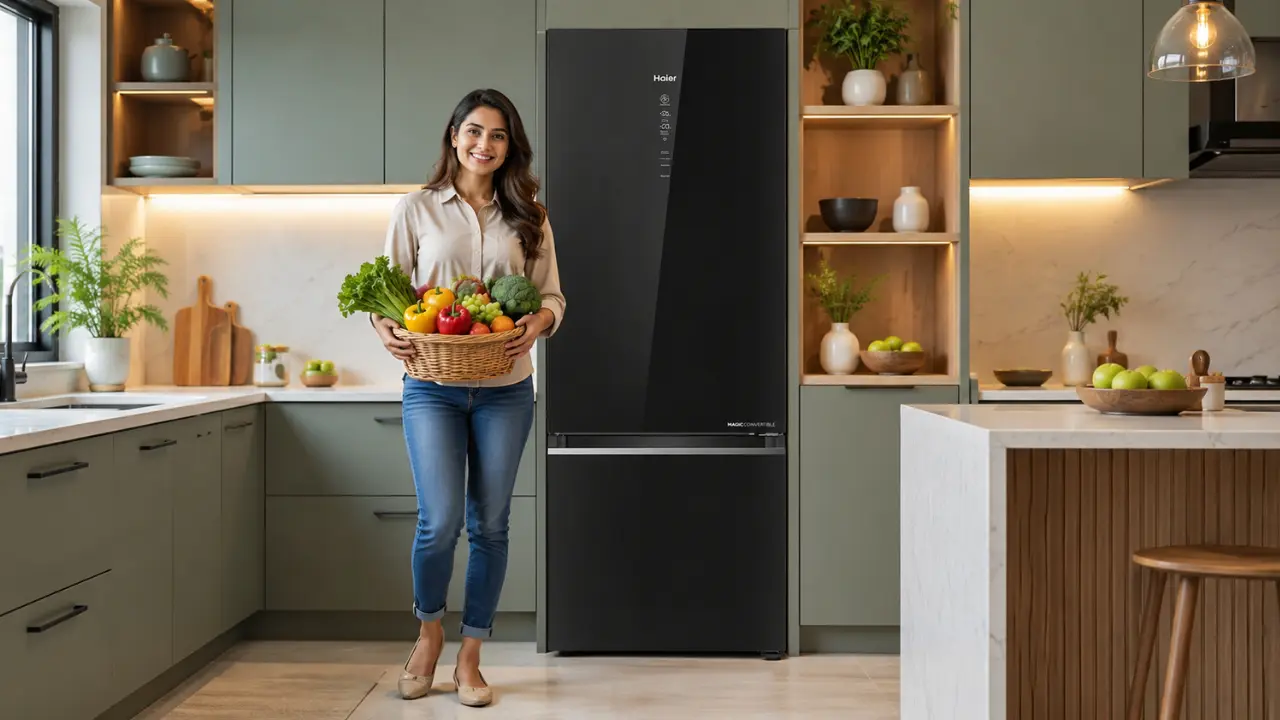

Freshness is not just about cooling anymore. It is about organisation, airflow, moisture balance, and how real Indian kitchens actually function every day.
A separate fruit and vegetable box inside a refrigerator helps reduce food spoilage, improves storage hygiene, prevents odour mixing, and makes everyday cooking more efficient. What looks like a simple storage compartment quietly changes how households shop, store, cook, and waste less.
That is the hidden system most people miss.
The refrigerator is not a storage machine anymore.
Walk into a modern Indian kitchen on a Sunday evening.
Someone is washing coriander. Tomatoes are rolling across the counter. Mangoes sit beside green chillies. A half-cut watermelon waits for space inside the fridge. Meanwhile, someone else is trying to fit leftovers from lunch.
This is not a storage problem.
It is an organisation problem.
Most households do not run out of refrigerator space because the fridge is small. They run out of usable space because fruits, vegetables, leftovers, beverages, dairy, and frozen items compete for the same environment.
Different foods behave differently.
Bananas release ethylene gas. Leafy vegetables lose moisture quickly. Citrus fruits need stable cooling. Herbs wilt faster when airflow changes constantly.
One compartment cannot optimize freshness for everything simultaneously.
That is exactly why separate fruit and vegetable boxes matter.
Why separate storage improves freshness
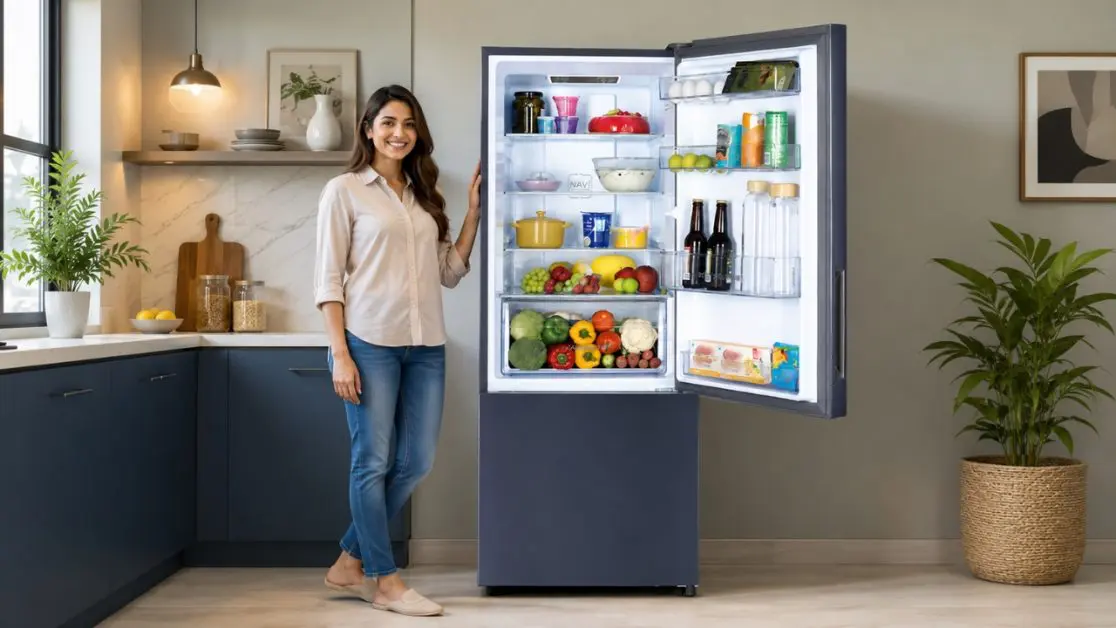
A refrigerator works like a small ecosystem.
The moment different produce items share random shelves, invisible reactions begin.
Some fruits speed up ripening. Some vegetables absorb moisture. Some items transfer odours quietly. Others lose texture faster due to incorrect humidity exposure.
The result?
Food looks tired before it gets cooked.
Fruits and vegetables age differently
This is where separate storage becomes practical, not cosmetic.
Fruits generally release more natural gases during ripening. Vegetables often require higher humidity retention to remain crisp.
When stored together without separation:
- Leafy vegetables soften faster
- Herbs lose freshness
- Fruits over-ripen quickly
- Moisture imbalance develops
- Odours spread across shelves
A dedicated fruit and vegetable box creates controlled separation.
Simple idea. Big outcome.
According to the Food and Agriculture Organization (FAO), nearly one-third of food produced globally gets wasted. Household storage practices contribute significantly to that number.
Freshness is rarely lost dramatically.
It disappears slowly. Quietly. One soft tomato at a time.
The hidden cost of poor refrigerator organisation
Most people calculate refrigerator value through capacity.
445 litres.
596 litres.
Bigger shelves.
More doors.
But storage efficiency matters more than raw volume.
A badly organised large refrigerator behaves like a cluttered wardrobe. You own space you cannot actually use well.
Food waste is usually a visibility problem
Here is what happens in many homes:
- Coriander gets buried behind containers
- Cucumbers freeze accidentally near cooling vents
- Apples disappear beneath takeaway boxes
- Tomatoes soften because onions sit beside them
- Spinach wilts unnoticed in plastic bags
The issue is not forgetfulness.
The issue is design.
Separate fruit and vegetable boxes create visual structure. They make fresh produce easier to track, rotate, and consume before spoilage begins.
Organisation reduces waste because visibility changes behaviour.
People cook what they can see.
Why Indian households need larger vegetable storage
Indian cooking uses fresh produce aggressively.
That changes refrigerator expectations completely.
A Western household may store packaged foods heavily. Indian kitchens rotate through coriander, curry leaves, tomatoes, ginger, green chillies, bottle gourd, spinach, lemons, onions, and seasonal fruits almost daily.
Especially during:
- Festival preparation
- Weekly sabzi shopping
- Family gatherings
- Summer mango season
- Monsoon bulk stocking
Small crisper drawers fail quickly under Indian usage patterns.
This is why larger dedicated vegetable boxes feel surprisingly important in real life.
Haier’s Bottom Mounted Refrigerators like the Haier 445L 2 Star Graphite Black Bottom Mount Refrigerator (HRB-4952BGKA-P) and the Haier 445L 2 Star Black Glass Bottom Mount Refrigerator (HRB-4952CKGA-P) feature a 2X Bigger Vegetable Box designed specifically for higher fresh produce storage needs.
That matters more than it sounds.
Because refrigerator design should reflect how people actually live.
The psychology of easy access changes eating habits
Here is something fascinating.
People eat healthier when healthy food becomes easier to access.
Not because motivation improves.
Because friction reduces.
A clearly visible fruit box increases the chances of someone grabbing grapes instead of packaged snacks late at night.
A well-organised vegetable section makes weekday cooking feel less exhausting.
Tiny design decisions influence daily behaviour more than motivational speeches ever will.
One organised drawer reduces decision fatigue
Modern households already manage too many decisions daily.
Work calls.
School schedules.
Meal planning.
Electricity bills.
Grocery tracking.
A refrigerator should reduce cognitive load, not add to it.
Separate storage compartments simplify mental processing:
- Fruits go here
- Vegetables go there
- Leftovers stay elsewhere
Order creates calm.
That is what smart appliance design actually means.
Not complexity.
Clarity.
Bottom mounted refrigerators quietly solve another problem
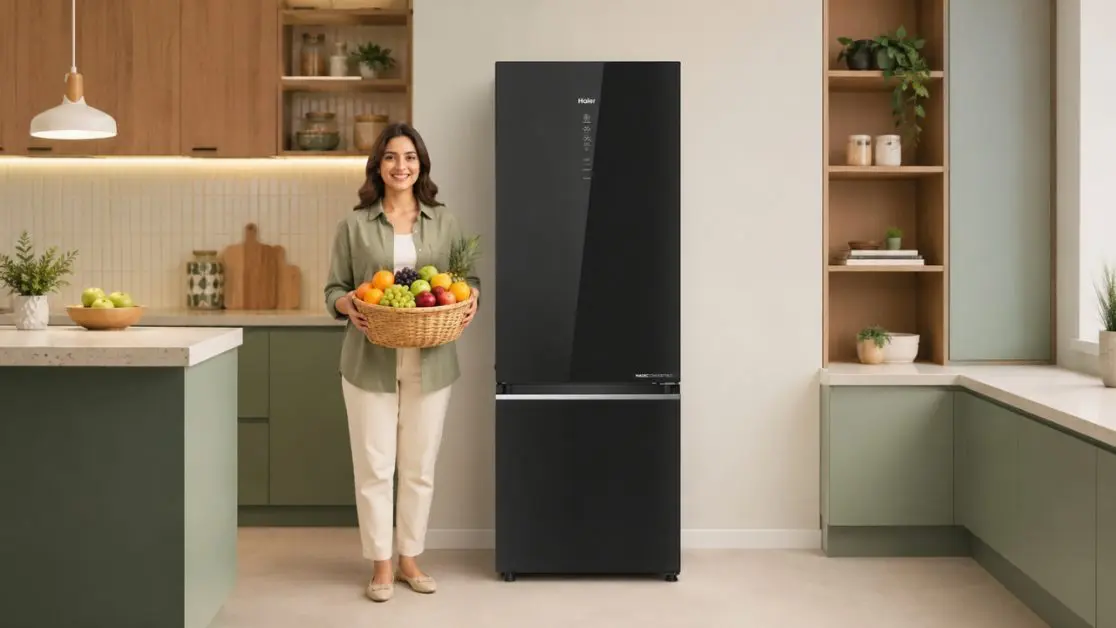
Most people access vegetables more than frozen food.
Yet traditional refrigerators place vegetables at the bottom.
Which means bending repeatedly throughout the day.
That system never made practical sense.
Bottom mounted refrigerators changed this logic entirely.
Fresh food sections move upward. Freezers shift downward.
Haier calls this philosophy Jhukna Mat, reducing bending during everyday usage.
It sounds simple because it is simple.
But systems that remove daily friction often create the biggest lifestyle improvements.
Convenience compounds over time
One less bend does not matter.
Five bends daily do.
Over three years, refrigerator ergonomics quietly shape physical comfort more than people realise.
The best appliances do not demand attention.
They remove irritation.
Separate compartments improve refrigerator hygiene
Cross-contamination inside refrigerators happens more often than households notice.
Cut fruits absorb odours.
Leafy vegetables collect excess moisture.
Open produce spreads bacteria faster when storage becomes crowded.
Separate fruit and vegetable compartments improve hygiene because airflow and segregation become more manageable.
Why airflow matters inside refrigerators
Cooling is not just temperature.
It is circulation.
Poorly organised refrigerators block airflow. Uneven cooling zones emerge. Some sections become colder while others remain humid.
Modern refrigerators increasingly solve this through compartmentalisation and airflow engineering.
For example, Haier’s Bottom Mounted Refrigerators combine Triple Inverter Technology with Dual Fan Technology to maintain cooling consistency and freshness across sections.
That matters during Indian summers.
Especially when refrigerators open constantly throughout the day.
One refrigerator now serves multiple lifestyles simultaneously
This is the modern household challenge.
Different people use the same refrigerator differently.
Parents store meal prep containers.
Children reach for fruits.
Working professionals stock beverages.
Fitness-conscious users store salads and protein bowls.
Grandparents prioritise fresh produce.
The refrigerator becomes shared infrastructure.
Which means organisation becomes non-negotiable.
Three storage approaches households usually follow
Option One: Everything together
Fast initially.
Chaotic later.
This creates clutter, hidden spoilage, and wasted groceries.
Option Two: Plastic containers everywhere
Looks organised.
Consumes space aggressively.
Too many boxes reduce usable capacity quickly.
Option Three: Built-in separate compartments
Most efficient long-term system.
The appliance itself guides organisation naturally.
Good refrigerator design quietly teaches better habits.
That is the hidden principle.
Freshness is becoming an economic decision
Food prices fluctuate constantly.
Vegetables spoil faster during summer.
Seasonal fruits cost more during demand spikes.
Weekly grocery bills increase silently.
Wasted produce is not just frustrating anymore.
It is expensive.
A refrigerator that helps preserve freshness longer indirectly protects grocery budgets too.
Small preservation gains create large savings
Consider this pattern:
- Fewer spoiled vegetables weekly
- Less emergency grocery ordering
- Better meal planning visibility
- Reduced duplicate purchases
- Longer produce usability
These are invisible savings.
Most people notice electricity bills immediately.
They rarely calculate food waste losses properly.
But over time, freshness preservation becomes financially meaningful.
Modern refrigerators are becoming behavioural tools
This is the bigger shift happening quietly across homes.
Appliances used to perform one task.
Now they shape routines.
A washing machine influences laundry frequency.
An air conditioner changes sleep quality.
A smart TV changes family entertainment habits.
Similarly, refrigerator design shapes eating, shopping, cooking, and waste patterns.
That is why storage architecture matters more now.
Not because drawers look premium.
Because systems shape behaviour.
What to actually look for in a fruit and vegetable box
Not all storage compartments work equally well.
Here are the features that genuinely matter:
Prioritise these factors
- Larger vegetable box capacity
- Clear visibility through transparent drawers
- Easy sliding movement
- Moisture retention balance
- Odour separation
- Flexible compartment space
- Strong airflow consistency
Avoid these common mistakes
- Overcrowding produce
- Mixing fruits and leafy vegetables randomly
- Blocking cooling vents
- Using sealed plastic bags excessively
- Ignoring cleaning schedules
Freshness is maintenance plus design.
Both matter.
The future of refrigerators is quieter than people expect
Most appliance innovation headlines focus on AI, connectivity, and touch panels.
Those things matter.
But the real revolution often happens inside ordinary routines.
Inside how easily vegetables stay fresh.
Inside how quickly groceries get organised.
Inside whether cooking feels stressful after work.
Technology succeeds when it disappears into life naturally.
A separate fruit and vegetable box looks like a small refrigerator feature.
In reality, it solves a much bigger problem.
Modern life creates enough friction already.
The best appliances remove some of it silently.
And sometimes, a well-designed vegetable drawer does exactly that.
Frequently Asked Questions
Why does my refrigerator always feel full even when it has enough capacity?
In many homes, the problem is not total capacity but poor organization. Fruits, vegetables, leftovers, beverages, and dairy products often compete for the same space. Separate fruit and vegetable compartments create structure, making storage easier to manage and reducing clutter.
Does a separate fruit and vegetable box actually make daily cooking easier?
Yes. When produce is organized and visible, ingredients are easier to find, meal preparation becomes faster, and fewer items get forgotten at the back of the refrigerator.
Can refrigerator organization reduce food waste?
Absolutely. People are more likely to use ingredients they can easily see. Dedicated compartments improve visibility, helping households consume produce before it spoils.
Why should fruits and vegetables be stored separately?
Fruits and vegetables have different storage needs. Many fruits release ethylene gas during ripening, which can accelerate spoilage in nearby vegetables. Separation helps preserve freshness and texture.
Do vegetables stay fresh longer in a dedicated vegetable box?
Yes. Dedicated vegetable compartments help maintain moisture balance and reduce exposure to gases and odors from other foods.
Why do my leafy vegetables become soft so quickly?
Leafy vegetables are sensitive to humidity changes and ethylene exposure. Storing them alongside ripening fruits often shortens their shelf life.