
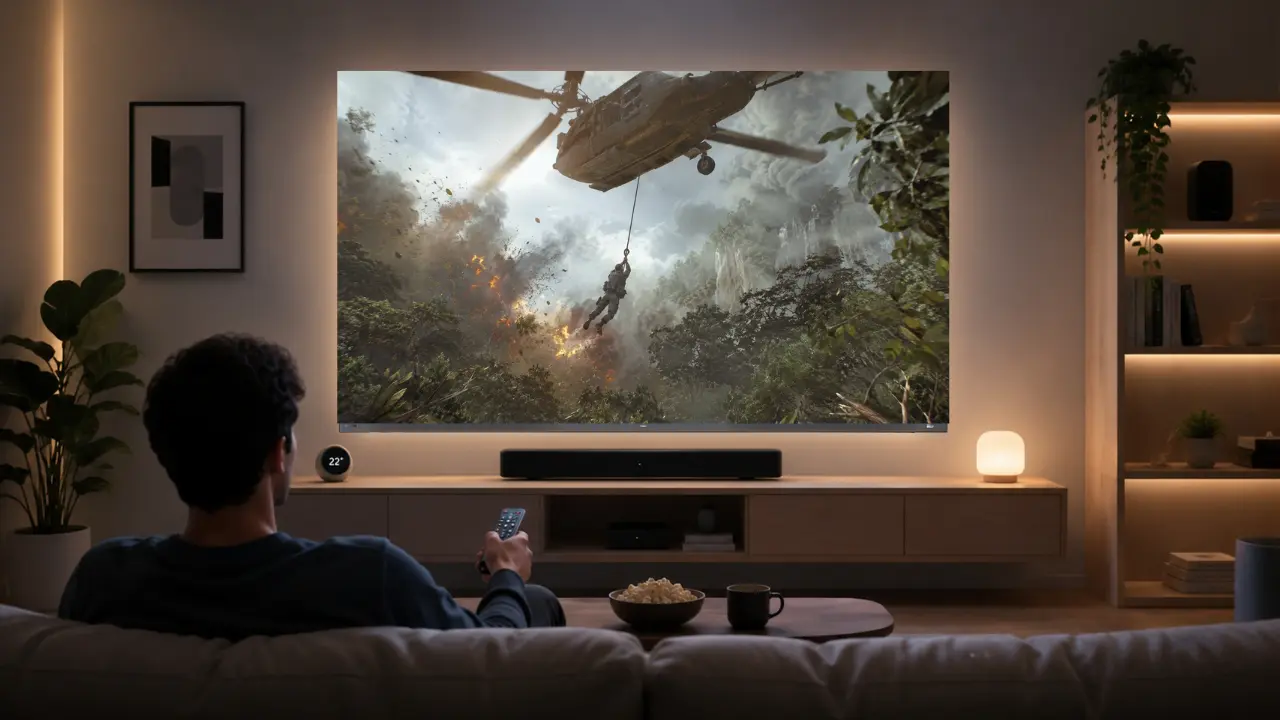

AI makes streaming feel personal, effortless, and cinematic
AI enhances streaming by understanding what viewers watch, how they watch it, and even when they watch it.
It improves picture quality in real time, recommends relevant content faster, reduces motion blur during sports, optimises sound automatically, and creates smoother entertainment experiences across OTT platforms, gaming, and live content.
The television did not become smarter overnight.
The living room changed first.
A few years ago, families gathered around scheduled TV shows. Today, streaming behaves differently. One person watches thrillers at midnight. Someone else streams cricket highlights during lunch. Children jump from cartoons to YouTube tutorials in seconds.
The screen stayed in the same place.
But behaviour changed completely.
And whenever behaviour changes, technology quietly reorganises itself around people.
That is exactly what AI is doing to streaming experiences today.
The real problem with streaming was never content
There is already too much content.
Netflix alone releases hundreds of titles yearly. YouTube uploads more than 500 hours of video every minute. Disney+ Hotstar becomes a stadium during the IPL season. Spotify competes for attention while OTT apps multiply across every screen.
The real problem became decision fatigue.
What should you watch?
What deserves your time?
Why does one movie look cinematic while another feels flat on the same TV?
Streaming platforms realised something important:
A smart screen matters less than a smart experience.
That is where AI entered the room.
AI studies patterns most viewers never notice
AI streaming systems constantly analyse behaviour patterns.
Not in a creepy science-fiction way.
In practical ways.
What AI observes during streaming
- Viewing habits
- Favourite genres
- Peak watching hours
- Lighting conditions in the room
- Motion intensity in scenes
- Audio levels
- Internet bandwidth fluctuations
- Gaming responsiveness
This creates something bigger than automation.
It creates adaptation.
The television begins responding to the environment instead of forcing viewers to adjust manually.
That changes everything.
Picture quality is no longer static
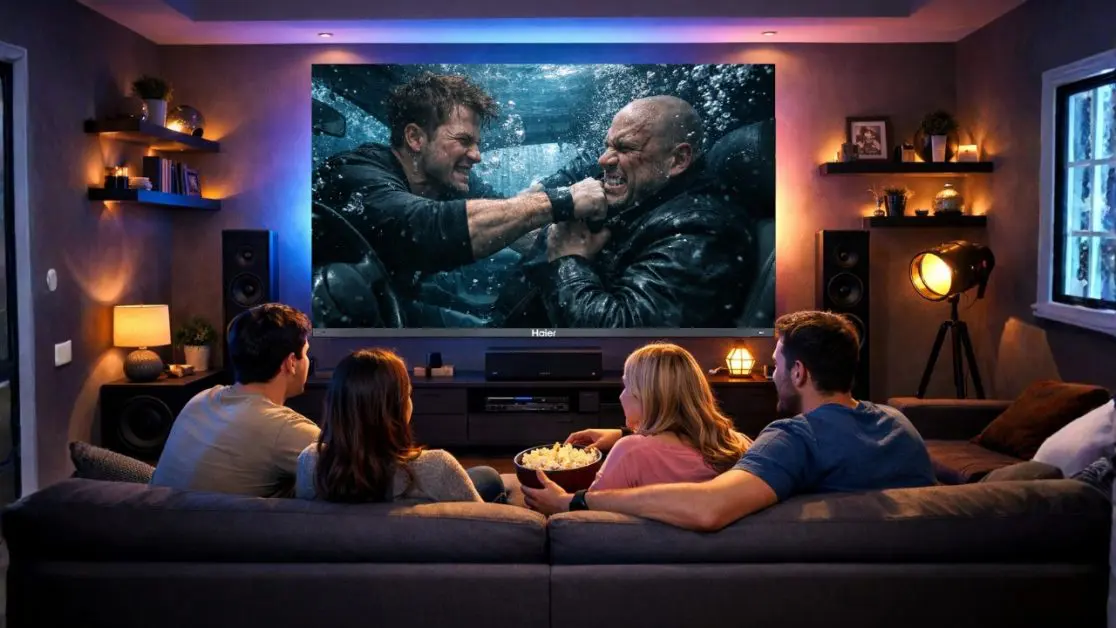
Older televisions displayed the same settings continuously.
Modern AI TVs behave differently.
They optimise scene by scene.
A dark thriller gets different brightness calibration than a cricket match. Animated content receives different colour treatment. Fast-moving Formula 1 races require different motion handling than slow cinematic drama.
The shift sounds technical.
But the result feels emotional.
Why AI picture optimisation matters
One option is watching content exactly as transmitted.
The second option is allowing AI to improve clarity, contrast, depth, and motion dynamically.
The difference becomes obvious during:
- IPL matches
- Fast-action films
- Gaming sessions
- Nature documentaries
- Late-night binge watching
Haier’s AI-powered QD Mini LED TVs, including the Haier New M92 Series 164cm (65) QD-Mini LED AI Smart Google TV H65M92FUX and Haier New M92 Series 189cm (75) QD-Mini LED Smart AI Google TV H75M92FUX, use AI Ultra Sense Processor technology for real-time scene recognition and intelligent tuning across colour, contrast, motion, and depth.
That matters because streaming quality is rarely consistent anymore.
Some content streams in pristine 4K. Some does not.
AI helps bridge that gap.
Streaming quality depends on movement more than resolution
Most people assume sharper resolution creates better streaming.
Not entirely.
Motion quality shapes immersion more than people realise.
Think about a cricket ball travelling at speed during a close IPL finish.
Or a car chase sequence in an action film.
Or fast camera pans during football matches.
Without intelligent motion handling, scenes blur.
The brain notices instantly.
AI-enhanced motion changes live streaming
Modern AI TVs use technologies like:
- MEMC
- AI motion estimation
- Variable Refresh Rate
- 144Hz refresh systems
- AMD FreeSync Premium Pro
These systems reduce lag, tearing, and blur during streaming and gaming.
Haier’s M92 and M96 AI Google TV series feature 144Hz refresh rates, MEMC motion technology, VRR, ALLM, and AMD FreeSync Premium Pro for smoother streaming and gaming experiences.
A smooth stream feels premium before viewers consciously understand why.
That is the hidden system.
Good technology disappears into the experience.
AI sound optimisation quietly transforms streaming
People tolerate average visuals.
They rarely tolerate bad sound.
A dialogue-heavy drama becomes frustrating if voices sound unclear. Action scenes feel flat without depth. Live sports lose energy without atmospheric sound.
This is why AI audio systems evolved rapidly.
How AI improves streaming sound
AI-enhanced sound systems can:
- Separate dialogue from background noise
- Enhance bass dynamically
- Adjust sound based on room acoustics
- Improve vocal clarity
- Create spatial surround effects
- Optimise audio for gaming versus cinema
The Haier M92 Series integrates Sound by KEF, Dolby Atmos, and Total Sonic technologies to create richer and more immersive audio experiences.
The Haier New M96 Series 254cm (100) QD-Mini LED AI Smart Google TV H100M96FUX goes further with a 6.2.2 channel speaker setup for layered, three-dimensional sound.
That matters because streaming today competes with cinemas, not cable television.
The smartest streaming feature is actually simplicity
Most people do not want “more technology.”
They want fewer decisions.
That is why AI-powered content discovery matters so much.
Streaming platforms became overwhelming because every app behaves like its own universe.
Search fatigue became real.
AI recommendation systems reduce friction
Google TV and AI-driven recommendation engines now organise streaming around people rather than apps.
Instead of manually opening platforms one by one, viewers receive:
- Personalised recommendations
- Unified watchlists
- Voice-based search
- Cross-platform suggestions
- Context-aware content discovery
Haier AI Smart Google TVs integrate Google TV for personalised recommendations and hands-free voice control.
This sounds like convenience.
But convenience changes behaviour.
People watch more when discovery becomes frictionless.
Indian homes are changing how streaming works
Streaming in India behaves differently from Western markets.
Families often share screens.
Multi-generational viewing happens daily.
One television handles:
- OTT content
- Live cricket
- YouTube
- Kids’ learning videos
- Music streaming
- Gaming
- Video casting from phones
The television became infrastructure.
Not entertainment alone.
Why AI matters more in Indian households
Indian homes deal with:
- Bright daytime viewing conditions
- Shared family viewing
- Regional language content
- Mixed internet speeds
- Heavy sports streaming
- Smaller urban spaces
AI systems now adjust brightness based on ambient lighting, optimise bandwidth handling, and personalise recommendations for multiple viewing patterns.
Haier’s Dolby Vision IQ and AI Ambient Sense technologies automatically optimise brightness and visuals according to room lighting conditions.
That is not just smart technology.
It is adaptive living.
Gaming and streaming are merging into one ecosystem
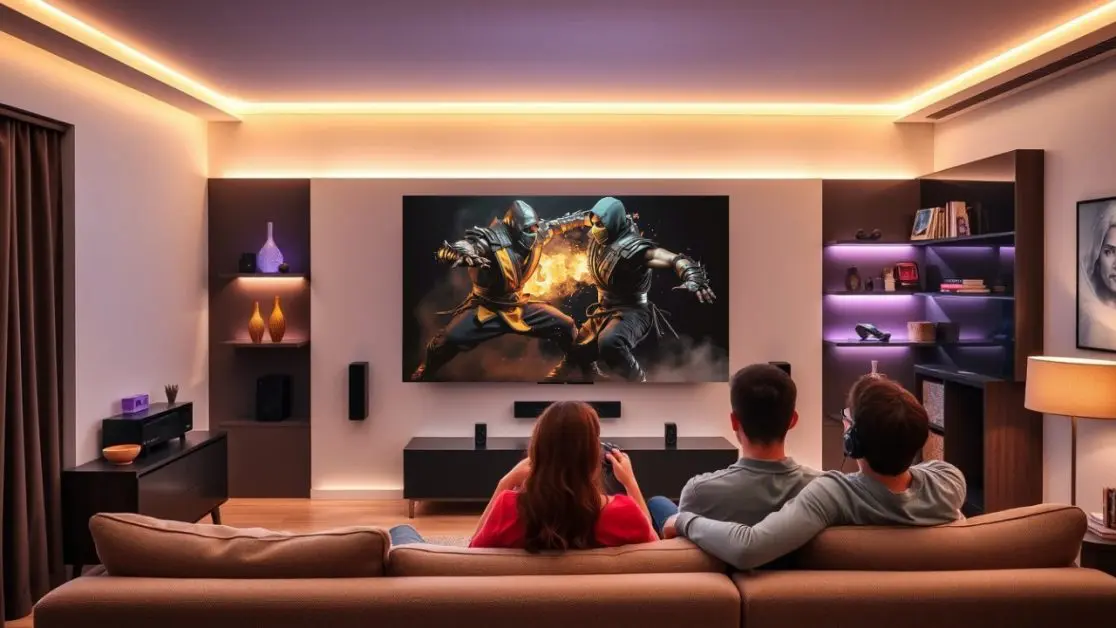
The line between streaming and gaming is disappearing.
One screen now handles both.
A television that streams Netflix at night may host competitive gaming sessions by evening.
This changed what viewers expect from AI TVs.
What modern streaming screens must handle
- Fast refresh rates
- Low latency
- High brightness
- AI upscaling
- Responsive audio
- Real-time motion optimisation
- Seamless casting
Haier’s AI-powered Game Mode enhances responsiveness and motion smoothness while optimising display settings dynamically.
This matters because younger viewers no longer separate “watching” from “interacting.”
Entertainment became participatory.
Streaming quality now depends on the room itself
A hidden shift happened inside premium televisions.
The TV started observing the environment.
Ambient light sensors, AI brightness systems, and adaptive sound calibration now optimise streaming based on where the screen exists physically.
The room became part of the algorithm.
AI adapts streaming to real environments
One option is forcing viewers to manually adjust brightness and sound repeatedly.
The second option is AI sensing the room continuously.
The benefits become obvious:
- Easier viewing during daylight
- Reduced eye strain at night
- Better contrast in dark scenes
- Consistent sound balance
- Lower fatigue during binge watching
Haier’s AI Ambient Sense and Low Blue Light technologies are designed to create more comfortable long-duration viewing experiences.
Technology works best when people stop noticing it.
The future of streaming is predictive
Today, AI reacts.
Tomorrow, it predicts.
Streaming platforms and AI televisions increasingly anticipate behaviour before viewers act.
Recommendations become sharper.
Voice interaction becomes conversational.
Picture optimisation becomes invisible.
The television evolves from a device into an adaptive entertainment system.
That sounds futuristic.
But fragments of that future already exist.
Haier’s Ultra Sense AI ecosystem integrates visuals, gaming, sound, and entertainment intelligence into a unified AI-driven viewing experience.
The important insight is not technological.
It is human.
People do not remember specifications. They remember how a room felt during a moment.
The last over during IPL.
A late-night thriller after work.
A gaming marathon with friends.
A Sunday movie with parents.
Streaming technology succeeds when it quietly improves those moments without demanding attention for itself.
That is the real role of AI.
Not replacing entertainment.
Removing friction from it.
Frequently Asked Questions
How does AI improve the streaming experience?
AI improves streaming by optimizing picture quality, enhancing sound, recommending content, reducing motion blur, adapting to room conditions, and personalizing entertainment based on viewing habits.
What makes AI-powered streaming different from traditional TV viewing?
Traditional TVs display content using fixed settings. AI-powered TVs continuously analyze content and viewing conditions, making real-time adjustments to improve the experience.
Does AI only help with recommendations?
No. Recommendations are only one part of the experience. AI can also improve visuals, sound, motion handling, gaming performance, and content discovery.
Why is AI becoming important for streaming platforms?
The amount of available content has grown dramatically. AI helps viewers find relevant content faster while improving how that content looks and sounds.
Can AI improve both movies and live sports?
Yes. AI can optimize different content types differently, improving cinematic movies, fast-paced sports, documentaries, gaming, and live broadcasts.