
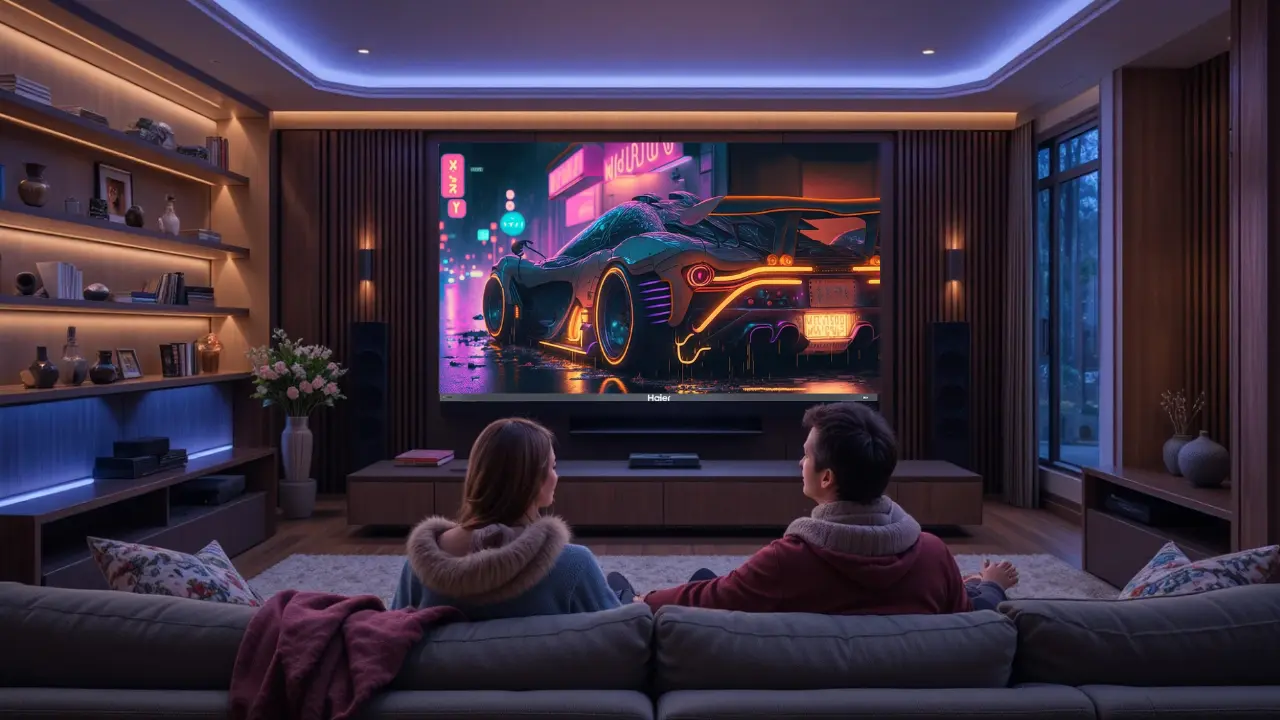

AI powered smart TVs turn everyday watching into a personalized, adaptive experience by learning your habits, optimizing picture and sound in real time, and connecting seamlessly with your home.
The result is simple. Less effort. Better comfort. And entertainment that feels designed for you.
Why does your TV feel outdated even when it’s new?
It’s 9:30 pm.
Dinner is done. Lights are dim. You open your TV.
And then it begins.
Scrolling. Searching. Switching apps. Adjusting brightness. Increasing volume. Decreasing it again.
Five minutes later, you are still not watching anything.
This is the real problem.
Not content.
Friction.
Most TVs still behave like machines. They wait for instructions.
AI powered smart TVs behave like systems. They anticipate.
That shift changes everything.
AI TVs don’t just display content. They understand context

Traditional TVs follow commands.
AI powered smart TVs follow patterns.
They notice what you watch on weekdays versus weekends. They adapt to lighting in your room. They adjust sound based on what is playing.
This is not feature stacking. This is system thinking.
Take models like the Haier New M92 Series 189cm (75) QD-Mini LED Smart AI Google TV (H75M92FUX).
- AI Ultra Sense Processor identifies scenes in real time
- Homey AI integrates visuals, sound, and gaming
- Ambient sensing adjusts brightness automatically
The TV is no longer reacting.
It is responding intelligently.
Insight:
A smart device follows instructions. An intelligent device removes them.
What actually improves with AI powered smart TVs?
1. Picture quality becomes adaptive, not static
In most Indian homes, lighting changes constantly.
Morning sunlight. Afternoon glare. Night darkness.
Traditional TVs treat all of this the same.
AI powered smart TVs don’t.
With technologies like Dolby Vision IQ and HDR10+, brightness and contrast adjust dynamically based on both content and environment.
What this means in real life:
- Cricket matches stay sharp even in bright rooms
- Movie nights feel cinematic without manual tweaking
- Dark scenes retain detail without looking washed out
Cost vs Benefit:
- Cost: Slightly higher upfront investment
- Benefit: Zero manual adjustments and consistent viewing quality
2. Sound becomes immersive, not just loud
Most people increase volume when they cannot hear clearly.
But clarity is not about loudness. It is about separation.
AI powered smart TVs use advanced audio systems like Dolby Atmos and KEF-tuned speakers to create layered sound.
In larger setups like the Haier New M96 Series 254cm (100) QD-Mini LED AI Smart Google TV (H100M96FUX):
- Multi-channel audio creates a three-dimensional sound field
- Dialogue, music, and effects are balanced intelligently
Real-world impact:
- Dialogues stay clear even in action scenes
- Background music feels richer
- No constant volume adjustments
Insight:
Good sound fills the room. Great sound disappears into the experience.
3. Content discovery becomes effortless
The biggest paradox today:
More content. Less clarity.
AI powered smart TVs solve this by organizing content around your habits.
With Google TV integration:
- Content is curated across platforms
- Recommendations improve over time
- Watchlists stay unified
Instead of:
- Opening multiple apps
- Searching manually
- Forgetting what to watch
You get:
- Personalized suggestions
- Faster access
- Less decision fatigue
Comparison Table:
| Experience | Traditional TV | AI Smart TV |
| Search time | High | Low |
| Relevance | Generic | Personalized |
| Effort | Manual | Automated |
| Satisfaction | Inconsistent | Consistent |
4. Control shifts from remote to voice
The remote is slowly becoming optional.
With hands-free voice control, AI powered smart TVs allow you to operate them naturally.
You don’t navigate menus.
You say:
- “Play something relaxing”
- “Open Netflix”
- “Increase brightness”
And it happens.
Models like the Haier New M92 Series 164cm (65) QD-Mini LED AI Smart Google TV (H65M92FUX) support hands-free voice control and smart home integration.
Insight:
The best interface is the one you don’t notice.
AI powered TVs are becoming the center of the smart home
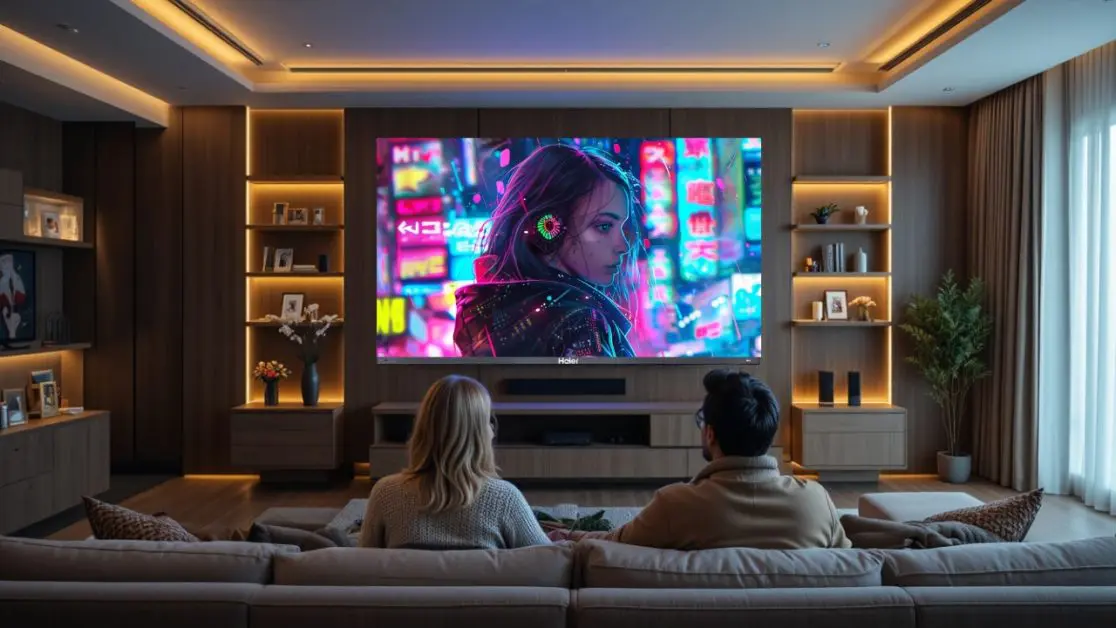
Most people still think of TVs as entertainment devices.
That thinking is outdated.
AI powered smart TVs are becoming control hubs.
With ecosystems like HaiSmart:
- TVs connect with appliances across your home
- You can control devices from a single screen
- Content casting and device syncing happen seamlessly
Real-life example:
You are watching a movie.
Without leaving the screen:
- Adjust AC temperature
- Cast content from your phone
- Control connected devices
This is no longer just a TV.
It is a central system.
What about gaming, sports, and fast content?
Speed defines experience.
AI powered smart TVs are built for it.
With features like:
- 144Hz refresh rate
- AMD FreeSync Premium Pro
- VRR and ALLM support
You get smoother motion and lower lag.
Why it matters:
- No blur during fast cricket matches
- Better response in gaming
- Sharper action sequences
Performance Breakdown:
- Higher refresh rate → smoother visuals
- Adaptive sync → no screen tearing
- AI motion processing → clearer movement
Health and comfort are now part of the system
Watching TV is not just visual. It is physical.
Eye strain. Flicker. Harsh brightness.
AI powered smart TVs reduce these quietly.
- Flicker-free display reduces strain
- Low blue light protects eyes
- Ambient sensors balance brightness automatically
Real-life scenario:
Late-night watching becomes more comfortable without manual adjustments.
Insight:
Comfort is invisible when it works.
Three ways people actually use AI TVs at home
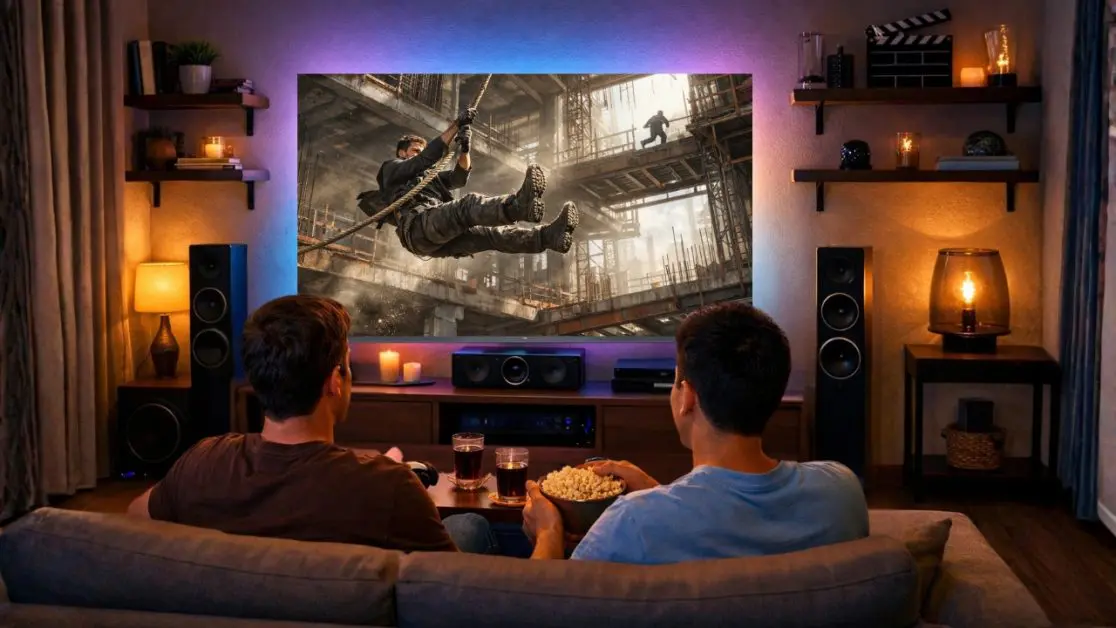
Different users. Same system.
One option is the effortless viewer
- Wants quick recommendations
- Minimal interaction
- Seamless experience
The second option is the family user
- Uses TV for OTT, YouTube, gaming
- Shares content across devices
- Controls smart appliances
The third option is the performance user
- Focuses on visuals and sound
- Uses gaming features
- Wants immersive experiences
AI powered smart TVs adapt to all three.
That is the advantage of intelligent systems.
The hidden benefit: Decision fatigue disappears
Every day comes with decisions.
Small ones add up.
AI removes many of them.
Instead of scrolling endlessly, you start watching faster.
Instead of adjusting settings, everything adapts automatically.
Instead of managing devices, they sync together.
Aphorism:
The best technology gives your attention back.
So, what does this mean for modern Indian homes?
Homes are evolving.
- Smaller spaces
- Busier routines
- More connected lifestyles
Devices cannot demand effort anymore.
They must reduce it.
AI powered smart TVs do exactly that.
They:
- Simplify everyday use
- Improve comfort
- Connect your home
- Adapt to real life
And that is the real benefit.
Not just better viewing.
A better way of living.
Final thought: The TV is no longer a screen
The biggest shift is not AI.
It is what AI enables.
From watching content
To experiencing it
From operating devices
To living with systems
AI powered smart TVs like the Haier New M92 Series and M96 Series are not just upgrades.
They are transitions.
And once you experience it, going back feels impossible.
Frequently Asked Questions
Why do I spend more time scrolling than actually watching TV?
Because traditional TVs rely on manual browsing across multiple apps. AI-powered TVs reduce this friction by learning your preferences and surfacing relevant content instantly so you start watching instead of searching.
I feel overwhelmed by too many OTT options. Can AI TVs actually simplify this?
Yes. Platforms like Google TV aggregate content from different apps into a single interface and recommend shows based on your habits, reducing decision overload.
Why does my TV look too bright at night and too dull during the day?
Traditional TVs use fixed settings. AI TVs use ambient sensors to adjust brightness dynamically based on room lighting so visuals stay comfortable all day.
I get eye strain during late-night watching. Can AI TVs help?
Yes. AI TVs include low blue light modes, flicker-free panels, and adaptive brightness to reduce strain automatically, no manual tweaking needed.
Why do I keep adjusting volume during movies?
Because traditional TVs don’t separate audio layers well. AI TVs using technologies like Dolby Atmos balance dialogue, music, and effects automatically.
Is higher refresh rate really noticeable for sports and gaming?
Absolutely. Features like 144Hz refresh rate and AMD FreeSync Premium Pro reduce motion blur and screen tearing, making fast scenes smoother.
Can I really control my TV without a remote?
Yes. AI TVs support hands-free voice commands. You can say things like “Play something relaxing” or “Open Netflix,” and the TV responds instantly.
How does an AI TV fit into my smart home?
It acts as a central hub. Through ecosystems like HaiSmart, you can control appliances, cast content, and sync devices directly from your TV.