
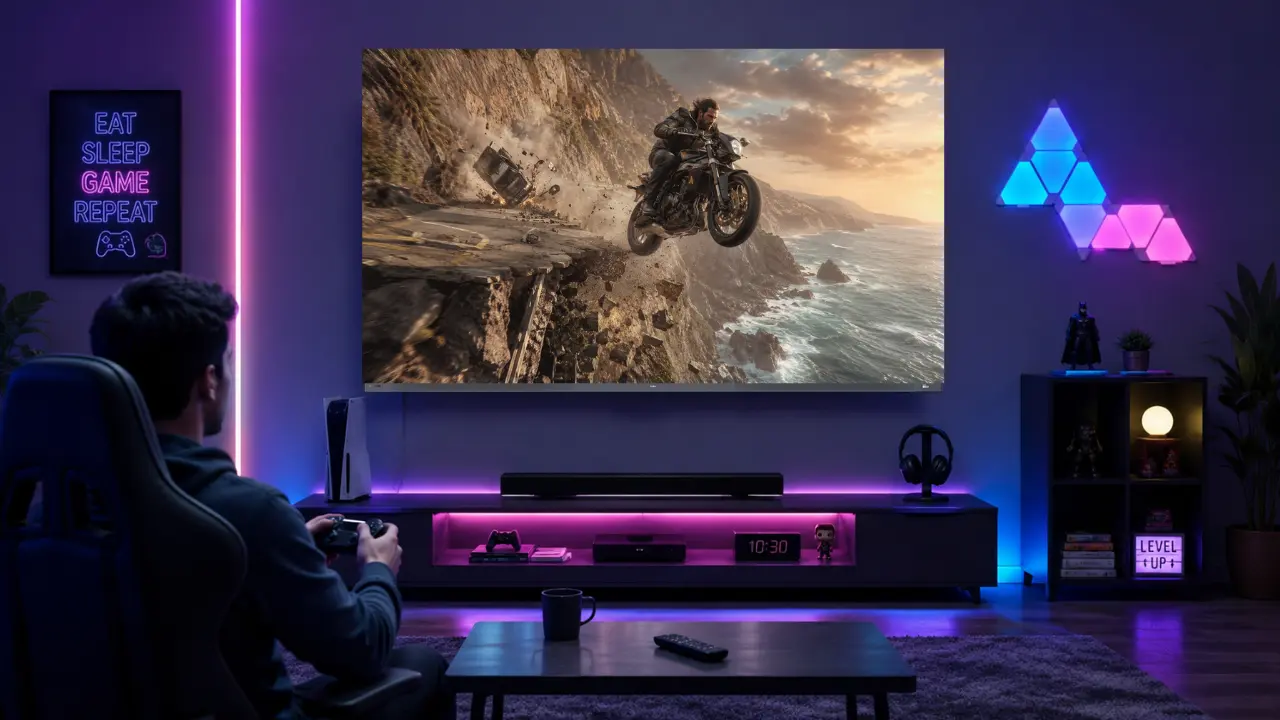

Big screens do not just change what you watch. They change how a home feels.
A cricket final sounds louder on a big screen. Weekend movies feel slower, richer, more cinematic. Even YouTube cooking videos start looking like premium productions. That is the real shift happening in Indian homes today. Televisions are no longer background appliances. They are becoming the emotional centre of the living room.
And once that happens, performance matters more than price tags.
Because a big screen that struggles with motion blur, weak sound, poor contrast, or washed-out colours becomes exhausting surprisingly fast.
That is where modern Mini LED and QD-Mini LED televisions are quietly changing expectations.
Most people think screen size creates immersion. It doesn’t. Performance does.
A 189cm(75) TV with average processing still feels flat.
Meanwhile, a well-optimised display with strong contrast, intelligent dimming, immersive sound, and smooth motion makes ordinary content feel cinematic.
The hidden system here is simple:
- Bigger screens amplify strengths
- Bigger screens also amplify weaknesses
- Poor picture quality becomes more visible on larger displays
That is why performance reviews matter more in the big-screen category than anywhere else.
And it explains why technologies like Mini LED, Dolby Vision, MEMC, and Dolby Atmos are becoming central to modern TV buying decisions.
The screen is only the surface. Processing is the experience.
Why Mini LED changes the viewing experience
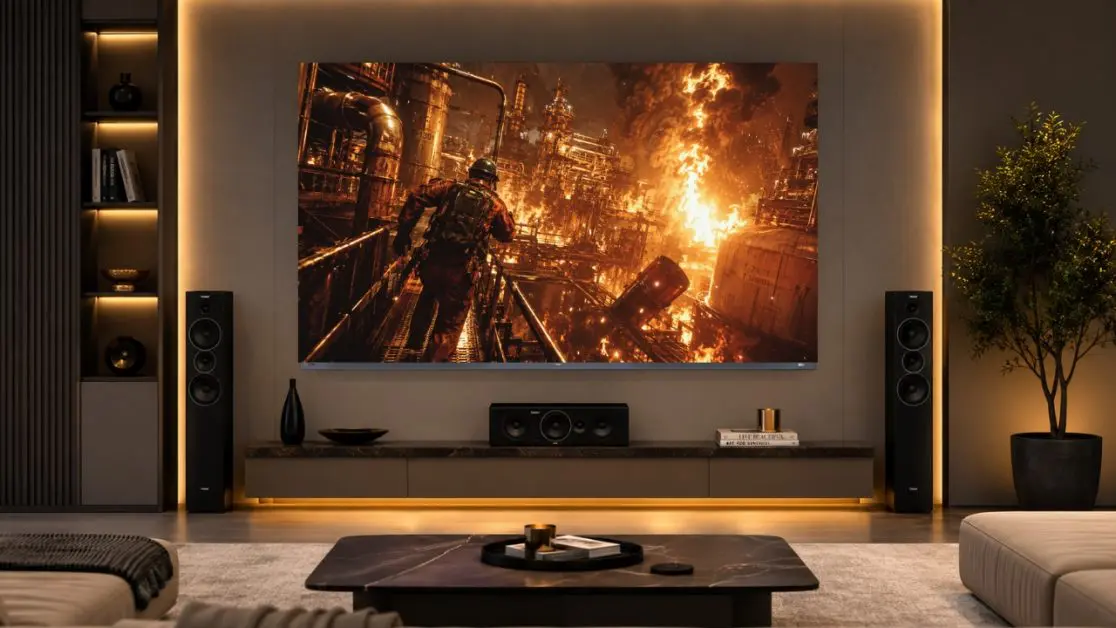
Walk into most Indian homes during IPL season or a big OTT release weekend.
The curtains are drawn.
The lights dim slightly.
Snacks appear automatically.
Homes become mini theatres.
But traditional LED panels often struggle in these moments. Blacks look grey. Bright scenes lose detail. Motion feels blurry during sports.
Mini LED changes that equation.
The Haier M80F Mini LED Google TV series uses Mini LED technology to improve contrast, brightness, and local dimming performance.
That matters because contrast creates realism.
A night scene should feel deep.
Fireworks should feel bright without overexposing the image.
A cricket ball travelling quickly across the screen should remain sharp.
What viewers actually notice in daily use
People rarely describe televisions using technical language.
They say things like:
- “The colours look alive.”
- “Sports look smoother.”
- “The sound feels bigger.”
- “Movies feel more cinematic.”
Those reactions usually come from a combination of:
- Better dimming zones
- Higher brightness
- Faster processing
- Improved sound staging
- Motion optimisation
The technology disappears.
The feeling remains.
That is a good design.
The invisible battle inside every TV is light control
Every premium television is solving the same problem:
How do you control light precisely?
The better the control, the more realistic the image becomes.
The Haier H75M80FUX Mini LED Google TV includes 264 local dimming zones.
The larger Haier H85M80FUX Mini LED Google TV increases that to 360 dimming zones.
That matters more than most spec sheets explain.
Because dimming zones determine how precisely a TV can brighten one part of the image while keeping another dark.
Think about a candle in a dark room.
Cheap displays brighten the entire scene.
Better displays isolate the light source accurately.
That difference creates depth.
And depth creates immersion.
Sound is half the screen experience. Most TVs still ignore this
Here is the strange thing about television buying.
People obsess over pixels.
Then they tolerate weak audio for years.
But sound shapes emotion faster than visuals.
A thriller without bass feels flat.
Crowd noise during football loses energy.
Dialogues become tiring during long binge sessions.
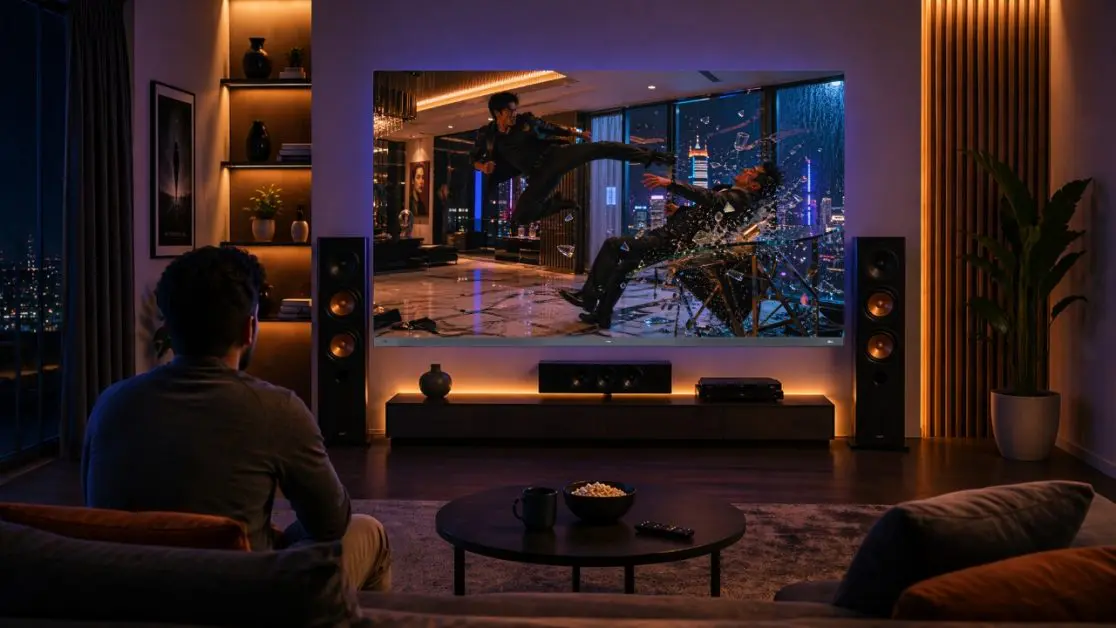
This is where Haier’s collaboration with KEF becomes interesting.
The Haier M80F series integrates Sound by KEF along with Dolby Atmos and 2.1 channel speaker systems.
The larger M96 QD-Mini LED series pushes further with a 6.2.2 channel sound setup and 90W audio output.
Why this matters in Indian homes
Most Indian living rooms are multi-purpose spaces.
The same room handles:
- Family movie nights
- Casual gaming
- News viewing
- Festival gatherings
- Music playback
- OTT marathons
- Kids watching animated content
Very few people want separate speaker systems everywhere.
Integrated audio quality suddenly becomes practical, not premium.
Good television sound reduces friction.
And convenience is one of the most underrated luxury signals.
Smooth motion is no longer a gaming feature alone
There was a time when high refresh rates only mattered to gamers.
That era is over.
Now even regular viewers notice motion quality during:
- Cricket matches
- Action films
- Fast sports sequences
- Racing content
- Scrolling visuals
- Gaming consoles
The Haier M96 Series QD-Mini LED TV supports a 144Hz refresh rate with AMD FreeSync Premium Pro.
The M80F series includes DLG 120Hz support and MEMC optimisation for smoother motion handling.
The larger the screen, the more motion quality matters
Motion flaws scale with size.
On smaller displays, blur feels manageable.
On 189cm(75) and 215cm (85) screens, blur becomes distracting.
That is why motion processing is becoming a major buying factor for premium televisions.
A big screen should feel fluid.
Not heavy.
Google TV changed how families discover content
People once bought TVs for channels.
Now they buy televisions for ecosystems.
The shift matters because content overload has become real.
Families spend more time choosing what to watch than actually watching.
The Haier Mini LED television lineup integrates Google TV with curated recommendations, Chromecast support, voice control, and app ecosystem integration.
That sounds technical.
But the real benefit is simpler:
Less searching.
More watching.
Three things modern viewers expect automatically
One option is convenience.
People want instant access to OTT platforms without external devices.
The second option is personalisation.
Different family members want different recommendations and watchlists.
The third option is ecosystem continuity.
Phones, smart home devices, streaming apps, and televisions increasingly work together.
Smart TVs are no longer isolated appliances.
They are becoming operating systems for home entertainment.
Brightness matters differently in Indian homes
Most global TV reviews underestimate one reality:
Indian homes receive strong ambient light.
Open balconies.
Large windows.
Bright afternoons.
Tube lights.
Warm lighting during gatherings.
A television optimised only for dark-room cinema struggles here.
The Haier M80F Mini LED series highlights brightness performance reaching 800 nits.
That matters because brightness affects daytime usability.
Good televisions should work during:
- Sunday afternoon cricket
- Bright family gatherings
- Casual daytime viewing
- Festival celebrations with lights on
A television should adapt to homes.
Not force homes to adapt to it.
The 254cm(100) television is not about excess. It is about replacement.
At first glance, a 254cm(100) television sounds extreme.
Then you experience one.
And something interesting happens.
Projectors start feeling inconvenient.
Cinema outings become optional.
Wall space starts behaving differently.
The Haier H100M96FUX QD-Mini LED AI Smart Google TV combines AI-powered picture processing, 144Hz refresh rate, Dolby Vision IQ, HDR10+, and advanced sound architecture in a 254cm(100) format.
This is not just a larger TV.
It represents a shift in how entertainment spaces are designed.
Large displays are changing interior behaviour
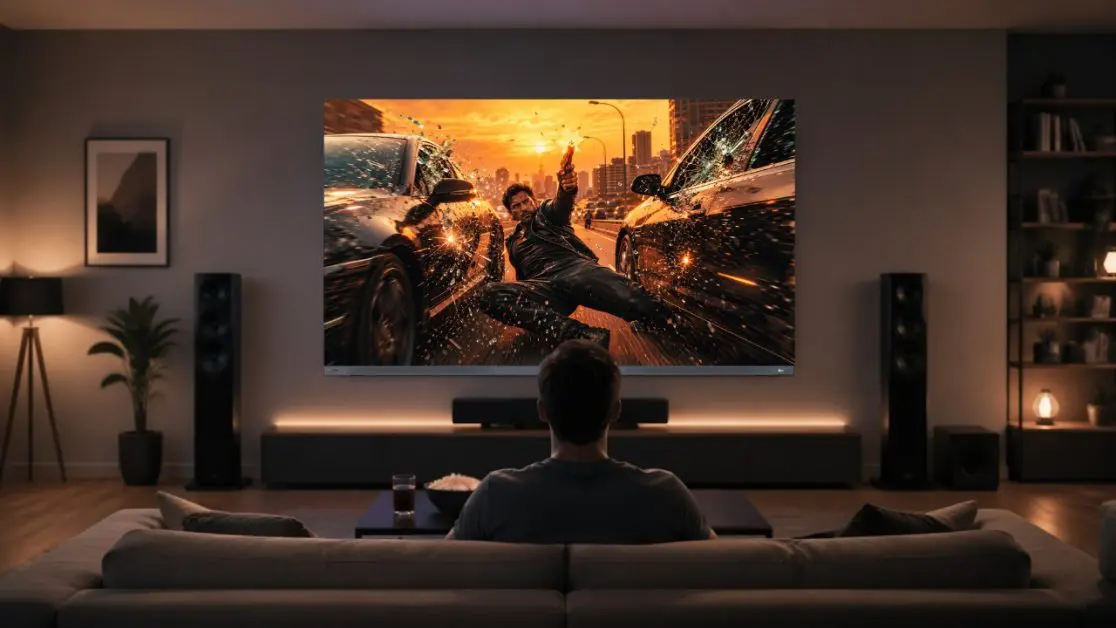
Furniture placement changes.
Viewing distances change.
Social gatherings change.
The television becomes architectural.
That is why premium TV conversations increasingly overlap with interior design conversations.
Technology eventually disappears into lifestyle.
That is always the pattern.
Energy efficiency and sustainability are becoming quiet buying factors
Most people do not buy televisions because of sustainability features.
But they increasingly appreciate them.
Features like solar remotes and energy-saving modes signal something deeper:
Thoughtful product design.
The Haier Mini LED TV lineup includes Solar Remote functionality and Energy Saving modes.
Small conveniences compound over years.
That is the hidden truth of appliance satisfaction.
Not every feature creates excitement immediately.
Some create trust slowly.
Performance reviews are ultimately about emotional friction
People rarely remember exact specifications.
They remember frustrations.
Laggy interfaces.
Weak sound.
Poor brightness.
Complicated remotes.
Motion blur.
Slow app loading.
The best big-screen televisions remove friction quietly.
That is what modern premium viewing is becoming:
- Less setup stress
- Better immersion
- Smarter content discovery
- More natural sound
- Smoother motion
- Better everyday usability
The television stops behaving like hardware.
It starts behaving like an atmosphere.
The future of big-screen entertainment is not bigger screens. It is a better system.
That is the real insight.
Screen size alone stopped being impressive years ago.
What matters now is orchestration.
How picture processing, sound engineering, AI optimisation, gaming performance, smart ecosystems, brightness handling, and user experience work together.
The Haier Mini LED and QD-Mini LED television lineup reflects that broader shift toward integrated entertainment systems designed for modern Indian homes.
Because the future living room is not just a room where people watch content.
It is where people gather.
Recover.
Celebrate.
Escape.
Connect.
And the best technology does not dominate those moments.
It disappears into them.
Frequently Asked Questions
Why are Mini LED TVs becoming so popular?
Mini LED technology improves contrast, brightness, local dimming precision, and overall image realism. This creates deeper blacks, brighter highlights, and a more cinematic viewing experience.
Is a premium TV really noticeable compared to a standard LED TV?
Most people notice it through smoother sports, richer colors, stronger contrast, better sound, and more immersive movie experiences rather than technical specifications.
Why do blacks sometimes look grey on my TV?
Traditional LED TVs often struggle with precise light control. Mini LED TVs use multiple local dimming zones to better isolate bright and dark areas, creating deeper blacks and better contrast.
What do local dimming zones actually do?
They allow specific parts of the screen to brighten or darken independently. More dimming zones generally result in more accurate contrast and greater depth.
Will I actually notice the difference between 264 and 360 dimming zones?
In challenging scenes like night sequences, fireworks, or HDR content, more dimming zones can improve light control and reduce blooming around bright objects.
Why do movies feel more cinematic on some TVs?
Strong contrast, better brightness management, accurate colors, and intelligent picture processing create a more realistic and immersive image.
Why does cricket sometimes look blurry on large TVs?
Fast-moving objects reveal motion limitations more clearly on bigger screens. Refresh rates, MEMC technology, and motion processing help maintain clarity during sports.
Does the refresh rate matter if I don’t play games?
Yes. High refresh rates improve sports, action movies, racing content, and fast-moving scenes, making them appear smoother and clearer.