
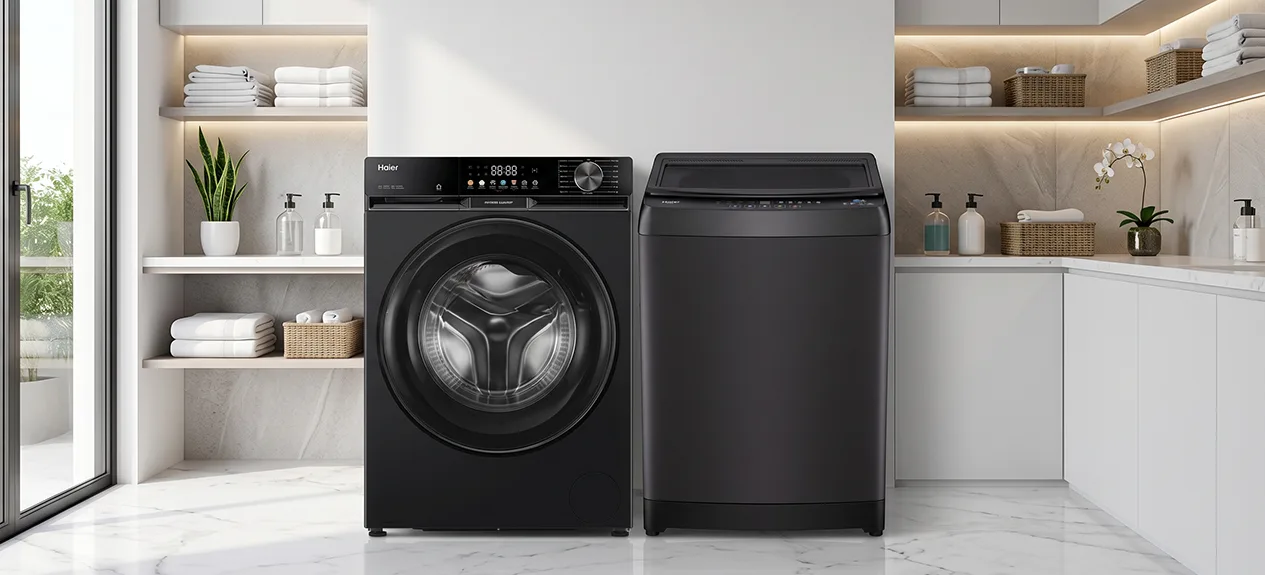

The first thing most people check when buying a washing machine is the price on the screen. Fair enough, but that only covers part of the picture. The real cost of owning a washing machine shows up in your monthly electricity bill, the water each cycle consumes, how often something breaks down, and which washing machine lasts longer before it actually needs a replacement.
Understanding those numbers before you buy is what separates a smart decision from a regrettable one.
Which is Better: Front Load or Top Load?
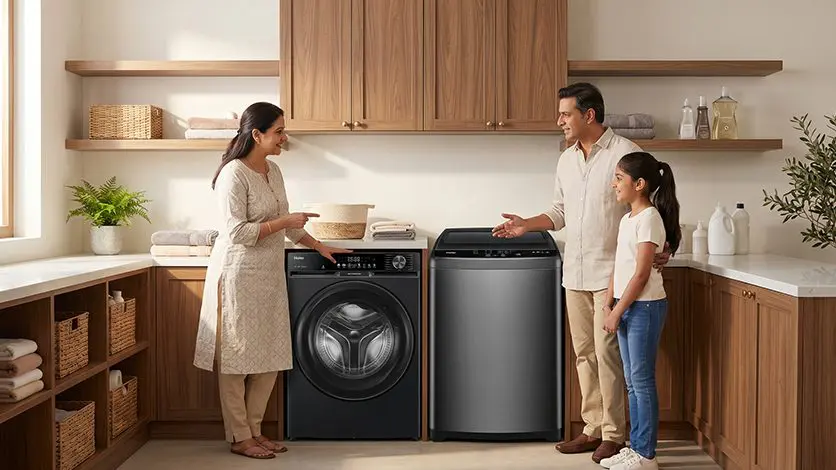
The front-load vs top-load washing machine debate has been around for years, and both sides have solid reasons. Each type washes clothes well enough for everyday use, but they don’t work the same way, and that changes what you spend later. One machine may save water, while the other fits better into a busy routine.
- Which Uses Less Water?
Front-loaders use considerably less water per cycle than top-loaders. On average, a front-loading machine uses around 40-50% less water because it tumbles clothes through a shallow pool at the bottom of the drum, rather than submerging the entire load every time.
The front-load vs top-load water consumption gap becomes most relevant for families in cities with limited or irregular water supply. Running two or three loads a day throughout the year means those savings accumulate into something worth accounting for before you decide. Top loaders need more water to fully submerge clothes for the agitator to work, which is simply how the mechanism functions by design.
- Which Cleans Better?
On deep cleaning, front-loaders have the stronger track record across most real-world comparisons. The front-load vs top-load cleaning performance data consistently shows that the tumbling drum action creates stronger mechanical friction against fabric, working stains out more effectively than an agitator does. Heavily soiled clothes, sportswear, and items with embedded dirt respond noticeably better to this action.
Top loaders handle everyday laundry without much trouble and finish cycles more quickly. They work well for school uniforms and daily office clothes, so most families won’t notice any issue. Front-loaders, though, usually remove tougher stains and deep dirt more effectively.
- Washing Machine that Lasts Longer
Many buyers overlook lifespan while comparing washing machines, though it matters after years of use. Front-loaders often last around 12 to 15 years if you maintain them properly and avoid overloading the drum too often. Top loaders usually run for 8 to 12 years, but repairs are simpler, and parts are easier to replace.
Models with agitators have more moving components, so servicing can come up sooner. Small habits make the biggest difference in the long run. Use the right detergent, avoid stuffing the drum, and your machine will stay reliable for much longer, whichever type you choose.
- Which Is Better for Large Families?
Large families usually wash clothes more often, so capacity matters just as much as machine type. Top loaders keep daily laundry simple because loading feels easier, and you can add forgotten clothes during the wash. That helps older users, too, who don’t want to bend every time. Front-loaders handle blankets, quilts, and heavier loads with less trouble while giving a deeper wash for dirty clothes.
Why Indian Families Choose Haier Washing Machines
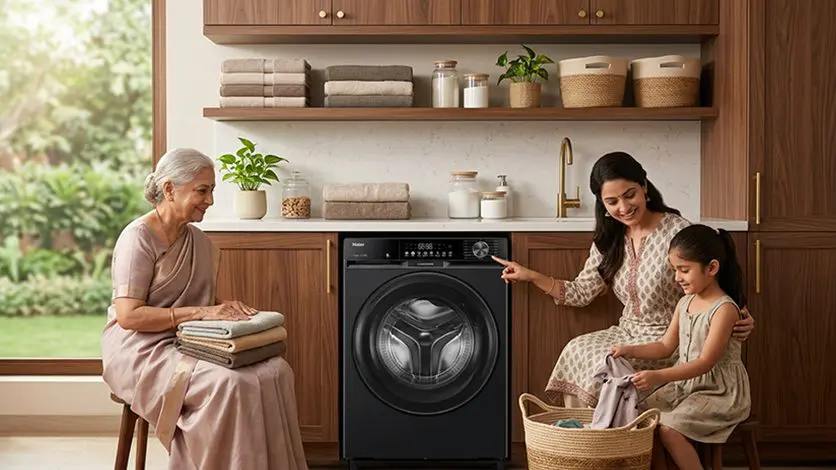
We understand that no two households approach laundry the same way. A couple in a metro apartment washes differently from a joint family in a smaller town, and we’ve built our product lineup keeping both in mind. That’s the reason our washing machine range covers three distinct categories with specific features built into each.
Our Front Load Washing Machines range is anchored by the F-Series, which includes models featuring Ultra Fresh Air Technology and AI Touch Panel capabilities. The lineup spans capacities from 8 kg to 12 kg across the F3, F5, F9, and F11 variants. We also offer an F11 washer-dryer combination for households that want both washing and drying from a single unit. Every front load model in this range carries 4 years comprehensive warranty and 12 years motor warranty.
The front load vs top load energy efficiency difference is something we’ve specifically worked on in our front load range. These machines are engineered to use less water and electricity per cycle, which reduces running costs meaningfully over the years for households, thinking about the total cost of ownership.
Our Top Load Washing Machines are built around problems Indian households actually deal with every day. The Oceanus Wave Drum variant delivers a gentle yet effective wash action. The Dual Magic Filter keeps lint and debris from resettling on clean clothes post-wash. The Anti-Scaling Technology models address hard water mineral deposits, a real challenge for a large share of Indian cities. Capacities in this range go from 6.5 kg to 10 kg, and these models carry a 2-year comprehensive warranty and 10 years motor warranty.
Here are the things worth keeping in mind before you make the final call:
- Water supply in your area: Front-loaders are a better fit for households with limited or irregular water availability
- Usage frequency: Families running daily loads benefit more from front-load efficiency over the long term
- Physical comfort: Top loaders are easier for those who can’t comfortably bend or crouch every day
- Type of laundry: Front loaders handle bulky and heavily soiled loads more effectively per cycle
- Maintenance routine: Front loaders need regular drum and door seal cleaning to stay fresh and functional
- Budget flexibility: Semi-automatic machines give larger families direct control over water use per wash
| Feature | Front Load | Top Load |
| Water Usage | Low (40-50% less per cycle) | Moderate to High |
| Cleaning Performance | Deep clean, strong on stains | Good for daily lighter loads |
| Typical Lifespan | 12-15 years | 8-12 years |
| Capacity Range (Haier) | 8 kg to 12 kg | 6.5 kg to 10 kg |
| Motor Warranty (Haier) | 12 years | 10 years |
The front-load vs top-load maintenance cost equation tilts toward front-loaders over a 5 to 7 year window once you factor in the reduced water and electricity usage per cycle. The additional cleaning routine the door seal and drum require each month doesn’t fully offset those savings when you look at the bigger picture.
Related Blogs: How Washing Machines Are Becoming Smarter
Conclusion
Choosing between a front loader and a top loader is not about which machine is universally superior. Front-loaders make the stronger case for households focused on efficiency, cleaning depth, and lower long-term running costs. Top loaders work well for those who need convenience, shorter cycle times, and comfortable daily access. Semi-automatic machines remain a practical and flexible pick for large families, managing both cost and water flexibility together.
At Haier, we offer a range across all three types, with features and warranty terms built around the real laundry conditions that Indian households face every day.
Frequently Asked Questions
Which washes better: front load or top load?
Front-load washing machines remove stubborn stains more effectively because the tumbling motion creates stronger fabric contact during every wash. Top-load models still clean everyday clothes quite well, though they work better for regular loads that are not very dirty most days.
Are front-load washing machines more expensive to maintain?
Front-load washing machines need regular cleaning around the drum, door seal, and detergent tray so residue does not build up over time. They use less water and electricity, so the extra care often pays back, making long-term ownership costs lower for many households.
Is front load or top load better for Indian homes and water scarcity?
Front-load machines are the better choice for water-scarce regions. They use approximately 40-50% less water per cycle than top loaders do. In cities with irregular supply or high water charges, front-loaders offer a clear and practical long-term advantage for households doing laundry multiple times a week.
How long do front-load vs top-load washing machines last?
With proper maintenance, front loaders tend to last 12 to 15 years. In most households, top loaders tend to last 8 to 12 years. Proper loading habits, proper detergent type and amount, and regular cleaning are the most important factors in longevity in both types of machines.
What warranty does Haier provide on front-load and top-load washing machines?
Haier front-load machines include 4 years comprehensive warranty and 12 years motor warranty. Top load models carry 2 years comprehensive warranty and 10 years motor warranty. Semi-automatic machines come with 2 years of comprehensive coverage, 5 years on the main motor, and 5 years on the spin motor.
Does Haier offer both front-load and top-load washing machines? Which one should you choose for long-term value?
Yes, Haier offers both front-load and top-load washing machines across different capacities to match different household needs. Front-load models give better long-term efficiency and cleaning, while top-load machines feel easier for daily use and work well for many Indian families.