
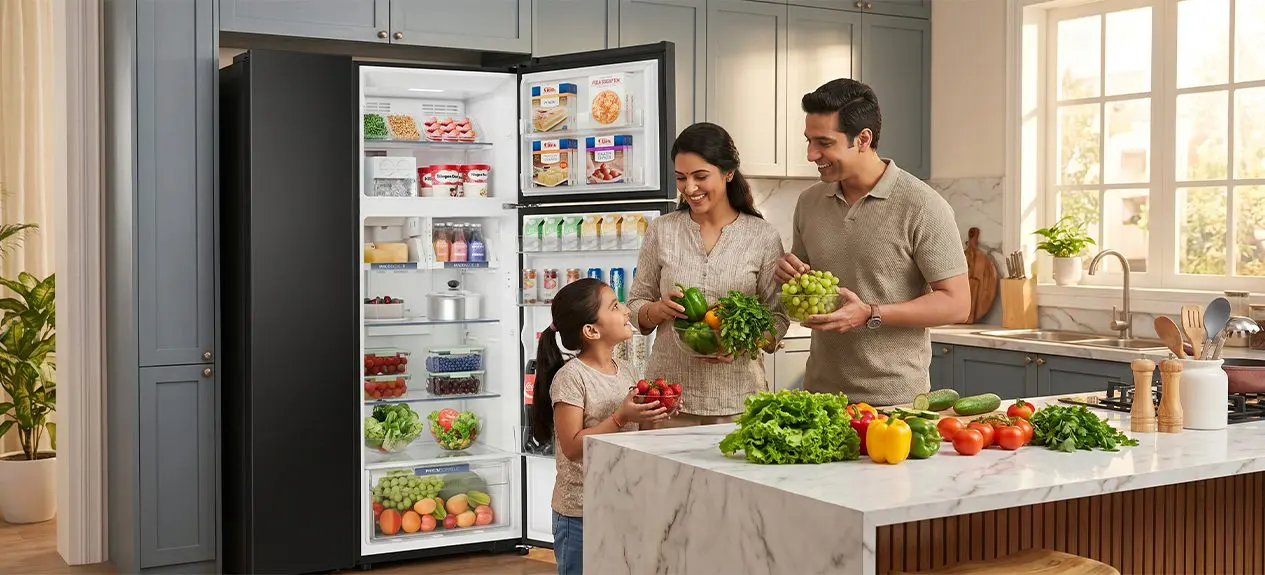

Most people think of a refrigerator as a box that keeps things cold. That framing, while understandable, misses the larger picture entirely. A modern refrigerator is a precision engineering system built around one core challenge: slowing down the biological and chemical processes that cause food to deteriorate.
True food preservation requires far more than a drop in temperature. It demands a carefully managed equilibrium of thermal stability, humidity control, microbiological suppression, and optimised air circulation. Understanding how these variables interact is what separates a basic appliance from a genuinely advanced kitchen preservation system.
This is where the latest refrigerator technology : including the engineering that powers Haier’s premium refrigerator range, has made remarkable strides. The result is food that stay fresher for longer, households that waste less, and kitchens that operate more intelligently.
How Does a Refrigerator Keep Food Fresh?
A refrigerator keeps food fresh by removing heat from the inside and releasing it outside. As the heat is removed, the temperature inside stays cool enough to slow down spoilage.
But cooling isn’t just about keeping food cold. Harmful bacteria grow quickly when food stays between 4°C and 60°C. This temperature range is called the Danger Zone, where food can spoil much faster.
That’s why most refrigerators are designed to maintain an internal temperature of 1°C to 3°C. At this temperature, fruits and vegetables stay fresh for longer, and bacteria grow much more slowly. The result is food that lasts longer, tastes better, and stays safer to eat.
Want to keep fruits and vegetables fresh for longer?
Read this blog: How to Keep Fruits and Vegetables Fresh for Longer
Overcoming Structural Gaps: Airflow and Microbiological Defence
One of the most underappreciated causes of uneven food spoilage is poor air circulation inside the refrigerator cabinet. When cooling is static and air is stagnant, certain areas become warmer than others. Food items in one corner stays fresher while items in a thermal pocket deteriorate faster.
Haier addresses this through multi-airflow cooling systems that distribute continuous, linear streams of cooled air across every shelf tier. The result is a uniform thermal environment throughout the entire cabinet, not just near the evaporator.
Bacterial and Viral Suppression Inside the Cabin
Microbial contamination is a serious concern inside any closed, humid space. Haier’s ABT (Anti-Bacterial Technology) and ABT Pro systems actively eliminate up to 99.99% of bacteria and viruses within the cabin. This oxidation and sterilisation process prevents cross-contamination between raw and cooked foods, and also neutralises volatile organic compounds (VOCs) that cause foul odours over time.
Micro-Climate Customisation: Why One Setting Isn’t Enough
Different food categories have different biochemical preservation needs. Haier’s My Zone compartment allows users to configure dedicated settings for cheese, beverages, spices, or sensitive fruits and vegetables. This modular approach recognises that uniform cooling, while better than no cooling, is still a compromise when it comes to genuinely diverse food profiles.
The Ethylene Effect: The Science of Produce Ageing
Most people have heard that apples and bananas shouldn’t be stored together. The reason is ethylene gas and understanding it can meaningfully extend how long your produce lasts.
Ethylene (C₂H₄) is a naturally occurring, colourless, odourless plant hormone released by most fruits and vegetables as they ripen. Refrigeration slows ethylene production but does not stop it. This is why separate, humidity-controlled crisper drawers with sealed compartments matter so much. Compartmentalised storage prevents accelerated spoilage by keeping high ethylene producers separate from sensitive vegetables.
| Category | Common Examples | Storage Action |
| High Producers | Apples, bananas, pears, mangoes, avocados, tomatoes | Store separately, away from sensitive vegetables |
| Ethylene-Sensitive | Broccoli, leafy greens, cucumbers, carrots, cauliflower | Keep in sealed high-humidity crisper drawer |
| Low/Neutral | Citrus fruits, grapes, cherries, blueberries, watermelon | Can be stored near most other produce |
Refrigerator AI Technology and Inverter Engineering
The most significant leap in modern refrigerators is the shift from reactive to predictive preservation. Conventional cooling systems wait for the internal temperature to rise before responding. Refrigerator AI technology changes this model entirely.
Smart Sense AI – Predictive Cooling
Haier’s Smart Sense AI uses neural networks to analyse external ambient temperature variation and historical door-opening patterns. Using this telemetry, the system proactively adjusts cooling before high-usage windows, preventing the thermal shock that occurs when warm room air repeatedly enters the cabinet. The food inside never experiences the kind of temperature swings that accelerate spoilage.
Expert Inverter Compressor – Structural Food Protection
Traditional fixed-speed compressors cycle on and off abruptly, creating temperature spikes that damage the cellular structure of fresh food. Variable-capacity inverter compressors scale their operation smoothly and continuously, eliminating those spikes and maintaining the kind of consistent internal environment that preserves food at the cellular level.
Energy Efficiency – Independently Validated
Haier was recognised as India’s Most Energy-Efficient Appliance Brand in 2025 by the Bureau of Energy Efficiency (BEE), validating that superior preservation and reduced energy consumption are complementary outcomes of intelligent design, not competing priorities.
Want to know how Haier refrigerators optimise food freshness and storage?
Read this blog: How Haier Improves Food Freshness and Storage
Spatial Architecture: Convertible Design and Volumetric Intelligence
Preservation science cannot be separated from how space is used. An overpacked refrigerator obstructs airflow, creates uneven cooling, and accelerates spoilage regardless of how advanced the compressor or AI system is. Spatial design is, therefore, part of the preservation equation.
Haier’s Smart Convertible design addresses this dynamically. Users can adjust the fridge-to-freezer ratio based on seasonal preservation demands, with convertible fridge space reaching up to 83%–85% of total cabinet volume where required. A dedicated 80-litre freezer zone with separate storage boxes prevents frost-burn and ensures that frozen items do not cross-contaminate each other.
This kind of architectural flexibility ensures that the refrigerator adapts to the household rather than the household adapting to the refrigerator.
5 Common Refrigerator Mistakes That Accelerate Spoilage
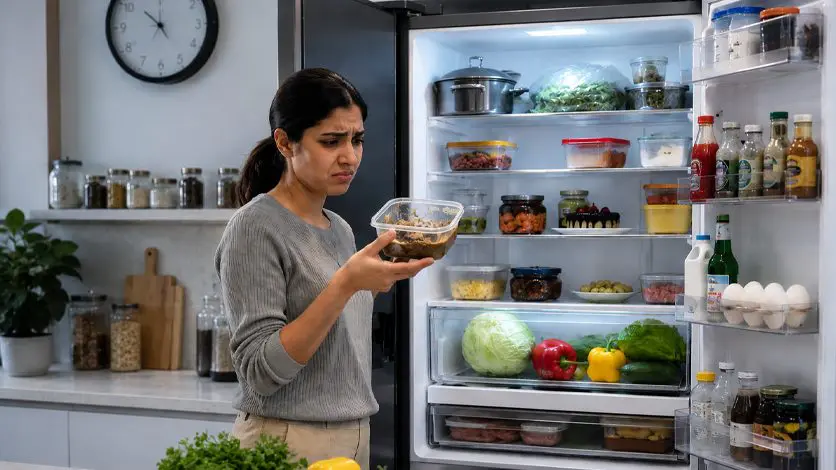
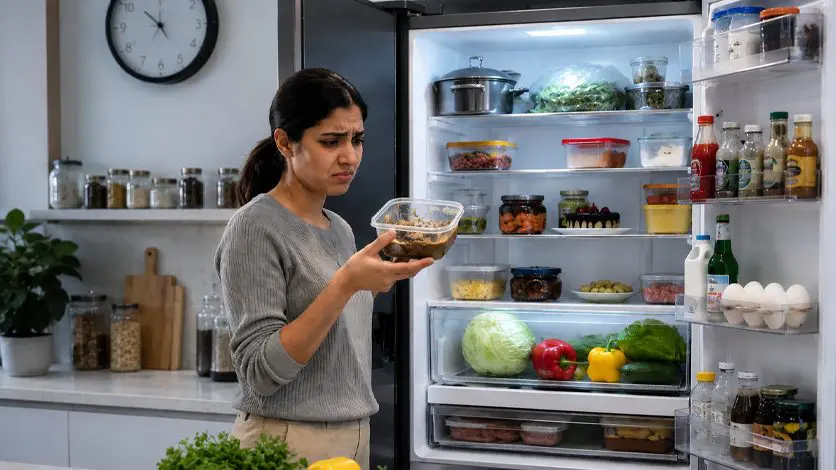
Even with the most advanced refrigerator, incorrect habits can undermine preservation. Here are the most frequent errors and the science behind why they matter.
1. Keep Eggs and Dairy in the Door
The door of the refrigerator is the warmest and most variable area in terms of temperature, exposed to warm air any time the door is opened. Dairy and eggs are perishables that benefit from the stable cold of interior shelves, not the door despite what the door racks seem designed for.
2. Overstuffed Fridge
A packed refrigerator restricts the flow of cold air, creating warm spots that cause food to spoil faster. Leave space between items, particularly on lower shelves where airflow is crucial for raw meats.
3. Placing Hot Food Directly Inside
Hot food raises the internal cabinet temperature, triggering temperature swings that affect everything else stored inside. Allow cooked food to cool for no more than 2 hours before refrigerating in shallow containers.
4. Mixing Ethylene Producers and Sensitive Produce
As covered above, apples, bananas, pears, and mangoes release ethylene that can rapidly spoil neighbouring vegetables. Store them separately in different crisper drawers or sealed containers.
5. Ignoring the Crisper Drawer Settings
Many households never adjust crisper drawer humidity settings. High-humidity drawers are designed for leafy greens and vegetables; low-humidity settings suit fruits. Using both compartments correctly can add several extra days of freshness.
Conclusion
Food preservation is not a passive outcome of cold air. It is the result of deliberate thermodynamic engineering, intelligent biological management, and predictive computing working in concert. Every feature in a premium refrigerator from the inverter compressor to the AI system to the humidity-controlled crisper drawer exists to address a specific and measurable cause of food deterioration.
According to the UNEP, an average person in India throws away about 55 kg of food every single year. When you multiply that across a household, you aren’t just tossing out leftovers, you are watching your hard-earned grocery budget go straight into the bin. In a climate like ours, keeping food fresh isn’t just about the convenience of a cold drink; it is a direct way to cut down daily household waste and stop wasting money on groceries that spoil before you can cook them.
FAQs
How does a compressor’s inverter design affect the shelf life of fresh produce?
Inverter compressors operate at variable speeds, eliminating the abrupt on-off cycling of fixed-speed motors. This maintains a consistent internal temperature without spikes, which preserves the cell walls of fresh produce and slows moisture loss, directly extending shelf life.
What is the specific function of an automated humidity-controlled crisper drawer?
A humidity-controlled crisper regulates moisture levels within a sealed compartment to match the preservation needs of fresh produce. Higher humidity slows moisture evaporation from leafy greens.
How does refrigerator AI technology mitigate thermal shock inside the cooling cabin?
Haier’s Smart Sense AI tracks ambient temperature patterns and door-opening frequency to anticipate high-usage periods. Before those windows, the system proactively lowers the internal temperature, ensuring that heat introduced by open-door events does not cause significant temperature fluctuation inside the cabinet.
What is the safest internal refrigerator temperature?
Food safety experts recommend maintaining refrigerator temperatures at or below 4°C. However, the ideal range for everyday food storage is 1°C to 3°C, which provides an extra margin of safety below the bacterial danger zone while helping keep food fresh for longer. A refrigerator running at 7°C offers significantly weaker protection, even if it still feels cold.
How much food does the average Indian household waste each year?
A: According to the Food Waste Index Report 2024, the average Indian household wastes approximately 55 kg of food per person per year, contributing to around 78 million tonnes of household food waste annually. Proper refrigeration, good storage habits, and modern appliance technology can help reduce this waste.