
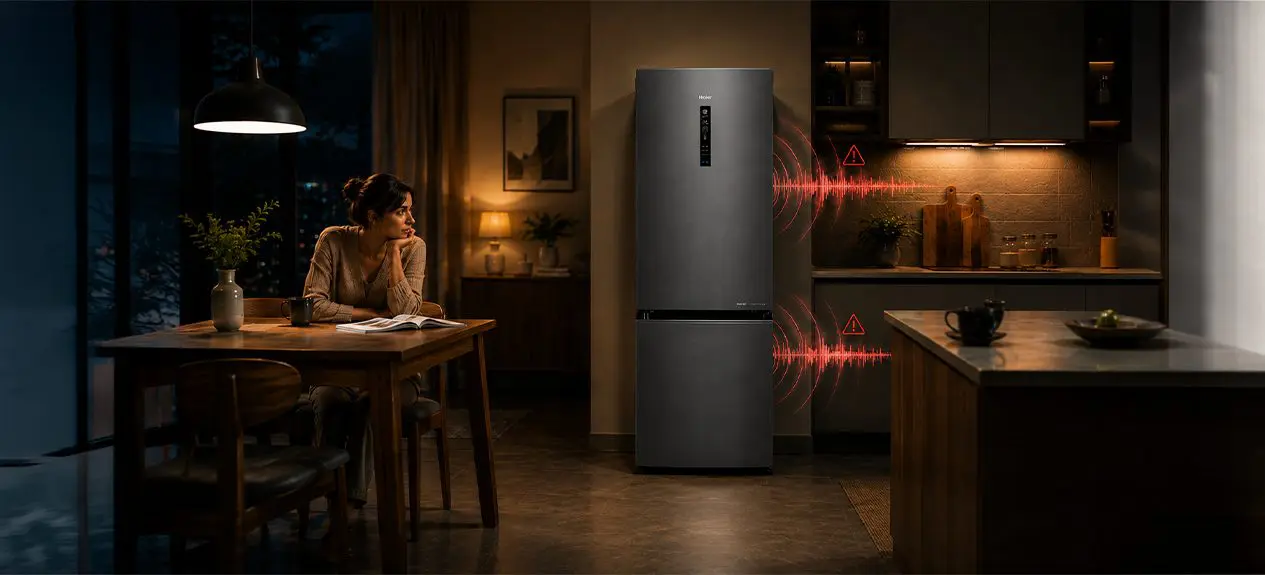

It is 11 pm, the house is quiet, and then you notice it: a sound coming from the kitchen you are not entirely sure was always there. A buzz, a gurgle, a sharp click. If your fridge is making noise you have never paid attention to before, the first instinct is to assume something is wrong.
In most cases, it is not. But some sounds do matter. Knowing which ones to ignore and which ones to take seriously is what this guide covers.
Why a Fridge Making Noise Is Normal
A refrigerator is not a passive appliance. It runs continuously, cycling through cooling, defrosting, and restarting dozens of times a day. The compressor turns on and off. Fans circulate air. Refrigerant moves through coils. Water drains. Each of these actions produces sound, and all of them are part of normal operation.
A completely silent fridge would actually be a concern. What you want is a noisy refrigerator that sounds consistent. It is the new sounds, the sudden ones, or the ones getting steadily louder that deserve a closer look.
How Loud Should a Refrigerator Be?
Many people assume a noisy refrigerator automatically means something is wrong, but that is not always the case. Modern refrigerators typically operate at around 35–45 dB, which is roughly as quiet as a library or a soft conversation. During compressor start-up, defrost cycles, or ice-making, the sound may briefly become more noticeable, and that is completely normal.
If your fridge making noise suddenly becomes much louder than usual, or if the sound is accompanied by excessive vibration, poor cooling, or frequent compressor cycling, it is worth checking the cause. A noticeable change in sound is usually a better indicator of a fridge noise issue than the normal day-to-day operating noises every refrigerator makes.
The Hum: The Sound You Should Hear Every Day
The low, steady hum is the compressor running. It turns on to cool the unit down, runs for a while, then shuts off once the target temperature is reached. That cycle repeats all day, which is why the hum comes and goes.
This is normal. What becomes a concern is a hum that never stops or one that has grown louder over months. A compressor running non-stop is usually working harder than it should. Common reasons include a worn door seal letting warm air in, poor ventilation at the back of the unit, or cooling efficiency dropping with age.
Fridge Making Buzzing Noise: When to Worry and When Not To
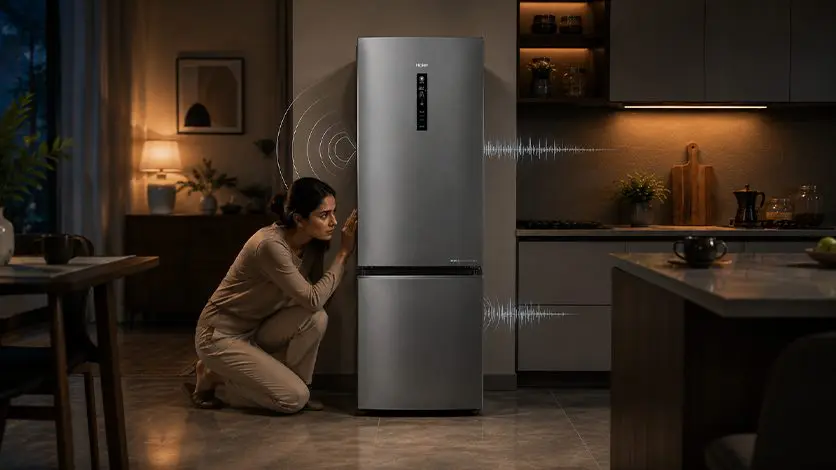
A fridge making buzzing noise is one of the most searched refrigerator concerns, and the answer is almost always reassuring. A light buzz from the back or bottom of the unit is typically the compressor or condenser fan motor running under load. Completely normal.
The buzzing becomes worth investigating when it is loud, irregular, or accompanied by vibration. The most common reasons are the fan hitting an obstruction, a loose component at the back, or the refrigerator not sitting level and vibrating against the floor. Check those two things before assuming anything mechanical has gone wrong. They resolve a large share of buzzing complaints without any repair needed.
Clicks and Pops: Not a Fridge Noise Issue
A sharp click when the fridge turns on or off is the thermostat switching the compressor in or out of its cooling cycle. It sounds abrupt the first time you notice it, but it is one of the most routine sounds a refrigerator makes.
Popping or cracking sounds from the interior walls happen when plastic and metal expand or contract as temperatures change, similar to a metal roof on a hot afternoon. After a long stretch of the door being closed or first thing in the morning, these sounds are especially common. There is no fridge noise issue here at all.
Rattling: Almost Never the Fridge Itself
Rattling is the one sound almost never caused by the refrigerator. A bottle against a can, a container not fully seated on a shelf, or something resting against the door are the usual suspects. Check the door tracks and top shelf first.
If the rattle is from underneath or behind the unit, a loose drain pan or a slightly shifted component is typically the reason. Both are straightforward to identify and fix without a service call.
Gurgling, Dripping, Whooshing: Signs of a Healthy Fridge
Gurgling or a soft whoosh from inside the unit is refrigerant moving through the cooling coils. It sounds a little like water in a pipe, and it tends to be more noticeable in quiet rooms at night. It is normal.
Dripping sounds are the defrost cycle running. Frost on the evaporator coils is melted periodically, and that water drains down through a tube inside the unit. Hearing it drip before it disappears means the auto-defrost system is doing exactly what it was designed to do.
Read More: How to Reduce Noise from Your Refrigerator: Tips and Tricks
Common Refrigerator Sounds at a Glance
| Refrigerator Sound | Normal? | Common Cause | What You Should Do |
| Low humming | Yes | Compressor running | No action needed unless it becomes much louder over time. |
| Light buzzing | Yes | Compressor or condenser fan operating | Normal. If the fridge making buzzing noise is unusually loud or causes vibration, check that the fridge is level and nothing is obstructing the fan. |
| Clicking | Yes | Thermostat switching the compressor on or off | No action required. |
| Popping or cracking | Yes | Interior materials expanding or contracting | Completely normal during temperature changes. |
| Gurgling or whooshing | Yes | Refrigerant flowing through cooling lines | Normal operation. |
| Dripping | Yes | Defrost cycle draining water | Indicates the auto-defrost system is working correctly. |
| Rattling | Sometimes | Loose containers, drain pan, or components | Check items inside the fridge and ensure the drain pan is secure. |
| Grinding or squealing | No | Worn or obstructed fan motor | Schedule a service inspection. |
| Loud knocking or banging | No | Possible compressor issue | Contact a technician promptly, especially if cooling performance is affected. |
The Sounds That Actually Need Attention
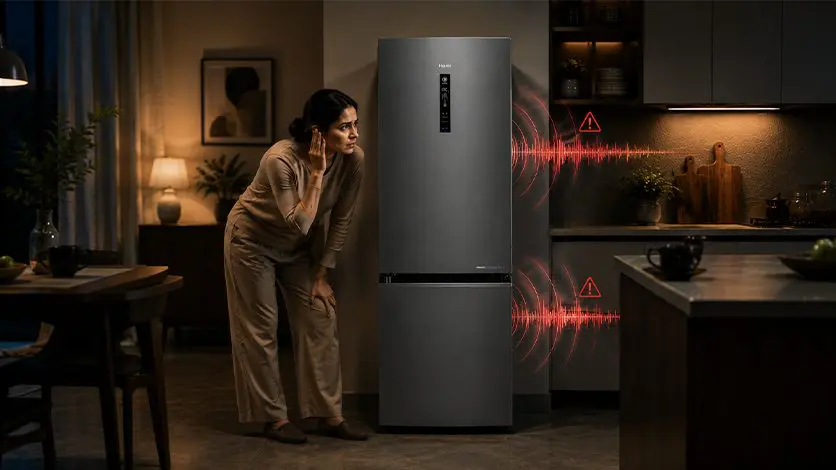
A high-pitched squeal or grinding sound sits outside the normal range. These usually point to a fan motor that is worn or obstructed, and a failing fan motor eventually affects cooling across the whole unit.
Loud banging or heavy, repetitive knocking is different from the standard compressor click. If the sound is deep, rhythmic, and getting worse, the compressor needs to be inspected before the problem compounds.
Any sound that has visibly worsened over weeks, especially when the fridge is also not cooling as well as it used to, is the clearest sign that something mechanical needs professional attention.
How the Right Technology Keeps Refrigerators Quieter
Many noise complaints trace back to single-speed compressors that switch abruptly between fully on and fully off. That hard switching creates more vibration, louder starts, and more stress on the compressor over time.
Inverter compressors work differently. They adjust speed continuously based on how much cooling is needed, rather than toggling between two states. The result is smoother, quieter operation with less vibration and fewer of those abrupt start-and-stop cycles.
Haier’s Expert Inverter Technology works on this principle, modulating compressor output based on real-time demand. Combined with Magic Cooling, which maintains stable internal temperatures through consistent airflow, the system avoids the sudden compensation cycles that make older fridges run louder and harder. A 10-year compressor warranty reflects the confidence placed in how these components are built to last.
Haier Refrigerator Features That Make a Real Difference

Understanding what causes noise is useful. But if you are at a point where you are thinking about a new refrigerator, it also helps to know which features are worth prioritising beyond the compressor.
Triple Inverter and Dual Fan Technology take the inverter concept further. Two fans working in coordination distribute cold air more evenly across the unit, which means the compressor does not need to compensate for temperature gaps between sections. Even airflow equals less strain, and less strain equals quieter, more efficient operation over time.
Smart Sense AI monitors your household’s usage patterns and adapts cooling output accordingly. A fridge that anticipates demand rather than reacting to it does not go through the sudden start-stop cycles that older models rely on. This keeps both the sound levels and the energy consumption lower across the day.
ABT Pro Technology works in the background, eliminating up to 99.99% of bacteria while removing odour and foul smells from inside the unit. It is not related to noise, but it directly affects how long food stays fresh and how clean the fridge environment stays without regular manual intervention.
Magic Cooling maintains temperature stability during power fluctuations and frequent door openings, which are both common in Indian households. A fridge that holds its temperature without overcompensating runs quieter and extends the life of the compressor.
Finally, a 10-year compressor warranty on Haier refrigerators signals something straightforward: the components are built to last, and the brand stands behind them. For a product you use every hour of every day, that assurance matters more than most people factor into a buying decision.
Read More: Which Refrigerator Features Are Actually Worth Paying For?
At Last
A hum, a click, a gurgle, a soft buzz: taken together, these are the sounds of an appliance doing its job without interruption. Most refrigerator sounds are not warning signs.
The ones worth acting on are new, sharp, worsening, or accompanied by a drop in cooling performance. Understanding what each sound actually means removes the guesswork, and usually the worry, of living with a refrigerator that makes itself heard.
FAQs
Is it normal for a fridge to make noise?
Yes. A refrigerator naturally makes sounds such as humming, buzzing, clicking, gurgling, or dripping during normal cooling, defrost, and compressor cycles. A consistent fridge making noise is usually part of regular operation.
Why does my fridge sound like a loud buzzing or humming?
A light hum or buzz is typically the compressor or condenser fan working, which is normal. However, if your fridge making buzzing noise becomes unusually loud, irregular, or is accompanied by vibration or poor cooling, it may need inspection.
Does refrigerator noise increase during summer or heavy usage?
Yes. During hot weather or frequent door openings, the compressor works harder to maintain the set temperature, so a noisy refrigerator may run longer or produce slightly more noticeable operating sounds.
How can you reduce normal refrigerator noise at home?
Ensure the refrigerator is placed on a level surface, leave enough ventilation space around it, avoid overloading shelves, and check that bottles or containers are not rattling. These simple steps can minimise a minor fridge noise issue.
When should I call a technician for fridge noise?
Contact a technician if your fridge starts making new or unusually loud noises, such as grinding, squealing, or heavy knocking, especially if they are accompanied by poor cooling, excessive vibration, or the noise worsens over time.