
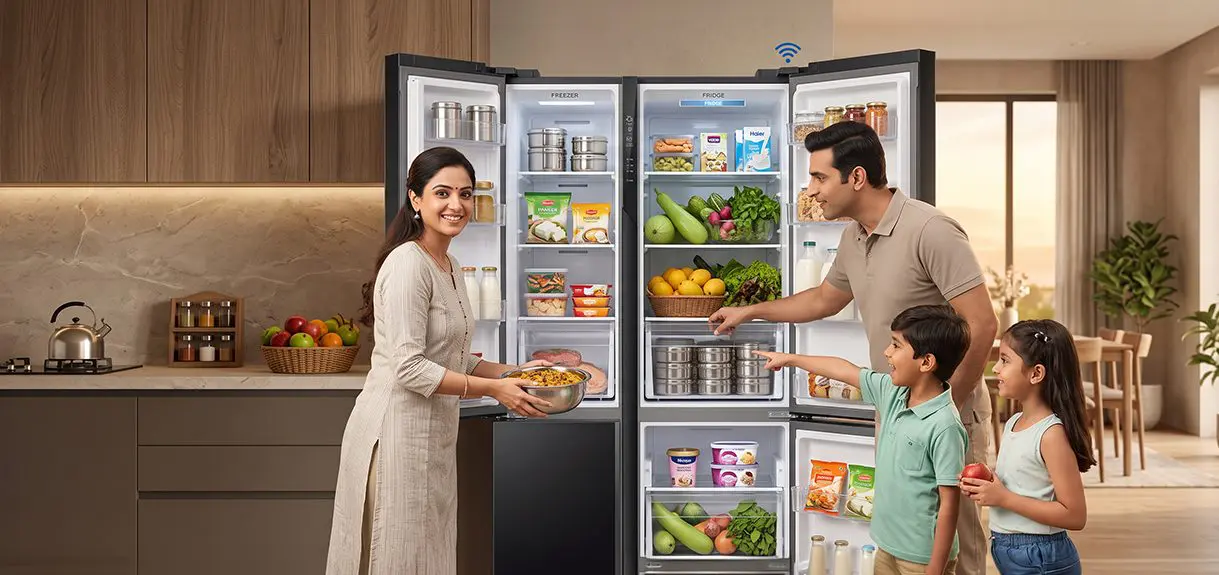

You walk into your kitchen on a Wednesday evening and realize your refrigerator situation has become ridiculous. You’ve got vegetables spilling out of the crisper, frozen items stacked awkwardly in the freezer, and nowhere to put the ice cream your kids want. Then your parents call to say they’re visiting for two weeks. This is the problem that convertible refrigerators actually solve.
Most fridges come with a fixed design. Your freezer section is a certain size. Your fresh-food area is locked at whatever percentage the manufacturer decided. When your household needs change, you’re stuck. A convertible refrigerator changes this equation by letting you adjust compartments from freezer to refrigerator mode depending on what you need right now.
What Convertible Storage Actually Means
Let’s be clear about what we’re talking about. A convertible compartment is usually positioned in the middle or lower section of your fridge. It’s not some complex technology. It’s a zone that can switch its temperature between freezer settings and regular refrigerator settings based on what you choose. You simply adjust a control panel or use an app, and that compartment does its job accordingly.
Think about real life. In July, you don’t need much freezer space. Your family is smaller, and you’re buying more fresh groceries because everything else is available. By November and December, you’re preparing for family gatherings, buying desserts and frozen items, and hosting dinner parties. The same compartment that stores fresh vegetables in summer becomes freezer space in winter. You’re not buying a second refrigerator for the three months you need it. You’re using one appliance that adjusts to your actual life.
The Three-Door Setup Gives You Real Advantages
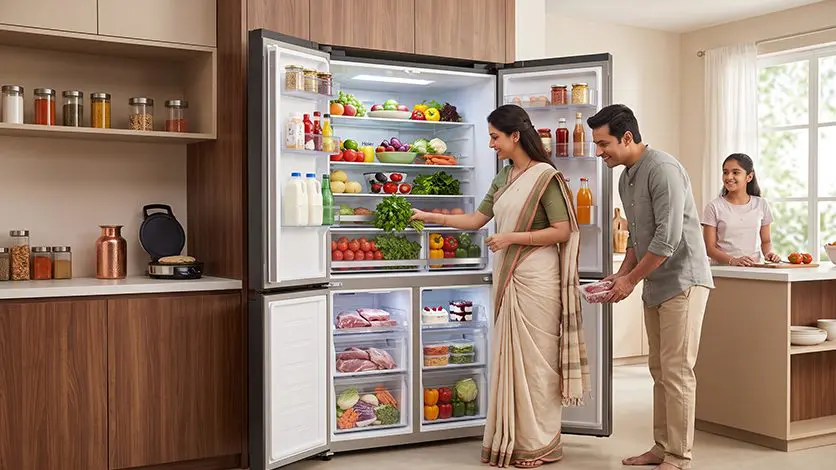
A 3-door refrigerator with convertible capability works differently than what you’re probably used to. You get an upper fresh-food section, a convertible middle or lower compartment, and a third freezing section. This arrangement matters more than you’d think.
The convertible zone usually sits at eye level or waist level. This is where you reach most often. When it’s set to refrigerator mode, your fresh produce and beverages are right there without bending or stretching. When you need it as a freezer, frozen items stay accessible. You’re not climbing into a bottom freezer or reaching overhead. The placement makes daily use easier.
Compare this to a standard two-door fridge where you either bend down to your freezer or you’re limited to whatever frozen space sits at the top. A three-door design with convertible capability actually improves your daily workflow.
How This Solves Real Household Problems
Let’s talk about actual situations where this matters. Summer in India means your vegetables go bad quickly. You buy more fresh produce. Lettuce, tomatoes, bell peppers, cucumbers, herbs, and milk all need refrigerator space. If you’re stuck with a small fresh-food compartment, things get squeezed and bruised. A convertible fridge lets you shift that middle zone to refrigerator mode, giving you the space you need. Your freezer capacity drops temporarily, but you don’t need as much ice in July anyway.
December arrives. Suddenly you’re thinking about sweet preparation, ice cream, frozen appetizers. You’re hosting family. You need more freezer capacity. The same compartment that held fresh vegetables flips to freezer mode. Problem solved without a second appliance running up your electricity bill year-round.
Here’s another reality for Indian homes. Hard water creates scaling issues, and ice quality suffers. Many modern refrigerators include jumbo ice makers with rotating trays. When you have a convertible middle zone dedicated to freezing, that ice maker works efficiently, and you’re not stealing space from your fresh-food storage. If ice production becomes excessive, you switch that zone back to refrigerator mode.
The Electricity Question People Always Ask
When someone hears about switching compartment temperatures, they assume you’re using extra energy. You’re not. Here’s why. The compartment doesn’t have its own separate compressor. Dampers and doors regulate airflow from your main compressor based on the temperature you’ve set. When you switch modes, the compressor works the same way. It’s just delivering cooling to a different zone configuration.
Modern refrigerators use inverter compressors that adjust their speed based on actual cooling demand. A refrigerator with flexible storage often runs more efficiently than a standard model with locked compartments. The compressor cools exactly what you need at any given time, not wasted capacity sitting idle.
Why Festive Seasons Create Storage Chaos
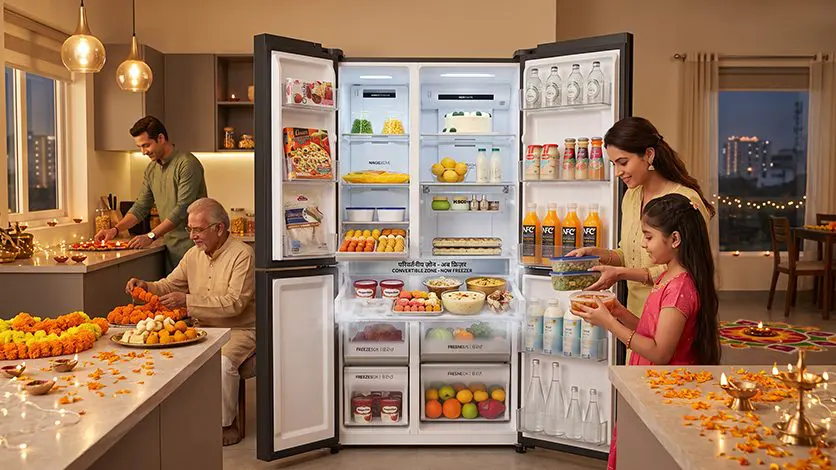
If you’ve hosted family gatherings in India, you know the problem. Diwali arrives. Your extended family is coming. Suddenly you need space for sweets, ice cream, prepared dishes, and frozen items. But you also need your refrigerator for daily groceries. A standard fridge forces a choice. A convertible middle zone shifts to freezer mode for the festival season, then switches back when your guests leave.
This matters because most Indian homes can’t justify running a separate deep freezer that sits empty nine months a year. Those use electricity constantly whether they’re full or empty. A convertible compartment gives you seasonal flexibility without that cost. Your one appliance adapts.
How Haier’s Solution Works in Practice
Haier’s 598L convertible 3-door model gives you 83 percent fresh-food space and 17 percent dedicated freezer space in its base configuration. The middle compartment is where the flexibility comes in. You adjust the temperature through a digital control panel. No guessing. No opening the fridge repeatedly to find the right setting.
The inverter compressor manages cooling efficiency across whatever configuration you choose. Deo Fresh Technology keeps odors from spreading between compartments, which matters when you’re storing diverse items. The WiFi control means you can adjust settings from your phone. If you’re at the market and realize you need more freezer space before getting home, you change it remotely.
The practical outcome is straightforward. You buy one appliance that grows with your actual household needs rather than fighting with a design that was frozen the day it left the factory.
FAQs
What is a convertible refrigerator?
A convertible refrigerator has a compartment that switches between freezer and fresh-food refrigerator temperatures. You control which mode it operates in through a digital panel or app. Most convertible models place this flexible compartment in the middle or lower section where you access items frequently. It eliminates the need to buy multiple appliances when your storage needs change seasonally.
How does a convertible middle or lower zone make grocery storage more convenient?
A compartment at middle height is easy to reach without bending or stretching. When set to refrigerator mode, fresh vegetables, fruits, and beverages stay at arm’s level. When switched to freezer mode for ice or frozen items, those products remain just as accessible. You stop wasting time reorganizing your entire fridge every time seasonal needs shift. The compartment is already in the right place for what you’re storing.
What temperature range options are available on Haier’s flexible convertible compartments?
Haier’s convertible models let you set the middle compartment anywhere from standard refrigerator temperature around 2 to 8 degrees Celsius to freezer temperature at minus 18 degrees Celsius or colder. Your digital control panel lets you choose either setting directly. The compressor adjusts its cooling output accordingly without using extra energy.
Why is convertible storage particularly useful during festive seasons or family gatherings?
Festive season means temporary needs for frozen sweets, ice cream, and prepared foods while you still need daily fresh-food storage. A convertible zone shifts to freezer mode for those months without reducing your year-round refrigerator capacity. After guests leave, it converts back. You avoid buying a separate freezer that runs constantly and wastes electricity sitting idle most of the year.
Does utilizing a convertible storage mode increase electricity consumption?
No. Convertible compartments use dampers to redirect airflow from your main compressor, not separate cooling systems. Switching modes doesn’t add energy use. Since inverter compressors adjust speed to match actual cooling demand, a convertible fridge typically uses less electricity than a conventional model with fixed compartments and unused capacity.
Which is the best convertible refrigerator?
That depends on your family size, space, and what you actually store. Look at total capacity, the fresh-to-frozen ratio, whether it has inverter technology, smart features, warranty length, and extras like ice makers or odor control. Haier’s 598L model works well for larger Indian households that do seasonal entertaining, with its 83-17 split and inverter compressor.
Does convertible storage help during monsoon season?
Absolutely. Monsoon humidity destroys fresh produce quickly. You buy more vegetables and fruits during these months. Extra refrigerator capacity means your produce stays fresher without getting squashed. After the monsoon ends, you rebalance the compartment back to your regular setup. Flexibility is exactly what seasonal weather demands.