
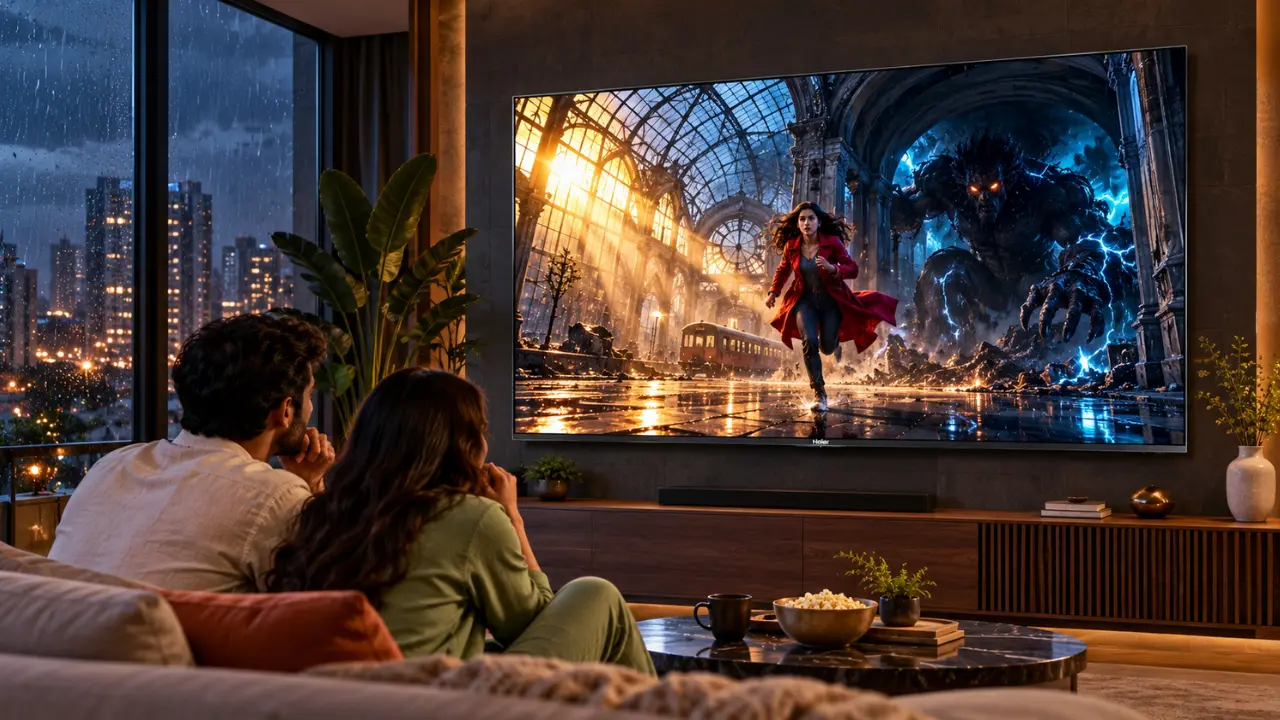

Picture this. You’re watching a thriller on your television. The scene transitions from an outdoor area with a bright light to an indoor area with a dim light. All of a sudden, there’s a lot of confusion. The darker parts seem to be more black than usual, and the light of the streetlights seems brighter than usual.
It’s not the fault of the film. The brightness, contrast and colour production of your TV may be the cause of the difference.
It’s here that HDR10 comes in.
There are lots of picture enhancing technologies that are available in modern televisions, but HDR10 is one of the most important ones for cinema enthusiasts, web series lovers, documentaries and lots of visually spectacular entertainment.
If you are thinking about buying a new 4K TV for your home, you can use some insight into HDR10 to distinguish between meaningful image benefits and intricate technical jargon.
What is HDR10 on TV?
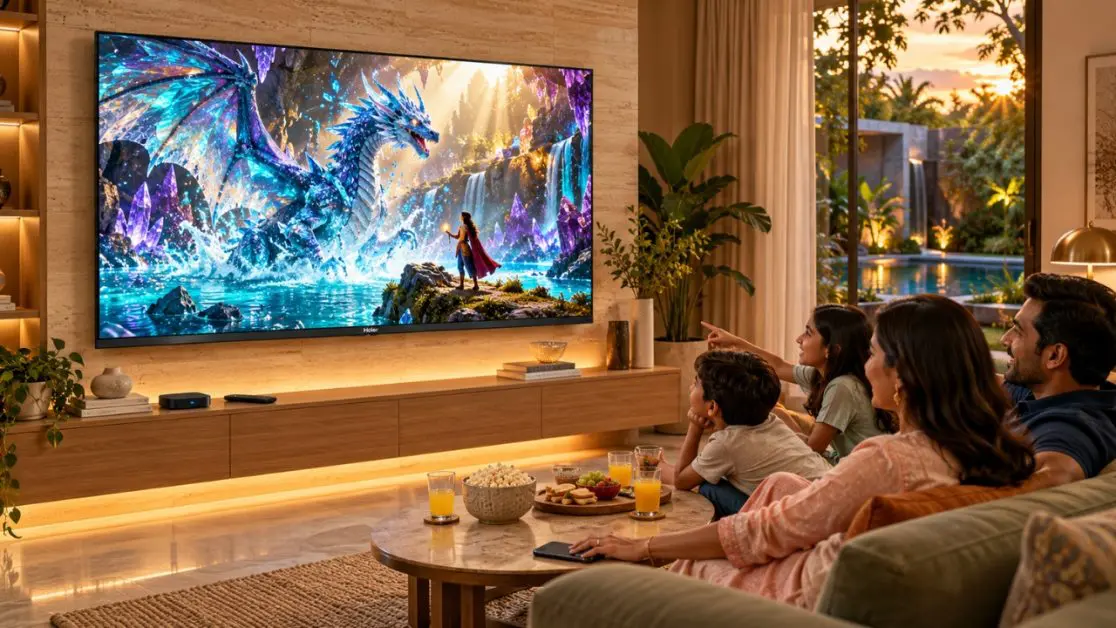
HDR10 is a broadly adopted High Dynamic Range (HDR) video format that enhances the compatibility of televisions in terms of brightness, contrast and colour.
HDR is the amount of contrast between the lightest and darkest parts of a photo. HDR10 is based on 10-bit colour information and static metadata to assist with HDR content being displayed on compatible television sets.
Put simply, HDR10 enables a TV to display more information in terms of its image than a traditional SDR (Standard Dynamic Range) TV.
Consider the sunset image.
The orange sky may be a pretty background on a regular display, but delicate variations between the golden sun, darker clouds and background landscape would be less obvious.
If the HDR10 material is handled correctly and the TV is competent, those distinctions will be more palatable.
The following are the HDR10 features it supports:
- More details in the brighter and darker components of similar content.
- Better colour colour reconstruction using 10-bit video signal.
- Better highlights (sunlight and reflections).
- Improved contrast and smoother transitions in different brightness levels.
- A viewing experience that more closely captures the creative vision of HDR content.
But, HDR10 support doesn’t automatically mean that the picture is going to be fantastic. Brightness, contrast performance and colour capabilities of the TV are also essential.
What impact does HDR10 have on picture quality?
What is the difference, when you think about what happens the normal way when you watch TV at the end of the day.
1. Bright scenes can be used to show more detail
Suppose that you are viewing a travel documentary about snow-capped mountains in the Himalayas.
The sunlight reflects greatly on the snow and the surrounding rocks and valleys are comparatively dark.
The brightest parts may be missing some nuances on a low dynamic range display.
HDR10 offers details that assist similar TVs to better capture those highlights.
It can create a shot with a lot of texture visible in the highlights, rather than a big white blob.
2. The darker the scene, the more defined
Dark scenes are particularly challenging for televisions.
The brightness levels in a night-time sequence with a narrow street, dim streetlights and shadowed buildings.
HDR10 aids in maintaining the desired range between those levels.
A good HDR television will be able to show more difference in the shadows, rather than treating all the dark areas alike.
It’s not a case of how effectively those details will appear, though, because that depends on the panel’s native contrast and backlight performance.
3. Colours can be more natural
HDR10 based on 10-bit colour information means that signals from compatible video devices can deliver 1.07 billion colours.
This is more than double the 8-bit colour representation’s ~16.7 million combinations.
What does this imply for common use?
Think of a nature show that is about a tropical forest.
The finer shades of green, water reflections and subtle changes in the sky may look more refined when supported by the source and display that provide the required colour information.
A 10-bit HDR signal isn’t enough to signal that all televisions can display all these colours though.
Colour capabilities of the display panel remain an issue.
The True Difference between HDR10 and SDR
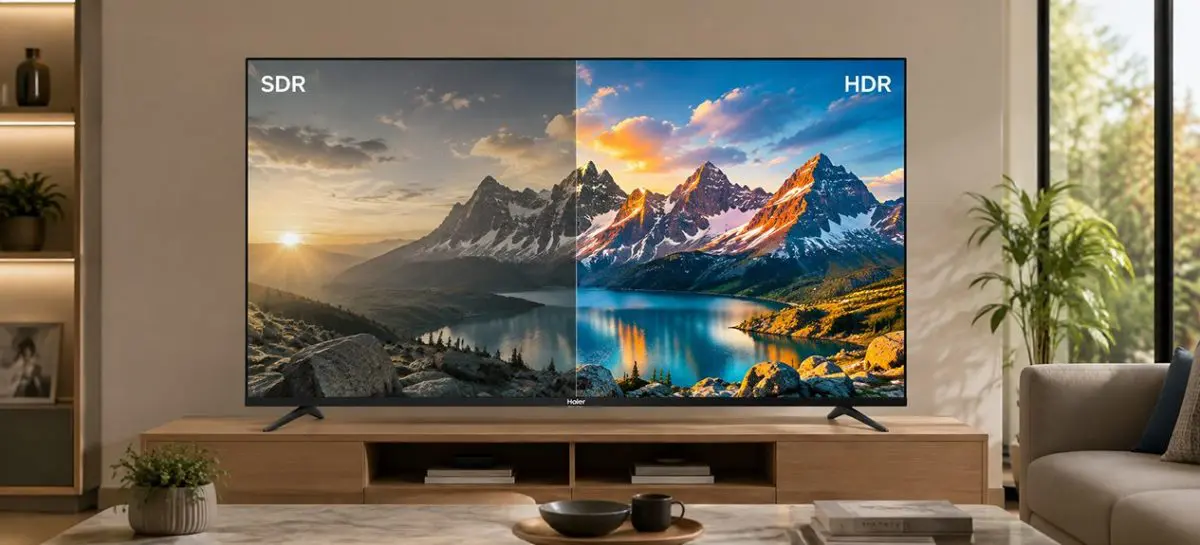
The use of SDR for television broadcast and video content has been in use for many years. Still good for regular recreation.
HDR10 extends the range of video presentations.HDR10 extends the field of video presentation beyond the traditional video range.
Here’s how they differ in real world terms.
Brightness Representation
SDR content is likely to be mastered for a narrower brightness range.
HDR10 content may include data relating to “significantly brighter” highlights, but what is actually displayed will be dependent on the TV.
Colour Information
Typical SDR content is 8-bit video.
HDR10 delivers 10-bit video information, providing even more finely nuanced colours when they are being reproduced by both the display and the content.
Shadow and Highlight Detail
HDR10 will retain more information in challenging scenes.
This is especially helpful in movies where the lighting is dramatic, night scenes, brightly lit landscapes.
Content Compatibility
SDR is still commonplace for TV shows and web videos.
Compatible streaming content, UHD Blu-ray releases and various gaming devices support HDR10.
What matters is that HDR10 enhances the quality of content that can be made HDR. It does not convert all regular videos to HDR.
Enjoy HDR10 with Haier K85G 4K Ultra HD Google TVs
While it’s good to know about HDR10, it’s far more useful to have a TV that supports it and offers other common features for everyday use.
With support for 4K resolution, Google TV and Dolby Audio, the Haier K85G series of Google TVs allows HDR10 picture technology to come along with 4K resolution.
The series has been released in four screen sizes, giving Indian households a choice based on the viewing preference and the size of their rooms.
Haier K85G 127cm (50) 4K Ultra HD Google TV (H50K85GUX)
Haier K85G 127cm (50) TV is a 127 cm TV with 3840 × 2160 resolution, which is perfect for compact living rooms and bedrooms.
The HDR10 picture technology is able to handle compatible HDR content, and the 4K UHD display offers vivid images.
The TV also comes with Google TV, Google Assistant, Dolby Audio and MEMC motion technology.
For those homes seeking to upgrade their older Full HD TVs, it’s an option to consider.
Haier 139cm (55) 4K Ultra HD Google TV (H55K85GUX)
The Haier K85G 139 cm (55) TV offers an extra screen in order to view movies, TV shows and family entertainment.
In addition to HDR10 and 4K UltraHD resolution, it boasts a 60Hz refresh rate and MEMC technology.
Google TV and Chromecast are also integrated into the TV, which means users can enjoy compatible entertainment apps and stream supported content from other devices.
Families that watch movies together will find that the big screen can be more interesting than the smaller one for watching the details.
Haier 164cm (65) 4K Ultra HD Google TV (H65K85GUX)
When viewing a video that has a lot of room to fill, a larger TV can be the difference.
The Haier K85G 164cm (65) model boasts a 164 cm 4K UHD display, which supports HDR10.
When you’re watching a wildlife show or a movie with rich detail, the size of the screen and the high resolution of the picture can enhance the viewing experience.
The model also comes equipped with Dolby Audio, Google Assistant and MEMC technology.
Haier K85G 189 cm (75) 4K Ultra HD Smart Google TV (H75K85GUX)
Haier K85G 189 cm (75) TV is particularly the best option for large sized Indian TVs for living rooms.Haier K85G 189 cm (75) TV is specially designed for large size televisions for Indian living rooms, with a display of 189 cm.
Ideal for those who want a big screen entertainment experience, it offers 4K UHD resolution and is HDR10 compatible.
The model also has Dolby Audio, MEMC and Google TV functionality.
The larger screen will allow families to watch compatible HDR films and documentaries and streaming entertainment all on the same screen.
But, what else matters besides HDR10?
HDR10 is just one aspect of television picture quality.
The technologies that go with a new TV should be taken into consideration when making a decision.
4K Ultra HD Resolution
The Haier K85G series has a resolution of 3840 × 2160.
This means that around 8.3 million pixels are part of the image displayed.
HDR10 impacts on the compatibility of the brightness and colour information in the content while 4K helps determine the number of pixels required to render the detailed information within the picture.
They collectively solve various issues related to image quality.
MEMC Motion Technology
Have you ever experienced a situation where the image in a fast moving scene looks less clear than a stationary image?
Motion Estimation, Motion Compensation (MEMC) technology is intended to help enhance the smoothness of the perceived motion by producing intermediate frames.
The Haier K85G series is designed with 60Hz refresh rate and MEMC technology.
This can be helpful when viewing sports or other fast-moving material, as well as for picture quality, but will vary based on the content being watched and the picture settings selected.
Dolby Audio
While picture quality may grab attention, sound quality also has an important role in entertainment.
The Haier K85G series comes with Dolby Audio technology.
From dialogue in an exciting moment to background music in a dramatic one, sound effects enhance the viewing experience.
Google TV and Voice Assistance
The K85G series is also equipped with Google TV, which provides access to playable entertainment apps and personalised content suggestions.
Google Assistant offers the voice control of supported functions.
This mix means that the TV can be a family-friendly option for households with diverse entertainment interests.
How to Get the Best HDR10 Picture Quality at Home
The first step is to purchase an HDR10 compatible TV. The way you present your content and the setting of the viewing also affects the experience.
A few changes will help.
- Play HDR10 compatible content: Find out which HDR10 titles are available on streaming Apps.
- Test streaming quality: If available, choose a subscription and the desired streaming quality.
- Employ appropriate picture settings – Movie or Standard modes may be good to start with.
- Minimise direct sunlight or glare: Angle the TV to reduce direct sunlight and glare.
- Do not use unnecessary brightness or contrast controls: These can affect the amount of detail that is visible.
- Look for connected devices: External streaming players and gaming consoles must be able to accept HDR10 output as needed.
The Haier K85G series features several picture modes, including Standard, Vivid, Sport, Movie and Game, to help viewers choose the settings in which they play their games.
Does HDR10 Make All Movies Look Better?
Not necessarily.
HDR10 provides the desired effects only in combination with content created for the format and a TV with the necessary display capabilities.
For instance, a show that was recorded in SDR will not all of a sudden have more HDR information if it’s played on an HDR10 capable TV.
Likewise, streaming video that is of poor quality can still look compressed or lacking in detail.
Again, HDR10 doesn’t mean deeper blacks, higher peak brightness or wider colour on all televisions.
The features are related to the display equipment.
Therefore, when buying a television, check out HDR10 along with resolution, screen size, picture processing and your preferred viewing habits.
Experience Haier India’s entertainment in all its glory
The purpose of a television is to show a big screen. It should bring to life your favourite entertainment in a way that captures all its essence and luster.
HDR10 enables that with videos that are compatible with it, it offers more information in the brightness and colour range.
The Haier K85G 4K Ultra HD Google TV series combines HDR10, 4K resolution, MEMC motion technology, Dolby Audio and smart entertainment functions, in one box.
The series comes in 127cm (50), 139cm (55), 164cm (65) and 189 cm (75) screen sizes, which can be used for various room sizes and viewing preferences.
Enjoy the best of Haier K85G TV series from Haier India and find out how the certified combination of picture technology and screen size can improve your daily entertainment.
Frequently Asked Questions About HDR10
1. Is HDR10 better than normal 4K?
HDR10 and 4K serve different purposes. HDR10 concerns brightness and colour information, while 4K refers to screen resolution. A television supporting both can reproduce compatible 4K HDR content.
2. Is HDR10 good for watching movies?
Yes. HDR10 can improve the presentation of compatible films by preserving additional highlight, shadow and colour information. The visible improvement depends on the television’s capabilities.
3. Does HDR10 work with Netflix and other streaming platforms?
HDR10 works with compatible titles on streaming platforms that support the format. Availability depends on the selected title, subscription, device and streaming service.
4. What is the difference between HDR10 and HDR10+?
HDR10 uses static metadata for HDR presentation. HDR10+ supports dynamic metadata that can adjust tone-mapping guidance from scene to scene. Actual picture quality still depends on the display and content.
5. Do Haier K85G televisions support HDR10?
Yes. The Haier K85G 127cm (50), 139cm (55), 164cm (65) and 189 cm (75) 4K Ultra HD Google TV models feature HDR10 picture technology.