
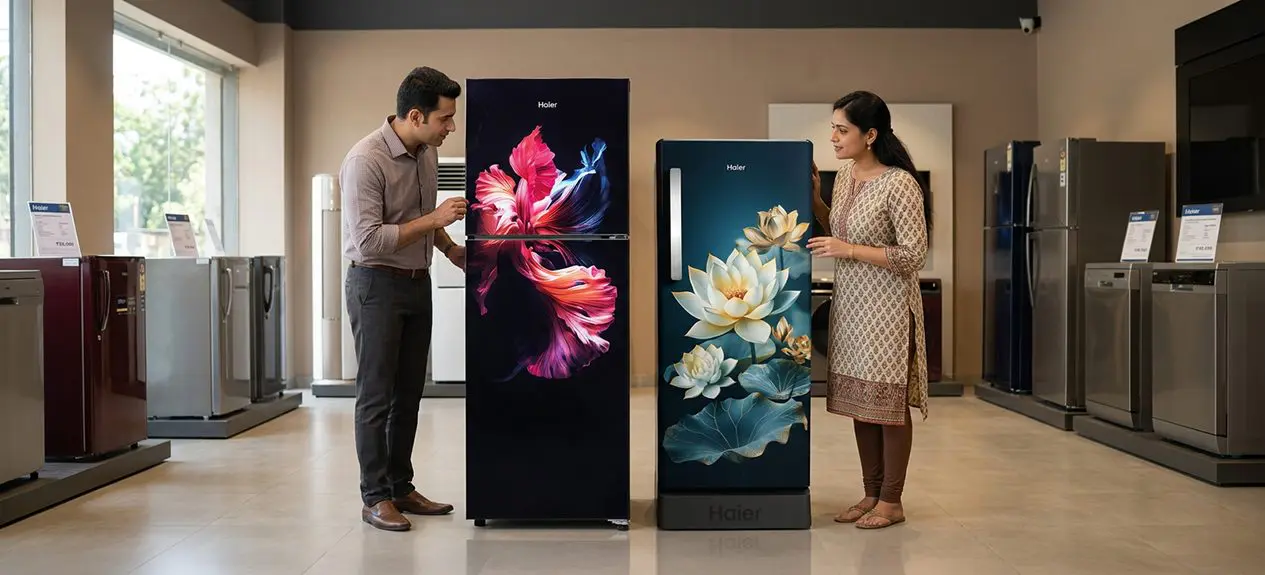


When you are shopping for a new refrigerator, it is easy to focus first on size, storage layout, finish and cooling features. The energy label often gets a much quicker glance, even though it can tell you quite a lot about how the appliance is expected to perform over time.A better understanding of the fridge star rating meaning can make those comparisons feel far less confusing. Questions such as which star is good in a refrigerator? or what is 5 star in refrigerator? often come up once you begin looking at different models, and the answer starts with understanding what the label actually shows.
Before comparing one rating with another, it is worth knowing what the star label is designed to show in the first place.
What Does a Refrigerator Star Rating Actually Tell You?
The star label gives you a quick way to understand how a refrigerator has been rated for energy use, but there is more on that label than the stars themselves. Reading a few key details together can give you a much clearer picture before you compare models:
- The stars indicate the level of energy efficiency. A BEE star-rated refrigerator can carry between 1 and 5 stars. A higher number represents a better level of energy efficiency under the applicable BEE rating standard.
- Annual energy consumption gives the rating some context. Look for the electricity-use figure stated in kWh per year. This shows the refrigerator’s estimated annual energy consumption under standard test conditions and makes the fridge star rating meaning easier to understand in practical terms.
- Star ratings work best when you compare similar refrigerators. Comparing two refrigerators of a similar size and category gives you a much fairer idea of what the difference in ratings actually represents.
- The label helps you look beyond the purchase price. A refrigerator stays in regular use for years, so its annual electricity requirement forms part of its overall running cost. Checking the star level and the kWh figure can therefore give you a more complete view before buying.
5-Star vs 2-Star Refrigerator: Where Does the Difference Really Show?
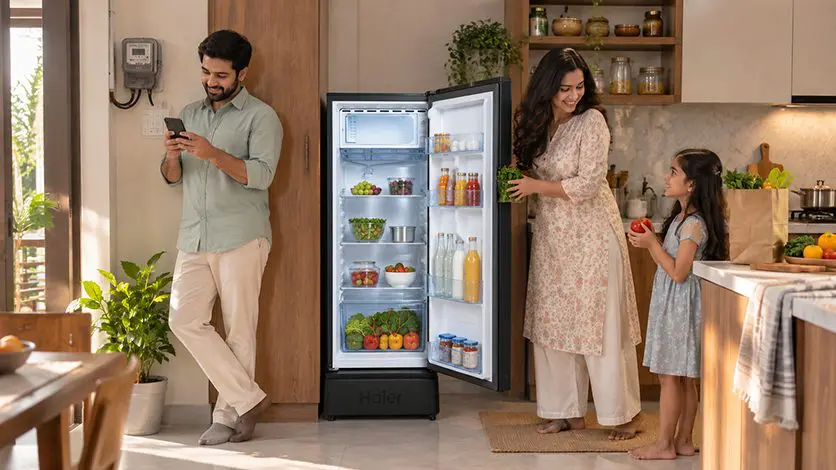
Once you look beyond the number on the label, it is easier to understand the difference. So, to fairly compare 5 star refrigerator to a 2 star refrigerator, it is useful to view the:
| Points of comparison | 5-Star Refrigerator | 2-Star Refrigerator |
|---|---|---|
| Energy efficiency | Higher BEE energy-efficiency level | Lower BEE energy-efficiency level |
| Annual power use | Generally uses fewer electricity units each year | Usually consumes more units in a like-for-like comparison |
| Electricity cost | Lower annual consumption can reduce running costs over time | Higher consumption can add more to long-term electricity costs |
| Upfront price | Has a higher purchase price | Comes at a lower initial price |
| Cost over ownership | Higher initial spend may be balanced by lower electricity use over the years | Lower purchase cost may come with higher electricity use over time |
| Long-term value | More appealing when efficiency matters over several years | Can suit buyers who prioritise a lower initial spend |
| Best suited for | Buyers focused on efficiency and lower long-term energy use | Buyers balancing essential features with a tighter budget |
This also answers the search, which fridge is good, 2 star or 5 star? A 5-star model is more energy-efficient when compared with a similar 2-star refrigerator, but price, capacity, and features still need to suit your home.
What Can 5-Star Fridge Electricity Consumption Look Like in Real Numbers?

Star ratings become much easier to understand once you put actual electricity use beside them. Looking at annual units can give you a more practical sense of what 5 star fridge electricity consumption may mean over a year and over the longer life of the appliance.
- Look at the annual units, not just the stars. Haier gives a useful 190L comparison: a 5-star single-door refrigerator is listed at around 120 units a year, compared with about 155 units for a 3-star model and up to 194 units for a 2-star model.
- Turn those units into a cost you can relate to. One unit of electricity is 1 kWh. Multiply the refrigerator’s stated annual consumption by the electricity rate you pay locally, and you have a simple way to estimate what it could add to your yearly electricity spend.
- A yearly difference can become more noticeable over time. In Haier’s 190L example, the gap between the 2-star and 5-star models is about 74 units each year. Over five years, that works out to roughly 370 units of electricity, before accounting for any change in electricity tariffs.
- Your actual usage may not match the label exactly. How often the door is opened, the room temperature, food load and temperature settings can all influence power use at home. The annual figure is therefore most useful as a standardised basis for comparing similar refrigerators, rather than an exact prediction of your electricity bill.
Find the Right Balance With Haier Refrigerators
Haier’s refrigerator range gives you quite a few ways to balance energy efficiency with the space and features you actually need. Instead of treating the star rating as a standalone decision, it helps to compare models within the right refrigerator type and then look at what else you are getting for everyday use.
- Compare star ratings within a similar capacity first
Our 190L direct-cool range includes 3-star, 4-star and 5-star variants, which makes it easier to compare efficiency without moving into a completely different refrigerator size. Selected 5-star models also come with an inverter compressor.
- Let your storage needs decide the refrigerator size
We offer refrigerators across different sizes and formats, from 240L and 268L top-mounted models to 358L top-mounted options and larger side-by-side refrigerators of around 596L. Looking at the capacity your household genuinely needs can make the star-rating comparison far more useful.
- Look at the efficiency technology that comes with the model
The BEE label remains an important reference for rated energy use, while the technology built into the refrigerator also deserves attention. Selected Haier top-mounted refrigerators combine Twin Energy Saving Mode with Twin Inverter Technology, while some 358L models feature Triple Inverter & Dual Fan Technology. Our larger side-by-side range also includes Expert Inverter Technology, with selected models featuring Smart Sense AI for energy efficiency.
- Make sure the extra features are useful to you, not just impressive on paper
Across our range, you can find features such as convertible storage, separate fruit and vegetable compartments, digital controls, stabiliser-free operation and smart connectivity, depending on the model. Selected side-by-side refrigerators offer up to 100% convertible fridge space, while some top-mounted models provide 5-in-1 or 10-in-1 convertible modes, giving you more flexibility to match storage with everyday needs.
Conclusion
There is no single star rating that works equally well for every household. Whether you are wondering which fridge is best, 5 star or 3 star?, or which refrigerator is best in India 5 star?, it helps to look beyond the stars themselves.
Consider capacity, refrigerator type, annual kWh consumption, purchase price and how long you expect to use the appliance. A higher-rated model gives you better energy efficiency within a comparable category, while another rating may still make sense if it better matches your budget and storage needs.
Most importantly, check the BEE label on the exact refrigerator you are buying rather than choosing only by the star number.
Frequently Asked Questions
Which is better, a 2 star or 5 star refrigerator?
A 5-star fridge will be more energy efficient than a similar 2-star model because it is designed to use less electricity. But it may be more expensive initially, so compare similar capacities and check the annual energy consumption before buying. BEE rates appliances from 1 to 5 stars, with 5 stars being the highest level of efficiency.
What is a 5-star refrigerator?
BEE defines a 5-star refrigerator as one that is in the top band of energy efficiency for its category and rating period. It typically consumes less electricity than similar refrigerators with fewer stars.
Is a 5 star fridge worth it?
Yes, especially if you plan to keep the refrigerator for several years. The purchase price might be higher, but the lower electricity consumption every year can help to reduce the running costs over the lifetime of the product.
How much electricity does a 5 star fridge use?
There is no total amount for every 5-star refrigerator, as consumption varies with capacity and model. Our 190L 5-star direct-cool refrigerator uses about 120 units a year. A larger fridge can use more electricity even with the same star rating.
What is the difference between a 2 star and 3 star fridge?
A 3-star refrigerator is more energy efficient than a comparable 2-star refrigerator within the same BEE rating period. This usually means lower annual electricity consumption, but the exact difference depends on the capacity and type of refrigerator.
How do I check a refrigerator’s star rating?
Check the BEE rating label on the refrigerator. Check the number of stars, the annual energy consumption in kWh or units per year, model details and the label period. These details give a fuller picture than the number of stars alone.
Do refrigerator star ratings change over time?
Yes. BEE keeps updating energy-efficiency standards, and therefore the criteria for getting a particular star rating may change. That is why the BEE label has a label period. When comparing refrigerators, make sure the ratings are from the same applicable period and don’t just compare stars.