

Searching for the best washing machine can leave you with ten different recommendations from ten different websites. The problem is that every household washes clothes differently. A working couple in a small flat might need a compact machine, while a joint family might need higher capacity for daily sarees, uniforms and bigger loads.
So, rather than picking a one-size-fits-all winner, start with your own laundry routine. Check load type, drum capacity, wash programs, spin speed, motor design, energy consumption, and after-sales support. These can make more of a difference than a long list of features.” So match them to your needs, budget and space before making the final choice.
Why ‘Best’ Depends on Your Needs
Ask a salesperson which washing machine brand is best, and the answer may depend on what is being promoted or is on discount that week. Your machine should fit your home, water pressure, electricity use, and weekly laundry load. Capacity matters, but it is only the first thing to check. Families washing woollens often may need gentler wash action, while homes dealing with cotton clothes can look for stronger cleaning. Star ratings also cannot explain how a machine performs during everyday use.
A practical washing machine buying guide should focus on these daily factors instead. Compare capacity, wash programs, cleaning performance, energy use, available space, and service support before making your choice.
- Load Type: Top Load vs Front Load
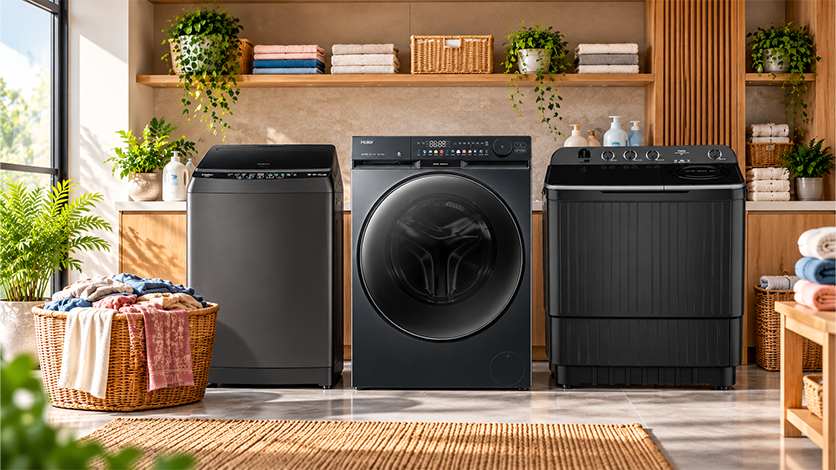
There is no single answer to which washing machine type is best. Front-load machines clean clothes thoroughly, use less water, but take longer and cost more upfront. Top-load models wash faster, are easier to pause, and work well for regular family laundry. Semi-automatic machines remain useful where water pressure is unreliable, since you can fill and drain water manually. Your choice should depend on water supply, laundry needs, available space, and budget. The right machine is the one that fits your daily routine.
So when someone asks whether top load vs front load is the better call, the honest answer depends on your budget, water situation, and how hands-on you want to be. Neither is the best washing machine type for every household.
Want a deeper breakdown of every washing machine type before you decide?
Read this blog: Types of Washing Machines: Complete Buying Guide
- Capacity and Household Size
Capacity gets treated like a vanity number, bigger sounds better, but an oversized drum with a half-empty load washes worse and wastes water. As a rough guide, 6 to 7kg suits a single person or couple, 7 to 8kg works for a small family, and 9kg upward suits larger households or anyone washing blankets often. A wider drum spreads the same kg across more surface, cutting tangling even when two machines list the same capacity.
- Wash Programs and Fabric Care
Most buyers glance at the number of wash programs printed on the box and assume more equals better, but what matters is whether the programs match what you wash. A household with a lot of ethnic wear benefits from a saree mode, and a family with young kids needs a reliable stain-removal cycle for milk, mud, and food stains. These work best paired with automatic load sensing, so the machine adjusts water and time to what is inside the drum.
- Spin Speed and Drying Performance
Spin speed, measured in RPM, decides how much water gets flung out before clothes reach the drying rack. Entry-level machines spin around 700 to 800 RPM, mid-range units run 1000 to 1200 RPM, and higher-end models reach 1400 RPM, which shortens drying time considerably in monsoon months. Delicate fabric spun at maximum RPM every time wears out faster, so a machine that lets you dial down spin speed for specific programs works better than a single fixed setting.
- Energy and Water Efficiency
Star ratings give a starting benchmark, but what moves your monthly bill is how the machine decides water levels. Fuzzy logic sensing, where the machine reads laundry weight and adjusts water and detergent accordingly, avoids filling a full tub for a half load. Inverter and direct-drive motors matter too, drawing power more precisely across different speeds instead of one fixed output.
- Motor Type, Noise and Durability
Older machines connect the motor to the drum through a belt and pulley system, which adds friction and noise and eventually wears out. Direct-drive motors skip the belt entirely, cutting vibration and noise noticeably. A unit near a bedroom that rattles through every cycle becomes a daily irritation fast, so pay attention to warranty coverage. A long motor warranty, stretching well beyond the standard period, usually signals the manufacturer trusts its own build.
- Smart Features and Convenience
Not every “smart” feature earns its place on the spec sheet. A notification telling you the wash finished, when you were already in the next room, does not solve a real problem. Automatic detergent dosing based on load weight stops the guesswork at the drawer, and app-based scheduling that has clothes ready before you leave for work genuinely changes a routine. Does it save time, or does it just add another screen to look at?
- After-Sales Service and Warranty
A spec sheet stops mattering the day the machine develops a fault and no technician is nearby. Check how many years the comprehensive warranty runs, separate from how many years the motor is covered, since manufacturers often split these numbers. Equally important is whether the brand has service centres reachable from where you live, not just listed on a website.
How We Build Washing Machines at Haier
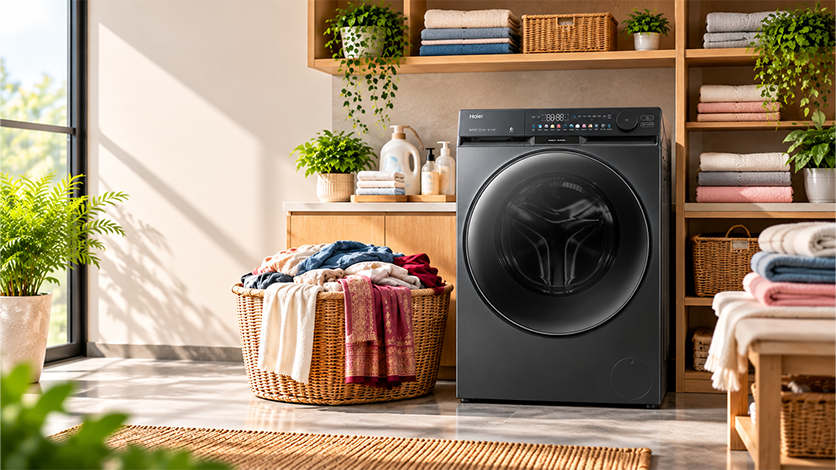
We do not build a single machine and call it universal. Our front-load range runs on a Direct Motion Motor connected straight to the drum, no belt, no pulley, so vibration drops and the motor lasts longer. Paired with a 525mm Super Drum, clothes get more room to tumble with less tangling.
Essence Wash technology pre-mixes detergent and sprays it directly onto fabric instead of letting it dissolve slowly, finishing a load in around 39 minutes. Smart Dosing calculates the right detergent amount automatically, and AI Wash reads laundry weight and fabric type to pick the cycle.
For households that prefer a top-load vs front-load setup, our top-load lineup uses Oceanus Wave Drum technology, which imitates hand-wash motion instead of a harsh pulsator. For buyers who want a simpler, budget option, our semi-automatic range still gets the job done with dependable pulsator action.
Haier India was named Best Washing Machine Brand at the NDTV Gadgets 360 Awards 2026, and that reflects this approach. Browse the full top-load washing machine lineup alongside the front-load and semi-automatic ranges to compare what fits your routine.
The Feature Checklist
Run through this before you commit to a model. It covers the questions worth answering, not the ones printed largest on the box.
- Load type that matches your water supply, budget, and how hands-on you want to be
- Capacity sized to weekly laundry volume, not just headcount
- Wash programs that cover the fabrics you own, saree mode, wool, stain cycles
- Spin speed with the flexibility to lower it for delicate loads
- Motor type, with direct-drive generally quieter and longer-lasting
- Water and energy efficiency, backed by load-sensing rather than a fixed fill level
- Smart features that save real time, not ones that just look modern
- Warranty length on the motor, and a service network you can reach
A quick reference on capacity, since it trips up more buyers than anything else on this list.
| Household Size | Suggested Capacity |
| Single person or couple | 6 to 7 kg |
| Small family (3 to 4 members) | 7 to 8 kg |
| Larger family (5+ members) | 9 kg and above |
| Bulky items (blankets, curtains) | 9 kg and above |
Conclusion
There is no single machine that deserves the crown across every household in the country. What changes your daily experience is whether the load type suits your water setup, whether capacity matches your real laundry volume, and whether the motor, warranty, and service network hold up once the newness wears off. Run your shortlist through the checklist above, and the decision gets a lot clearer.
Frequently Asked Questions
Which type of washing machine is best?
Front-load suits thorough cleaning and lower water use, top-load suits faster cycles, and semi-automatic suits tighter budgets. The right choice depends on your water supply, laundry volume, and how much manual effort you want.
What features should I look for in a washing machine?
Check load type, capacity against your weekly wash, program variety for your fabrics, spin speed flexibility, motor type, energy efficiency, and warranty coverage. Smart features help too, but only when they save real time instead of adding another screen to check.
Is top load or front load better?
Neither wins outright. Front-load machines clean more thoroughly and use less water, but cost more and run longer cycles. Top-load machines finish faster and cost less upfront. The better option depends on your budget, water pressure, and daily habits.
What is the best washing machine capacity?
The capacity should be based on household size and weekly laundry volume, not personal preference. A couple will usually need 6-7kg, a small family will easily get by with 7-8kg and larger households or bulky items will need 9kg or more.
Do more wash programs actually matter?
Only if the programs match what you wash. A large number printed on the box means little if none suit sarees, delicates, or your common stains. A few relevant, well-designed programs beat twenty generic ones you never touch.
How important is spin speed?
Spin speed decides how much water gets removed before drying, which shortens drying time considerably. Higher RPM suits cottons and towels, but delicate fabric benefits from a lower, adjustable spin setting so it does not wear out from repeated high-speed cycles