

A washing machine is one of the few appliances a household depends on almost every day. It stays in the home for years and determines the water and electricity bill every month. Most buyers still pick one without knowing what separates one machine from another. This washing machine buying guide will help you choose the perfect washing machine for your home.
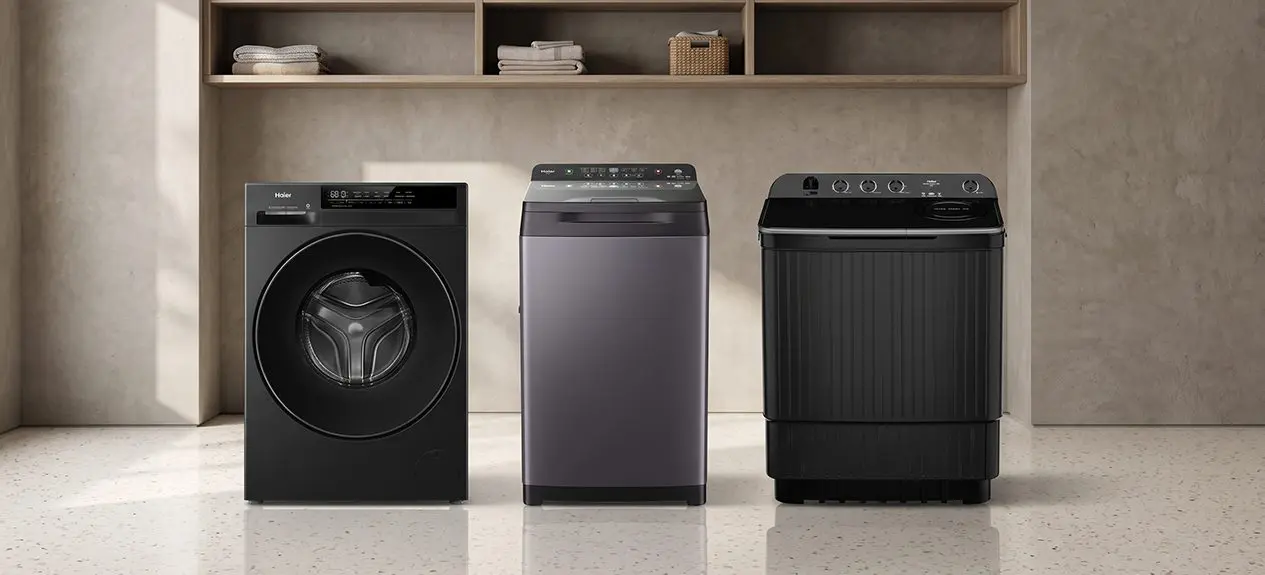
India’s market largely comes down to three types of washing machines:
- front load,
- top load, and
- semi-automatic,
each running on a different mechanism and suiting a different kind of household. The right choice starts with understanding how each one genuinely works, not with brand names or panel displays.
Types of Washing Machines in India: An Overview
Machines are grouped by how the drum handles laundry and how much manual work falls on the user. Front load and top load units are fully automatic, meaning clothes go in, a program gets selected, and the machine takes it from there. Semi-automatic machines work differently, since they still need the user to fill water, drain it, and manage spinning by hand.
1> Front Load Washing Machines
A front load machine washes clothes inside a horizontal, rotating drum that tumbles laundry through a shallow pool of water instead of submerging it completely. That motion is closer to hand washing, and it usually produces a cleaner result, since clothes keep folding through the water repeatedly.
Because the drum never fills to the top, these machines tend to use less water overall and spin faster, pulling out more moisture before drying. Cycles run longer here, and that remains the main trade-off, though newer models now come with adjustable panels to ease the loading angle.
2> Top Load Washing Machines
Top load machines rely on a vertical drum built around a central pulsator that moves clothes and water together. Loading happens from the top without bending, which works well for elderly users or anyone managing back trouble, and cycles also finish faster here.
Water usage runs noticeably higher though, since the drum needs enough water to cover the load for the pulsator to work properly. Premium top load models now pack in an in-built heater along with anti-scaling features, closing much of the hygiene gap that used to favour front load machines.
3> Semi-Automatic Washing Machines
Semi-automatic machines split the process into two separate tubs, one for washing, one for spinning. Water gets filled manually, a timer gets set, and the water drains before clothes move to the spin tub by hand. Close to nine steps make up one full cycle, including refilling water twice for rinsing.
What these machines lack in convenience, they make up for in affordability and flexibility. No continuous water connection is needed, which suits homes with patchy supply, and most roll on castor wheels for easy movement. The catch is constant supervision, plus the water wasted through repeated cycles.
How to Choose a Washing Machine: Key Factors
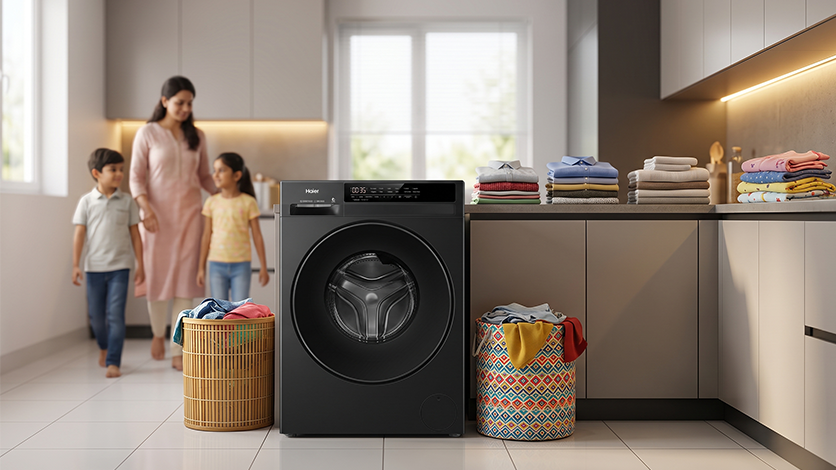
Knowing how each machine works only solves half the puzzle. The other half is matching that mechanism to what your household genuinely needs.
- Family size: Bigger households usually do better with higher-capacity front load or top load machines, since small loads waste water and power over time.
- Water availability: Homes with irregular supply often lean toward semi-automatic or top load options.
- Utility space: Front load machines can typically be stacked with a dryer, useful in smaller apartments.
- Fabric care: Households washing sarees, wool, or delicates benefit from dedicated wash programs and gentler drum movement.
- Hygiene needs: Homes with infants or older members often need steam or heater-based hot wash, since hot water handles bacteria and stains better than cold water.
- Efficiency: Fully automatic machines, front-load ones especially, measure water more accurately against load size.
| Factor | Front Load | Top Load | Semi-Automatic |
| Water usage | Lowest | Moderate to high | High, especially on rinse |
| Wash quality | Thorough, gentle on fabric | Good, effective agitation | Good, needs manual effort |
| Loading style | Front, requires bending | Top, no bending required | Two separate tubs |
| Best suited for | Hygiene-focused, larger homes | Elderly users, quicker cycles | Budget-conscious homes, irregular water supply |
| Automation | Fully automatic | Fully automatic | Manual intervention required |
Haier’s Range: Built for Every Indian Home
At Haier, we don’t think one washing machine type works for every household. That’s why we build across front load, top load, and semi-automatic categories. The idea behind each one stays the same: cleaner clothes, with less effort demanded from the person doing the laundry.
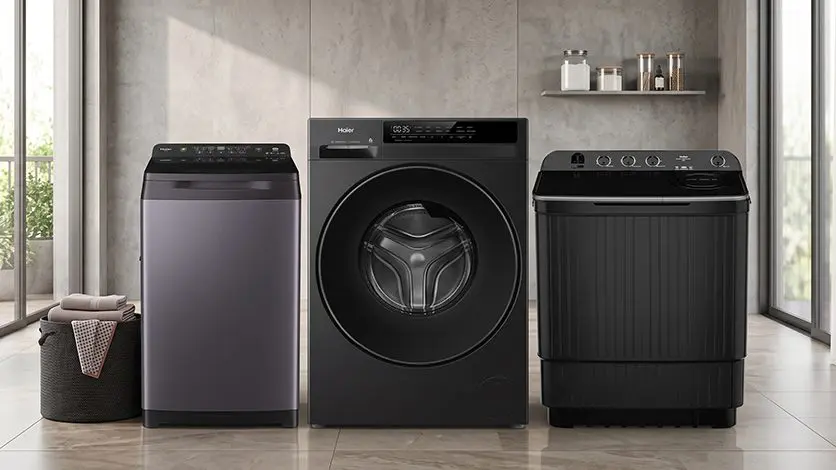
Our front load washing machines are built around a 525mm Super Drum that gives clothes more room to move and cuts down on tangling. A Direct Motion Motor connects straight to the drum, removing the belt and pulley for quieter operation over years of use. Several models also carry Essence Wash, where detergent gets pre-mixed and sprayed directly onto fabric instead of dissolving slowly in a tub of water, so clothes come out cleaner in less time. For hygiene, we’ve added Anti-Bacterial Technology, steam functions, and Ultra Fresh Air ventilation that stops the drum from developing odour.
Our top load washing machines suit households that want automatic convenience without bending down. Many models come with an in-built heater, and ours uses a butterfly-shaped design that expands the heating surface area, bringing roughly 30% better heating uniformity and faster hot washes. We’ve also added anti-scaling technology using nano-sized cleaning balls, and an Oceanus Wave Drum built to mimic gentle hand-wash motion.
For homes that still prefer our semi-automatic washing machines, durability has been the focus. These machines come with castor wheels, magic filters that catch lint efficiently, and reinforced tubs designed for repeated fill-and-drain cycles, a solid choice for households managing variable water supply.
Whichever type suits your home, our goal doesn’t change, wash thoroughly, run quietly, and hold up for years of daily use.
Best Washing Machine Types in India: A Quick Checklist
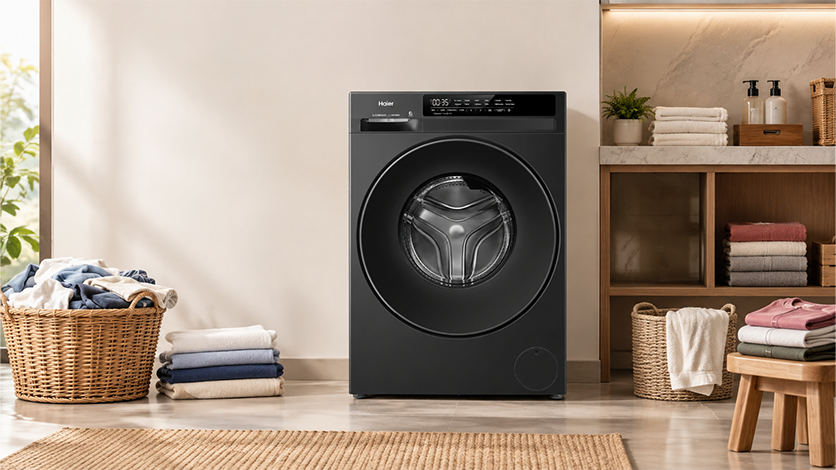
Run through this before finalising a purchase.
- Confirm your household’s average laundry load per week
- Check floor space and whether stacking with a dryer matters
- Assess water supply consistency and pressure at home
- Decide whether hot wash or steam features are a genuine priority
- Compare drum material, motor type, and warranty coverage, not just capacity
Wondering if a smart washing machine is worth the extra investment for your home?
Read this blog: Is a Smart Washing Machine Worth It? Here’s What Indian Homes Should Know
Conclusion
Choosing between front load, top load, and semi-automatic comes down to how your household lives day to day, not which machine carries the longest spec sheet. Families prioritising thorough washing and water efficiency lean toward front load machines. Those wanting automatic convenience without bending often prefer top load instead. Households working with tighter budgets, or facing inconsistent water supply, still find genuine value in semi-automatic machines. Understanding how each type works puts you in a stronger position to pick a machine that suits your home for years, not just for the first wash.
FAQs
What are the main types of washing machines?
The three main types are front load, top load, and semi-automatic. Front load and top load machines run fully automatic cycles, while semi-automatic machines need manual filling, draining, and spinning, and each suits a different kind of household.
Top load or front load, which is better?
Neither is universally better. Front load machines generally wash more thoroughly and use less water, while top load machines load without bending and finish cycles faster. The right pick depends on space, water supply, and daily convenience needs.
Which is best, an automatic or semi-automatic?
Fully automatic machines suit households wanting hands-off convenience and consistent water usage, while semi-automatic machines suit tighter budgets or irregular water supply. Automatic machines demand less supervision, but semi-automatic units remain more affordable and easier to move.
How do Haier washing machines cater to diverse requirements in India?
Haier builds across front load, top load, and semi-automatic categories, so households can choose based on space, budget, and water availability. Features like in-built heaters, Essence Wash, and Anti-Bacterial Technology are tailored to Indian hygiene and laundry needs.