

Whether you’re storing fresh groceries, keeping drinks chilled or making room for frozen foods, a refrigerator plays an important role in everyday kitchen routines. But the names of the different models can make even a simple device look confusing.
While exploring the types of refrigerators available today, you may come across terms such as direct cool, frost-free, and convertible. If you know what these terms mean, you can look past the product descriptions and get a better understanding of how the various refrigerator features work.
To better understand these features, it helps to first clear up a common question.
Fridge vs Refrigerator: Is There Really a Difference?
The words fridge and refrigerator are used interchangeably, and there is no technical difference between them. A refrigerator is shortened and more popular as a fridge. The word refrigerator may appear in product listings and appliance specifications, but the two terms refer to the same appliance, no matter the size, cooling technology or storage arrangement.
Fridge vs Freezer: Understanding Their Different Uses
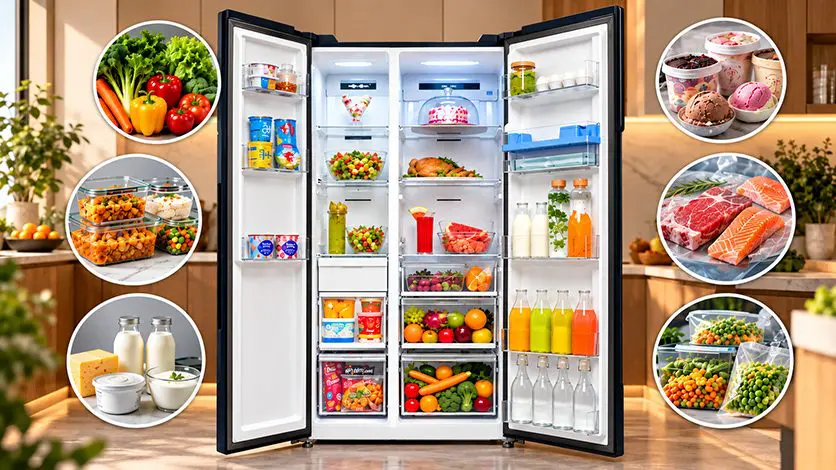
Both compartments aid in preserving food, but the manner in which you organise, pack and handle the items stored inside them can be quite different. This fridge vs freezer comparison discusses seven practical differences beyond their basic functions and operating temperatures.
| Points of comparison | Fridge | Freezer |
| Compartment arrangement | Shelves, door racks and crisper drawers help organise everyday groceries | Drawers and storage bins accommodate frozen foods and bulk purchases |
| Food packaging | Covered containers prevent spills, odour transfer and cross-contamination | Airtight, freezer-safe packaging reduces freezer burn and moisture loss |
| Handling cooked food | Shallow containers allow cooked food to cool quickly after refrigeration | Portion-sized containers make it easier to freeze and use individual servings |
| Preparing food for use | Most chilled ingredients can be used directly or cooked as needed | Frozen foods may require safe thawing before preparation, depending on the item |
| Managing available space | Frequently used items stay within easy reach, while raw meat belongs on lower shelves | Dated and labelled portions help track stored food and use older items first |
| Managing moisture | Crisper drawers help maintain suitable humidity for fruits and vegetables | Properly sealed packaging protects food from drying out during frozen storage |
| Routine maintenance | Regular cleaning of shelves, drawers and door seals helps maintain hygiene | Manual-defrost models require periodic ice removal; frost-free models defrost automatically |
Whether you’re storing fresh groceries, keeping drinks chilled or making room for frozen foods, a refrigerator plays an important role in everyday kitchen routines. But the names of the different models can make even a simple device look confusing.
While exploring the types of refrigerators available today, you may come across terms such as direct cool, frost-free, and convertible. If you know what these terms mean, you can look past the product descriptions and get a better understanding of how the various refrigerator features work.
To better understand these features, it helps to first clear up a common question.
Fridge vs Refrigerator: Is There Really a Difference?
The words fridge and refrigerator are used interchangeably, and there is no technical difference between them. A refrigerator is shortened and more popular as a fridge. The word refrigerator may appear in product listings and appliance specifications, but the two terms refer to the same appliance, no matter the size, cooling technology or storage arrangement.
Fridge vs Freezer: Understanding Their Different Uses
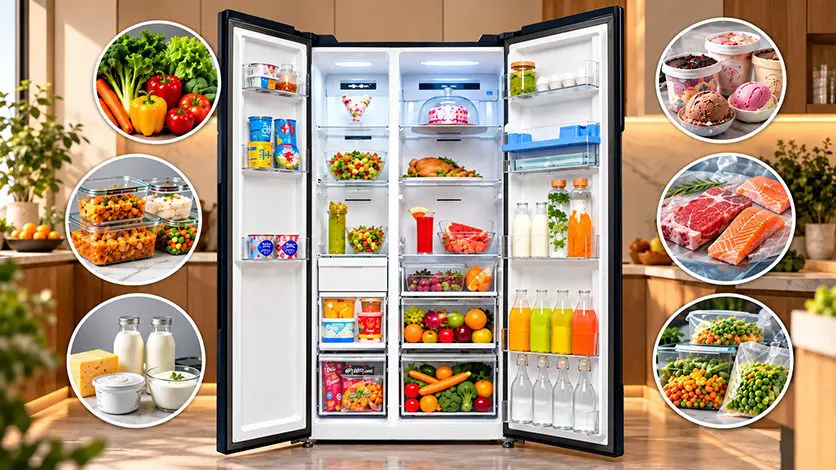
Both compartments aid in preserving food, but the manner in which you organise, pack and handle the items stored inside them can be quite different. This fridge vs freezer comparison discusses seven practical differences beyond their basic functions and operating temperatures.
| Points of comparison | Fridge | Freezer |
| Compartment arrangement | Shelves, door racks and crisper drawers help organise everyday groceries | Drawers and storage bins accommodate frozen foods and bulk purchases |
| Food packaging | Covered containers prevent spills, odour transfer and cross-contamination | Airtight, freezer-safe packaging reduces freezer burn and moisture loss |
| Handling cooked food | Shallow containers allow cooked food to cool quickly after refrigeration | Portion-sized containers make it easier to freeze and use individual servings |
| Preparing food for use | Most chilled ingredients can be used directly or cooked as needed | Frozen foods may require safe thawing before preparation, depending on the item |
| Managing available space | Frequently used items stay within easy reach, while raw meat belongs on lower shelves | Dated and labelled portions help track stored food and use older items first |
| Managing moisture | Crisper drawers help maintain suitable humidity for fruits and vegetables | Properly sealed packaging protects food from drying out during frozen storage |
| Routine maintenance | Regular cleaning of shelves, drawers and door seals helps maintain hygiene | Manual-defrost models require periodic ice removal; frost-free models defrost automatically |
What Are the Different Types of Refrigerators?
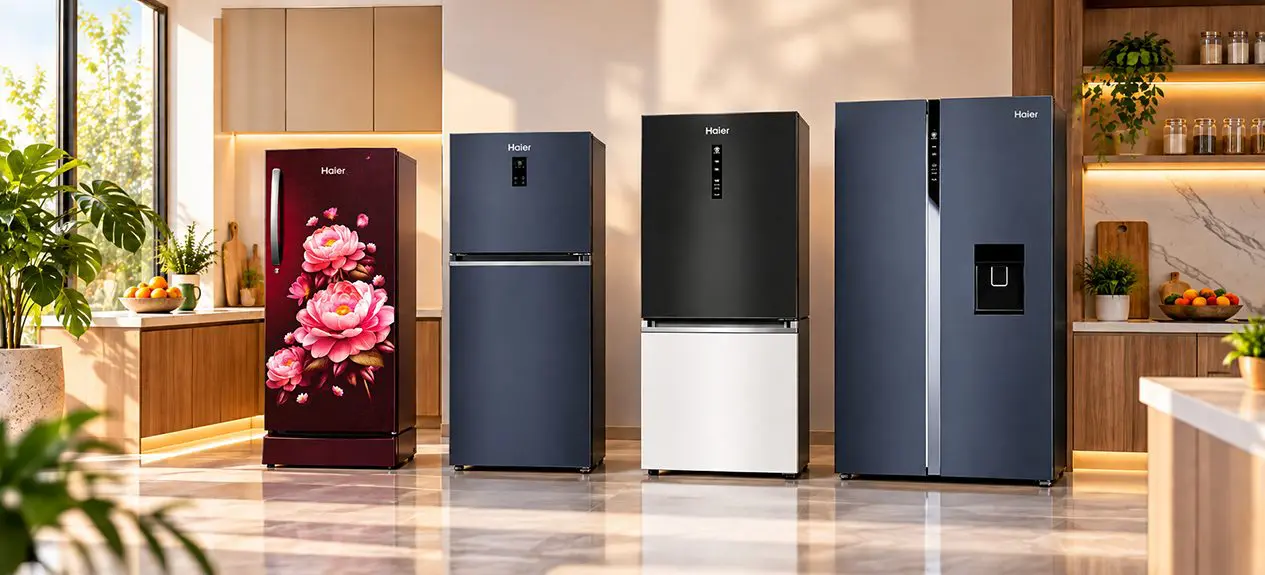
Refrigerators come in different designs, with each offering a distinct way to organise fresh and frozen foods. The number of doors, freezer placement and internal storage layout can vary from one model to another. Here are four common types of refrigerators you will come across:
- Single-Door Refrigerators: These refrigerators have one main door, with a smaller freezer compartment located inside. Their compact design makes them suitable for smaller kitchens and households with limited storage requirements.
- Double-Door Refrigerators: These models have separate doors for the fridge and freezer compartments. Top-mounted refrigerators have the freezer above the fresh-food section, while bottom-mounted models place it below.
- Side-by-Side Refrigerators: These refrigerators have two tall doors that open outwards, typically with the freezer on one side and the fresh-food compartment on the other. Their vertical storage arrangement provides dedicated space for frozen and refrigerated items.
- Multi-Door Refrigerators: These models have three or more doors, often with separate compartments for different storage needs. French-door refrigerators, for example, usually have two upper doors for the fresh-food section and a freezer drawer below.
Confused about whether your choice is ideal enough?
Read through: Matching Your Style: A Guide to Choose the Perfect Fridge for your home
Direct Cool vs Frost Free: What Do These Terms Mean?
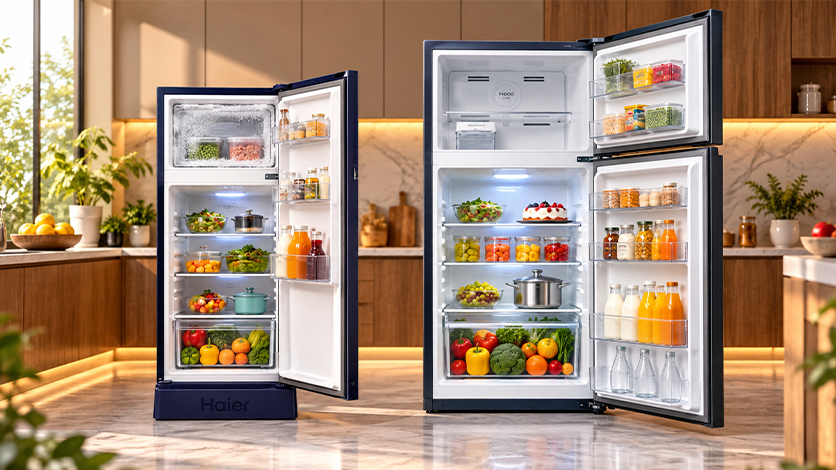
A direct cool refrigerator maintains a low temperature inside the appliance by using natural airflow. This cooling system is often employed in single-door refrigerators with a smaller freezer compartment inside the main cabinet. While the refrigerator is running, ice slowly builds up surrounding the freezer section. This build-up has to be removed manually by defrosting (switching off the cooling and allowing the ice to melt).
Instead, a frost-free refrigerator uses fans to circulate the cold air throughout its interior spaces. It also features an automatic defrost system that cycles periodically to defrost the cooling coils, preventing excessive ice build-up. That means you won’t have to defrost it manually on a regular basis, and it will make the appliance easier to maintain. Multi-door and double-door refrigerators are usually frost-free cooled side-by-side.
What Is a Convertible Refrigerator and How Does It Work?
A convertible refrigerator allows you to change the cooling options of some compartments according to your storage needs. Depending on the model, you can switch between modes for fresh groceries, frozen food or change household requirements. Here are four facts on how Convertible Fridges work:
- It allows you to change the use of some compartments. Some models allow you to convert the freezer into additional refrigerator space when you need more room for fresh groceries. That sort of flexibility can be a great bonus when your storage needs change from day to day.
- The modes are different and have different temperatures. Convertible refrigerators have special cooling modes to fit specific storage needs. These options allow you to vary the temperature of supported compartments to keep different food items at proper conditions without having to manually control each temperature change.
- The cooling system will switch to the mode you selected. In switch mode, the refrigerator controls the cooling to achieve the new temperature setting in the selected compartment. The duration of this process varies depending on the appliance, the amount of food stored and the difference between the previous and selected temperatures.
- The features might be different from one model to another. Some fridges may let you use the freezer as extra fridge space. Others have multiple operation modes, or separately adjustable compartments. It is important to check the modes and temperature settings to understand how they work in a particular model.
Other Basic Refrigerator Terms Worth Knowing
Besides cooling technology and storage design, knowing a few refrigerator basic terms can help you compare product specs and identify the features that matter for your household.
- Gross Capacity & Net Capacity: Gross capacity is the total internal volume of the refrigerator, while net capacity is the usable space after internal fittings have been removed. Both are measured in litres, and net capacity gives you a better idea of how much food the appliance can take.
- BEE Star Rating: The Bureau of Energy Efficiency (BEE) rates refrigerators on a scale from 1 to 5 stars. The higher the rating, the more energy efficient the appliance is in its category and rating period. Also, on the energy label, you can compare models with the annual electricity consumption in kWh.
- Inverter Compressor: It is not a regular compressor that operates at a steady speed, but an inverter compressor adjusts its speed to control the temperature. This allows the refrigerator to keep a more consistent temperature while juggling electricity consumption as cooling requirements change.
- Stabilizer-Free Operation: The refrigerator can function within a specified voltage range without the need for an external stabiliser. However, different models support different voltage ranges, so it’s important to check the manufacturer’s specifications, especially in areas with frequent voltage fluctuations.
How Haier’s Refrigerator Range Brings These Features Together
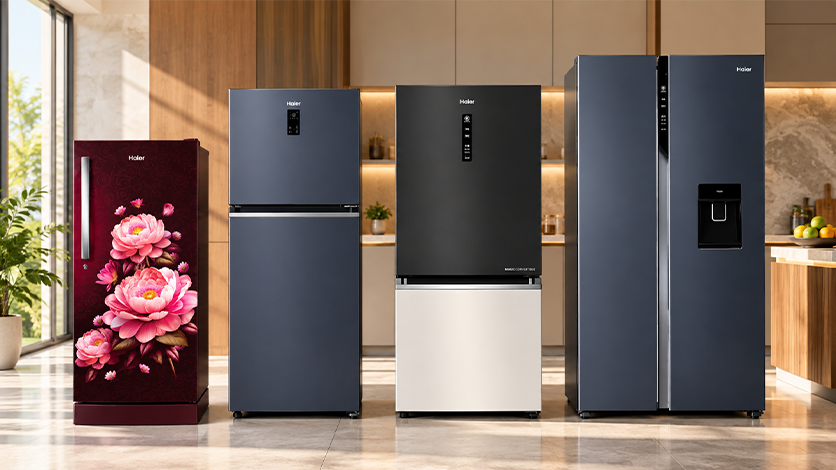
Seeing how features work in an actual appliance makes it easier to understand refrigerator terminology. Haier offers a variety of refrigerators with cooling technology, compartment configuration and adjustable storage to fit a variety of household needs.
1> Direct cool technology features throughout our single door range
Our single door refrigerators feature direct cool technology for a cool storage environment with a separate internal freezer compartment. 190L 5 Star Red Blossom Direct Cool Refrigerator with 1 Hour Icing Technology, Inverter Compressor & Stabiliser-Free Operation. It also has a base drawer for storing things like potatoes and onions outside the refrigerated section.
2> Our top-mounted range offers convertible storage combined with frost-free cooling
Our top-mount refrigerators feature separate compartments for fresh and frozen foods, plus automatic defrosting to help minimise the need for manual maintenance. The 358L Magic Convertible Top Mount Refrigerator comes with 10-in-1 convertible modes, so you can change the cooling modes according to your storage needs. It also comes with Magic Cooling, Triple Inverter and Dual Fan Technology and a digital display to control the refrigerator settings.
3> Bottom-mount fridges put fresh food storage at an easily accessible height
Our bottom-drawer range has the fresh-food compartment above the freezer, making it simpler to grab things you use a lot. The 325L Vogue Bottom Mount Refrigerator provides this setup with frost-free cooling and 14-in-1 convertible modes. Cooling performance is enhanced with support from its Triple Inverter and Dual Fan Technology, and a separate freezer compartment offers dedicated space for frozen foods.
4> Our Convertible Side-by-Side Models Grow with Your Storage Needs
Our convertible side-by-side refrigerators give households the ability to customise the fresh-food and freezer storage balance. The 596L Side-by-Side Refrigerator offers 100% convertible operation, providing the flexibility to use the freezer as additional fridge space when needed. It also has Expert Inverter Technology, Deo Fresh Technology and an external water dispenser that provides different functions within one appliance.
Conclusion
Knowing the difference between a fridge and a refrigerator, and the different cooling technologies and storage options, can make things a lot easier in terms of picking the right appliance. Direct cool, frost-free, and convertible refrigerators and more with a host of features to suit your daily household needs.
Browse Haier’s refrigerator line-up to find a model that provides the right combination of storage space, cooling technology and convenience for your home.
FAQs
Is it called a refrigerator or a fridge?
Both words are correct and refer to the same domestic appliance. Its full form is refrigerator. The informal version used in everyday speech is fridge. The word “refrigerator” is used both in product descriptions, user manuals and technical specifications. As a general rule.
Are a fridge and a refrigerator the same thing?
Yes, a refrigerator and a fridge are the same appliance. Both are meant to help keep food and drinks cold, helping to keep their freshness. The only difference is in the wording and does not imply any difference in cooling technology, storage capacity or appliance design.
What is a refrigerator used for?
A refrigerator is used to keep food and drinks that spoil at a low, temperature that is controlled. It helps to slow down the growth of bacteria and food spoilage, allowing products like milk, vegetables, fruits and cooked meals to stay fresh longer. Freezer sections in fridges are also used to store frozen food and make ice.
What is the difference between a fridge and a freezer?
The difference between a fridge and a freezer is mainly the temperature in which they operate and the reason for their storage. Refrigerators are used to keep food cold ( normally at or below 4 °C ) but not frozen. Freezers, however, operate at much lower temperatures (usually around -18°C) to freeze food and preserve frozen products for longer durations.
What is a frost-free refrigerator?
Frost-free refrigerators have automatic defrosting and fan-assisted air circulation to prevent too much frost from building up inside the refrigerator. You do not have to defrost it manually, as in a direct-cool fridge freezer. Cold air flows through the fridge compartments, so daily upkeep is simpler.
What is a convertible refrigerator?
A convertible refrigerator allows certain compartments to operate at different temperature settings according to your storage requirements. For example, selected models allow the freezer compartment to be converted into additional refrigerator space when you need more room for fresh groceries. The available modes and convertible compartments depend on the refrigerator model.
What are two types of refrigerators?
Based on their cooling and defrosting systems, refrigerators are commonly classified into two main types: direct cool and frost-free. Direct cool refrigerators primarily use natural air circulation and generally require manual defrosting. Frost-free refrigerators use fan-assisted cooling and automatic defrosting to manage frost buildup. Refrigerators can also be classified by their design, such as single-door, double-door, side-by-side and multi-door models.