
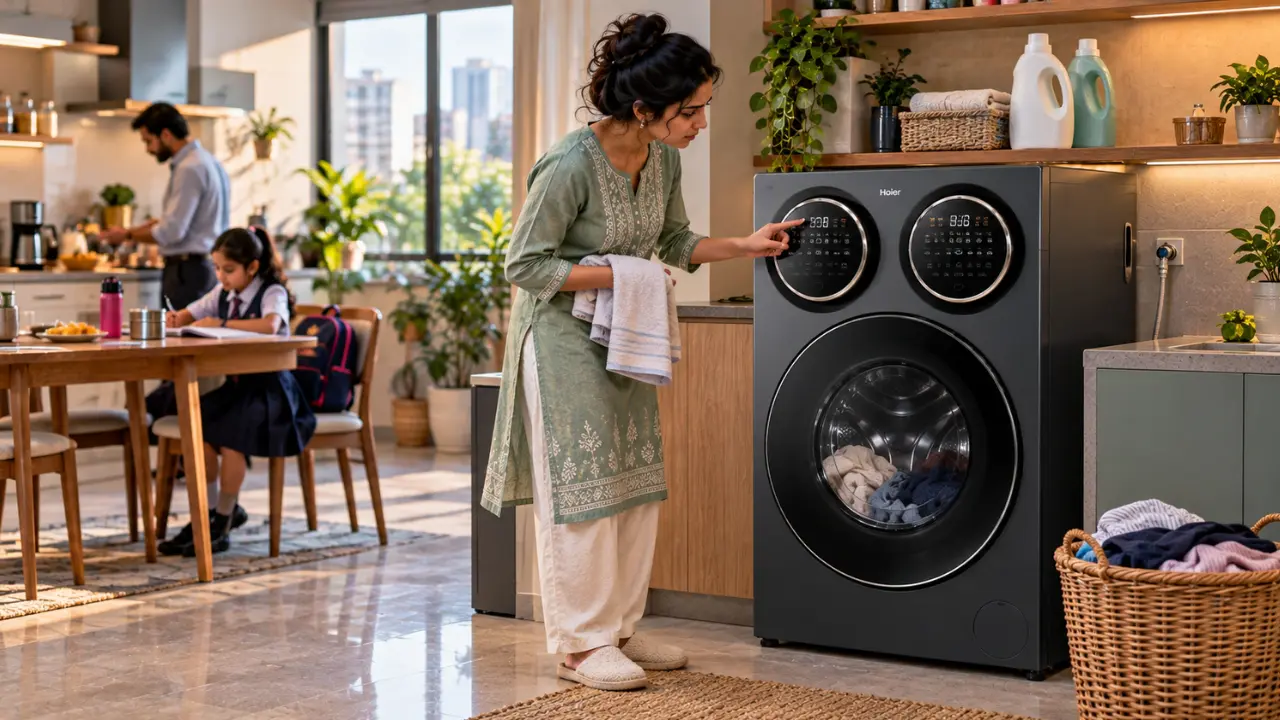

You have put in the washing machine, put in the detergent, chosen the wash cycle and pressed the Start button. Everything looks normal.
That is, unless there is one problem.
The washing machine is not filled with water.
After another minute, you might think it’s taking too long. The display is functioning, the door is shut and there is no known water sound in the drum.
Never presume that it has been a costly mistake until you’ve thought of a much simpler explanation. May be due to blockage of the water inlet valve or filter.
This is a common situation with washing machines, especially in Indian households, which may suffer water pressure changes or have overhead tanks and sediment in the water supply that can impact the washing machine.
The good news? Not all water filling problems are serious problems.
If you need to repair your washing machine, knowing how the water goes through the machine may assist in making the diagnosis and/or knowing when the problem is beyond your abilities.
To Begin With, You Need to Understand How Water Gets into the Washing Machine
An automatic washing machine doesn’t simply allow water to flow continuously into its drum.
Rather, it employs an electrically controlled part known as the water inlet valve to control the water flow at various points in the washing cycle.
If a programme is chosen, the wash cycle is controlled by the washing machine’s control system, which will decide when water is needed. The inlet valve opens to let water flow through the water supply hose.
The machine stops the flow of water once a certain level has been reached.
Simple enough.
However, there are a number of things that must come together to make this process work:
- Water supply hose properly connected
- Sufficient water pressure from the domestic supply
- An unobstructed inlet filter.
- A water inlet valve that is working properly.
- Proper sensor to control system communication
If one of these connections malfunctions, your washing machine could have trouble filling.
But sometimes it is not the machine that’s the problem.
Does Your Washing Machine Have a Problem With an Inlet Valve?
Here’s where many homeowners make an understandable mistake.
If a washing machine is not filling it doesn’t necessarily indicate that the inlet valve has failed.
There are a few other conditions that could cause symptoms similar to this.
1. The Water Supply Tap Is Partially Closed
Surprisingly, it does happen, but it’s a very common mistake.
It may be a result of a hose pipe being switched off during washing. Or perhaps it was not opened fully after doing plumbing work.
If the tap is partially closed, it may not be able to flush the water as quickly and cause a delay in the washing cycle.
Ensure that the connected water supply tap is completely opened.
2. Water Pressure Is Too Low
In many Indian households overhead water tanks, pressure pumps or municipal water supplies are used.
There might be times when the water pressure to an automatic washing machine is lower than normal, and the machine may not receive enough water or take longer to fill.
This may be evident in apartments that have multiple households sharing their water supply.
3. Inlet Hose Is Bent
If a washing machine is located near the wall, it can crush the washing machine’s inlet hose.
The machine can be completely installed on the front, and the hose on the rear is bent.
This frequently leads to limited water flow.
4. Sediment Has Been Collected in the Inlet Filter
This is another option that should be explored.
Over time, small particles of sand, rust or other sediment may build up around the inlet filter.
The more the filter clogs, the less water will flow.
The machine may eventually have a problem filling.
5. The Water Inlet Valve Is Faulty
If the external water supply, hose and accessible filter is working properly the valve can be professionally inspected.
The valve may not open correctly due to an electrical failure or mechanical failure.
It’s important to note that a clogged filter and an inlet valve malfunction are not the same issue.
What Happens if the Inlet Filter on the Washing Machine Is Clogged?
Consider the mini mesh filter located at the inlet into the water.
It functions to stop some particles from going into the washing machine’s inner water system.
Particle accumulation is a possibility over time, however.
If there is noticeable sediment in the water then this buildup can occur more often in homes.
The machine is now supplied with less water than it is meant to be fed with as the opening narrows.
You might notice:
- Unusual slow water flow into the washing machine
- The delay in the start of the wash programme
- The machine stopping before the washing cycle starts
- An error related to the water inlet that is displayed.
- A washing machine that doesn’t fill even when the tap is open.
Again, all of these symptoms can also signify other faults.
Therefore, being safe is best – you should check the water supply before concluding that the inlet valve is faulty.
Washing Machine Not Filling With Water? Make the Following Checks First
Homeowners can make a few simple checks before calling for a service visit.
The secret lies in recognising what is safe to do by yourself and what isn’t.
Step 1: Determine if There Is Any Water Available
Begin with water.
If your house has an overhead tank, check to see if there is enough water in the tank.
It is also important to see if there is normal flow of water through taps in the area.
If the power goes out while the washing machine is running, then there is not much point looking at the washing machine in detail.
Step 2: Check the Water Supply Hose
Unplug and turn off the washing machine when checking the installation.
Look behind the appliance for obvious bends, twists or compression in the inlet hose.
Be sure the hose is not being placed between the washing machine and the wall.
Don’t yank or strain connections or connections.
Step 3: Check for an Inlet Filter Blockage
There is a small mesh filter in the vicinity of the water inlet connection of many automatic washing machines.
This filter can be cleaned, depending on the model.
But there are differences between machines about the correct procedure.
Read the manufacturer’s user manual first before trying to clean the filter.
If cleaning is allowed, power and water should be turned off before cleaning. Never force or tear out a filter, or break open the internal electrical components.
If you have a model that you aren’t familiar with, it might be better to seek help.
Step 4: Restart the Washing Machine
If everything is normal for the external water supply and connections, restart the appliance following the operating instructions.
Choose a suitable wash programme; observe if water flows back in.
When the machine still shows an error message or doesn’t fill, don’t restart the machine repeatedly.
The problem could be a technical one.
When to Hire a Washing Machine Repairman?
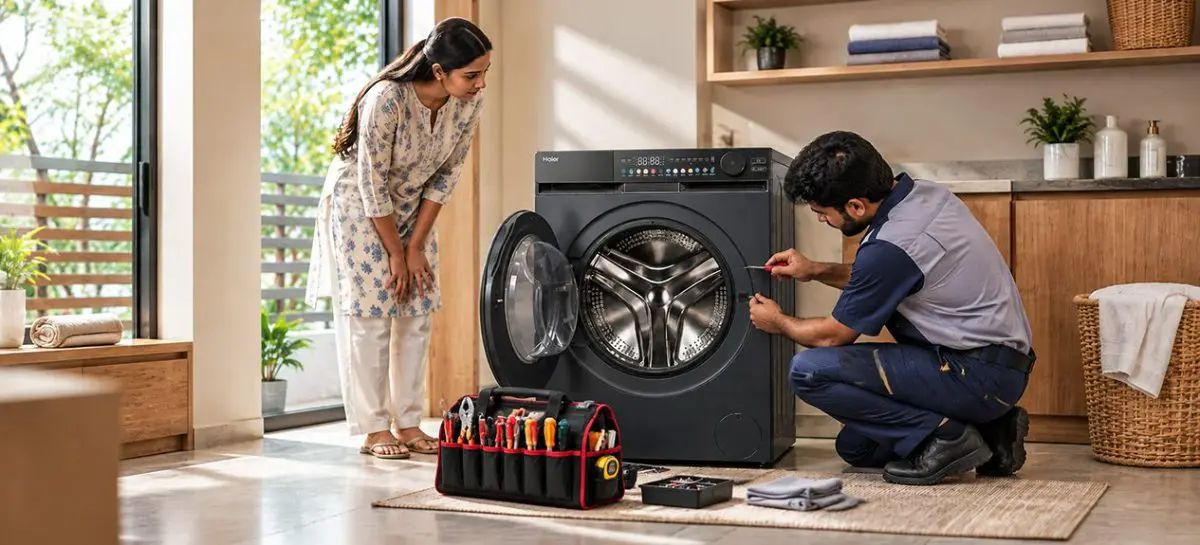
However, some washing machine issues cannot be addressed by simple cleaning.
Faulty inlet valve, damaged wiring, sensor and control system issue may need specialist diagnosis.
When thinking about arranging a professional service consider:
- The washing machine keeps on filling even when water supply is present.
- Water does not stop flowing even after the machine should have stopped filling.
- Repeated water inlet related error messages are shown.
- Leaks are seen around water connections.
- The machine makes strange noises in its electrical operation or appears to be misbehaving.
If water just keeps running, turn off the water supply and do not use the appliance, until it has been checked.
Do not test an electrically operated inlet valve when the appliance is plugged in.
Do not replace any internal parts without the proper technical knowledge.
A professional technician can tell you if it is a blocked filter, broken valve or something else that needs to be fixed in the washing machine.
Making Everyday Laundry More Convenient Is Haier’s Way of Doing It
Haier is doing it the easy way with everyday laundry.
We need water, and that’s a reminder of how much we rely on our washing machines.
If it all goes as it should, we really don’t give a damn about it. The clothes go in, the programme takes place and laundry gets done.
But choosing a washing machine isn’t only about solving occasional maintenance concerns.
It’s also about finding an appliance that makes everyday washing more organised and convenient.
Haier India’s washing machines are tailored to meet the practical needs of washing, addressing various types of fabrics, frequent laundry loads and hectic family schedules for Indian households.
For instance, Haier’s Triple Drum Washing Machine (HW120-DM12LC3GNU1).
This model features three independently controlled washing drums in a single drum machine, which eliminates the need for a traditional single drum setup.
Three Independent Drums for Different Laundry Needs
Picturing coming home with office clothes that need to be washed, for kids, their clothes that need special care and a bigger stack of regular laundry.
Typically, these could be separated into various washing loads.
The Haier Triple Drum Washing machine offers 3 separate drums to wash up to 12 kg of clothes altogether.
Its configuration includes:
- One 10kg drum for the larger loads of everyday laundry.
- A large drum (1 kg) for larger loads:
- Another 1kg top drum for top washing separately
The Direct Motion Motor and controls are separate for each drum.
The machine can be used to run all three drums simultaneously with each drum independently running its chosen programme.
This type of setup may be helpful to households who want to wash smaller clothes in a different bowl.
Smart Dosing Takes the Guesswork Out of Detergent Use
Ever added detergent in the washing machine and wondered if you added too much?
It’s a familiar situation.
The Haier Triple Drum Washing Machine comes with a Smart Dosing technology that dispenses the detergent and fabric softener automatically.
The model has a detergent compartment of 900ml and a softener compartment of 800ml.
This saves the need to measure each compatible wash for detergent.
Multi-Drum AI Wash for More Convenient Programme Selection
Sometimes, when you have varying laundry loads to wash, selecting the right washing programme seems to be an unnecessarily complicated process.
Haier has introduced a Multi-Drum AI Wash function that suggests the wash programmes according to the weight of the laundry.
The machine also comes with various wash programs such as those for baby clothes, hygiene purposes, as well as cotton and silk.
Its three drums have different programmes to choose from.
This provides family members with greater options for washing their clothing as per the fabric needs.
Quick Clean for Busy Laundry Days
Not all washing loads require an extended programme.
The Haier Triple Drum Washing Machine has a Quick Clean function for appropriate laundry.
The product manual lists the wash time as 1:29, but this is shortened to 46 minutes.
Specific washing needs will vary according to the washing programme and laundry conditions.
A shorter wash time can be convenient for those who have jobs and family responsibilities.
Can Smart Washing Machine Features Prevent Inlet Valve Blockages?
This is a crucial difference.
Various features like AI Wash, Smart Dosing and independent washing drums are meant to add washing and laundry convenience.
They need not be confused with systems that automatically prevent inlet valve blockages.
The listed features of the Haier Triple Drum Washing Machine do not imply that it has the ability to cause a washing machine to detect or remove a blocked water inlet valve without the assistance of a user.
It just needs a suitable water supply and correct installation like other automatic washing machines.
Applying good external water connections maintenance is still an important component of appliance maintenance.
Here Are Some Easy Tips to Keep Water Flowing Properly
You don’t need an elaborate maintenance routine to look after your washing machine’s water connections.
With a little attention, avoidable interruptions can be prevented.
Here are some practices to keep in mind:
- Regularly inspect the inlet hose for any noticeable bending or damage.
- Make sure that the home water supply complies with the installation specifications of the machine.
- When a user manual for any recommended inlet filter cleaning is available, follow the instructions provided.
- Do not push the washing machine against the wall.
- Schedule a professional inspection when filling issues frequently occur.
- Only use compatible replacement parts and hose as recommended for the appliance.
If sediment-laden water often occurs in your home, consult a professional to determine if extra water supply maintenance is necessary or suitable.
Don’t add unauthorized accessories or change the plumbing inside the appliance.
Make Your Washing Machine Work All Day for All Your Laundry
Water won’t fill into a washing machine and this can ruin an otherwise ordinary day.
Fortunately, the cause could be as simple as a closed tap, a limited hose or a clogged inlet filter.
The logical first step is to examine the outside water supply, then do the maintenance using the manufacturer’s procedures, and ask for professional help if there is a problem inside.
If you are looking for a change in how your household does laundry, then the Haier Triple Drum Washing Machine (HW120-DM12LC3GNU1) is an alternative to your regular laundry routine.
It offers 3 independently controlled drums: Smart Dosing, Multi-Drum AI Wash and Quick Clean, providing added flexibility in washing various kinds of clothes.
Take a detailed look at Haier India washing machine range and find an appliance that meets the laundry needs of your family.
Remember: Regardless of whether you’re employing a standard automatic washing machine or a multi-drum washing machine, installation and routine maintenance of the washing machine will inevitably be a key aspect of dependable operation on a day to day basis.
Frequently Asked Questions
1. Why is my washing machine not filling with water even when the tap is open?
Possible reasons include low water pressure, a bent inlet hose, a clogged inlet filter or a faulty water inlet valve. Start by checking the external water supply and connections.
2. Can a blocked inlet filter stop a washing machine from working?
Yes. A heavily clogged inlet filter can restrict water flow and prevent the machine from receiving sufficient water to begin or continue a wash programme.
3. Can I clean the washing machine inlet valve myself?
Some models allow users to clean an accessible inlet mesh filter according to the manufacturer’s instructions. However, internal inlet valve repairs and electrical testing should be handled by qualified technicians.
4. How often should I check my washing machine’s inlet filter?
There is no single maintenance interval suitable for every machine. Follow your model’s user manual and consider the condition of your household water supply.
5. Does the Haier Triple Drum Washing Machine support separate washing?
Yes. The Haier Triple Drum Washing Machine (HW120-DM12LC3GNU1) features three independently controlled drums with a combined maximum capacity of 12 kg, allowing different laundry loads to be washed separately.