
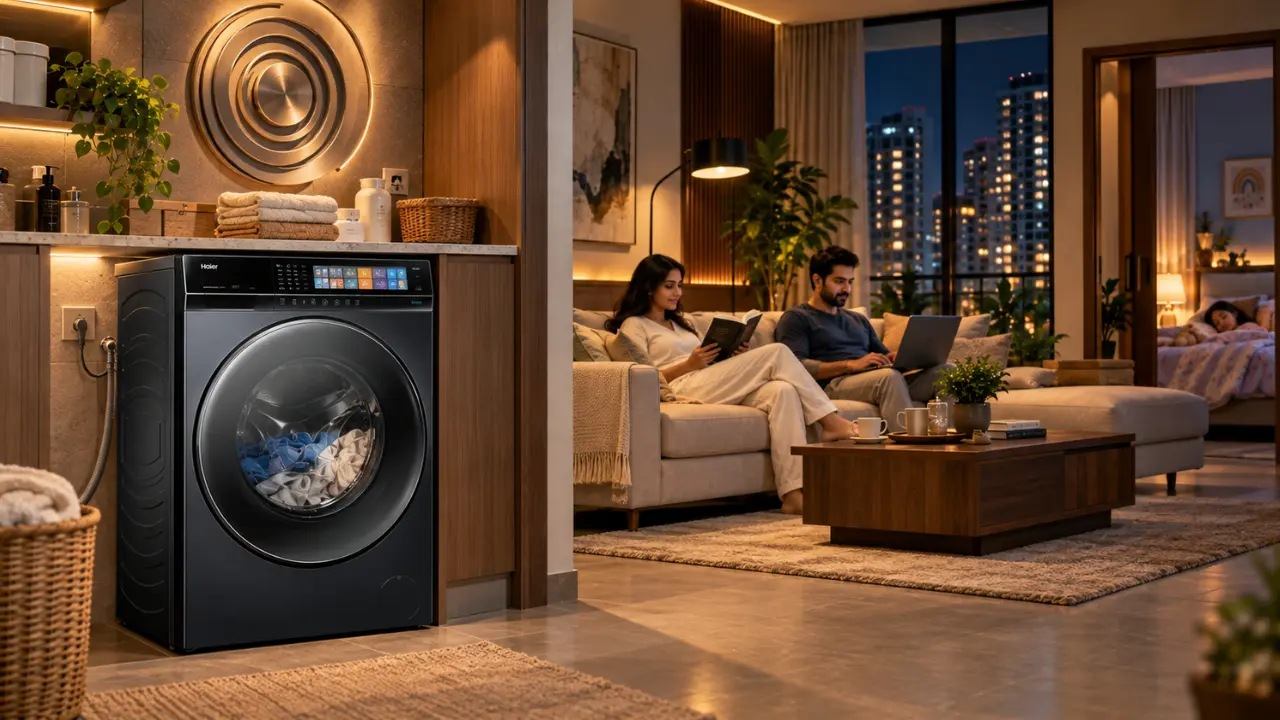

There’s much more to it than comparing washing machine sizes, wash programmes and star ratings when choosing a washing machine. One more aspect that is important to grasp before buying is the motor drive system. It affects the way the machine conveys power to the drum, making it relevant when comparing noise, vibration, maintenance and washing experience.
The two popular systems are belt drive and direct drive. They are both used to rotate the drum and support the wash cycle, but in different ways. Knowing what those variations are can enable Indian households to select a washing machine that matches their laundry routine, home environment and goal of finding a washing machine that will serve them for years.
Haier India’s front-load washing machines are designed to provide users with convenient, fabric-friendly laundry solutions. Its range includes models with a Direct Motion Motor, making it worth exploring the concept of direct drive and its implications for everyday use.
Therefore, before picking the washing machine that will get a place in your house, let’s take a look at the mechanisms that power each wash.
What Is a Belt Drive Washing Machine?
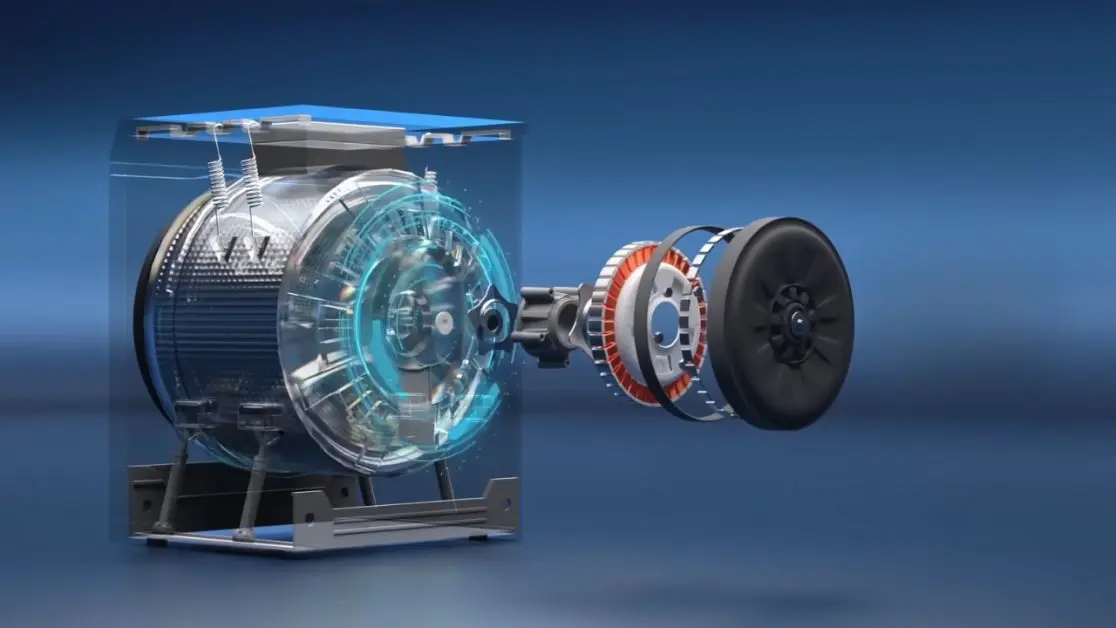
A belt drive washing machine is a type of washer that operates by using a belt as its drive mechanism.
A belt drive washing machine uses a motor that is attached to the drum mechanism via a belt and pulleys. When the motor is running, the belt rotates the drum through the various stages of the wash cycle.
It’s like the chain and gears of a bicycle, except that the parts are used in a different way. The belt is used to transfer this movement to the mechanism that rotates the drum, and the motor provides the movement.
Belt-driven systems have been used in washing machines for many years. They are a tried-and-tested design, but the belt is also another piece of mechanical equipment that needs to be in good condition.
How Does a Belt Drive System Work?
The process is fairly simple:
- The motor begins to run: Electrical energy operates the motor.
- The belt transfers movement: The motor is connected to a pulley, which is connected to the belt and moves it.
- The drum rotates: This movement is passed on to the drum via the connected mechanism.
- The wash cycle continues: Drum motion and speed alternate depending on the selected programme.
The belt is under mechanical stress during normal use. However, depending on the machine design, use and maintenance, it may lose its performance over time.
This isn’t to say that all belt-driven washing machines are loud or do not work properly. Product quality, installation, load distribution and component design are important. But the drive mechanism is one, not the only, measure of the performance of a washing machine.
What Is a Direct Drive Washing Machine?
In a direct drive washing machine, the motor is directly mounted to the drum mechanism instead of using a traditional drive belt. This eliminates the intermediate moving component between the drum and the motor, minimising the number of moving parts involved in transferring movement.
Haier’s Direct Motion Motor technology is based on this approach. The brand describes it as a beltless system designed for quiet and vibration-conscious operation, with an emphasis on efficiency and durability.
The attraction for a household is rather straightforward. A washing machine is supposed to accommodate regular laundry loads without being a nuisance. The design of the motor can play a part in that experience, but construction, floor stability, load size and spin speed are also factors affecting noise and vibration.
How Does Direct Drive Technology Work?
The motor transfers movement to the drum assembly without the use of a belt.
What this translates to practically is:
- Reduced number of transmission parts: No conventional drive belt between the motor and drum.
- More direct movement transfer: The motor drives the drum without using a belt.
- Potentially quieter operation: By removing belt-related movement, certain sources of mechanical noise can be reduced.
- Lower belt-related maintenance requirements: No drive belt to stretch, slip or require replacement.
Maintenance-free is not synonymous with direct drive. There are still other components that may need servicing, and installation is crucial. The advantage is not that it will never require repairs, but that it uses a simpler drive arrangement.
Belt Drive vs Direct Drive: The Key Differences
They are both used to spin clothes and wash them, but the difference lies in how the motor transfers movement and how the system may affect daily operation.
| Feature | Belt Drive | Direct Drive |
| Drive mechanism | Transfers motion from one place to another using a belt and pulleys | Motor is directly connected to the drum mechanism |
| Number of transmission components | Contains a drive belt | Removes the traditional drive belt |
| Noise | Depends on the condition of the motor or belt, installation and load | May help reduce some mechanical noise sources |
| Vibration | Depends on the design of the machine and its installation | May provide smoother operation, depending on the design |
| Belt maintenance | Inspection or replacement of belts may be necessary at some point | No drive belt to maintain or replace |
| Energy consumption | Depends on motor efficiency, controls and wash programme | Depends on motor efficiency, controls and wash programme |
| Purchase price | Varies by model and features | Varies by model and features |
| Overall lifespan | Depends on component quality, usage and maintenance | Depends on component quality, usage and maintenance |
There is one thing to note: direct drive is not a guarantee of reduced electricity usage, better cleaning or a longer lifespan in every instance. These outcomes rely on the complete washing machine and not just the drive mechanism.
When comparing models, the motor should also be taken into account alongside wash performance, capacity, available programmes, warranty coverage and the specifications offered by the manufacturer.
Which Washing Machine Motor Is Suitable for Indian Homes?
This is subjective and depends on what is important to your family.
Laundry routines differ across India. A small family could wash a few everyday clothes at a time, while a larger family may handle school uniforms, office clothes, towels, bedsheets and heavier garments in the same week. Some families prefer doing laundry early in the morning, while others like to do it after work.
These practical differences make some features more valuable than others.
1. If You Prefer Quieter Laundry Cycles
Having a washing machine in the proximity of a bedroom, living area or small kitchen in an apartment setting can make noise more noticeable.
Direct drive avoids the traditional belt connection between the motor and drum and could help reduce mechanical noise from the drive system. Haier’s Direct Motion Motor is designed for quiet and smooth operation, and some models feature a Night Wash function.
But the decibel rating is more important than just the motor label. Even if the machine is levelled and the load is distributed evenly, it is still possible to experience vibration, especially at high spinning speeds.
Things to watch out for: Compare published washing and spinning noise levels, and make sure the machine can be installed on a solid, level surface.
2. If You Want to Decrease Belt-Related Maintenance
There is another component in a belt drive system that is prone to wear. That type of maintenance consideration is eliminated with direct drive.
This is helpful when purchasing a washing machine with a simpler transmission system. However, there are other components on a washing machine that can wear or need maintenance, such as seals, bearings, pumps and electronic components.
Things to check: Consider the motor warranty, comprehensive warranty and service terms. Not all parts of the washing machine are necessarily covered under the motor warranty.
3. If Energy Efficiency Is a Priority
There are several factors that influence electricity usage: the programme, water temperature, load size, spin settings and motor efficiency.
While direct drive can support efficient operation, it is not enough to determine how much electricity a specific machine will use in your home without looking at the complete system. A good washing programme can be equally crucial.
A washing programme designed for lightly soiled everyday clothing, for example, may be better suited to a household than choosing an intensive programme for every wash.
Selected models come with the Eco Wash feature, which uses automatic weighing to optimise the water level and washing duration and help save water and energy.
Things to compare: Check the applicable energy-rating information and product specifications, not just the drive mechanism.
4. If Fabric Care Is a Concern
The drum structure and movement, wash programme and water management are also key factors affecting how garments are treated as the motor moves the drum.
Delicate fabrics, everyday cotton clothes and heavily soiled items don’t always need to be washed the same way. When deciding on the best programme to use, you can help ensure that each load is treated appropriately.
Depending on the model, Haier’s front-load washing machines feature motor technology and programmes such as Cotton, Delicate, Baby Care, Quick Wash and specialised stain-care programmes.
For a family with diverse laundry needs, this wider range of features may be worth considering.
Why Consider Direct Motion Motor Technology in Haier Washing Machines?

The drive system is just one part of the purchase. The important thing is how the technology works alongside the features that you will be using on a regular basis.
Direct Motion Motor technology, AI wash selection and multiple programmes are part of Haier India’s front-load range. This combination differs from model to model, so it makes sense to research the product’s details before buying.
Haier 10 kg Fully Automatic Front-Load Washing Machine
Model: HW100-DM14F9BKU1
This model features a Direct Motion Motor, One-Touch AI Wash, an AI Colour Panel and Night Wash. According to its specifications, it is listed with a spin speed of 1,400 RPM, 16 programmes and a 5-star energy rating.
This product is covered by a four-year comprehensive warranty and a 12-year motor warranty, subject to the applicable terms.
A solution to consider for households with higher capacity requirements that are looking for direct drive technology with automatic wash selection.
Haier 12 kg F11 Front-Load Washing Machine
Model: HW120-DM14F11BKU1
The F11 features a full-colour AI panel, One-Touch AI Wash, Night Wash, dedicated stain-removal programmes and a Direct Motion Motor. It’s also equipped with Ultra Fresh Air Technology for up to 12 hours of freshness, as listed for the machine.
The product listing includes the following warranties: four-year comprehensive warranty and 12-year motor warranty, subject to the applicable terms.
Consider this model if you have a large family that does a lot of laundry and you’d like additional laundry features.
These are just some examples that show the advantage of considering the whole product specification rather than just the motor type. Some models may be more appropriate for your home based on capacity, wash programmes, spin speed and warranty coverage.
How to Choose the Right Washing Machine Before You Make a Purchase
Once you have identified whether you need a belt drive or direct drive washing machine, ask yourself these questions. They can help you narrow down your options rather than get lost in jargon.
- How much laundry do you do? Select a size to accommodate your regular needs, including bedding and towels. A larger drum is helpful only if it meets your requirements.
- Where will you be putting the machine? A quieter operating profile is desirable in an apartment. Installation space is important, and so is proper levelling.
- Which programmes will you use? Different needs can be met by Daily Wash, Cotton, Delicate, Baby Care and Quick Wash. Make sure the programmes you want are available on the model you select.
- What are the warranty specifics? Be sure to read the comprehensive and motor warranty conditions, as well as any exclusions and service requirements.
- How much do you have to spend? Make sure that you compare the purchase price with the features, capacity and warranty that you get. Don’t overpay for functions you won’t use.
Last but not least, don’t mistake a motor warranty for a lifetime washing machine guarantee. The warranty is offered under certain conditions and should always be read before buying the product.
The Bottom Line: Look Beyond the Motor
A washing machine’s drive system is an issue you should pay attention to, but it shouldn’t make the decision for you.
Belt drive technology is a proven mechanical solution for turning the drum, whereas direct drive eliminates the use of a belt and connects the motor directly to the drum mechanism. That’s a difference that can matter when you’re considering operating noise, vibration and belt maintenance.
For buyers looking to go the direct drive route, Haier India’s front-load washing machines with Direct Motion Motor technology feature a beltless motor design and additional features such as One-Touch AI Wash, multiple wash programmes and a Night Wash function on selected models.
The most appropriate choice is the one that best suits your family’s laundry needs, available space and budget. Research the details, review the warranty terms and conditions, and choose the features that will make a difference at home.
Before buying, check the specifications of the model of your choice and explore the available options on the official Haier India website.
Frequently Asked Questions
1. What is the main difference between belt drive and direct drive washing machines?
A belt drive washing machine uses a belt and pulleys to transfer motor movement to the drum. A direct drive machine connects the motor directly to the drum mechanism, eliminating the conventional drive belt.
2. Is a direct drive washing machine quieter?
It can be. Removing the belt reduces certain sources of mechanical noise, but overall noise also depends on motor design, installation, load distribution and spin speed. Check the manufacturer’s noise specifications for a meaningful comparison.
3. Does direct drive consume less electricity?
Not necessarily in every situation. Electricity consumption depends on the motor’s efficiency, wash programme, water temperature, load size and other design factors. Compare the energy-rating information and specifications of individual models.
4. Which type of washing machine requires less maintenance?
Direct drive eliminates the need to inspect or replace a conventional drive belt. However, both types still require routine care and may need servicing of other components over time.
5. Does Haier offer washing machines with direct drive technology?
Yes. Haier India offers selected front-load washing machines featuring its Direct Motion Motor technology. Models such as the HW100-DM14F9BKU1 and HW120-DM14F11BKU1 combine this motor system with additional wash-care features. Check the relevant product listing for current specifications and warranty terms.
6. Is direct drive always better than belt drive?
Not automatically. Direct drive has a simpler transmission arrangement and can offer advantages in noise and belt-related maintenance. However, the overall quality of the washing machine, its wash performance, efficiency, features and price should determine the final choice.