
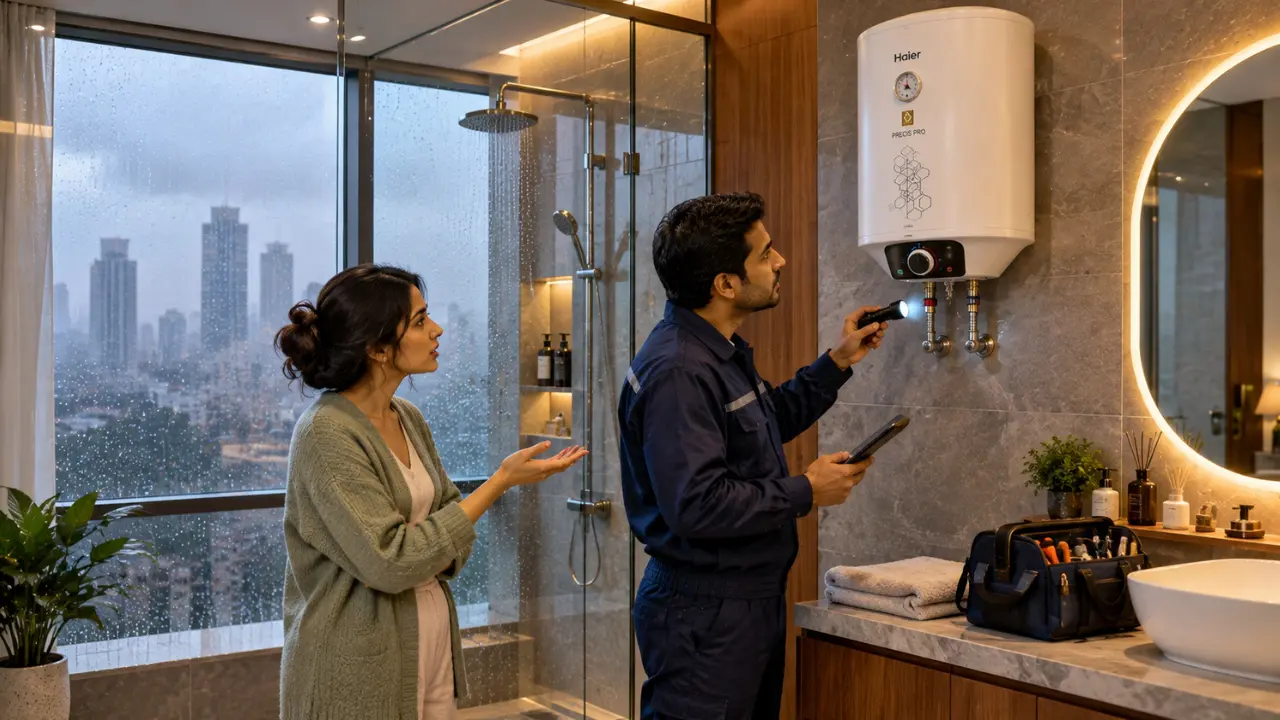

You turn on the geyser, wait for the water to warm up, and then switch on the shower. Cold water. Not even lukewarm.
When an electric geyser fails to heat water, it can be a major pain in the neck on winter mornings, when everyone is getting ready for work or school. However, before you think that the appliance has failed entirely, take this into account: the issue may be something as simple as an incorrect temperature setting.
Some faults, however, need professional attention. A geyser can fail to heat the water due to a damaged heating element, a faulty thermostat, or an electrical supply problem.
Knowing these options can help you determine what is wrong, when to call in the professionals, and make the right decisions about maintaining your water heater.
Why Does My Electric Geyser Not Heat Water When It Is Running?

An electric storage geyser is a type of geyser that uses an electric heating element to heat water stored in an insulated tank. The heating process is controlled by a thermostat, which turns off the element once the desired temperature is attained.
If something gets in the way of this, the water could stay cold or heat up very slowly.
Note: A lit or glowing power indicator does not necessarily indicate that a heating element is operating.
The most frequent causes are:
- Power outages or power surges.
- Incorrect thermostat settings.
- Damaged or worn-out heating element.
- Mineral accumulations in the tank.
- Faulty thermostat or thermal cut-off.
- Using too much hot water.
- Problems with plumbing connections or water mixing.
The symptoms frequently give hints. For example, a geyser spewing out slightly warm water might have an issue that is different from a geyser without any hot water.
Before You Call a Technician, What Should You Check?
Not all heating issues will need a service appointment right away. Some simple observations can help identify the cause without opening the appliance.
1. Does the Geyser Get Electricity?
Choose the most basic option.
Test the wall switch of the geyser to see if it is on, and test other electrical appliances in the bathroom circuit to see if they are working.
If your geyser has a power indicator, check to see if it is lit.
In addition, look at the electrical distribution board and see if the circuit breaker has tripped, if it is safe and accessible.
However, repeatedly tripping breakers indicate a possible electrical fault. Don’t keep resetting them or attempt to repair the wiring yourself.
2. Is the Temperature Setting Too Low?
In some cases, the geyser is working as it should be. The selection of temperature is the problem.
If the thermostat is set too low, the water produced by the appliance might not be hot enough, especially in colder weather.
If external temperature control is available, check the temperature control and adjust it as per the manufacturer’s instructions.
Wait long enough for the water to heat up before retesting.
Keep in mind that higher temperatures also carry a risk of scalding. Do check the temperature of the water before bathing.
3. Has the Hot Water Stored Already Been Used?
Imagine an average Indian family of four people using a single bathroom.
The first one is enjoying a nice shower. The second one gets a fairly warm water supply. When the fourth person arrives, the water has a definite chill to it.
This does not necessarily mean that the geyser is broken.
Storage water heaters have a set size. When the hot water is used up, the appliance must wait for the cold water to be heated.
If this is a regular occurrence, you may need to adjust your bathing schedule or get a water heater that has a capacity that matches your household’s needs.
Is a Faulty Heating Element the Reason Your Geyser Is Not Working?

Yes. One of the potential causes of an electric geyser not heating water is a faulty heating element.
The heating element transforms electrical energy into heat. It can become degraded over time by mineral deposits, corrosion, or electrolysis.
How to Identify Issues with the Heating Element?
Look out for these symptoms:
- Water remains cold despite adequate heating time.
- The geyser now takes much longer to heat up than it did previously.
- The circuit breaker trips when the appliance is running.
- Heating efficiency is not maintained.
These signs do not automatically indicate failure of the element. A qualified technician will need to perform a check and test the components involved.
Does Hard Water Affect Heating Performance?
Many cities in India have groundwater with dissolved minerals like calcium and magnesium.
These minerals can cause scales to form on the internal surfaces and heating elements when heated.
Scale can build up into a thick layer that affects the efficiency of heat transfer, which can lead to longer heating times and higher electricity costs.
Periodic professional cleaning and maintenance can help prevent mineral buildup from causing performance problems.
What Happens If the Geyser Thermostat Fails?
The thermostat is the device that determines when the heating element is turned on and off.
When it goes wrong, the geyser may not heat up to the desired temperature, or it can fail to heat completely.
Thermal cut-off is another feature in some water heaters that will stop the heating process when the temperature gets too high.
If the safety cut-off is triggered, it could be due to overheating or another problem.
Don’t bypass the thermostat or thermal protection system to restore heating. These are the parts that are critical to safety.
Rather, schedule a professional inspection.
Why Is It That Your Geyser Takes Longer to Heat Water in Winter?
A geyser that is working well in the summer can appear to be slower in December or January.
It’s because the water entering the system is colder.
For instance, it takes more energy to raise the temperature of 15 litres of water from 15°C to 60°C than to increase the temperature from 30°C to 60°C.
The heating element will have to operate for a longer period of time to reach the same end temperature.
Other factors that affect heating time are:
- Storage tank capacity.
- Heating element power.
- Incoming water temperature.
- Minerals within the tank.
- Insulation to reduce heat loss.
- Frequency of hot water usage.
Maintenance might be required if the heating time has been getting longer over a period of several months.
The difference may be due to the fact that the change takes place mostly in the winter season, when the inlet water is colder.
How Haier Water Heaters Can Help Ensure Stable Daily Heating
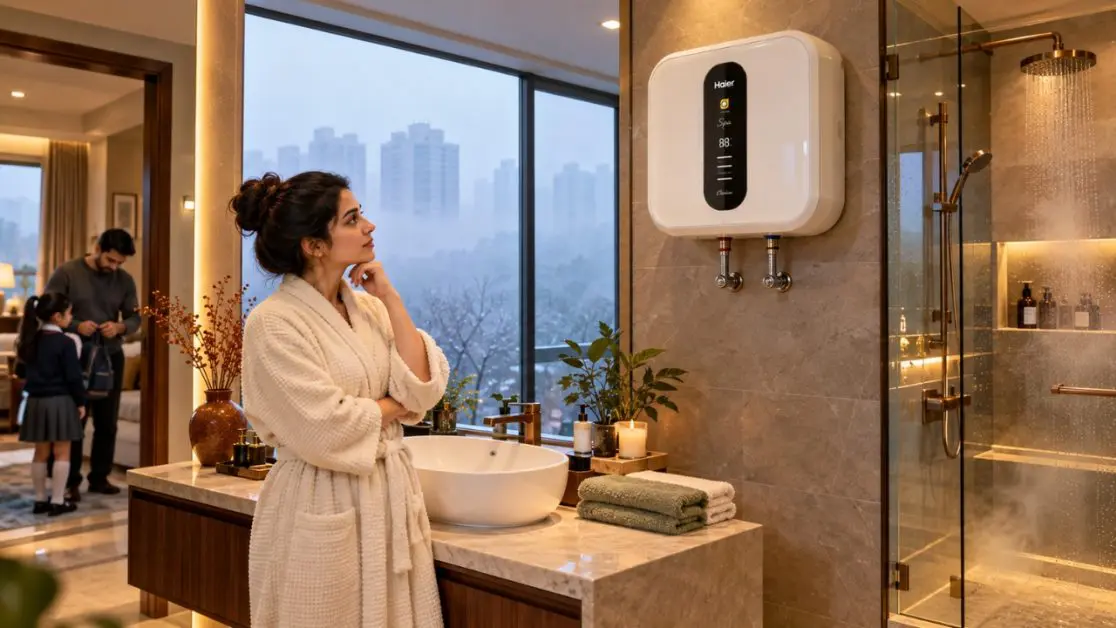
Performance is important when selecting a water heater. However, the internal components, temperature control, insulation, and protection should all be given the same consideration.
Haier India provides electric storage water heaters that cater to these needs.
If you are thinking of buying a geyser for your home, then there are three models that you should consider, which are all 15 litres.
Haier 15L Square Spa Ivory 5 Star Water Heater (ES15V-S1I)
Haier Square Spa Ivory features a unique square shape and has been designed to help ensure reliable heating and everyday usability.
It has remarkable characteristics such as:
- Shock Proof technology to protect from electric leakage.
- Two-stage overheating protection with Dual Thermal Proof (TTS).
- Incoloy 800 heating element designed to be durable.
- Corrosion-resistant glass-lined tank.
- PUF/EPS insulation to help retain stored heat.
- 8-bar rated pressure capacity for high-rise applications.
The tank also includes RSC U-turn Flow Technology, which enhances water flow within the tank.
This type of storage water heater is a practical choice for homes that want a small and stylish unit that will provide protection and keep heat in the tank.
Haier 15L Square Ivory 5 Star Water Heater (ES15V-SDI)
Love a geyser that has digital controls?
The Haier Square Ivory ES15V-SDI offers an electronic convenience experience.
In addition to Shock Proof protection and Dual Thermal Proof technology, it also features:
- LED screen for easy monitoring.
- Smart Timer functionality.
- Smart Memory feature.
- Remote control.
- Voltage fluctuation protection.
- 8-bar rated working pressure.
These attributes are especially attractive to homeowners who would like greater convenience in their water-heating habits.
The glass-lined tank and heating element are made to be durable, and the insulation reduces the amount of heat lost.
Haier 15L PRECIS ABS 5 Star Cylindrical Water Heater (ES15V-PRECIS)
Not all bathrooms require a square-shaped geyser.
The Haier PRECIS features a cylindrical design, 15 litres of storage space, and a 5-star energy rating.
Its features include:
- Shock Proof technology.
- Dual Thermal Proof protection.
- Incoloy 800 heating element.
- Glass-lined storage tank.
- IPX4 water resistance.
- Multi-Usage Valve (MUV).
- RSC U-turn Flow Technology.
- PUF/EPS insulation.
The model also features an 8-bar rated working pressure that is suitable for installations where higher working pressure needs to be taken into account.
These Haier water heaters each boast their own design and convenience features. The selection will depend on the layout of your bathroom, the number of people using it, and your preferred method of control.
What Are the Ways of Preventing Electric Geyser Heating Issues?
With a bit of preventive maintenance, a significant improvement can be made.
Water heaters have to work in harsh environments. They can withstand repeated heating and cooling cycles, temperature fluctuations, and, in some areas, mineral-laden water.
Small problems can grow into bigger problems if they are not addressed properly.
Follow These Practical Maintenance Habits
- Schedule regular professional maintenance as specified by the manufacturer.
- If heating is inconsistent, have the heating element and thermostat checked.
- Address hard-water scaling through appropriate professional maintenance.
- Look for any signs of leaks around plumbing connections.
- Provide adequate electrical protection and earthing for the appliance.
- Avoid operating the geyser when the tank may be empty.
- Do not dismiss strange odours, electrical tripping, or overheating.
Tank condition is also important in the case of storage water heaters.
Haier’s glass-lined tank construction enhances corrosion resistance, and its insulation property ensures heat is retained and reheating can be avoided.
These features are ideal for everyday use, but regular maintenance is still crucial.
When Is It Time to Give Up on Troubleshooting and Call in a Professional?
Some warning signs are not little annoyances.
If you see any of the following, turn off the geyser with a safe, dry control and contact a professional for help:
- Circuit breaker tripping that occurs more than once.
- Burning fumes or visible smoke.
- Any water that escapes from the body of the appliance.
- Unusual electrical sounds.
- Extremely hot water despite normal settings.
- Complete heating failure after basic external checks.
Never touch a wet or potentially energised appliance. When in doubt about electrical leakage, disconnect the circuit only when safe to do so.
Do not open the casing or try to make internal repairs to the geyser.
Haier India’s authorised service support can be contacted by customers for inspection and assistance with Haier water heaters.
Ensure a More Reliable Hot Water Experience with Haier India
If your electric geyser is not heating water, it does not always mean that it needs to be replaced. Often, this can be resolved by changing the temperature or giving the water enough time to heat. Otherwise, you need to call in the professionals.
It is important to determine the cause without sacrificing electrical safety.
When it’s time to replace your geyser, selecting a water heater with the right heating elements, insulation, and safety features can help make daily use easier.
Check out Haier India’s 15L Square Spa Ivory, Square Ivory, and PRECIS water heaters to choose the best model for your bathroom and household needs.
A comfy morning should not rely on the cooperation of your geyser.
Frequently Asked Questions
Why is my geyser light on but the water still cold?
The indicator may show that electricity is reaching part of the appliance, but it doesn’t necessarily confirm that the heating element is functioning. A faulty thermostat, damaged element, or thermal cut-off issue could be responsible.
Can low voltage prevent an electric geyser from heating properly?
Yes. Low supply voltage can reduce the heating power of a resistive element, increasing heating time. Significant electrical fluctuations should be assessed by a qualified electrician.
How long should a 15-litre geyser take to heat water?
Heating time depends on element wattage, incoming water temperature, and the selected temperature. A 2,000-watt element theoretically requires approximately 24 minutes to heat 15 litres of water from 15°C to 60°C, excluding heat losses. Actual heating time varies.
Can a geyser stop heating because of hard water?
Yes. Mineral scales can accumulate on heating elements and reduce heat transfer. Severe deposits may contribute to inefficient heating and component deterioration.
Should I repair or replace an electric geyser that isn’t heating?
That depends on the appliance’s age, overall condition, repair cost, and availability of replacement components. A technician can determine whether replacing a faulty part is sufficient or whether purchasing a new water heater is more economical.