
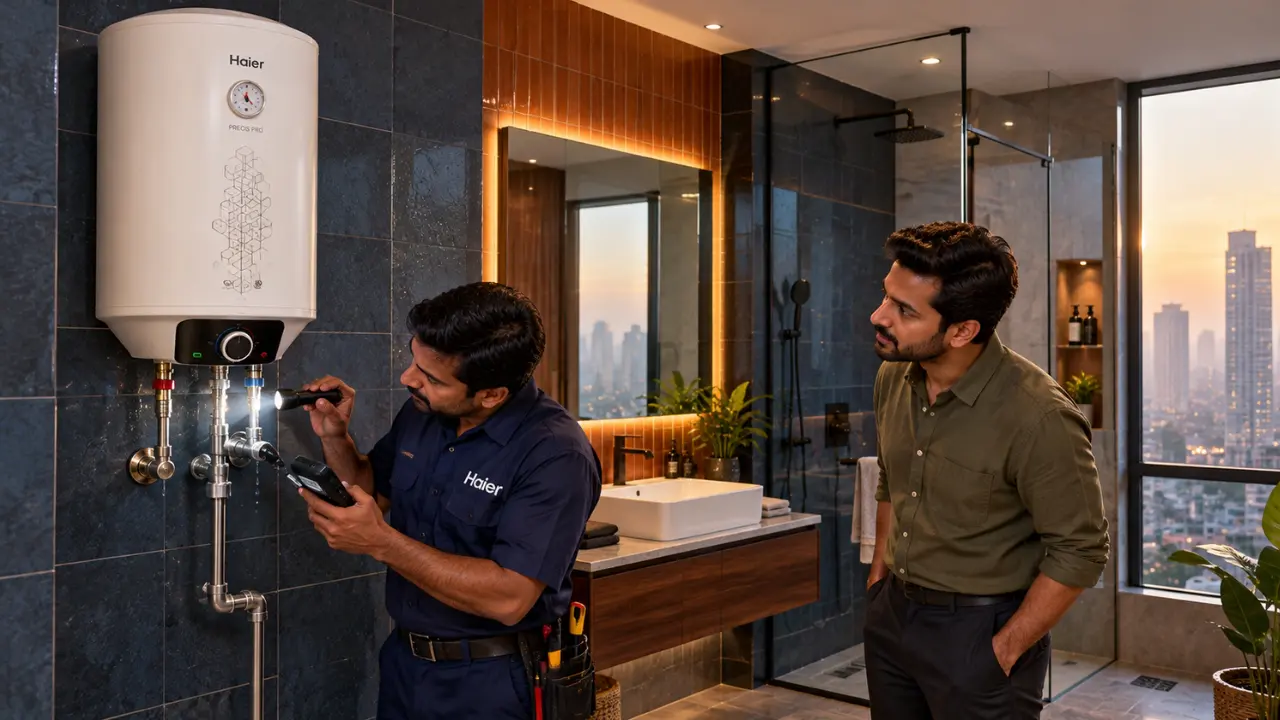

You turn on your geyser, wait for it to get hot and get ready for your shower. It appears that things are going along just fine. However, within this small device attached to the wall of your bathroom, the water pressure is always varying.
That is where a small part comes in handy.
The pressure relief valve on a geyser is to prevent excess pressure from building up to potentially unsafe levels. It’s not something you’ll touch each morning. Most homeowners would most likely not be able to recognize it without a careful inspection of the plumbing connections.
However, there’s one relatively unknown component that deserves attention—when it comes to water heater safety.
If you know how it operates, the importance of what it does, and what to do if it fails, you will be better equipped to make decisions about geyser maintenance and replacement.
What is a Pressure Relief Valve on a Geyser?
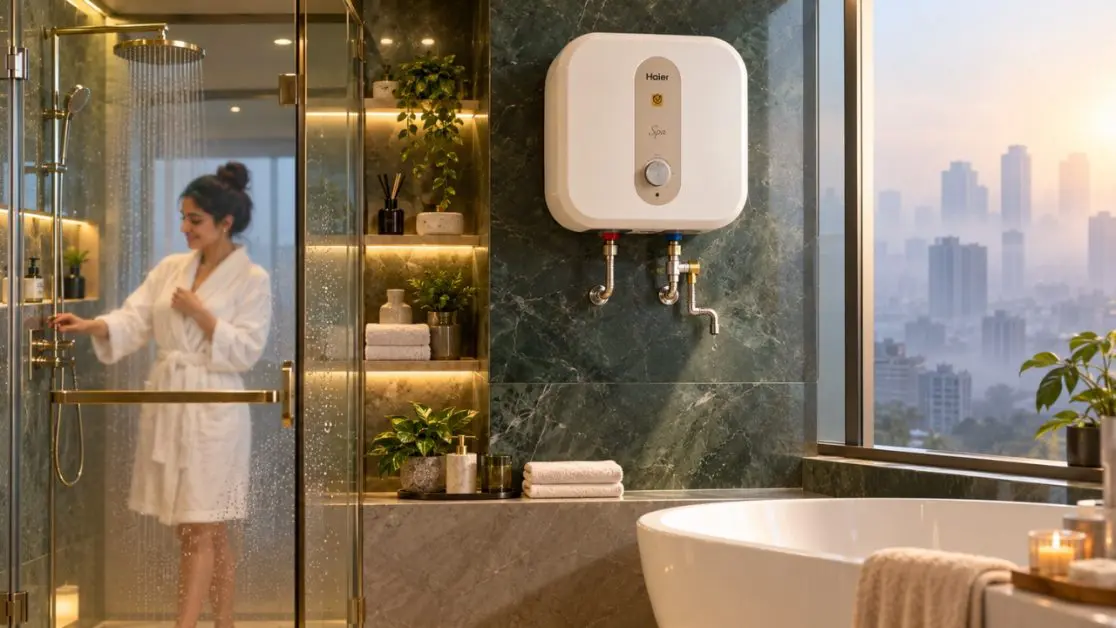
A pressure relief valve is a safety valve that helps to prevent excessive pressure in a water heater’s internal tank.
When water is heated in a storage geyser, it expands. This expansion can cause the pressure to rise inside the tank, depending on the plumbing configuration.
Pressure relief valve operates when the pressure is above the specified operating range.
It is simple to understand, its working principle is very simple:
- The inlet connection is where water is added to the geyser.
- The heating element heats the water up.
- Internal pressure can rise as the water gets hotter and expands.
- Once the pressure is above the calibrated level, the valve will open.
- Any surplus water is released at the designated outlet which decreases pressure.
The valve should automatically close when the pressure drops.
It is like a controlled release of excess pressure. Excessive pressure could put undue strain on the tank and on plumbing if it is not relieved with a proper relief device.
But never use a pressure relief valve as a replacement for correct installation or temperature controls.
Why is the pressure higher in the electric geyser?
Many homeowners don’t realize that heating water has more than just an effect on its temperature. It also alters its size.
As water temp. increases, its volume increases. With a closed plumbing system, that expansion can add to the pressure.
There are several other factors that could affect the situation.
1. High Incoming Water Pressure
In many residential buildings in India overhead tanks or pressure boosting pumps are used to ensure water supply.
In certain installations, the pressure of the incoming water can be fairly high.
If the geyser is running under these conditions, then the parts should be appropriate to the water pressure that is available.
2. Thermal Expansion During Heating
As water heats inside a storage tank, its expansion needs to be accommodated.
Where the plumbing system restricts backward flow, pressure can build up.
This is one reason appropriate safety valves and correctly designed plumbing arrangements matter.
3. Faulty Temperature Regulation
A malfunctioning thermostat may allow water to become hotter than intended.
Higher temperatures can increase thermal expansion and place additional stress on the system.
Importantly, a pressure relief valve and an overheat protection mechanism perform different functions. Both contribute to water heater safety, but one cannot replace the other.
4. Plumbing Restrictions
Blocked pipes, unsuitable fittings or incorrectly installed valves can interfere with normal water movement.
These problems may affect pressure conditions and should be examined by a qualified technician.
Should a Geyser Pressure Relief Valve Discharge Water?
Sometimes a few drops of water may be seen around the geyser’s safety valve when the geyser is heated.
Does this mean there is something wrong?
Not necessarily.
If the installation is not done correctly or the valve is not designed, there may be occasional discharge due to the expansion of the heated water.
The pattern is what is important.
If there is any water discharge, it may be normal.
- During the heating cycle there are very small amounts of water present.
- The discharge ceases once the heating cycle or the pressure stabilises.
- No other indications of leakage or unusual operation.
However, the discharge must comply with the manufacturer’s instructions for installation.
When to be concerned about the health and safety of a child.
Be extra attentive when:
- Water continuously flows from the valve.
- The leakage continues after the heating is off.
- Water is sprayed out of the discharge outlet.
- The valve is visibly corroded or damaged.
- Water is seen around the electrical joints or around the geyser housing.
If there is continuous discharge, it may be because of excessive inlet pressure or the valve is defective or there is another issue that needs to be checked.
Never cover the outlet to prevent the dripping. There’s a reason for that outlet.
If the discharge is continuous or abnormal, turn off the geyser properly and have it professionally inspected.
What Happens If a Pressure Relief Valve Fails?
There are two possible issues with a pressure relief valve.
When the valve fails to open when it needs to, it could cause the water heater to hold more pressure than it should.
This will put a lot of stress on the tank and plumbing connections and can cause significant damage to the equipment.
However, if a valve is not closing properly, it can continuously leak water.
This can lead to wasted water and a potential pressure issue.
The key difference is that not all valves that leak are the cause of the issue. In some cases, it’s reacting to unusual circumstances in other parts of the installation.
Not replacing it, but diagnosing the problem and then replacing it might solve the issue.
How Does Haier Solve the Problem of Water Heater Pressure Safety?
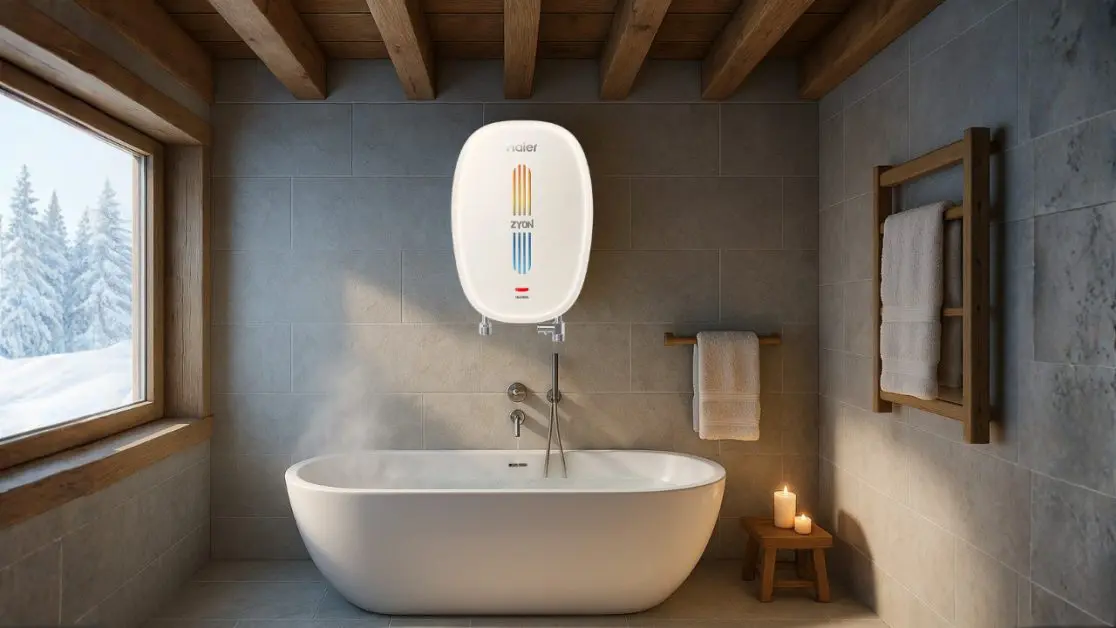
The safety of a geyser is dependent on more than its heating capacity. It is also essential that the protective elements are of high quality and that it can be used in a household water pressure system.
Haier India provides water heaters that have built-in safety mechanisms to deal with varying operating conditions.
One of these is the Multi-Usage Valve or MUV Valve, which is found in certain Haier water heater models.
Why is Haier’s MUV Valve Unique?
The MUV Valve is not a single function valve, but rather multiple plumbing-related functions in one assembly.
These include:
- Pressure relief: Helps release excessive water pressure.
- Anti-vacuum protection: This helps to solve the vacuum phenomenon that may occur in the system.
- Water tightness: Resists water leakage.
- Water drainage: Offers a way to drain water as needed.
This combination makes it easier to operate and maintain the water heater safely if done as directed in the instructions.
It also reminds homeowners to take the time to examine a geyser’s internal safety mechanisms as well as its capacity and design.
Which Haier Water Heaters have Pressure Protection?
Haier India water heater range comes with MUV Valve technology with storage and instant water heaters.
There are three models to consider: the Square Spa Ivory, PRECIS and EI3V-C1(W)-P.
Haier 15L Square Spa Ivory 5 Star Water Heater
The Haier 15L Square Spa Ivory Water Heater (ES15V-S1I) features a unique square shape and safety features.
It has a MUV Valve which provides water drainage, non-return, anti-vacuum protection and pressure relief.
Additionally, the model provides:
- The working pressure is rated for 8 bars, suitable for use in compatible high pressure installations.
- Dual Thermal Proof technology for protection against overheating.
- Shock Proof technology for additional electrical safety.
- Corrosion resistant glass-lined tank construction.
- PUF/EPS insulation to maintain heat and minimize repeated heating needs.
- Energy Star rated for 5 stars.
With a capacity of 15 litres, it can be used in homes that require a storage water heater for everyday bathroom needs.
It is a temperature safety feature combined with pressure protection which is especially important when selecting an apartment geyser.
Haier 15L PRECIS ABS 5 Star Cylindrical Water Heater.
Prefer a conventional cylindrical design?
The Haier 15L PRECIS ABS 5 Star Water Heater (ES15V-PRECIS) offers another option.
It is equipped with an MUV Valve and 8 bar rated working pressure, and Dual Thermal Proof technology.
Additional features include:
- Shock Proof technology.
- IPX4-rated splash resistance.
- Glass-lined tank construction.
- RSC U-turn Flow Technology to help circulate water.
- PUF/EPS insulation for better thermal insulation.
- 5-star energy efficiency rating.
The PRECIS would be worth considering for households seeking a 15 litre storage geyser with pressure protection and a familiar cylindrical design.
Haier 3L Instant Water Heater EI3V-C1(W)-P
Not all homes require a big storage tank.
If a smaller size is suitable for the application, the Haier 3L Instant Water Heater EI3V-C1(W)-P is an alternative option.
Its features include:
- MUV Valve – pressure relief.
- 8-bar rated working pressure.
- Dual Thermal Proof technology.
- 3 kW heating capability.
- Enamelled tank construction.
- IPX4-rated splash resistance.
The small size (3 litres) makes it a possibility to be considered for use where hot-water needs are not high.
Like all instant geysers, it will only be suitable for installation if the purpose of use is appropriate, any plumbing or electrical requirements are met.
Before purchasing a geyser for a high-rise apartment, what should you check?
Being on the tenth or twentieth floor does not necessarily mean that the water pressure is the same on your bathroom floor.
The actual pressure at an individual outlet is affected by building plumbing arrangements, by booster pumps and by pressure regulating systems.
That’s why it is not enough to pick a geyser according to the height of the building.
These are some of the things to think about before buying.
Check the Rated Working Pressure
Check manufacturer’s pressure ratings.
For instance, the three models mentioned above are Haier models with an 8-bar rated working pressure.
But, that doesn’t imply that all installations below 8 bar are suitable. The actual inlet pressure, pressure fluctuations and installation requirements should also be taken into account.
Discuss the Safety Valve Arrangement
Ensure that the model features the correct pressure relief mechanism.
The safety valve should be suitable for the water heater and properly installed.
Avoid relying on pressure protection.
A pressure relief valve cannot control every potential geyser problem.
Temperature control and electrical protection are two different matters.
The pressure protection features in Haier’s selected models are combined with Dual Thermal Proof technology to tackle various aspects of water heater operation.
Select the right capacity to achieve the best results.
There are different hot water needs that are met by a 15 litre storage geyser and a 3 litre instant geyser.
Before deciding, think about how often you use it, the space and electrical installation in your home.
Are Geyser Pressure Relief Valve Cleaning or Replacement jobs that can be done by the homeowner?
Only a qualified professional should inspect and service pressure relief valves.
The component may seem straightforward, but it could fail to perform its safety function if it is not handled properly.
Avoid attempting to:
- When the geyser is under pressure or hot, remove the valve.
- Cover or close its discharge hole.
- Use an incompatible plumbing fitting in place of it.
- Make changes to its pressure without authorization by the manufacturer.
- Remove the valve to prevent leaking.
When you see unusual discharge, corrosion, and even suspected valve failure, make sure to get it professionally serviced.
The technician can check the inlet pressure, condition of the valve and plumbing before making a recommendation for corrective action.
While a small leak might not seem to be a big deal, it is always risky to guess the cause.
What can be done to keep your Geyser’s Pressure Safety System (PSP) in good working order?
It doesn’t take a rocket scientist to take sensible precautions.
Some habits can assist you in finding issues early.
- Check on the valve discharge outlet periodically for unusual water flow.
- Be aware of continuous dripping or obvious corrosion.
- Do not obstruct drainage connections.
- Schedule service if water pressure changes drastically.
- Install and maintain according to the manufacturer’s guidelines.
- Get any abnormal heating or leakage checked up quickly.
Periodic professional inspection of the water heater also can help detect mineral deposits that may impact water heater parts, especially for households with hard water.
The goal is not to try to make adjustments to the geyser yourself. It’s to identify the need for professional help.
Select a Water Heater that is Pressure Safe.
The pressure relief valve may be one of the tiniest parts of your geyser, but it is very important.
It can assist with the control of excess pressure, safeguards the water heater system and promotes safer daily use.
Don’t just compare heating time and storage when selecting a new geyser.
Be aware of the safety features of the appliance.
Haier India has water heaters with these factors in mind, with MUV Valve technology and additional protective features on selected models.
Check out the Square Spa Ivory, PRECIS and 3L Instant Water Heater models of Haier India and choose the one that best matches your hot water needs.
Because a comfortable hot shower is important. It’s as important to know your water heater has the right safety features.
Frequently Asked Questions
1. What is the main purpose of a pressure relief valve in a geyser?
A pressure relief valve helps prevent excessive pressure from accumulating inside a water heater by releasing water when pressure exceeds its specified threshold.
2. Can a geyser work without a pressure relief valve?
A pressurised storage geyser should not be operated without the safety devices required by its manufacturer. Removing or bypassing a pressure relief valve can create serious safety risks.
3. Why does my geyser safety valve drip while heating?
Water expands when heated. In some plumbing arrangements, this can cause the safety valve to discharge a small amount of water. Persistent or excessive dripping requires professional inspection.
4. Is an 8-bar geyser suitable for high-rise buildings?
An 8-bar rated geyser may be suitable for many high-rise installations, provided the actual water pressure and plumbing conditions comply with the manufacturer’s requirements.
5. What is an MUV Valve in Haier water heaters?
Haier’s MUV Valve is a multi-usage valve that combines pressure relief, anti-vacuum protection, non-return functionality and water drainage in selected water heater models.
6. How often should a geyser pressure relief valve be checked?
Follow the inspection and servicing intervals specified in the manufacturer’s instructions. Arrange an earlier professional check if the valve leaks continuously, appears damaged or behaves abnormally.