
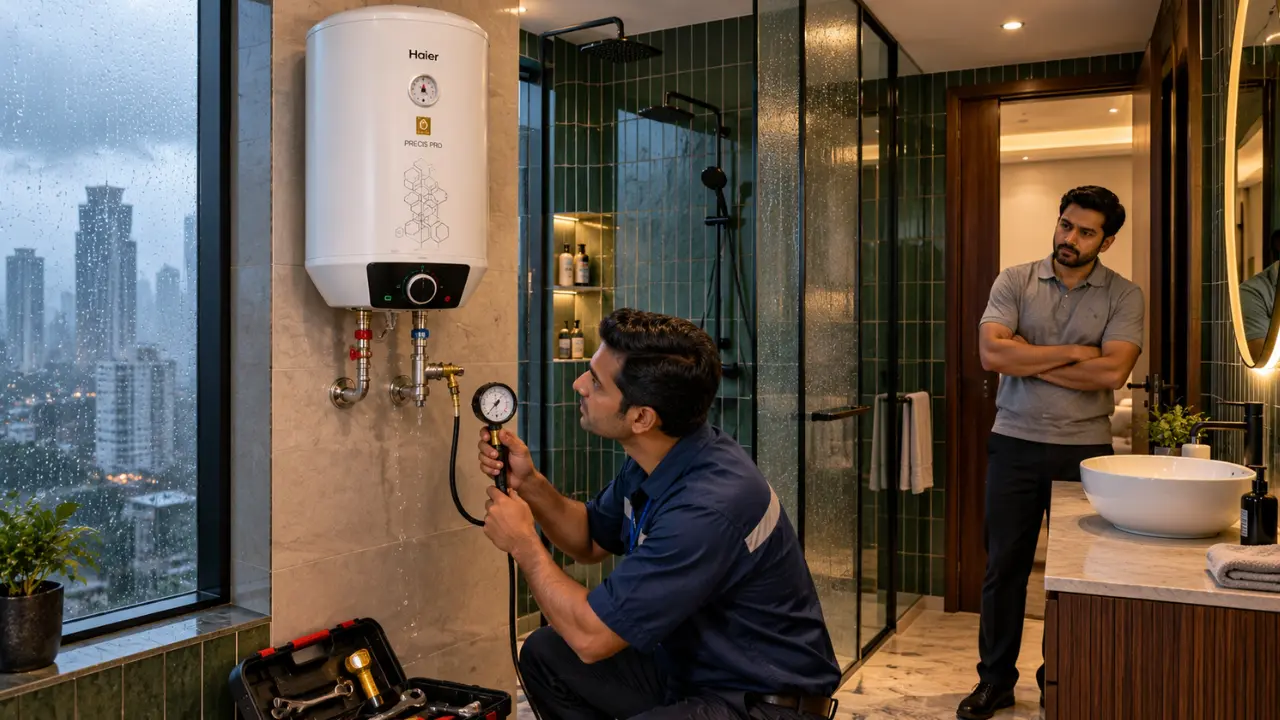

You turn on the geyser, the water warms up and you see a few drops coming out of a small valve under the geyser. Initially, it looks harmless. However, when the dripping persists, it’s only natural to ask yourself if there is a problem.
Many homeowners don’t know this, but water coming from a geyser safety valve doesn’t necessarily indicate that the geyser is leaking. In some cases it means that the valve is doing its job.
There is however, an important difference between occasional dripping when heated and water dripping all day long.
Knowing about differences can help you to detect potential issues before they impact on the performance and safety of your geyser.
Does it make sense that water should drip from a geyser safety valve?
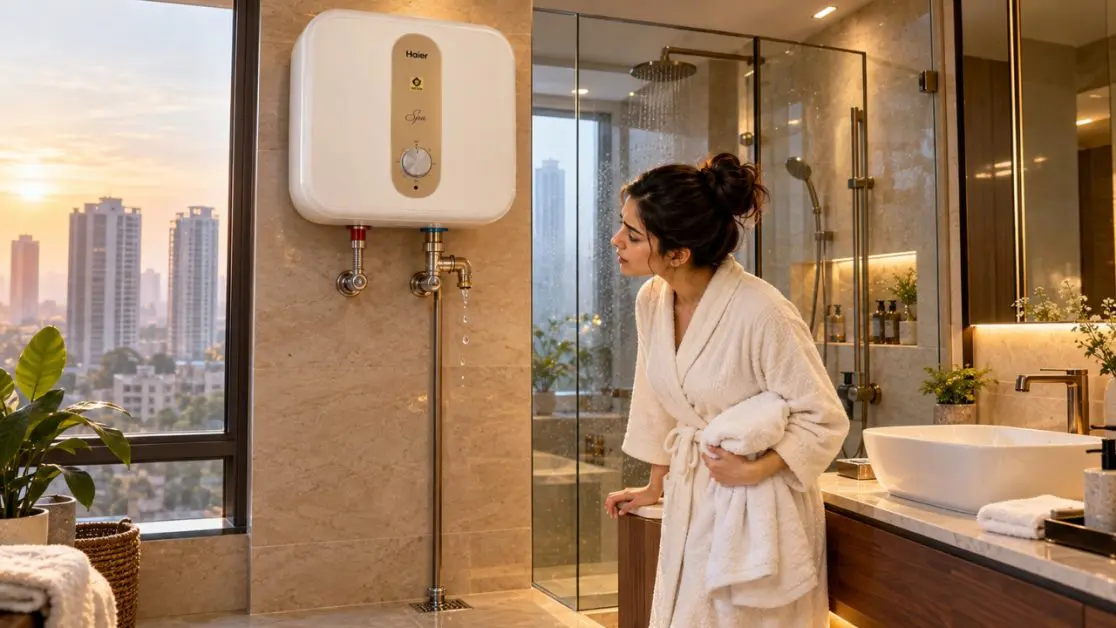
Yes, some dribbling from a geyser safety valve is normal and often occurs when the water in the tank is being heated.
The hotter the water, the more it expands. A storage water heater is in a pressurised plumbing system, and this expansion can raise the pressure in the tank.
The safety valve is used to relieve excessive pressures if needed.
Consider it to be a safety switch. The valve ensures a controlled release mechanism, preventing the pressure from exceeding the intended operating range.
You might notice:
- Some drops of water are seen during the heating of the water in the geyser.
- Drips that cease after the heating cycle.
- Water is released through the valve’s outlet, in small quantities.
This can happen at normal operating conditions, depending on the water pressure, temperature and plumbing configuration.
However, there’s a catch.
If the water continues to drip even after the geyser has not been heating for several hours, this needs to be investigated further.
What is the function of a Geyser Safety Valve?
A geyser safety valve is a safety device used to control any pressure related conditions in the water heater.
For pressurised storage geysers, the valve assembly is usually mounted on the cold-water inlet.
It is used mainly to reduce the pressure that can build up within the tank.
Why is it important to have pressure control?
Water changes when warm.
Water is not easily compressible like air. Water expands when heated and can cause pressure to increase when the heated water is trapped in a limited plumbing system.
If the pressure is too high, it can cause undue stress on the tank and plumbing components.
That’s why it’s critical to have a safety valve that’s working properly.
Some water heaters are equipped with multifunctional valve assemblies to serve other functions as well, such as reversing water flow and avoiding vacuum-related issues.
For example, Haier water heaters selected have a Multi-Usage Valve (MUV) that can be used for pressure relief, anti-vacuum protection, non-return function and water drainage.
These functions assist in controlling significant functions of the water heater.
Why is Your Geyser Safety Valve Dripping?

Not all dripping valves are created equal. The discharge of water may sometimes be helpful in determining the timing, frequency and quantity.
1. Water Expansion During Heating
This is one of the most common explanations.
When you switch on a storage geyser, the heating element gradually raises the water temperature.
As the water expands, internal pressure may increase.
If the pressure reaches the valve’s opening threshold, a small quantity of water can escape.
Once the pressure reduces, the valve should close again.
Occasional discharge during heating may therefore be expected.
2. Excessive Water Supply Pressure
Consider a flat in a multi-storey apartment building.
Depending on the building’s plumbing arrangement, water may reach individual apartments through overhead tanks or pressurised pumping systems.
If the incoming pressure is too high, the geyser’s safety valve may release water more frequently.
Common indications include:
- Dripping even when the heating element is switched off.
- Water discharge that increases during periods of high supply pressure.
- Repeated dripping after the valve has already been inspected.
A qualified technician can measure the incoming pressure and determine whether a suitable pressure-reducing arrangement is necessary.
3. A Worn or Damaged Safety Valve
Safety valves are mechanical components.
Over time, their internal springs, seals or seating surfaces may deteriorate.
When this happens, the valve might struggle to close completely.
The result?
A persistent drip, even when the pressure inside the geyser is within its normal operating range.
Replacing a faulty valve with a manufacturer-approved component is generally safer than attempting an improvised repair.
4. Mineral Deposits Around the Valve
Hard water is a familiar concern in several Indian households.
Water containing dissolved calcium and magnesium can leave mineral deposits on plumbing components as conditions change.
Over time, deposits may accumulate around the safety valve’s internal seating surfaces.
This can interfere with proper sealing.
A valve that cannot close tightly may allow water to escape continuously.
However, mineral deposits aren’t always visible from outside. A technician may need to inspect the component to confirm the cause.
5. Problems With Temperature Regulation
Sometimes, the issue originates inside the geyser rather than at the valve.
A malfunctioning thermostat may allow water temperatures to rise beyond the intended setting.
Higher temperatures can contribute to increased pressure inside the tank.
If you notice unusually hot water alongside frequent valve discharge, switch off the geyser and arrange professional inspection.
Do not continue operating a water heater that appears to be overheating.
How to check if the dripping is normal or the problem?
The simplest place to begin is to see when the water is showing.
When May Drip, It May Be Normal
- Water is released when heated.
- Drips stop when the heating cycle is complete.
- Hot-water supply is unaffected.
- No unusual noises or signs of overheating.
You should arrange an inspection when:
- Water is constantly dripping, even when the geyser is not heating.
- The valve is not leaking drops, but rather a constant flow.
- Water is found around the body of the tank or electrical connections.
- The water from the geyser is very hot.
- The dripping increases in intensity.
Keep in mind that the amount of water alone does not determine if the valve is working properly.
A technician should take both the pressure and temperature into account, along with the condition of the valve.
What to do if water drips from the safety valve?

The first thing to do is not to tighten the valve or to block its outlet.
A safety valve isn’t an ordinary tap. This is a part of the water heater’s safety features that allow it to relieve pressure when it is needed.
Rather, take these precautions.
Step 1: Observe the Dripping Pattern
Determine if the discharge is only during the heating of the water or after.
It’s possible to also record when it occurs during the day.
This information can aid a technician in determining the probable cause.
Step 2: Inspect for any obvious leaks.
When looking for water, check around the inlet pipe, valve connection and around the exterior of the tank, without touching electrical connections or disassembling the appliance.
Water that leaks from a leaky plumbing fitting is not water that flows out of the safety valve outlet.
The repair will be based on the location of the leak.
Step 3: Do not adjust the valve.
Do not plug the discharge port, connect a closed-ended pipe or make any attempt to stop the pressure relief mechanism.
If the valve is leaking a continuous stream of water, the water is too hot or leakage is close to electrical components, turn off the power supply if it is safe to do so and call a qualified technician.
Step 4: Organize Professional Servicing.
A technician can check the valve, measure water pressure and evaluate the thermostat.
If it needs to be replaced, the new water heater must be compatible with the specifications of the water heater it is replacing.
How do Haier Water Heaters cope with Pressure-related safety?
Most of the buyers of geysers pay attention to the speed of heating, capacity and electricity consumption.
However, pressure management should not be overlooked, especially in Indian homes where there are varying water supply conditions.
Haier India has water heaters with features that facilitate safer operation and reliable heating.
There are three models to consider: Haier 15L Square Spa Ivory, Haier 15L PRECIS and Haier 3L Instant Water Heater.
This water heater is a Haier 15L Square Spa Ivory 5 Star Water Heater.
The Haier 15L Square Spa Ivory Water Heater (ES15V-S1I) has a storage tank capacity of 15 litres and includes several safety features.
It has the functions of pressure-relief, anti-vacuum, non-return and drainage via its MUV valve.
It also has the following features:
- 8 bar rated working pressure for use in suitably designed high-rise installations.
- Dual Thermal Proof (TTS) – for two-stage overheating protection.
- Electrical safety with Shock Proof technology.
- A glass-lined tank to enhance resistance to corrosion.
- PUF/EPS insulation helps to retain heat and lower reheating needs.
- 5-star energy rating.
The square design also provides a unique look to contemporary bathrooms.
This type of storage geyser is suitable for households that want a storage geyser that has pressure management and heat retention.
Haier 15L PRECIS ABS 5 Star Cylindrical Water Heater
For those who want a cylindrical storage water heater, the Haier 15L PRECIS (ES15V-PRECIS) is an option.
It has a Multi-Usage Valve which is used for pressure relief and to prevent reverse water flow.
Its rated working pressure is 8 bar, which means it can be used for installations where the supply pressure is within the appliance’s rated working pressure.
The model also contains:
- Overheating protection by Dual Thermal Proof technology.
- Glass-lined tank for improved durability.
- Incoloy 800 heating element.
- RSC U-turn Flow Technology to promote water flow.
- Heat retention PUF/EPS insulation.
- IPX4 water-resistance rating.
The PRECIS features a 15-litre capacity, 5-star energy rating and combines water storage with protective features in an effective way.
Haier 3L Instant Water Heater EI3V-C1(W)-P
A large storage geyser is not suitable for all households.
The Haier 3L Instant Water Heater (EI3V-C1(W)-P) is a water heater with a smaller capacity, which is suitable for use in the applications where a compact water heater is more appropriate.
It has a 3 litre capacity and a 3 kW heating, which is suitable for fast water heating.
Also included in the model are:
- Multi-Usage Valve for pressure related protection.
- Dual Thermal Proof technology.
- Working pressure of 8 bars.
- A tank made of metal that is coated with enamel to prevent rusting.
- Incoloy 800 heating element.
- IPX4 water-resistance rating.
Its compact design makes it worth considering for installation space constraints.
Regardless of the model, proper installation and compatibility with the building’s plumbing system are still crucial.
Is there any way to prevent safety valve leakage by regular maintenance?
Normal pressure variations that happen while heating cannot be avoided by maintenance.
But it can be useful in detecting potential issues early on.
A reasonable maintenance program consists of:
- Inspecting safety valve as recommended by the manufacturer.
- Testing water pressure if it is dripping continuously.
- Scheduling professional inspection if suspected hard water deposits.
- Keeping an eye out for abnormal heating behavior.
- Keeping the discharge outlet clear.
The first thing to note is that a leaking safety valve is not a valve that needs to be sealed.
If the water is stopped without an attempt to determine the cause, the water may be used for a protective purpose.
Select a Water Heater That Cares About Pressure Protection
Some of the drops under your geyser may just be due to normal pressure release during heating. But, if leakage is continuous, it should be considered.
It’s about being aware of when the valve is working and when it is time for professional inspection.
If you are looking to install a new water heater in your Indian home, Haier has both storage and instant water heater models with pressure management technology, thermal protection and long-lasting tank material.
Visit Haier India’s water heater range and discover which water heater model is right for your household’s hot water needs, installation space and water supply conditions.
Reliable hot water isn’t all about speed. It’s also about the carefulness with which the appliance controls the conditions within.
Frequently Asked Questions
1. Why does my geyser safety valve drip only when heating?
Heating causes water to expand, which can increase pressure inside the tank. The safety valve may release a small amount of water to relieve excess pressure.
2. Is continuous dripping from a geyser safety valve dangerous?
Continuous dripping may indicate excessive supply pressure, a faulty valve or another operating problem. It should be inspected rather than ignored.
3. Can I stop geyser valve leakage by tightening the valve?
You should not attempt to tighten or modify the pressure-relief mechanism yourself. A qualified technician should identify whether the leakage comes from the valve outlet or a plumbing connection.
4. Does hard water cause geyser safety valves to leak?
Hard-water minerals can accumulate around valve components and interfere with sealing. Professional inspection can establish whether mineral deposits are responsible.
5. Do Haier water heaters have pressure-relief protection?
Yes. Selected Haier water heaters, including the 15L Square Spa Ivory, 15L PRECIS and 3L Instant Water Heater EI3V-C1(W)-P, feature Multi-Usage Valves with pressure-relief functionality.