
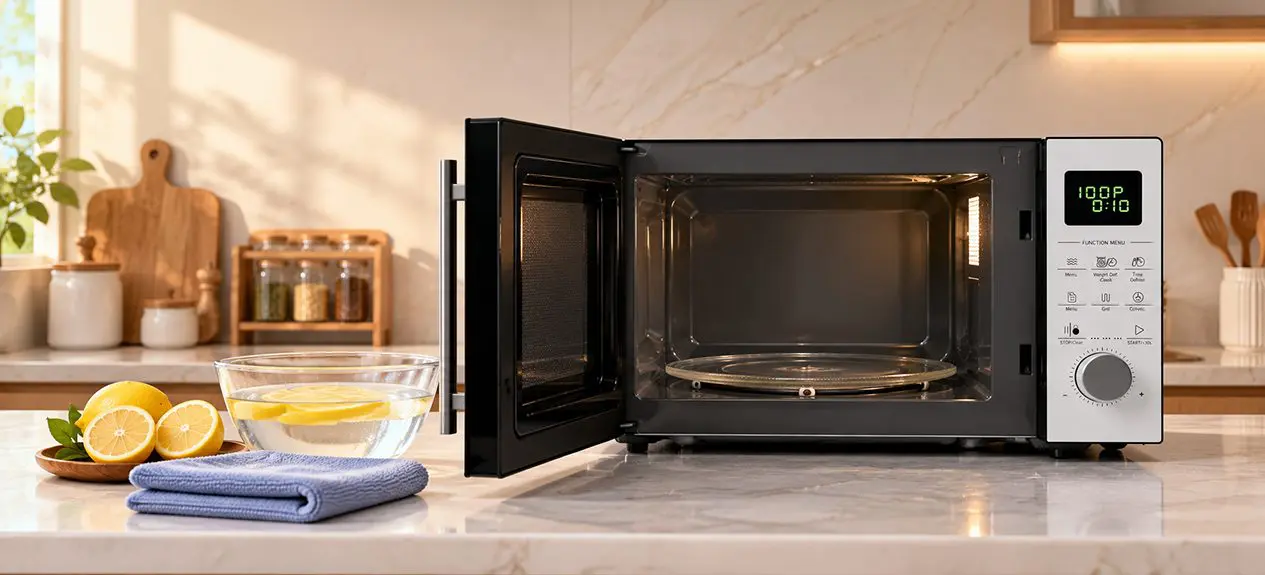

A microwave makes everyday cooking faster and more convenient, but food splatters, grease, and lingering odours can quickly make its interior messy. Fortunately, you don’t need strong chemical cleaners or expensive products to keep it fresh. A few everyday kitchen ingredients, such as water, lemon, and vinegar, can help loosen stubborn food residue and make cleaning easier.
Cleaning a microwave without chemicals is simple with the right techniques. Steam softens dried-on spills, a soft cloth removes grease, and natural ingredients can help freshen the interior. Regular cleaning also prevents food particles from building up and makes everyday maintenance faster.
In this guide, discover effective microwave cleaning tips, including how to use steam, clean the turntable, remove grease naturally, and eliminate unpleasant smells without relying on harsh chemicals.
Why Avoid Harsh Chemical Cleaners?
Strong cleaners, scouring powders and solvents are rarely needed for routine microwave cleaning. Used incorrectly, they can scratch the interior, leave residue, or dull the finish. Gentle methods are usually enough, and they’re easy to repeat.
- Less residue: Water and a soft cloth lift most splatters without leaving a chemical film
- Gentler on surfaces: Non-abrasive cloths protect the interior from scratches
- Odour control: Steam with lemon or vinegar helps loosen residue and freshen the air
- Fewer products: You may not need a special spray at all
For most spills, warm water, a soft cloth and a little mild dishwashing liquid for removable parts will do. Check your manual too, since finishes differ between models.
What You’ll Need (Everyday Kitchen Items)
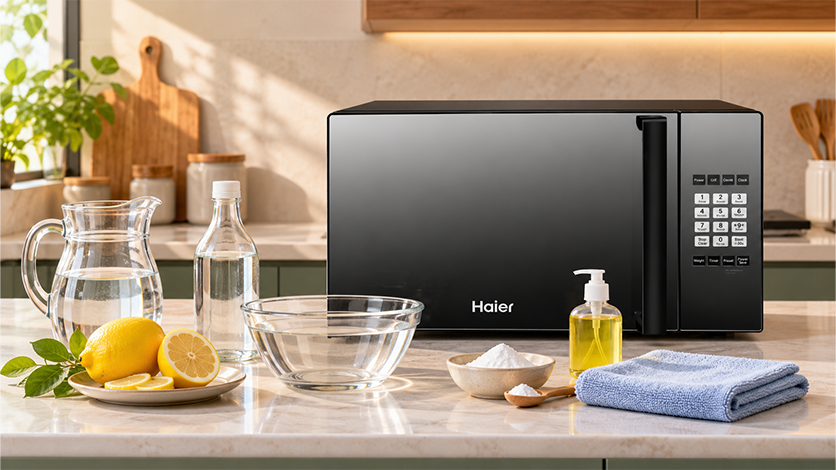
You probably already have everything in the kitchen. You won’t need everything every time. Plain water often handles a light mess, and lemon or vinegar helps with smells.
- Water: The base of steam cleaning, which softens dried splatters
- Lemon: Adds a fresh scent and can help reduce food odours
- White vinegar: May help with some residues and smells, so check your manual first
- A microwave-safe glass or ceramic bowl: Never use a sealed container
- A soft microfibre cloth or sponge: Wipes without scratching
- Mild dishwashing liquid: For the turntable, support ring and other washable parts
- Baking soda: A small amount mixed with water can treat stubborn stains on suitable surfaces
The Steam Method: Lemon, Vinegar or Water
Steam is one of the simplest ways to clean a microwave. Heat water in a safe bowl; the steam softens dried food so it wipes away. You’ll scrub far less. This is the heart of natural microwave cleaning.
| Option | Best for | Mix |
| Water | Everyday splatters and light residue | 1 cup (250 ml) of water |
| Lemon and water | Freshening while loosening residue | 1 cup of water and about 1 tablespoon of lemon juice |
| Vinegar and water | Some stuck-on residue and lingering smells | 1 cup of water and about 1 tablespoon of white vinegar |
Pick one at a time. There’s no need to combine lemon and vinegar.
Step-by-Step Steam Clean
- Switch off the microwave. Brush out loose crumbs with a dry cloth, and lift out the glass turntable if it comes out.
- Fill a microwave-safe bowl with about one cup (250 ml) of water. Add lemon juice or vinegar if you like.
- Place the uncovered bowl in the centre. Heat for about 2 to 5 minutes. Microwave power varies, so follow your manual and stay nearby.
- Leave the door closed for another 1 to 2 minutes. The steam needs that time to soften the residue.
- Open the door carefully, as hot steam can escape. The bowl will be very hot, so use oven mitts.
- Wipe the ceiling, walls, floor, and inside of the door with a soft, damp cloth. Dry with a clean one. If marks remain, steam again instead of scrubbing hard.
That’s also the easiest way to clean a microwave with lemon.
Cleaning the Turntable, Walls and Door
Steam loosens the mess, but you still need to wash the removable parts and wipe the surrounding surfaces. A few extra minutes here will keep the microwave fresher longer. Let it cool before you start.
- Glass turntable: Lift it out once it’s cool. Wash it in warm water with mild dishwashing liquid, rinse, and dry. Check your manual before using a dishwasher.
- Support ring: Wash it if it’s removable. Wipe crumbs from underneath before putting it back.
- Walls and ceiling: Use a soft, damp microfibre cloth. Check the corners and the ceiling, where splashes hide. Wipe gently around the waveguide cover, a small plate on an inner wall. Never remove or soak it.
- Inside the door: Wipe the glass and the edges where the door closes. Don’t push liquid into gaps or vents.
- Exterior: Wipe with a lightly dampened cloth. Never spray liquid onto the control panel, vents or electrical parts. Put any permitted cleaner on the cloth instead.
Removing Stubborn Stains and Grease Naturally
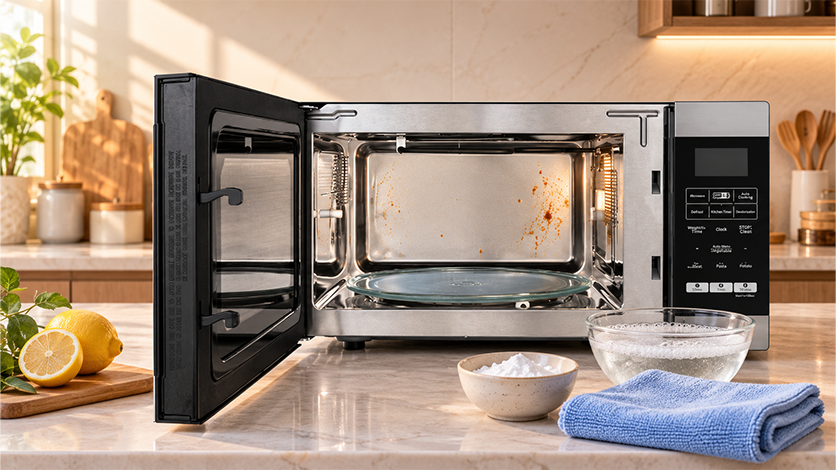
Baked-on food and oily splashes get harder to remove the longer they sit. Gentle methods still work if you’re patient. Soften the mess first, then wipe it away.
- Steam first: Repeat the steam clean and wipe with a non-abrasive cloth
- Baking soda paste: For stubborn marks on suitable surfaces, mix a little baking soda with water to form a thin paste. Apply it with a soft cloth, keep it away from vents and the waveguide cover, then wipe it off with a damp cloth and dry the area. Check your manual first.
- For greasy splashes: Use a cloth with warm water and a little mild dishwashing liquid, if your manual allows it. Wipe lightly, then use a damp cloth to remove the soap.
- Skip abrasives: Steel wool, rough pads and abrasive cleaners can scratch the surface and damage the finish
Repeating a gentle clean works better than one hard scrub. That’s the idea behind good natural microwave cleaning.
Getting Rid of Smells and Odours
Smells often come from burnt food, spilled sauce or oily residue you can’t see. Clean the inside first, because deodorising won’t help while the source is still there. Then try one of these ways to remove microwave smell.
- Lemon and water: Add about one tablespoon of lemon juice to one cup of water in a microwave-safe bowl. Heat for about 2 to 5 minutes, leave the door closed briefly, then wipe the inside.
- Vinegar and water: Mix about one tablespoon of white vinegar with one cup of water. Heat until steam develops, let it stand briefly, then wipe. Open a window if you dislike the smell.
- Baking soda: Once the inside is clean, an open container of baking soda in the switched-off microwave may help absorb lingering smells. Take it out before you cook. Don’t heat it unless your manual says to.
If a strong burnt, electrical or plastic smell continues after cleaning, stop using the microwave. Check the troubleshooting section of your manual, or contact a qualified service professional.
Cleaning Tips by Haier Microwave Type
Haier’s microwaves come in four ranges, and each needs a slightly different touch. The steam method works across all of them. The grill and convection models have heating parts and extra accessories, so they need a little more care.
| Haier range | Capacity | Cleaning note |
| Solo | 19L to 20L | Steam, then wipe. Wash the turntable separately. |
| Vogue Solo | 20L | Same routine. Wipe the digital display and controls with a lightly dampened cloth, and never spray them. |
| Grill | 20L | Let it cool fully before wiping. Keep the cloth off the heating element, and follow your manual. |
| Convection | 20L to 30L | Wash removable racks and trays by hand. Wipe the inside once it’s cool. |
Whichever model you own, your manual has the final say.
How Often Should You Clean Your Microwave?
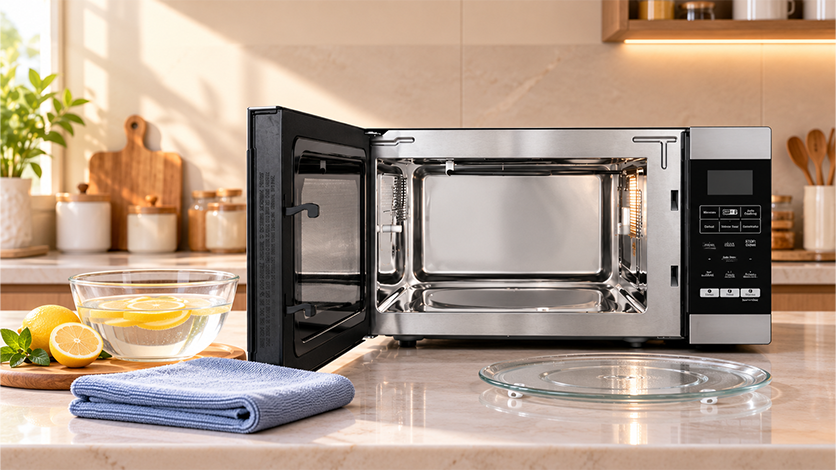
There’s no single schedule. It depends on how often you cook and what goes in. A household that reheats lunch every day needs more attention than one that uses the microwave only occasionally.
- After spills: wipe them up once the microwave has cooled
- Weekly: wipe the inside, door and exterior, and wash the turntable and ring if needed
- Every one to two weeks: do a deeper clean with a steam treatment
- Whenever a smell appears: look for forgotten food or burnt residue and clean the source
Regular wipes are far easier than lifting layers of dried grease. These microwave cleaning tips can keep the habit light. For more everyday kitchen guides, you can browse the Haier blog.
Dos and Don’ts
A few simple precautions make cleaning safer and more effective.
| Do | Don’t |
| Check your manual before trying a new method | Use steel wool, scourers or oven cleaners inside |
| Use a heat-resistant, microwave-safe bowl | Heat a sealed container or leave hot liquid unattended |
| Let the bowl, water and oven cool before wiping | Overfill the bowl or carry hot water carelessly |
| Use soft cloths and non-abrasive sponges | Spray liquid into vents, the control panel or electrical openings |
| Wipe spills promptly | Mix vinegar with bleach or other cleaners |
| Dry the inside and refit removable parts before use | Remove the waveguide cover, dismantle the oven or immerse it in water |
Final Thoughts
Keeping a microwave clean doesn’t take a cupboard full of chemicals. Warm water, a soft cloth and an occasional steam clean with lemon or diluted vinegar can loosen splatters, lift grease and freshen the inside.
Wipe spills early, wash the removable parts often, and use gentle methods. These small habits help you clean the microwave without chemicals and keep the appliance fresh and ready for daily use.
FAQs
How do you clean a microwave without harsh chemicals?
Heat about one cup of water in a microwave-safe bowl until steam develops. Leave the door closed briefly, then carefully remove the bowl. Wipe the inside with a soft, damp cloth. Add lemon juice or white vinegar if your manual allows it.
Can you clean a microwave with vinegar and water?
Yes, Diluted white vinegar can help loosen food residue and reduce some smells. Mix about one tablespoon with one cup of water, heat until steam develops, let the bowl cool enough to handle, then wipe. Check your manufacturer’s instructions first.
How do you remove smells from a microwave naturally?
Clean up any food or spills first. Then steam a bowl of water with about one tablespoon of lemon juice for 2 to 5 minutes, and wipe the inside. If the smell stays, look for hidden residue or a possible fault.
How do you clean grease off the inside of a microwave?
Steam the inside with plain water, then wipe with a soft cloth. For stubborn grease, add a little mild dishwashing liquid to the cloth if your manual permits. Finish with a damp cloth to remove the soap, and avoid abrasive pads.
How often should you clean your microwave?
Wipe spills once the oven has cooled. For regular use, clean the inside and outside weekly, with a deeper clean every one to two weeks. Clean more often if you use it several times a day.
Is it safe to use lemon to clean a microwave?
Yes, Lemon juice diluted in water is a common choice for steam cleaning. Use a microwave-safe bowl, avoid overheating the liquid, and let it cool before handling. Follow the instructions for your appliance.