
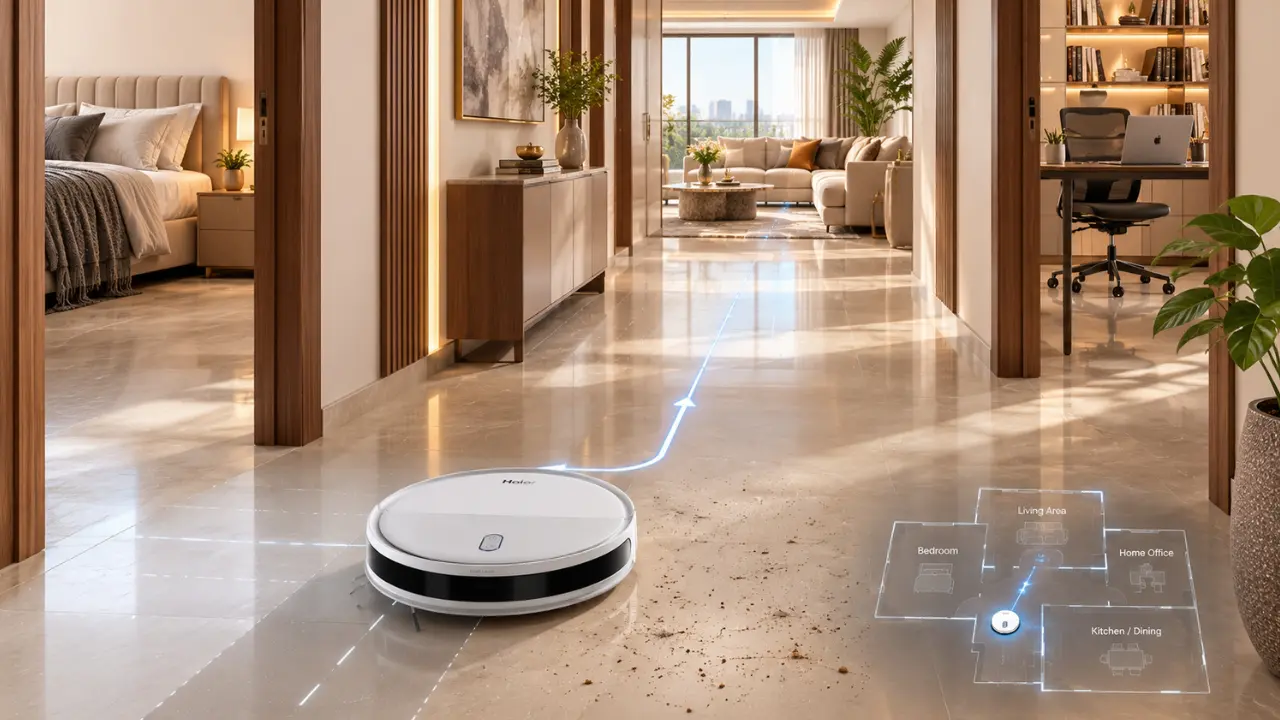

You probably won’t notice it the first day.
The robot rolls on the floor, it collides with a chair leg a couple of times, it rolls around the coffee table, rolls into the bedroom and comes back to its charging dock. It feels like it’s sort of random.
Then after some cleaning cycles, it changes.
No longer roams about so much. It directly moves towards the rooms that require cleaning, bypasses familiar obstacles and covers the home in a far more organised pattern. At this time, most people realize something interesting: the robot now appears to know the house.
And yes that’s typically the case.
Modern robot vacuum cleaners are capable of learning, remembering and adapting to the layout of your home, rather than treating each cleaning cycle as the first one. With the help of laser navigation and intelligent mapping, models can generate detailed floor maps which allow it to clean much more accurately than previous robotic models.
This technology has a significant impact for the Indian household, as layouts frequently have more than one room, furniture replacement, rugs and dining areas, balconies, and narrow passages.
A Robot Vacuum Doesn’t “See” Your Home Like You Do
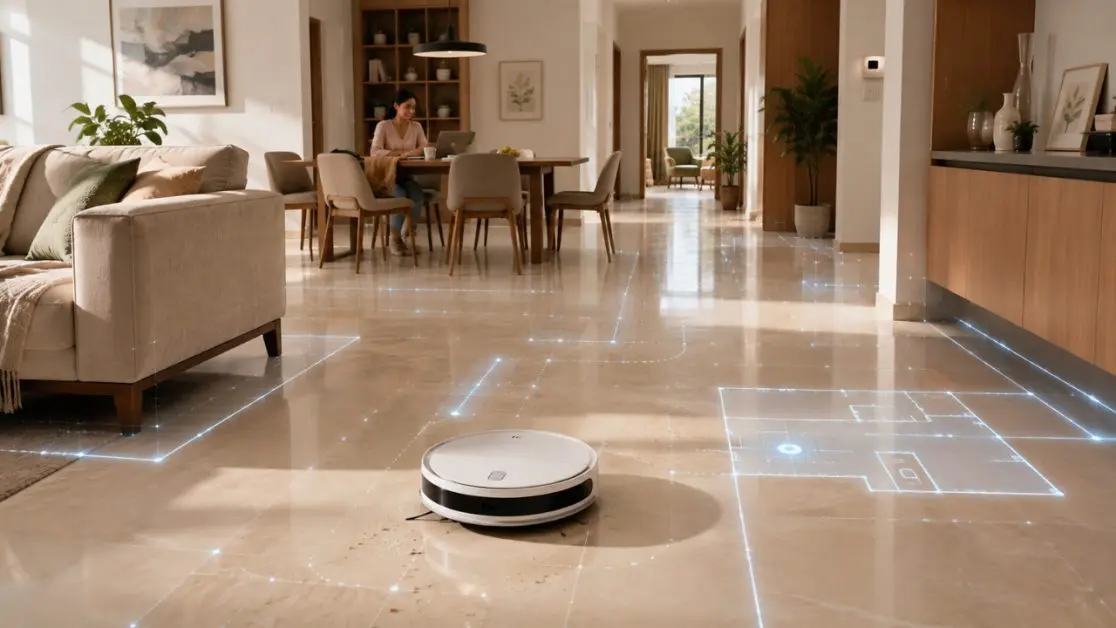
Robot vacuums are thought to use cameras to navigate all corners.
But it’s not quite like that.
Rather, more sophisticated models use technologies that can continuously determine distance, obstacle detection and a calculation of the location while navigating around the home. This leaves you with a digital floor map which gets better and better with each clean cycle.
It is like someone is sketching a blueprint.
This is a preliminary sketch.
The second one is descriptive.
After a while the drawing is sufficiently correct, and all the rooms, passages and barriers are already known.
What Happens During the First Few Cleaning Cycles?
Your robot isn’t simply collecting dust.
It’s collecting information.
During its initial runs, an intelligent robot vacuum generally focuses on:
- Understanding room boundaries
- Identifying walls
- Detecting furniture placement
- Finding open pathways
- Locating obstacles
- Recording charging dock position
- Planning efficient cleaning routes
Instead of cleaning randomly every single time, future cleaning sessions become much more structured.
That’s where mapping technology completely changes the experience.
Why Laser Navigation Makes Such a Difference
Older robot vacuums often relied on bump-and-go navigation.
Clean enough?
Sometimes.
Efficient?
Not really.
Laser navigation changes the approach entirely.
The Haier CIVIC X11 Robot Vacuum Cleaner and CIVIC X11 PRO feature Laser Navigation technology that enables precise movement throughout the home while improving obstacle avoidance and cleaning coverage.
Benefits include:
- Better room coverage
- Less unnecessary movement
- Reduced repeated cleaning over the same area
- Improved obstacle detection
- Faster completion of cleaning cycles
- More organised cleaning paths
For larger Indian apartments and independent homes, that efficiency becomes noticeable quite quickly.
Can It Remember Multiple Floors?
This is one question many homeowners ask.
“If I move it upstairs, does it forget downstairs?”
Not necessarily.
Some advanced robot vacuums include multi-map memory, allowing the robot to store more than one floor layout.
The Haier CIVIC X11 and CIVIC X11 PRO are equipped with 5 Maps Memory, enabling the robot to remember multiple home layouts instead of creating a new map every time.
That becomes useful if you have:
- Duplex homes
- Villas
- Multi-storey houses
- Holiday homes
- Separate office spaces within the same property
Simply relocating the robot doesn’t necessarily mean starting from scratch.
Signs Your Robot Has Successfully Learned the House
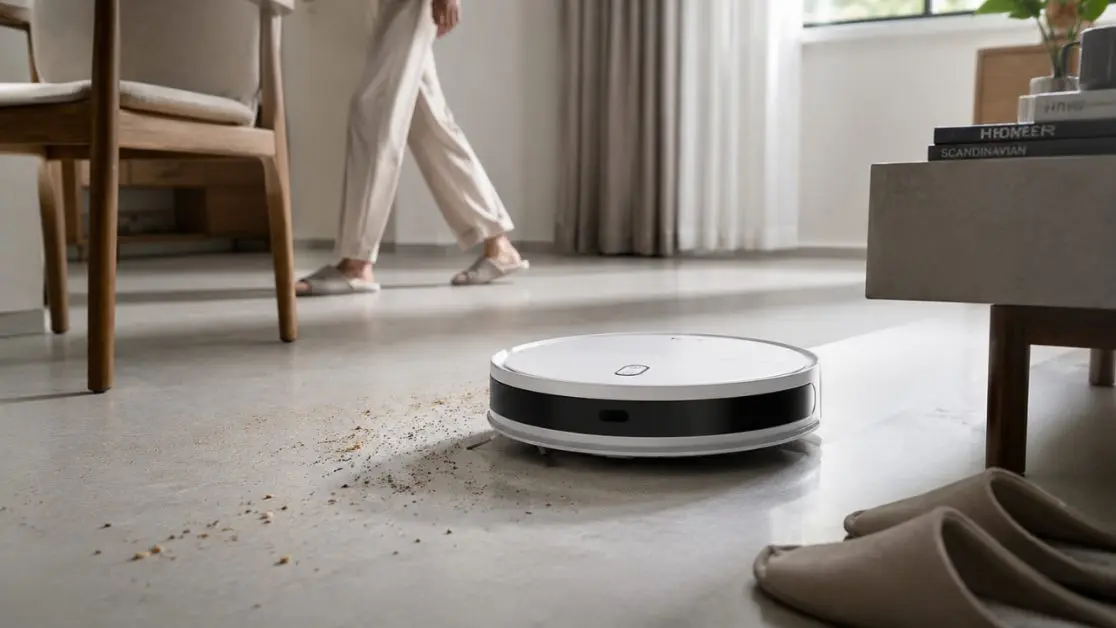
Oddly enough, the biggest sign is that you stop noticing it.
Instead of wandering around aimlessly, it starts behaving predictably.
You may observe:
| What You Notice | What It Usually Means |
| Goes directly into rooms | Stored room layout |
| Rarely bumps into furniture | Better obstacle recognition |
| Returns to dock smoothly | Charging location remembered |
| Covers rooms systematically | Optimised cleaning path |
| Finishes quicker | Efficient navigation planning |
That’s exactly what intelligent mapping is meant to achieve.
Not flashy.
Just consistently efficient.
Does Rearranging Furniture Confuse the Robot?
Only to a certain extent.
Moving a dining chair?
Probably not a problem.
Buying an entirely new sofa?
The robot may need a few cleaning sessions to adapt.
Because mapping systems constantly update environmental information, they can usually adjust to normal household changes without rebuilding the entire floor map.
Small layout changes are part of everyday living after all.
Children move stools.
Dining chairs shift.
Laundry baskets appear where they weren’t yesterday.
Modern navigation systems are designed with these realities in mind.
Why Accurate Mapping Improves Cleaning Quality
Here’s something people often overlook.
A robot vacuum doesn’t become better simply because it has stronger suction.
It becomes better because it knows where to clean.
Without proper mapping, even a powerful vacuum may waste time revisiting already-clean areas while missing others altogether.
Accurate navigation helps combine cleaning performance with efficiency.
The Haier CIVIC X11 delivers up to 5000 Pa suction power, making it suitable for cleaning multiple floor types including tiles, marble, hardwood, carpets and similar household surfaces, while also supporting simultaneous vacuuming and mopping.
Smart Features That Make Daily Cleaning Easier
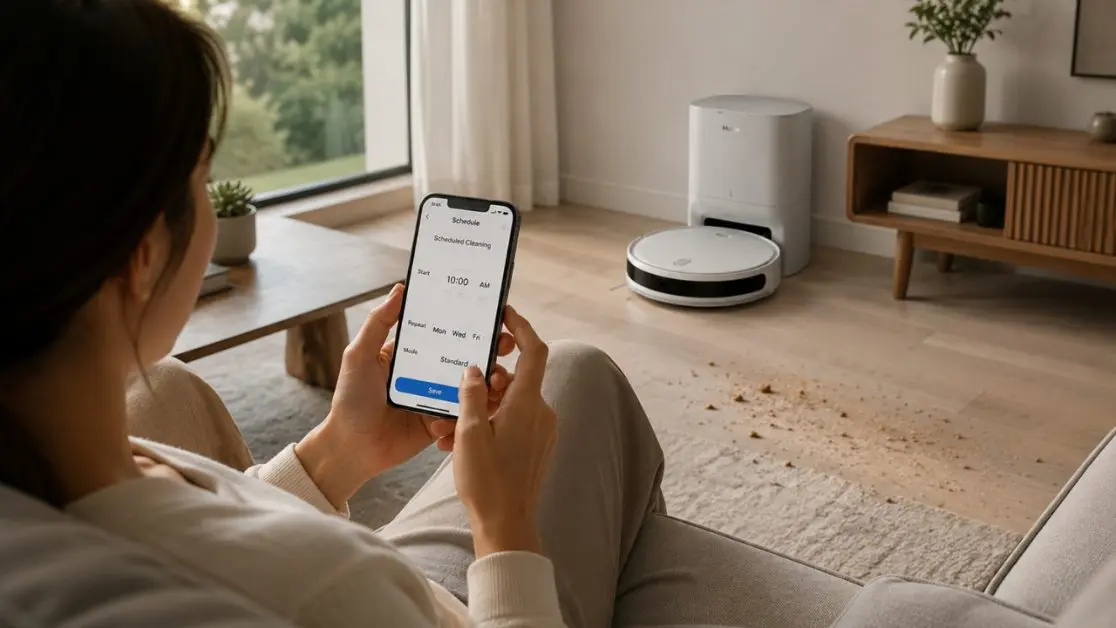
Knowing the layout of your home is just one component.
What really makes the experience excellent, however, is when mapping is combined with other smart features. The robot cleans routinely without constant supervision, and learns your preferences.
With mobile app control, scheduled cleaning, automatic return to charging dock, anti-fall sensors and compatibility with Google Assistant and Alexa, the Haier CIVIC X11 Robot Vacuum Cleaner offers intelligent navigation and a host of extra features. The CIVIC X11 PRO also features an Auto Empty Dust Box, which automatically empties the dustbin after each cleaning cycle to prevent the need for manual dustbin cleaning.
Some everyday conveniences include:
- Schedule cleaning even when you’re away.
- Start or stop cleaning using voice commands.
- Monitor cleaning progress through the connected app.
- Let the robot return to its charging dock automatically when the battery runs low.
- Resume regular cleaning with minimal manual intervention.
These features make robotic cleaning feel less like operating an appliance and more like automating a household routine.
Homes That Benefit the Most from Intelligent Mapping
Almost every household can appreciate automated cleaning, but certain homes benefit even more from intelligent navigation.
Busy Working Professionals
After long office hours and daily commutes, spending additional time vacuuming floors isn’t always practical. A mapped robot vacuum can maintain everyday cleanliness with minimal effort.
Families with Children
Crumbs under the dining table, biscuit pieces in the living room and footprints near the entrance these are everyday realities. Scheduled cleaning helps keep floors cleaner between deeper cleaning sessions.
Pet Owners
Pet hair has a habit of finding its way into every corner of the house.
Both the CIVIC X11 and CIVIC X11 PRO are designed to clean pet hair efficiently, making them suitable companions for homes with furry family members.
Larger Homes
The larger the floor area, the more valuable organised navigation becomes. Instead of cleaning randomly, the robot follows an efficient path, helping cover more space within a single cleaning cycle.
What Should You Do Before the First Mapping Run?
Thankfully, not much.
Still, a few small preparations can help the robot build a more accurate layout.
A simple checklist
- Pick up loose charging cables from the floor.
- Remove lightweight objects that could be pushed around.
- Keep doors open for rooms you want included in the map.
- Ensure the charging dock is placed in an accessible location.
- Allow the robot to complete its first cleaning cycle without interruption.
Once the initial map is created, future cleaning sessions generally become more efficient.
Beyond Navigation: Cleaning Performance Still Matters
A smart map isn’t useful if the cleaning itself falls short.
That’s why navigation and suction performance should work together.
The Haier CIVIC X11 Robot Vacuum Cleaner offers:
- Up to 5000 Pa suction power
- Simultaneous vacuuming and mopping
- 2600 mAh battery
- Up to 120 minutes of runtime
- Brushless motor
- Wet and dry cleaning capability
The Haier CIVIC X11 PRO builds on these capabilities by adding:
- Auto Empty Dust Box
- 3.5 L collection capacity at the docking station
- 250 ml onboard dustbin
- 300 ml water tank
- The same intelligent laser navigation and 5-map memory system
The combination of efficient navigation and powerful cleaning ensures that the robot doesn’t simply travel intelligently; it also delivers effective cleaning across different floor surfaces.
Why Home Mapping Is Becoming an Expected Feature
A few years ago, home mapping felt like a premium luxury.
Today, expectations have changed.
Consumers increasingly look for robot vacuums that can:
- Learn room layouts
- Remember multiple floors
- Avoid obstacles efficiently
- Clean methodically instead of randomly
- Integrate with smart home ecosystems
Support other home systems
Smart homes are smart appliances, which will respond to the user, rather than the other way around.
And that’s precisely what the robot vacuum does.
The better way to clean floors is to use a Smarter Way to Keep Floors Clean
A robot vacuum that learns your home’s layout is not just another tech feature, it’s a problem-solver. It can remember room layouts, plan efficient routes and adjust to the daily changes in the home, thereby minimizing movement and promoting consistency of cleaning.
The Haier CIVIC X11 and Haier CIVIC X11 PRO have been developed with these common needs in mind, making them the ideal cleaning solution that combines intelligent laser navigation, strong suction and connected smart-home capabilities. They range from 5 map memory to voice control, to scheduled cleaning, strong suction and advanced navigation, helping to make daily floor cleaning more organised and much easier.
You don’t need to spend time training your vacuum around the house anymore; intelligent mapping does the job, while you get on with all of your other tasks for the day.
Frequently Asked Questions
1. Can a robot vacuum learn the layout of my home?
Yes. Advanced robot vacuums use navigation and mapping technology to build a digital representation of your home’s layout. As the robot completes cleaning cycles, it can use that information to plan more organised routes and navigate familiar spaces more efficiently.
2. How does laser navigation work in a robot vacuum?
Laser navigation helps the robot measure distances, identify obstacles and understand the surrounding environment while it moves. This information is used to create and navigate a floor map, helping reduce unnecessary movement and improve cleaning coverage.
3. How long does it take for a robot vacuum to map a house?
The exact time depends on the size and layout of the home. During its initial runs, the robot needs to explore the available space and identify walls, rooms, obstacles and pathways. Allowing the first mapping run to complete without interruption can help establish the layout.
4. Can the Haier CIVIC X11 remember multiple floors?
Yes. The Haier CIVIC X11 and CIVIC X11 PRO feature 5 Maps Memory, allowing them to store multiple home layouts. This can be useful for duplexes, villas and multi-storey homes where different floors have different floor plans.
5. Will moving furniture confuse a robot vacuum?
Small everyday changes, such as moving dining chairs or stools, generally shouldn’t prevent the robot from navigating. Larger changes to the environment may require the robot to update its understanding of the space as it encounters the new layout.