


Detergent overuse is common because people equate more foam with better cleaning, misunderstand machine efficiency, and ignore how modern washing systems are designed.
The result is wasted detergent, residue on clothes, higher water consumption, and even damage to fabrics and machines over time.
The bucket test we all grew up with
There is a familiar scene.
A bucket. A handful of clothes. And a generous scoop of detergent.
The logic felt simple. More detergent means cleaner clothes.
That logic worked. Once.
But washing has changed. Machines have changed. Fabrics have changed.
Our habits have not.
And that gap is where detergent overuse quietly lives.
Why do we still believe “more detergent cleans better”?

Because foam is visible.
And humans trust what they can see.
The hidden psychology of bubbles
- More foam feels like more action
- More fragrance feels like more freshness
- More detergent feels like more control
But here is the truth.
Foam is theatre. Cleaning is chemistry.
Modern detergents are designed to work efficiently at low doses. Excess foam actually reduces friction between clothes, which is what helps remove dirt.
So when you add more detergent, you reduce the very thing you are trying to improve.
The mismatch between old habits and new machines
Front load washing machines do not behave like buckets.
They are engineered systems.
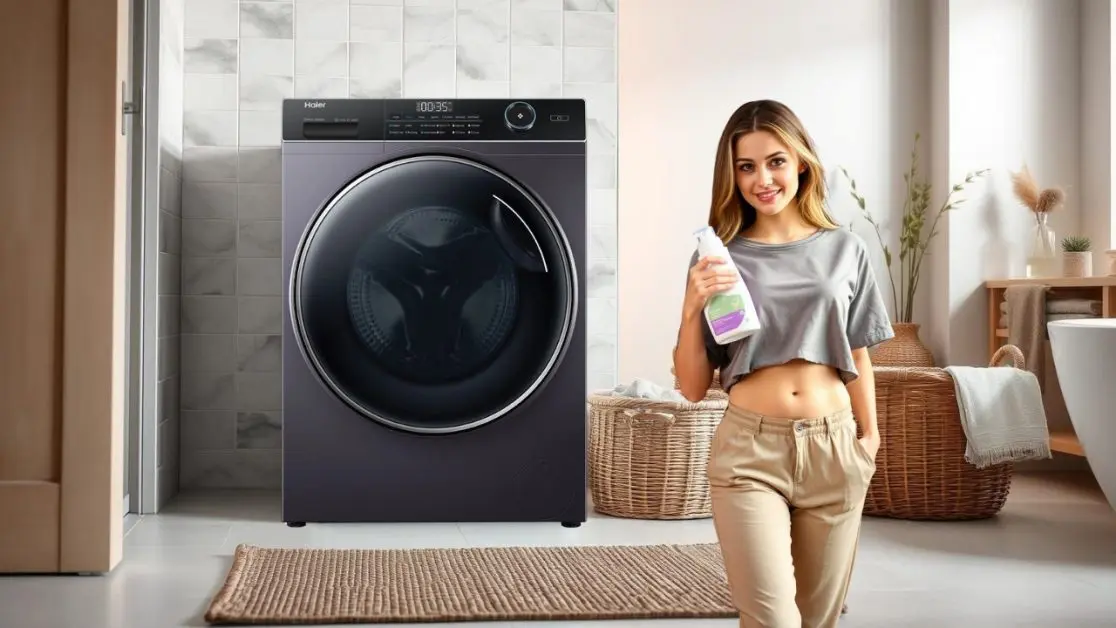
Take machines like the Haier 12 Kg F9 Pro Front Load Washing Machine (HW120-DM14F9PBKU1). It uses AI One-Touch Wash, which automatically detects fabric type, load size, and dirt level to optimize washing parameters .
That changes everything.
Because the machine already knows how much water and movement is needed.
Adding excess detergent interferes with that system.
What actually happens when you overuse detergent
| What you think happens | What actually happens |
| Clothes get cleaner | Residue builds up |
| More foam = better wash | Foam reduces wash efficiency |
| Strong smell = hygiene | Fragrance masks residue |
| Extra detergent saves time | Extra rinsing increases time |
More detergent does not amplify cleaning. It disrupts it.
Why detergent overuse is more common in Indian homes
This is not random. It is patterned.
Three real reasons behind the habit
1. Water variability
In many Indian cities, water hardness varies.
People respond by adding more detergent, assuming it compensates.
It does not. It creates buildup.
2. Mixed laundry loads
Bedsheets, jeans, office wear, gym clothes.
All in one cycle.
Different fabrics require different detergent levels. Overcompensation becomes the default.
3. Cultural association of fragrance with cleanliness
If it smells strong, it must be clean.
This belief drives overuse more than any instruction manual.
The invisible cost of detergent overuse
This is where it gets interesting.
Detergent overuse does not show immediate damage.
It compounds quietly.
The cost breakdown most people miss
- Fabric damage
Residue stiffens fibres and reduces softness over time - Skin irritation
Excess detergent stays in clothes, leading to itching and allergies - Machine inefficiency
Residue accumulates inside drums and pipes - Higher electricity bills
Extra rinse cycles increase energy consumption - Water waste
More detergent demands more rinsing
Machines like the Haier 10 Kg Fully Automatic Front Load Washing Machine (HW100-DM14F9BKU1) and intelligent washing programs designed to reduce residue and optimize cycles .
But even the smartest system cannot correct human excess.
The system most people don’t see

A washing machine is not just spinning clothes.
It is balancing four variables:
- Water level
- Mechanical movement
- Temperature
- Detergent concentration
If one goes out of balance, the system compensates.
Add too much detergent, and the system shifts.
- More foam forms
- Movement reduces
- Rinsing increases
Which leads to longer cycles and worse outcomes.
Efficiency is not about doing more. It is about doing just enough.
How modern machines are designed to reduce detergent use
This is where the shift becomes clear.
Machines are no longer passive tools. They are decision systems.
Three design shifts that change detergent usage
1. Load sensing
Machines detect how much laundry is inside and adjust water accordingly.
More detergent is no longer needed for guesswork.
2. AI-based washing
With features like One-Touch AI Wash, machines choose the right wash parameters automatically .
This removes human estimation errors.
3. Eco wash optimisation
Eco Wash functions match water and time precisely to the load, reducing waste at every level .
The system is already efficient.
The only inefficiency left is human behaviour.
Three ways people respond to laundry. Only one works.
One option is to overcompensate.
Add more detergent, run longer cycles, trust foam.
- Feels safe
- Costs more
- Damages fabrics
The second option is to guess.
Use “a little less than before” without understanding.
- Slight improvement
- Still inconsistent
- No real control
The third option is to trust the system.
Use recommended detergent levels and let the machine optimize.
- Lower cost
- Better fabric care
- Predictable results
The best systems fail when humans override them.
The myth of “heavily soiled clothes need more detergent”
This is one of the strongest assumptions.
And one of the most misleading.
What actually removes dirt
- Mechanical agitation
- Water flow
- Time
Detergent plays a supporting role.
When clothes are heavily soiled, the solution is not more detergent.
It is:
- Pre-soaking
- Using the right wash program
- Allowing sufficient cycle time
Adding more detergent simply creates more residue to rinse out.
What detergent overuse teaches us about everyday decision-making
This is not just about laundry.
It is about how we approach problems.
When something does not work, we tend to add more.
More effort. More input. More intensity.
Instead of asking a better question.
Is this the right input in the first place?
A simple framework for getting detergent use right
Think in terms of constraints.
Not abundance.
The “just enough” framework
- Load size decides quantity
Not habit - Machine intelligence replaces guesswork
Especially in AI-enabled systems - Fabric type matters more than volume
Heavy fabrics need time, not more detergent - Residue is the signal
If clothes feel stiff or overly fragrant, reduce dosage
Quick reference: how much detergent is actually enough
| Load Type | Recommended Approach |
| Small daily load | Half scoop or less |
| Medium mixed load | Standard recommended dose |
| Heavy load | Slight increase, not double |
| Delicate fabrics | Minimal detergent, gentle cycle |
The goal is not maximum cleaning. The goal is optimal cleaning.
Why this matters more today than ever
Modern homes are evolving.
- Smaller spaces
- Faster routines
- Smarter appliances
Laundry is no longer a weekly chore. It is a daily system.
And systems reward precision.
Not excess.
The quiet shift happening in Indian homes
Walk into a modern apartment today.
You will see:
- Front load machines replacing top load
- AI-based features becoming standard
- Water and electricity awareness increasing
What is missing is one small shift.
Detergent behaviour.
The insight that changes everything
Cleaning is not about adding more. It is about moving better.
Once that clicks, everything changes.
- Less detergent feels sufficient
- Machines feel more effective
- Clothes last longer
- Costs go down
And suddenly, laundry feels lighter.
Not because the load is smaller.
But because the system finally makes sense.
Final thought
Every household runs on invisible systems.
Cooking. Cooling. Cleaning.
When those systems work well, life feels effortless.
When they don’t, we compensate.
Detergent overuse is not a mistake.
It is a signal.
A signal that we are still solving modern problems with old instincts.
The opportunity is simple.
Trust the system. Use less. Let efficiency do its job.
Because sometimes, the smartest way to improve results is to stop adding more.
Frequently Asked Questions
Why do I automatically add more detergent even when I know I shouldn’t?
Because your brain relies on old habits formed during bucket washing days. When you’re unsure, you default to “more = safer,” even though modern machines don’t need it.
I feel like using less detergent won’t clean properly. Am I overthinking it?
Yes, a bit. Modern detergents are concentrated and optimized for low doses. Using more doesn’t improve cleaning; it often makes it worse.
How do I stop second-guessing detergent quantity every time I do laundry?
Follow the machine’s recommendation or detergent label consistently. Once you see stable results, your confidence builds and decision fatigue reduces.
Why do I feel like more foam means better cleaning?
Foam is visible, so your brain associates it with action. But cleaning is chemical, not visual. Foam is mostly “theatre.”
My clothes smell stronger with more detergent. Doesn’t that mean they’re cleaner?
Not necessarily. Strong fragrance can mask residue left behind. Clean clothes should smell neutral or lightly fresh, not overpowering.
Why do my clothes feel stiff even after washing?
That’s likely detergent residue building up in the fibres due to overuse.