
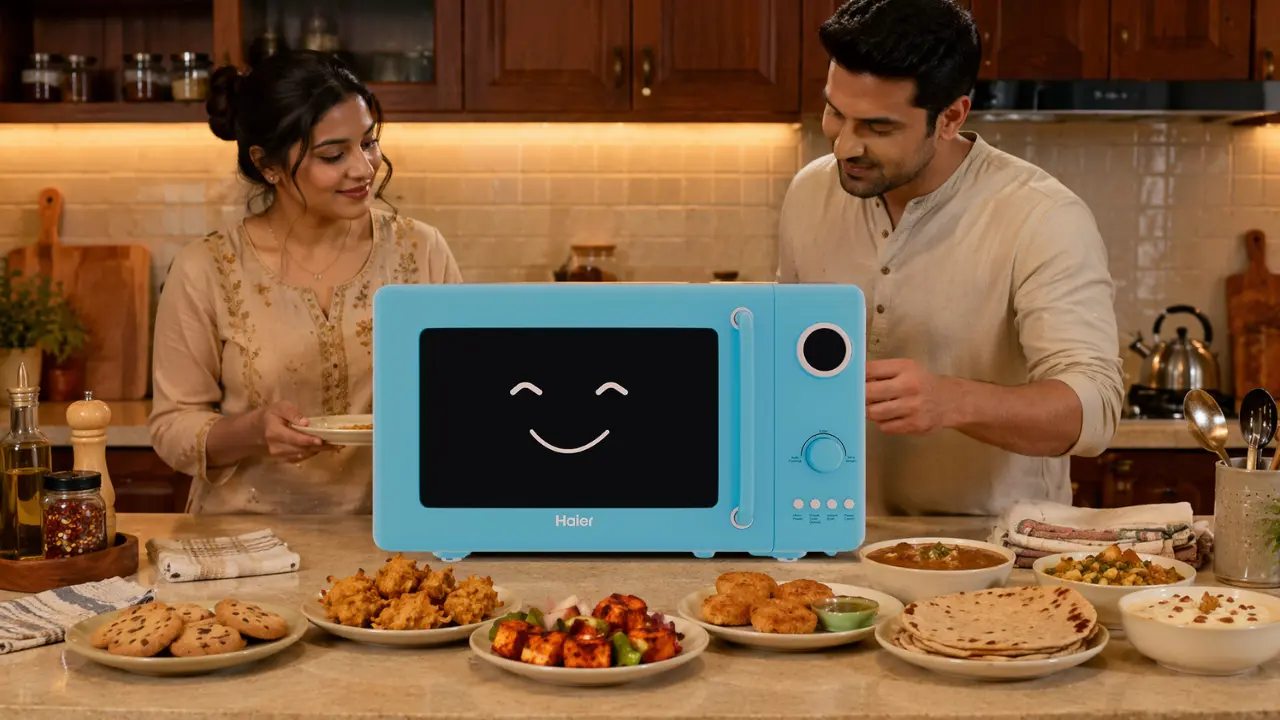

Digital display controls offer precision, automation, and ease for modern lifestyles, while manual controls offer simplicity, durability, and intuitive use.
The better choice depends on how you live. If your day runs on speed and multitasking, digital wins. If you value control without complexity, manuals still hold its ground.
The real question is not technology. It is behaviour.
Walk into two different Indian kitchens at 8:30 pm.
In one, someone taps a button on a sleek microwave. Dinner is reheated in seconds.
In another, someone turns a dial. Waits. Adjusts again.
Both work. Both heat food.
But the experience feels different.
This is not about digital display vs manual controls.
This is about how you want your appliances to think with you.
What exactly are digital displays and manual controls?
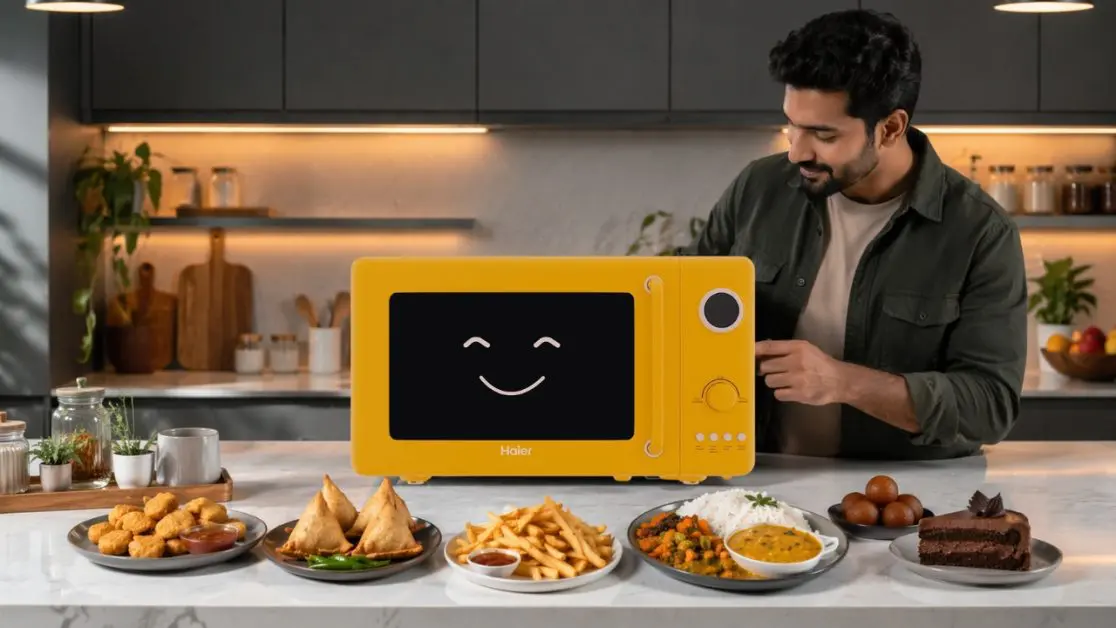
Digital display controls: Precision with intelligence
Digital display appliances use touch panels or buttons with a screen interface. They show time, temperature, and cooking modes.
Think of features like:
- Pre-set auto cook menus
- Instant start buttons
- Clear time display
- Smart adjustments
For example, the Haier Vogue 20L Lemon Solo Microwave Oven with Auto Cook Menus I Digital Display (HIL20V1MYPD) offers pre-set programs that automatically adjust time and power based on the dish.
That removes guesswork completely.
Manual controls: Simplicity you can feel
Manual controls rely on knobs and dials.
You turn. You adjust. You decide.
No screen. No presets.
Just direct control.
Why this choice matters more than people think
Most people assume this is a design choice.
It is not.
It is a decision about effort.
Every appliance interaction adds a small cognitive load.
- Adjusting time manually
- Guessing cooking levels
- Rechecking progress
Now multiply that across weeks.
The right control system does one thing well.
It removes friction from daily life.
Option 1: Digital display is about reducing decisions
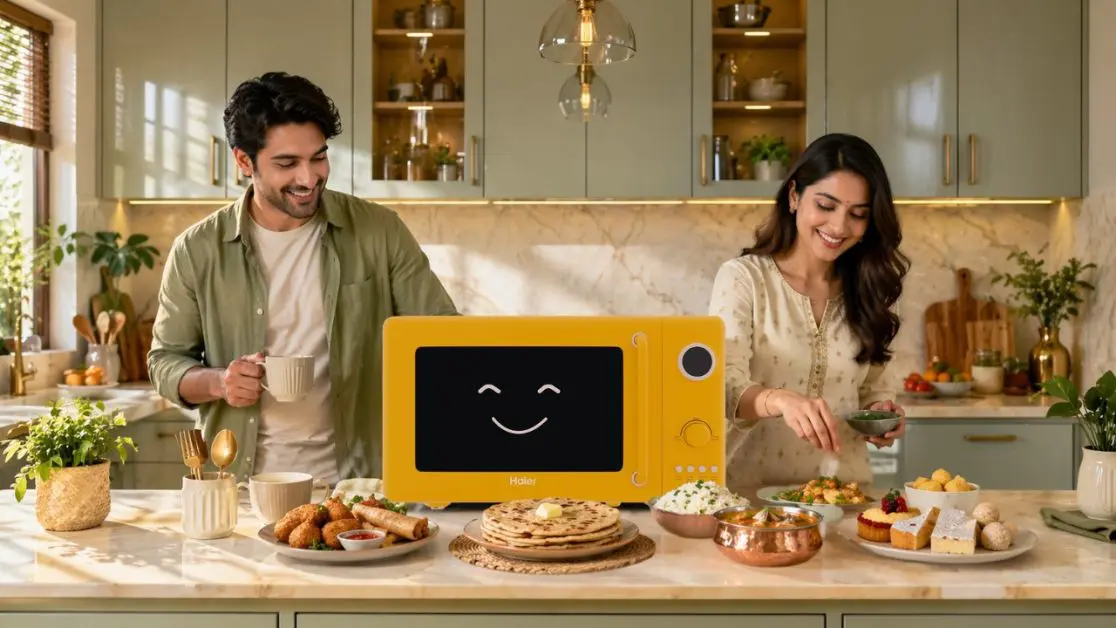
Digital display appliances are built for speed.
They assume you do not want to think every time.
What you gain
- Precision: Exact time and power levels
- Consistency: Same result every time
- Automation: Pre-set menus handle decisions
- Speed: One-touch actions like instant start
Take something as simple as reheating sabzi.
Manual control means trial and adjustment.
Digital display means one tap.
Done.
Real-life impact
- Working professionals save time daily
- Parents manage cooking while multitasking
- Students avoid guesswork
A few seconds saved per task.
A lot saved over a month.
Option 2: Manual controls are about control without dependency
Manual systems are built for independence.
They assume you want to stay in control.
What you gain
- Simplicity: No learning curve
- Durability: Fewer electronic components
- Flexibility: Adjust instantly
- Reliability: Works in any condition
Think of it like cooking on a gas stove vs using an induction preset.
One is intuitive. The other is guided.
Real-life impact
- Older users feel more comfortable
- Quick adjustments feel natural
- No dependence on menus
The manual is not outdated.
It is minimal by design.
Digital Display vs Manual Controls: A Clear Comparison
| Feature | Digital Display | Manual Controls |
| Ease of Use | High for beginners | High for experienced users |
| Precision | Exact settings | Approximate control |
| Speed | Faster with presets | Slower with adjustments |
| Learning Curve | Slight initially | Almost none |
| Maintenance | Moderate | Low |
| Flexibility | Menu-based | Instant manual changes |
What modern Indian homes are quietly shifting toward
Look at how homes are changing.
- Smaller kitchens
- Faster routines
- Dual-income households
- Higher appliance usage
Time is tighter.
Expectations are higher.
That is why digital display appliances are becoming more common.
Not because they are advanced.
Because they are aligned with how we live now.
The hidden system behind digital display popularity
Digital controls are not about screens.
They are about decision outsourcing.
When an appliance offers auto cook menus, it removes thinking.
For example, models like the Haier Vogue 20L Peach Solo Microwave Oven with Auto Cook Menus I Digital Display (HIL20V1MOPD) and Haier Vogue 20L Blueberry Solo Microwave Oven with Auto Cook Menus I Digital Display (HIL20V1MBPD) come with pre-set cooking programs that handle time and power automatically.
That is not just convenience.
That is a system shift.
But manual controls still solve a different problem
Manual controls answer a different question.
“What if I want full control without dependency?”
In situations like:
- Quick reheating without selecting menus
- Adjusting power mid-use
- Using appliances in unpredictable conditions
Manual wins.
Because it removes layers.
Three ways to decide what works for you
One option is digital-first living
You prefer automation.
- You multitask often
- You want predictable results
- You value speed
Cost: Slight learning curve
Benefit: Reduced daily effort
The second option is manual-first control
You prefer direct interaction.
- You trust your instinct
- You want fewer steps
- You value simplicity
Cost: More attention needed
Benefit: Full control
The third option is hybrid thinking
This is where most modern homes land.
You use digital for routine tasks.
You rely on manuals when needed.
Appliances like the Haier Vogue 20L Lemon Solo Microwave Oven with Auto Cook Menus I Digital Display (HIL20V1MYPD) combine digital display with jog dial control for flexibility.
That balance matters.
The design shift you might not have noticed
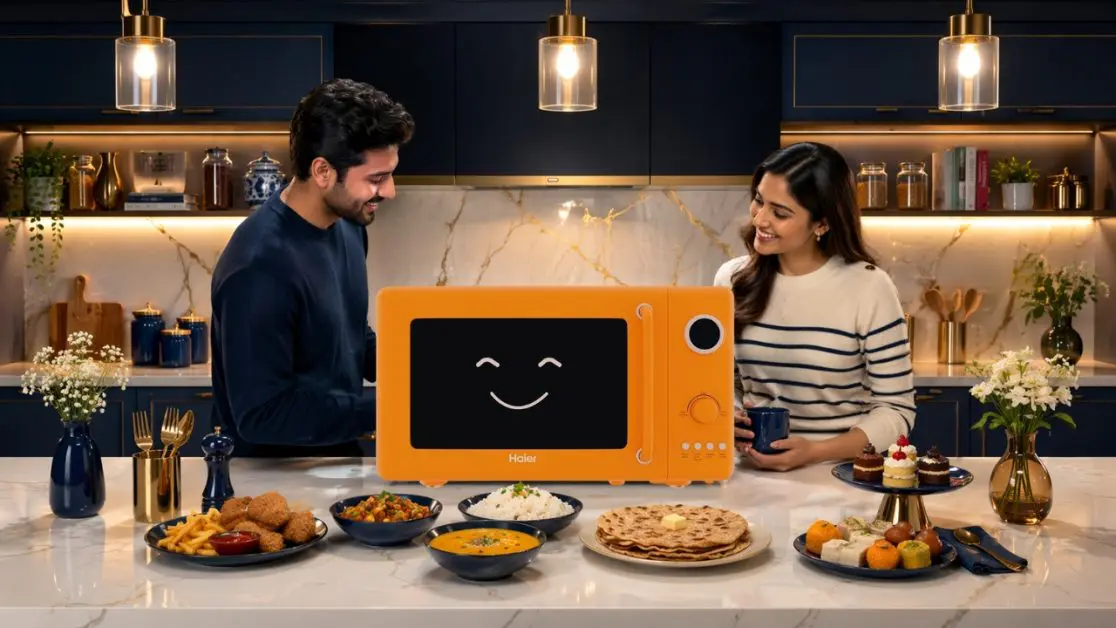
Appliances are no longer just machines.
They are interfaces.
And interfaces shape behaviour.
A digital display encourages:
- Faster decisions
- Less thinking
- Automation
A manual control encourages:
- Awareness
- Adjustment
- Engagement
Neither is better for everyone.
They are built for different lifestyles.
What does this mean for your next purchase?
Do not ask:
“Which is better?”
Ask:
“How do I live every day?”
Because the right appliance does one thing well.
It disappears into your routine.
A simple way to think about it
Manual controls are like cooking without a recipe.
Digital displays are like the following one.
Both can create great outcomes.
But the experience is different.
The one insight most people miss
Technology does not improve life.
Alignment does.
If your appliance matches your lifestyle, everything feels easier.
If it does not, even the best features feel unnecessary.
So, digital display vs manual controls. Which wins?
Neither.
The real winner is clarity.
- Clarity about your routine
- Clarity about your priorities
- Clarity about your time
Because the best appliance is not the most advanced one.
It is the one that quietly fits into your life.
And makes everything feel just a little more effortless.
Frequently Asked Questions
I’m always rushing after work. Will a digital display actually save me time or just add complexity?
Digital displays are designed for speed. Features like presets and instant start remove micro-decisions (time, power level), which adds up to real time savings over weeks.
Why do I feel more tired using manual controls even though they seem simpler?
Manual controls require repeated thinking, adjusting time, checking progress, correcting errors. That constant decision-making creates subtle mental fatigue.
I multitask a lot in the kitchen. Should I go digital or manual?
Digital fits better. It offloads decisions so you can focus on other tasks while the appliance handles consistency.
I enjoy cooking and being hands-on. Will digital controls feel restrictive?
Possibly. If you like adjusting as you go, manual controls provide a more engaging and flexible experience.
Are digital displays really “smart,” or just marketing?
They’re practical, not just marketing. Auto-cook menus and presets are essentially decision shortcuts built into the appliance.
I don’t want to think every time I cook. What’s better?
Digital. It’s built specifically to reduce thinking and automate routine tasks.
Will I become dependent on presets if I switch to digital?
Possibly but that’s the trade-off. You gain speed and consistency, but may rely less on instinct.
Is there a middle ground between digital and manual?
Yes, hybrid models (digital + dial/jog control). They give automation when needed and manual override when desired.