
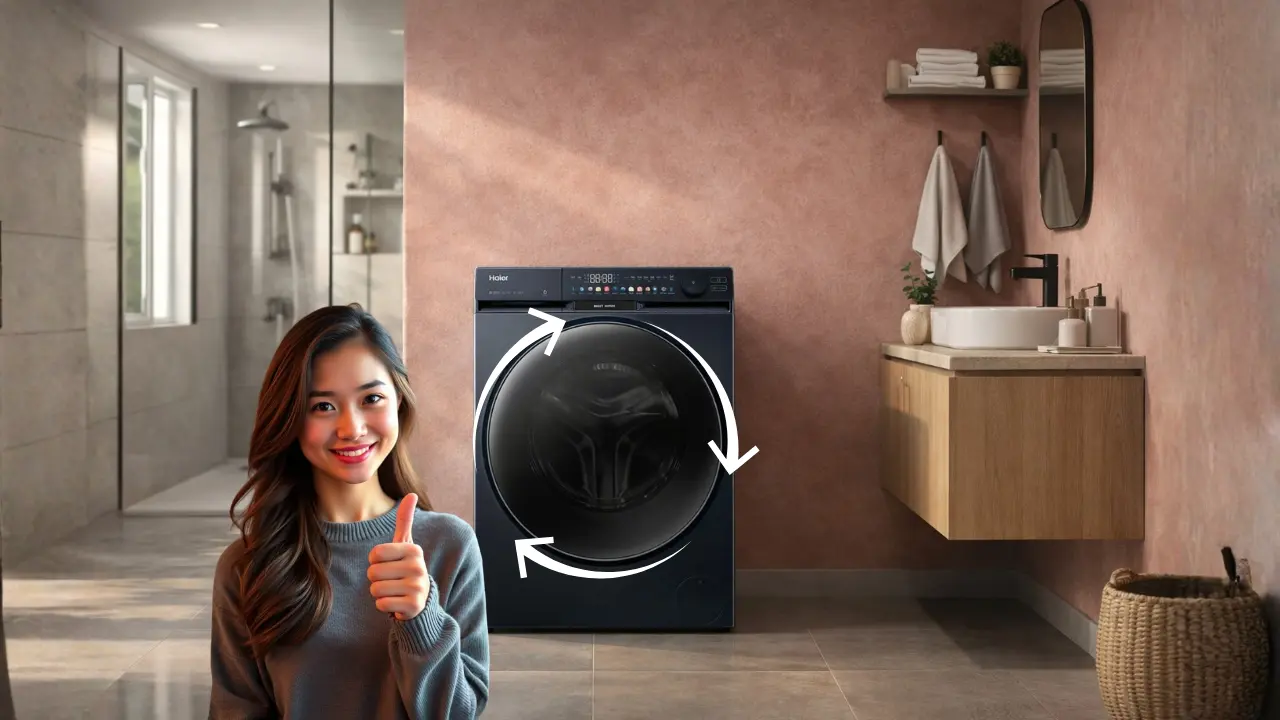

Direct Motion Motor technology connects the washing machine motor directly to the drum without using a belt.
This beltless design reduces friction, vibration, and energy loss.
The result is quieter wash cycles, smoother drum movement, and long-term durability. In simple terms, fewer moving parts create a calmer and more efficient laundry experience.
That is the short answer.
The longer answer begins inside a real home.
The 10:30 PM laundry moment most homes recognise.
Dinner plates are drying.
Lights are dim.
Tomorrow’s clothes sit quietly in a corner chair.
Someone remembers the school uniform.
Or the gym wear that cannot wait until morning.
Laundry begins.
In many homes, this is when the washing machine becomes the loudest object in the house. The drum spins. The motor hums. The floor vibrates slightly.
It works.
But it rarely feels calm.
Now imagine the same cycle running almost silently.
The drum rotates smoothly.
The machine stays stable.
No belt noise. No rattling vibration.
This difference usually comes down to one engineering decision.
How the motor connects to the drum.
Why Traditional Washing Machines Use Belts
Most conventional washing machines rely on a belt system.
The logic is simple.
- The motor spins.
- A belt transfers that motion to a pulley.
- The pulley rotates the drum.
It is similar to how a bicycle chain moves the wheel.
The system works. But every extra mechanical part introduces friction and motion loss.
The Hidden Costs of Belt Driven Motors
When belts are involved, three things happen.
| Traditional Belt Motor | What It Causes |
| Belt transfers power | Energy loss through friction |
| Multiple moving parts | Higher vibration |
| Mechanical tension | More noise during spin cycles |
These effects are subtle.
But together they shape how the washing machine behaves.
A louder spin cycle.
Slight vibration on heavy loads.
Gradual wear on internal parts.
The machine still works.
It simply works harder.
And this is where beltless engineering changes everything.
Direct Motion Motor: The Simpler System
Direct Motion Motor technology removes the belt completely.
Instead of transferring motion through pulleys and belts, the motor connects directly to the washing drum.
Think of it like this.
A belt system works like a bicycle chain.
Direct Motion works like an electric scooter.
Power goes straight to the wheel.
No middle layer.
According to product details for the Haier 10 Kg Fully Automatic Front Load Washing Machine (HW100-DM14F9BKU1), the Direct Motion Motor connects directly to the drum to deliver silent and vibration-free washing with improved efficiency and durability.
The engineering principle is straightforward.
The shortest path between power and motion is the most efficient one.
What Actually Changes When the Belt Disappears
Removing the belt affects more than just noise.
It changes how the entire washing machine behaves.
1. Reduced Vibration
Belts introduce tension.
Tension creates movement.
During high speed spin cycles, that tension can create small mechanical shifts that turn into vibration.
Direct Motion eliminates that intermediate layer.
The motor rotates the drum directly, which stabilises the entire washing cycle.
This stability becomes especially important at higher spin speeds. Many front load machines operate at around 1400 RPM spin speed, where stability makes a big difference in comfort and performance.
High speed without heavy vibration.
That is the goal.
2. Quieter Washing Cycles
Noise inside a washing machine usually comes from three sources:
- Motor movement
- Belt friction
- Drum imbalance
Direct Motion removes one full source of sound.
The belt.
This is why machines equipped with this motor technology can run noticeably quieter.
Some models even include features like Night Wash, allowing laundry cycles to run quietly even late at night without disturbing the household.
The deeper insight is simple.
Silence is not created by adding technology. It is created by removing unnecessary motion.
3. Higher Energy Efficiency
Every mechanical transfer wastes energy.
Belts create friction. Friction wastes electricity.
When the motor connects directly to the drum, more of the electrical energy becomes useful motion.
That efficiency compounds across hundreds of wash cycles each year.
The result is lower energy consumption and more consistent washing performance.
Why Fewer Parts Often Mean Better Engineering

Good engineering rarely adds complexity.
It removes it.
Direct Motion Motor technology reflects this philosophy.
Traditional Motor System
- Motor
- Belt
- Pulley
- Drum
Four mechanical components.
Direct Motion Motor System
- Motor
- Drum
Two components.
Half the mechanical chain.
Less friction.
Less wear.
Less noise.
This simpler design also improves durability. Some machines equipped with Direct Motion motors offer motor warranties extending up to 20 years, reflecting long-term reliability.
Because when fewer parts move, fewer parts fail.
What This Means Inside Real Indian Homes
Technology only matters when it improves daily life.
Direct Motion motors quietly change three everyday moments.
The Late Night Laundry Cycle
Many families run laundry after everyone sleeps.
A noisy washing machine interrupts the entire house.
A quieter motor allows cycles to run peacefully at night.
The Apartment Living Reality
In urban apartments, washing machines often sit close to bedrooms or kitchens.
Heavy vibration travels through floors and walls.
Direct Motion motors reduce this vibration, making them more suitable for compact urban homes.
The Heavy Weekend Load
Indian laundry rarely arrives in neat categories.
Bedsheets.
School uniforms.
Sportswear.
Towels.
Jeans.
Large loads demand stable drum movement.
Direct Motion motors deliver smoother torque control, which helps maintain consistent spinning even with heavier laundry batches.
Quick Comparison: Belt Motor vs Direct Motion Motor
| Feature | Belt Drive Motor | Direct Motion Motor |
| Connection | Belt and pulley system | Direct motor connection |
| Noise level | Higher mechanical noise | Quieter operation |
| Vibration | Moderate to high | Significantly reduced |
| Energy efficiency | Lower due to friction | Higher efficiency |
| Durability | Belt wear over time | Fewer moving parts |
Many people describe the difference the same way.
The machine simply feels calmer.
Where Direct Motion Meets Smart Laundry Technology
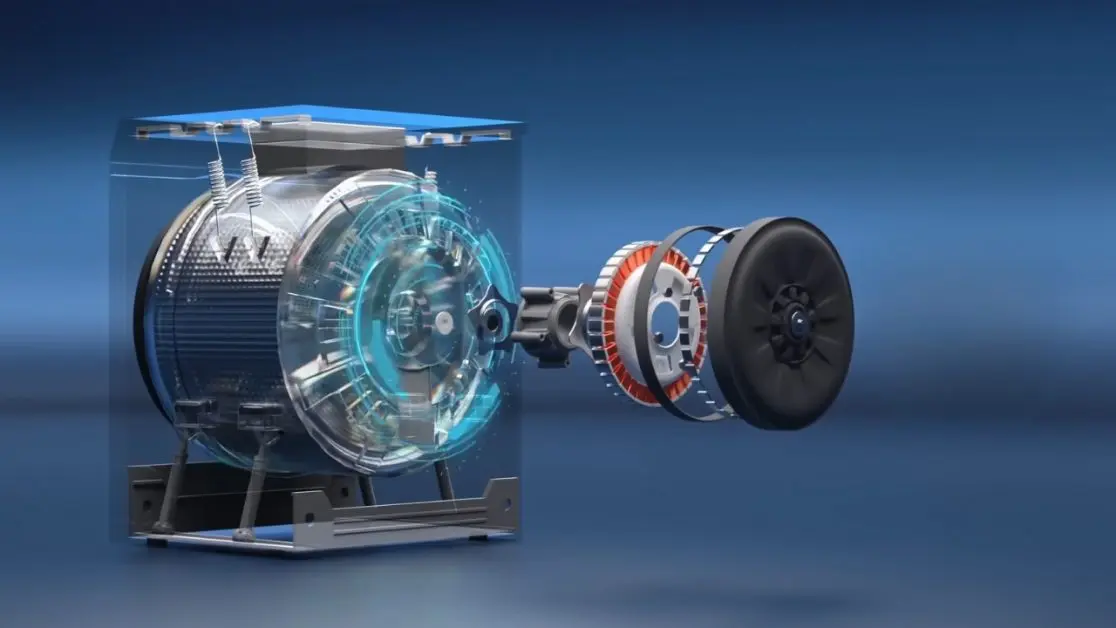
Direct Motion motors often work alongside intelligent washing features.
For example, the Haier 12 Kg F9 pro Front Load Washing Machine (HW120-DM14F9PBKU1) combines Direct Motion motor technology with smart systems such as AI powered wash programs that automatically detect fabric types and load levels.
When the motor moves smoothly, these smart systems become more precise.
Examples include:
- AI One Touch Wash that selects wash settings automatically
- Eco wash systems that optimise water and energy use
- Smart washing programs designed for different fabrics
Together they create a washing system that adapts to daily life instead of demanding attention.
Laundry becomes a background process.
Not a daily decision.
The Bigger Pattern: Quiet Appliances Are the Future
Look around modern homes.
Air conditioners are becoming quieter.
Refrigerators hum softly.
Induction cooktops replace noisy gas burners.
Appliances are evolving toward something subtle.
They perform their task without dominating the room.
Direct Motion Motor technology follows the same direction.
It removes unnecessary friction.
Reduces mechanical complexity.
Allows machines to operate quietly in the background.
And that is what modern homes increasingly value.
The Insight Most People Miss
Many people assume better appliances mean more features.
Often the opposite is true.
Better appliances remove unnecessary parts.
They simplify motion.
They eliminate friction.
The smartest machines rarely feel powerful.
They feel effortless.
The Quiet System Behind a Smarter Home
Laundry will always exist.
There will always be uniforms, gym clothes, festive outfits, and bedsheets waiting in the basket.
But the systems handling that work can evolve.
Direct Motion Motor technology represents that evolution.
A small engineering shift.
A meaningful improvement in daily life.
Smoother spin cycles.
Quieter nights.
Less vibration across the floor.
And sometimes the best technology is the one you barely hear.
Because silence is often the sound of good design.
Frequently Asked Questions
What exactly is a Direct Motion Motor in a washing machine?
A Direct Motion Motor connects directly to the washing drum without using belts or pulleys. This reduces friction, vibration, and mechanical complexity, resulting in quieter and smoother wash cycles.
I’m comparing washing machines online. Is a Direct Motion Motor actually better than a belt-driven motor?
Yes. Direct Motion systems typically produce less noise, create less vibration, and lose less energy because power goes straight from the motor to the drum instead of passing through belts.
I’m choosing between two washing machines and one mentions Direct Motion Motor. Should that influence my decision?
If you value quieter operation, better energy efficiency, and long-term durability, it’s a meaningful feature worth considering.
Does a washing machine with Direct Motion Motor really last longer?
Often yes. Because there are fewer moving parts, there is less mechanical wear compared to belt-driven systems.
I’m buying a washing machine for my apartment. Will Direct Motion make a noticeable difference?
Yes. Reduced vibration and quieter spinning are especially helpful in apartments where machines sit near bedrooms or shared walls.
I run my washing machine late at night. Will a Direct Motion Motor actually make the cycle quieter?
Yes. Removing the belt eliminates one major source of mechanical noise, which makes late-night washing less disruptive.
My current washing machine shakes the floor during spin cycles. Would Direct Motion fix that?
It can significantly reduce vibration because the motor rotates the drum directly without tension from belts.