
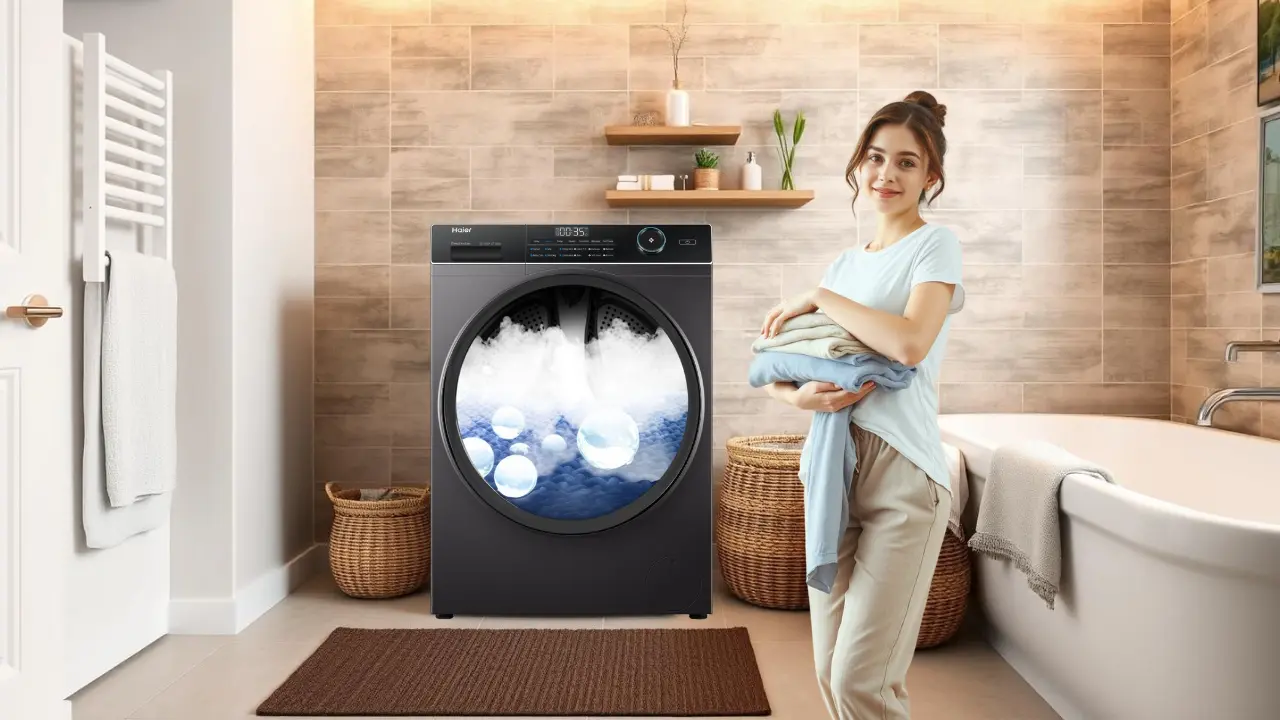

It’s pouring out again. You just finished washing a big load because, let’s be honest, there is too much humidity and rain in the air to care about schedules.
Now every corner of your house has t-shirts draped on chairs and socks stuck on curtain rods. The jeans? Still damp after yesterday’s wash. And that odor?
This next one should not come as a surprise,
It is certainly not the petrichor.
By Guwahati or even high-rises in Bangalore, the set issue most people grapple with is “managing” Indoors during heavy downpours which leads to an ongoing frustration in Indian homes. This monsoon if we told you that perhaps the answer lies beyond just rain water.
What if I told you it’s everything else in between your efforts to tackle that problem ?
This guide isn’t another dry-up near fan kind of article; We aim towards explaining how Indian families can dry their clothes smarter and faster during this windy season with highly effective hacks and sensible appliance choices that make sense for laundry care.
Why Clothes Just Don’t Dry Properly in the Monsoon (And Why That’s a Problem)

Here’s one thing to remember:
Not planning to dry clothes indoors leads to mildew growth.
During the monsoon season, cities like Mumbai, Chennai or Kolkata experience humidity levels exceeding 90%. Your clothes are not merely wet; they’re trapped in a continuous loop of moisture because there is no space for the excess dampness to escape.
What happens next?
- The room starts smelling weird
- Your cotton tees get that strange sour odour
- Towels feel moist even after two days
- And you’re forced to rewash just to feel clean
This isn’t about convenience anymore. It’s about hygiene, air quality and saving your time.
Start With the Basics: How Wet Are Your Clothes Right After the Wash?
This is where most of us lose the drying game.
If your machine’s spin cycle isn’t powerful, it leaves too much water behind. So no matter how clever your drying tricks are, you’re already behind.
Here’s what matters:
- Look for at least 1400 RPM spin speed in your machine
- Choose washers with direct motion motors (they’re quieter and more efficient)
- Steam functions like Refresh help reduce odour and wrinkles, so even slightly damp clothes feel wearable
Both the Haier 9 Kg Front Load Washing Machine and the Haier 11 Kg Washer Dryer come with 1400 RPM, Direct Motion tech and that godsend of a feature called Refresh. They spin hard, so your drying time is already halved.
Now let’s move on to drying after the wash.
Design Your Own Drying Zone
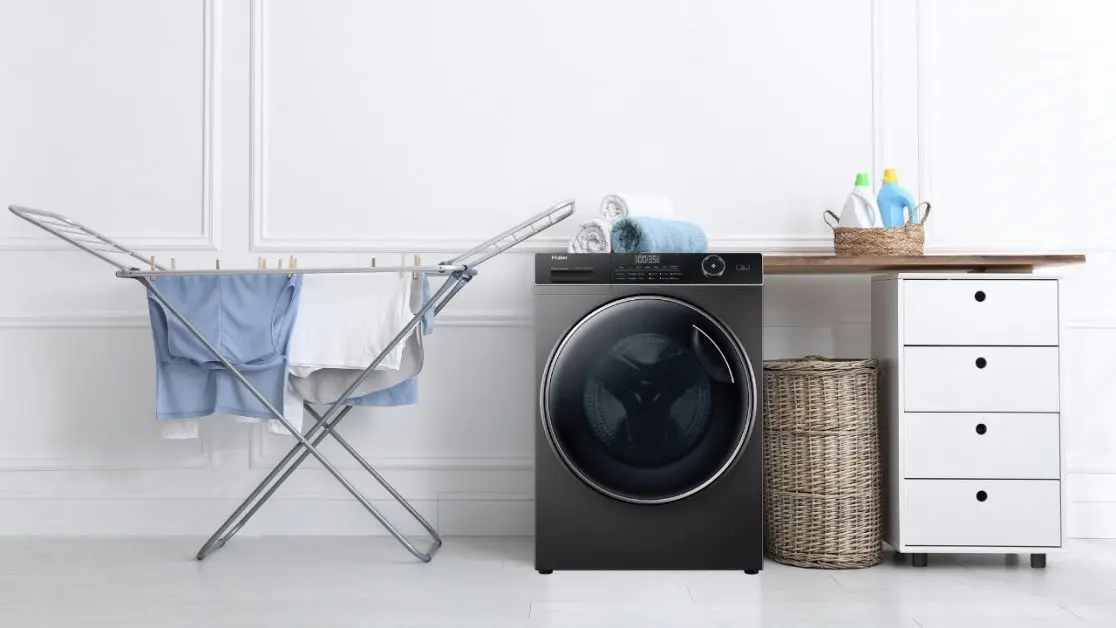
Most people hang clothes wherever there’s space. That’s the mistake.
You need to treat drying like a ritual during monsoon. Create a dedicated spot. Call it your “dry room” if you like. It can be the guest room, the study or just one half of your bedroom.
Here’s what your drying zone should have:
- Foldable metal rack (wood warps with moisture)
- A pedestal fan nearby
- A small open window, even if it’s just cracked a bit
- Aromatic solutions like camphor bowls or essential oil diffusers to prevent the musty smell
And here’s a small detail people often miss:
Leave at least 3 to 4 inches of space between garments. Clothes touching each other trap moisture and delay drying.
Got a Balcony? Turn It Into Your Secret Weapon
Even if you live in a flat, most homes have some kind of balcony space. Use it smartly:
- Install a wall-mounted pulley drying system. It’s better than leaning clothes on a grill or railing.
- Buy a plastic monsoon curtain (they’re cheap on Amazon or even at local hardware stores) to block side rain
- Rotate clothes every few hours to expose new angles to the breeze
And when the sun peeks out for a few minutes? You already know what to do.
The Fabric Strategy: Don’t Dry All Clothes the Same Way
Different fabrics behave differently in humid conditions. Here’s a cheat sheet for smart drying:
- Cottons: Hang them stretched. Shake them out first so creases don’t set.
- Denim and Towels: Roll them in a dry towel first to absorb water, then hang.
- Polyesters and quick-dry: These dry fastest, so place them in corners.
- Delicates: Use hangers and dry near low-speed fans. Not under direct blast.
- Bedsheets and Curtains: Fold in half and drape over wide surfaces. Don’t crumple.
Knowing where to place what cuts your drying time in half.
Turn On the Fan. Yes, Really.
People often assume ceiling fans don’t help. That’s half true.
If your fan is in turbo mode and clothes are directly underneath, they’ll just flap around and stay wet. But here’s a better approach:
- Use medium speed
- Place clothes slightly off-centre, where airflow is gentler but constant
- Rotate positions every 2–3 hours
And if you can spare one, a small table fan aimed sideways across the drying rack works even better. It’s a constant breeze without chaos.
Dryer Function in Your Washing Machine? Please Use It.
If you have a washer-dryer, activate that function guilt-free.
A lot of Indian households avoid using the dryer because they think it will damage clothes or eat up electricity. But today’s machines are built smarter.
Like the 11 Kg Washer-Dryer, which offers:
- Steam-powered Refresh cycles that don’t cook your fabric
- Smart drying that auto-stops once the clothes are dry
- Smartphone control through the Hai Smart App, so you can schedule it even when you’re out
Drying inside the machine is more hygienic, faster and consistent. You won’t need to iron half your clothes again. That’s a win.
Speed-Up Tricks Every Indian Family Swears By
These might sound old-school, but they work:
- Hairdryer for socks and baby clothes: Use on low heat, don’t hold too close
- Towel Press Method: Lay damp clothes between dry towels and press or sit on it
- Iron Between Two Cloths: Sandwich a shirt between two towels and iron it
- Open Cupboard Doors: If you dry clothes in your room, let air circulate through your storage too
- Use Camphor Balls or Neem Leaves: Great for controlling smell if you’re drying inside cupboards or under beds
Sometimes jugaad meets science beautifully.
Air Quality Matters Too
Drying indoors for weeks straight creates a heavy, musty feeling in the house. This isn’t just about smell It’s about air quality.
When clothes release moisture, your room becomes a mini cloud. Breathing that day in, day out? Not healthy.
Here’s how to balance it:
- Run an exhaust fan in the kitchen or bathroom while drying clothes
- Keep one window open and fan on to circulate air
- Use indoor plants like peace lilies or snake plants to absorb moisture
- Light a candle or use a diffuser to maintain freshness
And honestly, if you live in an area with consistent heavy rainfall, investing in a small dehumidifier is a smart move.
The Upgrade That Actually Pays Off
You’ve been thinking about it. Let’s talk real.
If your current washing machine leaves your clothes soggy and your house smelling like damp linen every monsoon, it might be time to upgrade.
Here are two smart choices that actually respect the Indian lifestyle:
Haier 11 Kg Washer-Dryer Combo (Model: HWD110-DM14959CS81)
- Perfect for large families
- Wash + Dry in one go
- Steam refresh, baby care, duvet, and even sportswear mode
- 20-year motor warranty
- 1400 RPM spin that seriously dries better
Haier 9 Kg Front Load Washing Machine (Model: HW90-DM14929EBKF)
- Super Drum 525 mm for deeper cleaning
- High-speed spin
- Ideal for smaller homes that prefer to air dry but want quicker results
- Hai Smart App for remote control
- Gentle on clothes but tough on water
These aren’t just machines. They’re what make rainy days manageable and your routine sane.
Let’s Wrap This With a Dry Towel (Not a Damp One)
The rainy season is magical, no doubt. But wet laundry on every chair and the smell of damp fabric everywhere?
That’s not romantic. That’s stress.
With a few practical changes, the right spin cycle, and a little help from smart appliances, you can make indoor drying efficient, clean and maybe even enjoyable.
And if you’re looking to simplify your monsoon laundry routine with zero stress, head to:
Haier India’s washing machine collection.
Because your home deserves comfort. Not compromise. Not even during monsoon.