


Eco Wash that adjusts water levels based on load weight is a smart washing technology that automatically weighs the laundry inside the drum and uses only the water required for that specific load.
Instead of filling the drum with a fixed amount of water every time, the machine calculates the load weight and adjusts water level, wash time, and energy use accordingly. The result is simple: clean clothes with less water, lower electricity use, and fewer decisions for busy households.
Laundry becomes less about settings and more about systems that quietly do the thinking for you.
The 9:15 PM laundry moment most homes recognise.
Dinner is done.
Someone remembers the school uniform.
The gym T-shirt smells like a full cricket practice.
There is one bedsheet that needs washing before tomorrow.
The basket is not full. But it cannot wait.
This is where most washing machines struggle.
They operate on an old assumption:
Every wash needs the same water.
That assumption made sense twenty years ago. It makes less sense today.
Because modern homes run smaller loads more frequently.
Working professionals wash midweek. Parents wash uniforms overnight. Couples run quick cycles after weekend trips.
Laundry changed.
Machines had to catch up.
Eco Wash: The Hidden System Behind Smarter Laundry

Eco Wash works on a simple principle.
Measure first. Wash second.
Inside the washing machine, sensors weigh the laundry load before the cycle begins. The system then determines three things:
- Water level required
- Ideal wash duration
- Energy needed to clean effectively
The machine uses exactly what is required. Nothing more.
According to the product specifications for Haier’s front load machines, Eco Wash automatically weighs laundry and matches the appropriate water level and washing time to optimize both water and energy consumption.
This is systems thinking applied to laundry.
The machine asks a better question.
Not how long should the wash run?
But how much washing is actually needed?
Why Fixed Water Levels Waste More Than We Think
Most people assume washing machines already optimize water.
Many older systems do not.
They operate on pre-programmed water levels designed for full loads. Smaller loads end up using nearly the same amount of water.
Consider this simple comparison.
| Laundry Situation | Traditional Machine | Eco Wash Machine |
| Half load of clothes | Nearly full water level | Water adjusted to load |
| Small load midweek | Same water as full load | Reduced water use |
| Mixed fabrics | Manual adjustments | Automatic calibration |
| Energy consumption | Often higher | Optimised for load size |
This difference compounds over time.
Two small loads a week can quietly waste thousands of litres annually.
Eco Wash solves the problem at the source.
It removes the assumption that every wash is equal.
Three Laundry Patterns Modern Homes Actually Follow
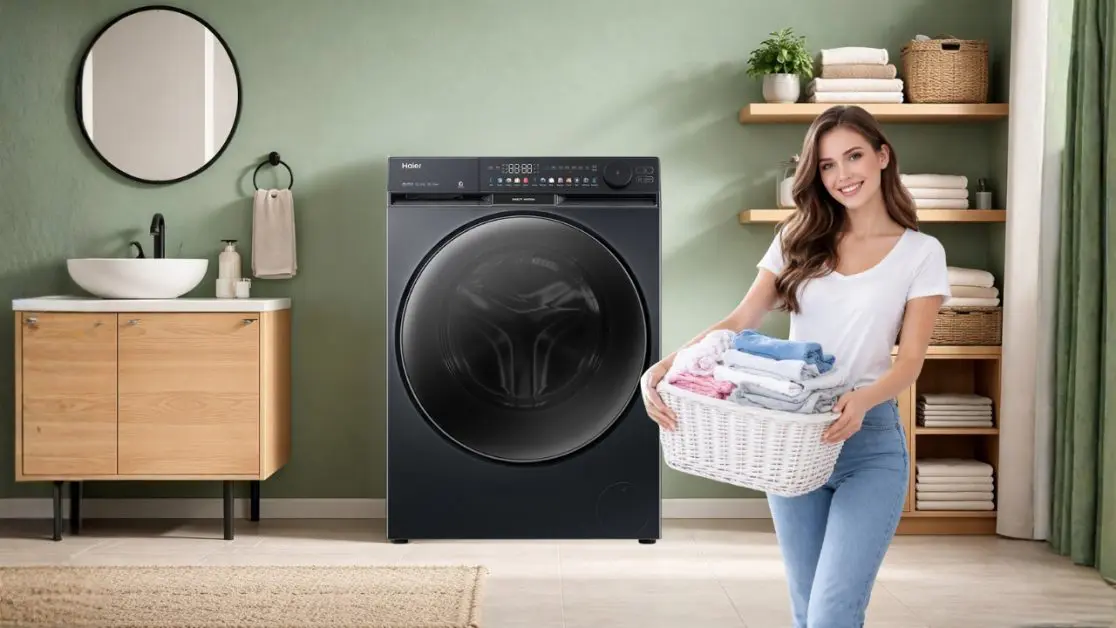
Most homes do not run laundry the way machines expect.
They follow patterns.
Understanding those patterns explains why load-based water adjustment matters.
1. The Midweek Quick Wash
A few office shirts. A gym outfit. Maybe a kurta.
The basket is not full, but the clothes cannot wait.
Traditional machines treat this like a full load.
Eco Wash treats it like what it actually is.
A small load that deserves a small wash.
The benefit:
- Less water
- Shorter wash cycles
- Lower electricity consumption
2. The Weekend Laundry Marathon
Bedsheets. Towels. Kids’ sportswear.
This is the opposite scenario.
Large loads require more water, more movement, and longer cycles.
Eco Wash scales accordingly.
Instead of underwashing heavy loads or overwashing light ones, the system calibrates the wash to the load weight.
Efficiency becomes dynamic.
3. The Festival or Guest Laundry Spike
Indian homes understand this scenario well.
Guests arrive. Extra bedding appears. Towels multiply.
Laundry spikes.
Machines with larger drum capacity and smart wash optimization handle these situations better because the system adjusts automatically.
For example, machines like the Haier 10 Kg Fully Automatic Front Load Washing Machine (HW100-DM14F9BKU1) and the Haier 12 Kg F9 pro Front Load Washing Machine (HW120-DM14F9PBKU1) combine Eco Wash with AI-assisted load sensing, allowing the machine to automatically detect load and fabric conditions.
The result is consistent washing performance regardless of load size.
The Quiet Economics of Water-Efficient Washing
Water efficiency rarely shows up dramatically in a single cycle.
It shows up over months.
Small savings accumulate.
Here is how Eco Wash creates those gains.
1. Water Savings
Because the system weighs the laundry, water levels adjust precisely.
Smaller loads use less water.
Over a year, the difference can be significant for households that run multiple cycles weekly.
2. Energy Efficiency
Heating and spinning water consumes electricity.
Less water means less energy required.
That translates directly into lower electricity bills.
3. Fabric Protection
Overwashing damages clothes.
When machines adjust water and cycle duration correctly, fabrics experience less mechanical stress.
Clothes last longer.
Laundry becomes gentler without sacrificing cleaning performance.
Why Load Sensing Works Especially Well in Indian Homes
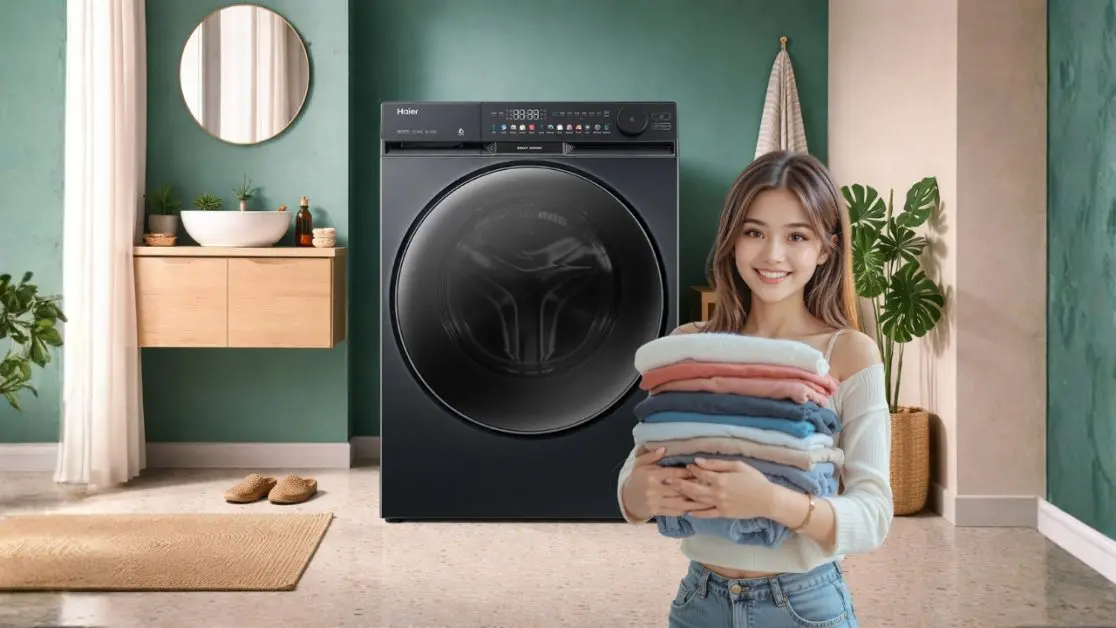
Indian laundry is rarely uniform.
A single load may contain:
- Cotton kurtas
- Gym wear
- Kids’ uniforms
- Towels
- Delicate fabrics
Climate also plays a role.
Humidity, sweat, dust, and seasonal changes affect fabric care requirements.
Smart washing systems respond better because they adapt.
Machines equipped with technologies such as One-Touch AI Wash, available in advanced Haier front load models, automatically sense fabric type, load weight, and dirt level before selecting the appropriate wash settings.
The system reduces guesswork.
Laundry decisions move from the user to the machine.
That shift matters more than it seems.
When Appliances Start Thinking in Systems
Most home appliances used to follow simple rules.
- Refrigerators cooled continuously
- Air conditioners ran at fixed speeds
- Washing machines filled to preset levels
Today the pattern is different.
Modern appliances respond to real conditions.
Air conditioners sense occupancy.
Refrigerators track cooling zones.
Washing machines measure load weight.
This is the larger shift happening inside homes.
Appliances are moving from manual control to intelligent response.
Eco Wash is one example of this system at work.
It replaces rigid settings with responsive behaviour.
What to Look for in a Washing Machine with Eco Wash
Not every machine labelled “eco” behaves the same way.
If load-based water adjustment matters, a few features become important.
Look for Load Detection
Sensors should measure the laundry weight before washing begins.
Without this step, water levels remain fixed.
Look for AI or Smart Wash Programs
Technologies like AI Wash combine load detection with fabric recognition.
This allows the system to adjust wash parameters automatically.
Look for Efficient Motor Design
Motors affect both energy use and noise levels.
For instance, Direct Motion Motor technology used in modern front-load machines connects the motor directly to the drum for smoother and quieter operation.
Look for Larger Drum Efficiency
Bigger drums allow better load distribution.
Systems like Super Drum designs increase drum diameter to improve wash performance and reduce tangling.
A Simple Insight That Changes How We See Laundry
Laundry seems simple.
Put clothes in. Press start.
But behind that simplicity lives a system of decisions.
Water levels.
Spin speeds.
Wash durations.
Energy consumption.
Older machines forced people to make those decisions manually.
Modern systems move those decisions into the machine.
Eco Wash represents that shift.
Not flashy.
Not complicated.
Just intelligent enough to remove waste.
And that is the real insight.
The best technology does not add more control. It quietly removes unnecessary decisions.
When appliances learn to adjust themselves to real conditions, homes feel lighter.
Bills shrink slightly.
Water usage drops quietly.
Laundry becomes less of a task and more of a background system.
And sometimes that is exactly the kind of progress a home needs.
Frequently Asked Questions
Do I still need to choose the water level if my washing machine has Eco Wash?
No. Eco Wash systems weigh the laundry inside the drum and automatically determine the appropriate water level. The machine handles the adjustment, removing the need for manual water selection.
If my laundry load is small, will the machine really use less water?
Yes. The sensors detect the weight of the clothes and reduce water usage accordingly. A small midweek load uses much less water than a full weekend load.
Does Eco Wash also adjust wash time automatically?
In most modern machines, yes. Load sensors typically adjust water level, wash duration, and sometimes spin speed based on the weight and fabric mix.
Will my clothes still get properly cleaned if the machine uses less water?
Yes. Eco Wash systems balance water levels with drum movement and detergent efficiency. The cleaning performance remains effective because the system optimizes the wash instead of simply reducing water.
My washing machine has Eco Wash. Can I just press start without selecting anything?
Yes, especially on machines with AI-assisted washing. These systems detect load weight and sometimes fabric type, allowing a simple one-touch wash cycle.
I hate figuring out wash settings. Will Eco Wash make laundry simpler?
That’s exactly the goal. Eco Wash shifts decisions like water level and wash duration from the user to the machine.
If my washing machine measures the load weight, how does it decide the wash cycle?
Sensors inside the drum estimate load weight and sometimes drum resistance. The system then calculates water level, agitation intensity, and cycle duration needed for effective cleaning.