
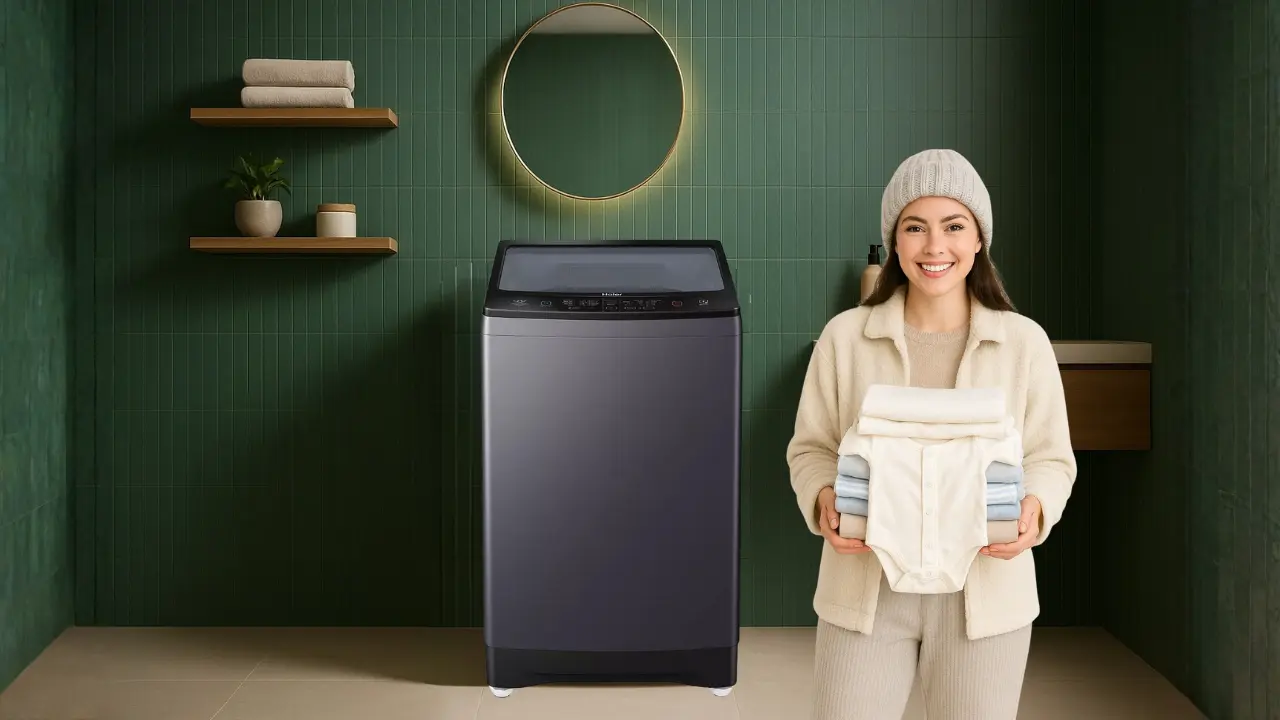

Winter raises your washing machine’s energy consumption because water is colder, detergents dissolve slower, and clothes take longer to rinse and dry.
You save energy by using warmer daytime cycles, avoiding overloading, choosing the right wash modes, and relying on built-in efficiency features like in-built heaters, Magic Filters, and Oceanus Wave Drums found in modern Haier machines.
Why winter changes how your washing machine behaves

Every Indian household knows the same winter routine.
Sunlight disappears by 5 pm.
Laundry piles grow faster than motivation.
And suddenly, everything takes more energy.
Cold water thickens detergents.
Fabric softeners lose their flow.
Stains behave like they have signed a truce with your clothes.
Winter makes the invisible systems inside your washing machine work harder.
And every extra minute of heating, spinning, or rinsing quietly reflects on your electricity bill.
This is where smart choices matter more than strong detergents.
Start with the human experience
Picture a typical week in December.
You run one load before work.
One load after dinner.
Light blankets on weekends.
Gym clothes. Office formals. Kids’ uniforms.
By the end of the week, your electricity bill looks like a festival gift no one wanted.
Winter is not the problem. The system is.
Your washing machine responds to cues you set without realising.
Once you understand those cues, energy saving becomes a habit, not a hack.
Tip 1: Wash during the warmest hours of the day
Bold principle:
Heat is expensive when nature provides none.
Cold mornings make your washing machine work twice as hard to dissolve detergent and maintain water temperature.
But sunlight at 12 pm? That is free energy.
Research from the Indian Institute of Technology Delhi shows that winter daytime temperatures can improve detergent activation by up to 40 percent.
In real life terms, that is less heating, shorter cycles, and cleaner clothes with lower power usage.
The bigger idea:
Timing is a tool. Use it.
Make this practical
- Run regular loads between 12 pm and 4 pm.
- Reserve bulky fabrics like towels and jeans for weekends when sunlight is stronger.
- Let natural warm air support your machine’s internal heating.
It sounds small.
It saves a lot.
Tip 2: Choose efficient wash modes that do the thinking for you
Every modern washing machine is a quiet system of sensors, timers, and logic.
Some do this better than others.
Haier’s top load machines, for instance, use:
- Oceanus Wave Drum for faster stain removal
- Dual Magic Filters for cleaner water flow
- Advance in-built heater on models like the HWM80-H826S6 for hot water cycles that do not waste power
- Memory Backup for uninterrupted cycles during power cuts
These features avoid the biggest winter mistake:
Over-washing.
The second mistake:
Increasing wash duration because clothes feel dirtier in winter.
Smarter modes for winter
- Quick Wash for lightly soiled daily clothes
- Deep Clean when winter brings dusty jackets
- Delicate to avoid shrinkage in cold cycles
- Tub Dry to prevent moisture and winter odors
Modes are not convenient.
Modes are strategy.
They help you use energy only where it matters.
Tip 3: Run full loads, not heavy loads
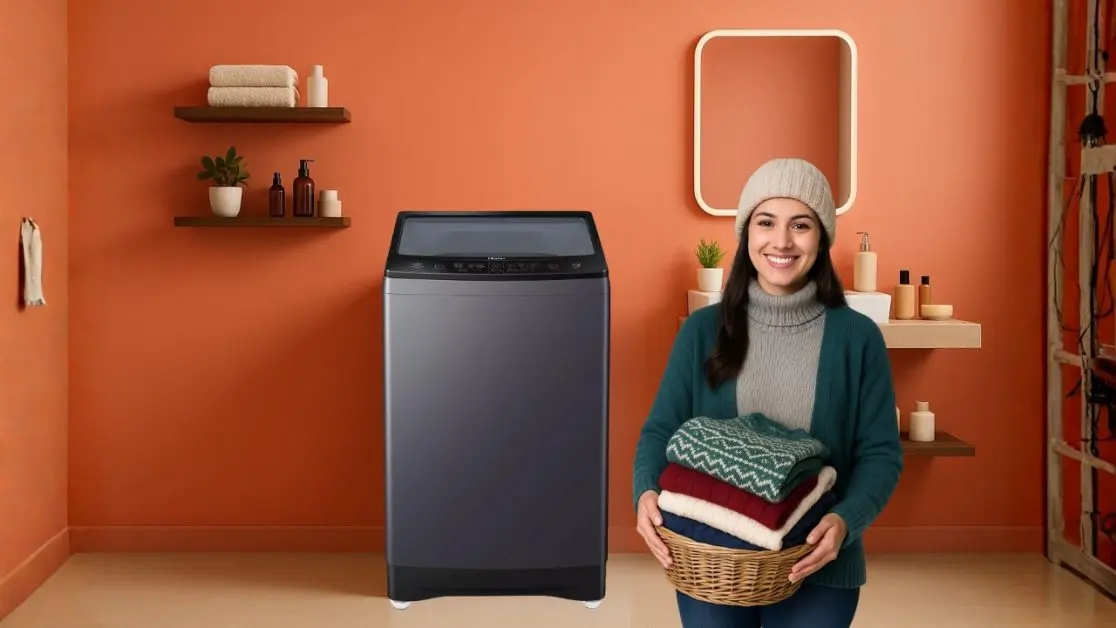
This is where most homes lose energy without noticing.
A full load is balanced.
A heavy load is stuffed.
There is a difference.
When clothes do not move freely, your machine increases spin time and draws more power.
Haier’s Oceanus Wave Drum reduces this energy drag by using water waves to create space between garments.
The three load rules
1. Leave a hand-sized gap at the top of the drum.
2. Mix heavy and light fabrics for smoother rotation.
3. Avoid two half loads. Run one full load instead.
The system reward is simple.
Less friction.
Less heating.
Less power.
Tip 4: Switch to liquid detergents during winter
Here is the hidden system most homes do not think about.
Powder detergents dissolve slowly in winter water and force longer heating cycles.
Liquid detergents activate immediately.
They reduce wash time.
They protect fabric colours in cold seasons.
They save your machine from leftover powder residue.
Combine this with Haier’s Magic Filter, which traps lint efficiently even in low temperature cycles, and your wash quality improves without energy drag.
Tip 5: Use hot water only when it matters
Hot water is not the hero.
Selective use of hot water is.
Three situations where hot water is worth the energy
- Washing bedsheets after winter allergies
- Removing oil-based stains from sweaters
- Cleaning towels used in humid bathrooms
If your machine has an in-built heater like Haier’s HWM80-H688BK, use the preset hot wash cycle instead of manually increasing water temperature.
Pre-programmed cycles regulate heat intelligently, preventing energy spikes.
Where cold water is enough
- Gymwear
- Office formals
- Kids’ uniforms
- Daily casuals
Use hot water as seasoning, not the base.
Tip 6: Keep your filter clean to avoid energy waste
Filters are like lungs.
Clog them, and the whole system suffers.
A blocked Magic Filter forces the motor to work harder.
It increases wash duration.
It reduces spin efficiency.
And winter moisture makes lint build up faster.
Haier’s 2X Magic Filter on models like the HWM80-H826S6 captures twice the lint, which reduces internal resistance and improves water flow.
A simple winter checklist
- Rinse the filter every 3 washes
- Run a Tub Dry cycle once a week
- Keep the lid open after every wash for airflow
Energy saving begins with air.
Tip 7: Position your washing machine away from cold air drafts
Place your washing machine next to a cold balcony opening, and you create a microclimate that works against you.
Cold drafts lower drum temperature.
Lower drum temperature increases heating cycles.
Increased heating cycles increase power usage.
A smarter position is indoors or against a wall that receives afternoon sunlight.
The machine stays warmer.
So does the water.
So does your bill.
Tip 8: Dry clothes efficiently without overusing the spin cycle
Here is a universal winter temptation.
Increase the spin speed because sunlight is weak.
But higher spin speeds draw more electricity.
Dryers draw even more.
The goal is balance, not brute force.
Energy smart drying strategy
- Use high spin only for thick fabrics
- Shake clothes before drying to remove trapped water
- Place drying racks near windows for natural air circulation
- Use Tub Dry mode to prevent mold without extra energy
If your machine has Haier’s Softfall Technology, opening and closing the lid repeatedly will not damage it. That helps when you sort clothes mid-cycle or check drying readiness.
Tip 9: Let the machine’s intelligence work for you
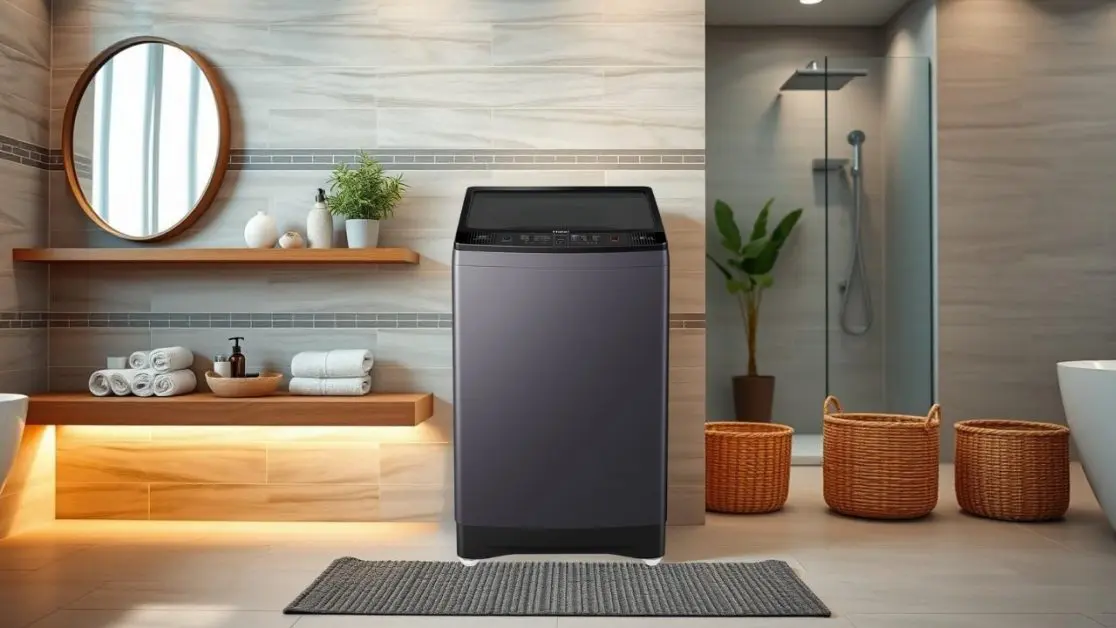
Modern washing machines are not devices. They are decision systems.
Haier’s top load line uses:
- Sensor-based load balancing
- Tub Dry for moisture control
- Near Zero Pressure technology for homes with low winter water pressure
- In-built heater with butterfly design for efficient heat distribution
- Memory Backup for power cut recovery
These features are not marketing.
They are energy strategies.
They reduce repeated cycles.
They avoid unnecessary rinsing.
They maintain optimal wash temperature even when the environment drops.
Work with the system.
Not around it.
Quick table: Winter habits that save energy
| Winter habit | What it saves | Why it works |
| Washing in the afternoon | 10 to 20 percent energy | Warmer water, shorter cycles |
| Using liquid detergent | 5 to 10 percent energy | Faster dissolving reduces heating |
| Cleaning Magic Filter often | 10 percent performance gain | Improves water flow |
| Running full loads | 15 percent savings | Fewer cycles, better drum movement |
| Smart washing modes | 10 to 25 percent | Sensors adjust cycle length |
Small choices. Large impact.
What this means for your home
Winter teaches a simple lesson.
Energy efficiency is not one decision. It is a system of choices.
When you run your washing machine at the right time, with the right load, using the right mode, the machine feels smarter.
Not because it changed.
But because you did.
A good appliance becomes a great experience when the home around it adapts.
Haier designs washing machines with this ecosystem in mind.
From Oceanus Wave Drums that save water movement energy, to Magic Filters that prevent internal drag, to in-built heaters designed for efficient winter cycles.
Not to push products, but to support habits that make daily living easier.
The final takeaway
Energy saving in winter is not about doing less. It is about doing things in harmony with how your washing machine actually works.
Wash when nature helps.
Use heat intelligently.
Let technology carry the load.
Let systems support your rhythm.
Your washing machine becomes more than a task handler.
It becomes part of a home that runs with more calm, less cost, and a little more thoughtfulness each day.
If an appliance can help a family save power, time, and winter stress, that is not technology.
That is care.
And care is what makes a home feel truly warm in winter.