
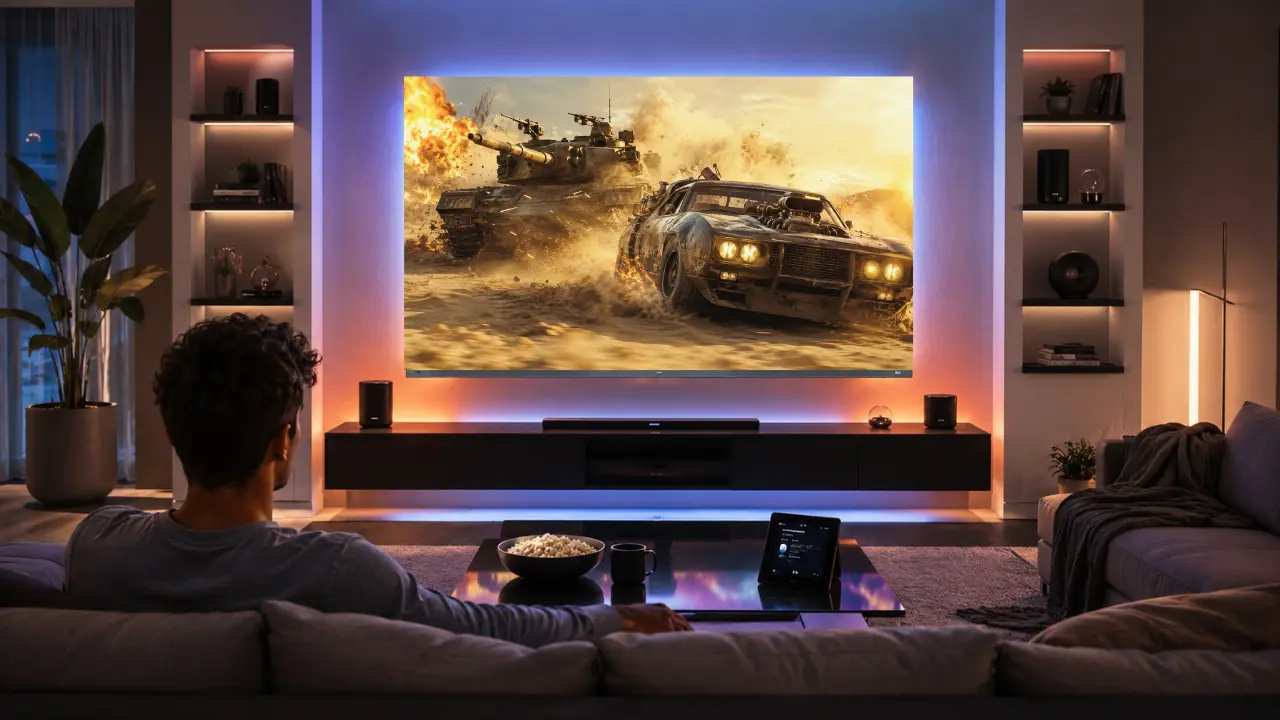

Television evolved from a simple broadcast box into an intelligent system that understands content, adapts to human behaviour, optimises picture and sound in real time, and quietly becomes the emotional centre of modern homes.
The television no longer just plays content.
It interprets it.
And that changes how families experience entertainment altogether.
The first televisions solved access. Modern televisions solve experiences.
There was a time when owning a television itself felt revolutionary.
One screen.
One antenna.
Limited channels.
Fixed schedules.
Entire neighbourhoods gathered around a single CRT television during cricket matches. Sunday movies became rituals. Families planned dinner around television timing because television controlled the schedule.
Now look at the shift.
Modern TV does not ask people to adjust their lives around programming schedules anymore. It adapts itself around people.
That is the real evolution.
Not bigger screens.
Not thinner bezels.
Not even 4K resolution.
The real transformation happened when televisions stopped behaving like hardware and started behaving like intelligent systems.
A smart television today handles:
- OTT streaming
- Gaming
- AI picture optimisation
- Voice control
- Smart home connectivity
- Real-time motion enhancement
- Personalised recommendations
- Ambient light adjustment
The television became infrastructure.
Quietly.
Every generation of TV solved a different human problem
Technology evolves in layers. Every layer removes one friction and introduces a new expectation.
That pattern explains television perfectly.
Phase 1: Black-and-white televisions solved visibility
The earliest televisions brought moving visuals into homes.
That alone felt magical.
People were not demanding cinematic colour accuracy. They simply wanted access to information and entertainment inside the house.
The technology solved one core need:
“Can we watch this at home?”
Phase 2: Colour televisions solved emotional immersion
Then colour arrived.
Suddenly cricket jerseys looked real. Movie songs felt alive. Festivals on television carried emotional depth.
Colour television changed one thing fundamentally:
Entertainment stopped feeling distant.
It became sensory.
Phase 3: Flat-screen and LED TVs solved space and design
Indian homes changed.
Living rooms became more compact. Modular interiors became aspirational. Wall-mounted screens replaced bulky CRT cabinets.
Televisions became part of home aesthetics.
This phase solved:
- Space efficiency
- Energy efficiency
- Better picture quality
- Modern visual design
The television stopped looking like a machine.
It started looking like décor.
Smart TVs changed behaviour more than technology
Most people think Smart TVs are about apps.
That is incomplete.
Smart TVs fundamentally changed viewing behaviour.
Before Smart TVs:
- People watched channels
- Content timing was fixed
- Discovery was limited
After Smart TVs:
- People started choosing content on demand
- Binge culture emerged
- YouTube became household entertainment
- OTT platforms replaced scheduling
The television stopped being passive.
It became interactive.
That shift changed Indian homes deeply.
Now one television handles:
- Morning devotional music
- Afternoon cartoons
- IPL streaming at night
- Weekend gaming
- Family movie marathons
One screen. Multiple identities.
That is why modern television design matters more than ever.
AI-powered TVs are not about “more features.” They reduce friction.
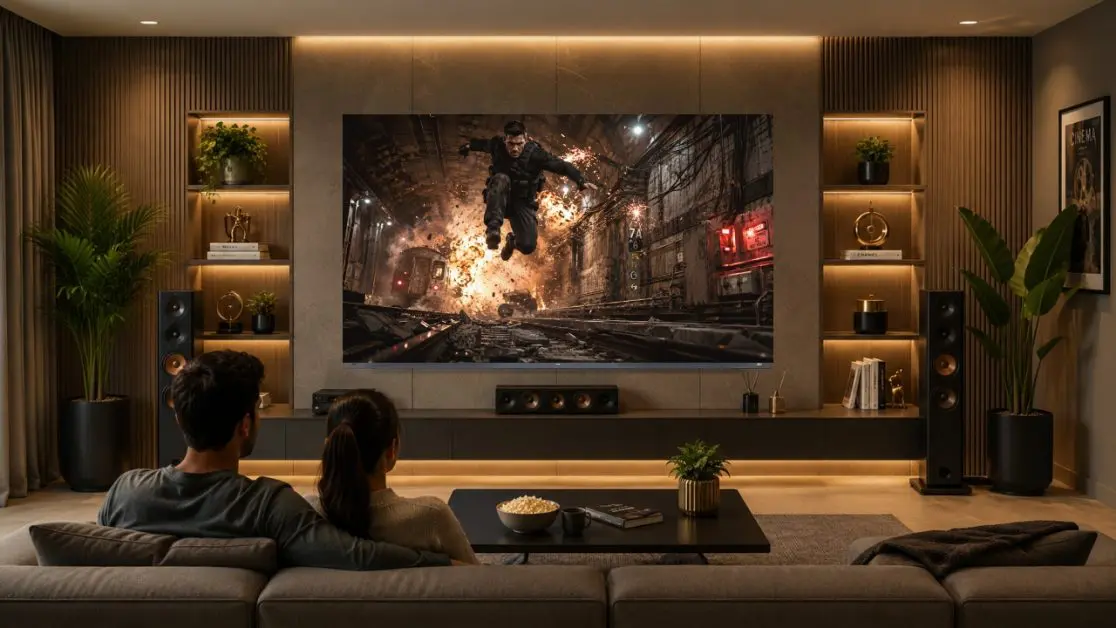
Most people misunderstand AI televisions.
AI is not there to impress users with technical jargon.
It exists to remove invisible frustrations.
Think about what modern viewers actually struggle with:
- Endless content scrolling
- Poor sound balance
- Motion blur during sports
- Washed-out brightness in daylight
- Lag during gaming
- Complicated settings menus
AI-powered televisions solve these problems automatically.
That is the hidden system.
The best technology disappears into the background.
AI picture engines now think scene-by-scene
Earlier televisions applied one fixed picture setting to everything.
Modern AI televisions behave differently.
AI processors now analyse scenes in real time and optimise:
- Contrast
- Brightness
- Motion
- Colour depth
- Sharpness
The result feels subtle at first.
Then impossible to unsee.
For example, the Haier New M92 Series 189cm (75) QD-Mini LED Smart AI Google TV uses an AI Ultra Sense Processor that intelligently tunes motion, contrast, and colour depth dynamically for sharper viewing experiences.
That matters because different content behaves differently.
Cricket needs smoother motion.
Movies need cinematic contrast.
Animation needs vibrant colours.
Gaming demands ultra-low latency.
AI systems now optimize these variables automatically.
The television quietly adapts itself to context.
The rise of Mini LED and why brightness suddenly matters
Resolution dominated television marketing for years.
Then consumers discovered something important.
Brightness changes realism more than resolution does.
Especially in Indian homes.
Bright daylight.
Open balconies.
Tube lights.
Sunlight reflections.
These conditions expose weak television panels immediately.
This is why Mini LED technology became important.
Mini LED televisions use smaller LEDs with more dimming zones, allowing:
- Better contrast
- Deeper blacks
- Higher peak brightness
- Better HDR performance
The Haier New M96 Series 254cm (100) QD-Mini LED AI Smart Google TV includes 2160 dimming zones and HDR10+ support for sharper contrast and scene-level optimisation.
That sounds technical.
But the real-world impact is emotional.
Night scenes stop looking grey.
Sports feel more vivid.
Movies gain depth.
Good display technology does not just show images better.
It creates an atmosphere.
Motion became the new battleground

Picture quality alone is no longer enough.
Movement matters now.
Fast-moving scenes expose television weaknesses immediately.
Think about:
- IPL matches
- Formula 1 races
- Action films
- PS5 gaming
- Football streaming
Poor motion handling creates blur, tearing, and stutter.
Modern AI televisions solve this using:
- MEMC technology
- High refresh rates
- VRR
- ALLM
- AI motion optimisation
The Haier M92 Series supports 144Hz refresh rates, MEMC motion technology, VRR, and AMD FreeSync Premium Pro for smoother gameplay and reduced blur.
Gaming pushed television innovation faster than movies ever did.
Because gamers notice latency instantly.
And once viewers experience smoother motion, ordinary televisions start feeling slow.
Sound quietly became cinematic
For years, television audio remained an afterthought.
That changed when streaming platforms began producing cinema-grade content.
Modern viewers expect immersion now.
Not just visibility.
This explains the rise of:
- Dolby Atmos
- Multi-channel audio
- Subwoofer integration
- Spatial sound processing
The Haier New M96 Series integrates Sound by KEF, Dolby Atmos, and a 6.2.2 channel speaker setup for layered, three-dimensional audio experiences.
Here is the larger pattern.
As televisions became thinner, sound engineering had to become smarter.
AI now helps optimise dialogue clarity, bass response, and spatial sound positioning dynamically.
The television is learning how humans hear.
Not just how speakers perform.
Voice control changed the relationship between humans and screens
Remote controls created friction people stopped noticing.
Search.
Typing.
Scrolling.
Switching apps.
AI voice assistants removed that layer.
Now televisions respond conversationally.
“Play cricket highlights.”
“Open Netflix.”
“Reduce brightness.”
“Play devotional music.”
The television stopped behaving like a machine interface.
It started behaving like an assistant.
That behavioural shift matters more than people realise.
The Haier M92 and M96 Series televisions support hands-free voice control and Google TV integration for personalised content discovery and seamless smart home connectivity.
Convenience compounds quietly.
That is how ecosystems win.
Televisions are becoming the operating system of the home
This is the next phase.
And it is bigger than entertainment.
AI-powered televisions increasingly connect with:
- Smart air conditioners
- Refrigerators
- Lighting systems
- Robot vacuums
- IoT ecosystems
The television becomes the command centre.
Not because brands planned it that way initially.
Because the living room naturally became the digital heart of the house.
The Haier HaiSmart ecosystem reflects this shift by enabling connected smart-home interactions directly through compatible AI televisions.
That changes the role of television entirely.
The screen is no longer the product.
The ecosystem is.
The future of television is invisible intelligence
The biggest technologies rarely feel loud.
Electricity disappears into walls.
Wi-Fi disappears into routines.
Good design disappears into comfort.
AI televisions are moving in the same direction.
The future is not televisions with endless settings menus.
The future is televisions that:
- Understand viewing behaviour
- Optimise automatically
- Reduce fatigue
- Adapt to surroundings
- Blend into everyday living naturally
That is the deeper evolution.
Televisions started as devices people watched together.
Now they are intelligent systems shaping how people gather, relax, play, celebrate, and unwind inside modern homes.
A screen used to display entertainment.
Now it understands experience.
And once technology reaches that stage, it stops feeling like technology at all.
Frequently Asked Questions
How is an AI-powered TV different from a regular Smart TV?
A Smart TV primarily gives access to apps, streaming services, and internet connectivity. An AI-powered TV goes further by analyzing content, viewing conditions, and user behavior to automatically optimize picture quality, sound performance, motion handling, and content recommendations in real time.
Is upgrading from a regular LED TV to an AI TV actually worth it?
For many households, yes. The biggest benefit isn’t more features, it is reduced effort. AI-powered televisions automatically adjust brightness, contrast, sound, and motion settings, creating a more consistent viewing experience without manual tweaking.
What is the biggest change television technology has delivered over the years?
The biggest change is convenience. Early televisions solved access to entertainment. Modern televisions solve experience by adapting to viewers instead of forcing viewers to adapt to schedules, settings, or technical complexity.
Why do modern TVs feel so different compared to older televisions?
Older televisions simply displayed content. Modern televisions interpret content, optimize performance in real time, provide personalized recommendations, support gaming, connect to smart-home devices, and respond to voice commands.
Does AI really improve picture quality?
Yes. AI processors analyze scenes continuously and adjust contrast, brightness, color depth, sharpness, and motion based on the type of content being viewed. This creates a more natural and immersive image.