
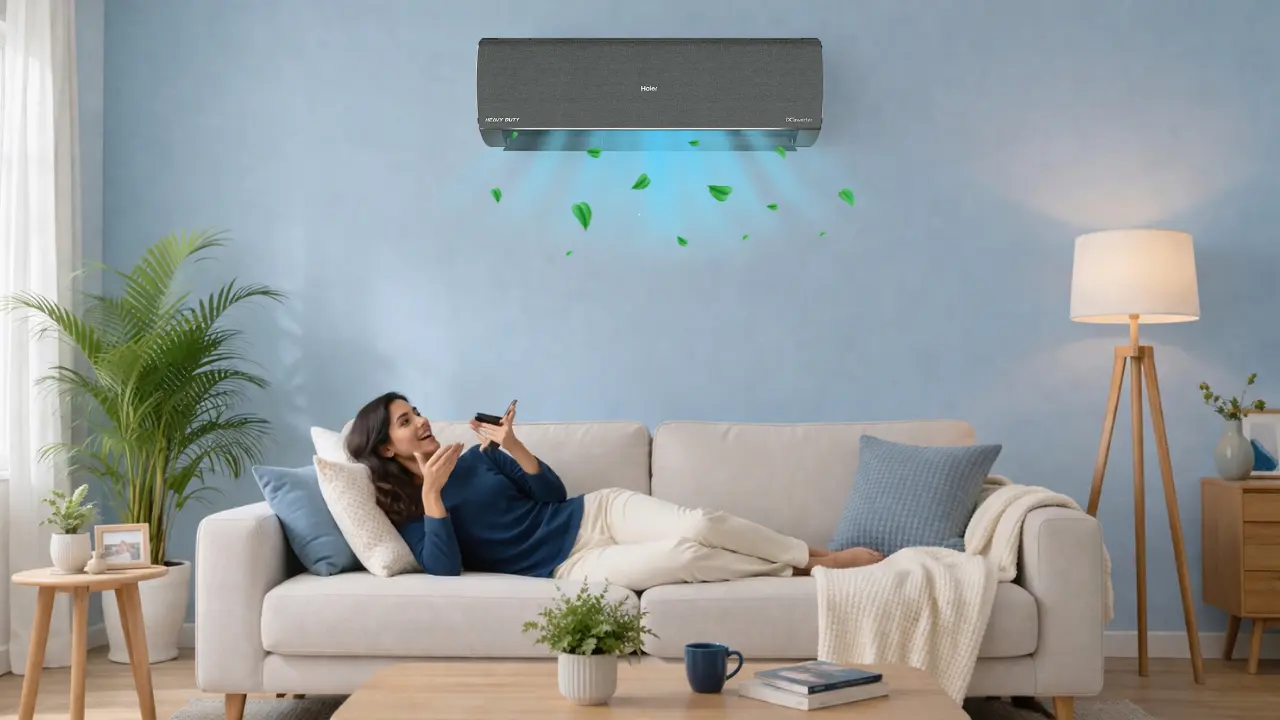

What makes advanced sensor-based ACs different?
Advanced sensor-based ACs use real-time data from temperature, humidity, movement, and usage patterns to automatically adjust cooling.
Instead of reacting to manual inputs, they predict, adapt, and optimize comfort while reducing electricity consumption and eliminating constant adjustments.
The evening scene every Indian home understands.
It is 7:30 PM in May.
Someone walks in after a long commute. The room feels heavy. The first instinct is familiar.
Switch on the AC.
Wait.
Adjust.
Wait again.
This is how cooling has worked for decades.
Reactive. Manual. Slightly inconvenient.
Now imagine something quieter.
The room is already cool when you enter. The AC has adjusted airflow based on where you are sitting. It slows down when the room empties. It tracks energy usage without you checking a single bill.
That shift is not just technology.
It is a system redesign.
Cooling moves from reaction to anticipation.
Upgrade your comfort with Haier’s premium sensor-based cooling
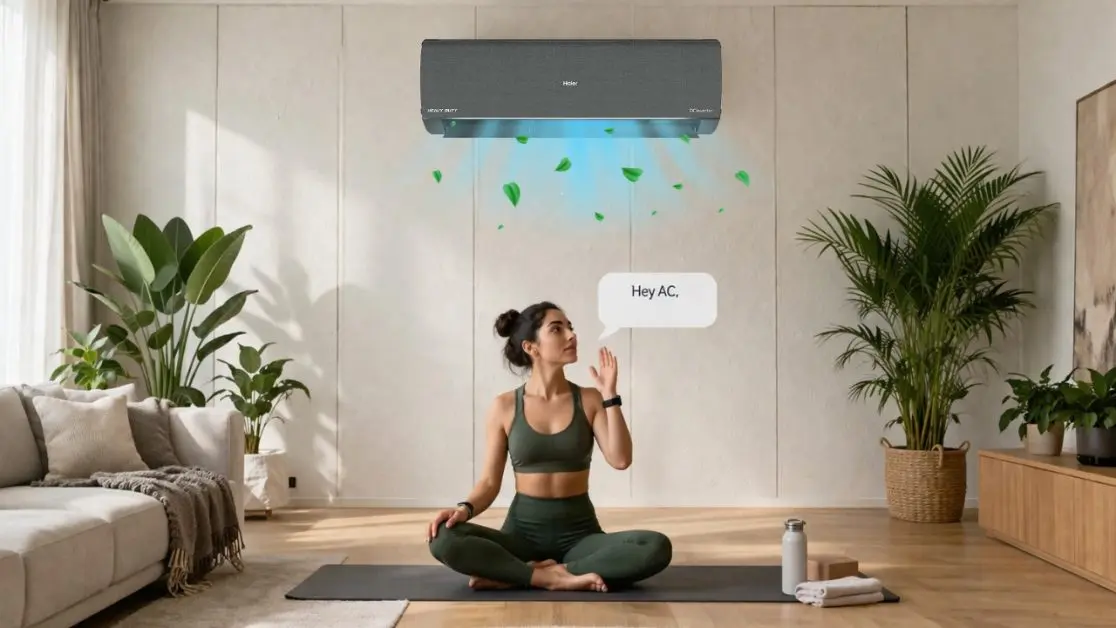
Modern Indian homes are changing fast.
- Smaller spaces in cities demand smarter airflow
- Rising electricity costs demand efficiency
- Hybrid work routines demand all-day comfort
A typical 1.5 ton AC can consume 1 to 1.5 units per hour. Over a month, that becomes one of the biggest contributors to electricity bills.
Which raises a sharper question.
What if cooling systems started thinking instead of just running?
That is where advanced sensor-based ACs enter.
The Core System Behind Sensor-Based ACs
Sensor-based ACs do not rely on a single input.
They combine multiple signals:
- Room temperature
- Outdoor climate conditions
- Human presence and movement
- Time of day and usage patterns
According to the AI Atmox system used in Haier ACs, the unit continuously collects environmental and behavioral data to build a personalized cooling model in real time
This creates something powerful.
Not just cooling.
A learning system.
1. AI Climate Control: Cooling That Adapts Automatically
What if the AC understood your room better than you do?
AI climate control continuously adjusts temperature and airflow without manual input.
How it works
- Tracks indoor and outdoor temperature variations
- Learns preferred settings over time
- Adjusts cooling intensity dynamically
According to the system overview, it uses machine learning to analyze usage patterns, duration, and environmental conditions to optimize performance
What this changes
| Traditional AC | Sensor-Based AC |
| Manual temperature changes | Automatic adjustments |
| Fixed cooling patterns | Dynamic adaptation |
| Overcooling common | Balanced comfort |
Insight:
Comfort is not a number. It is a continuously adjusted experience.
2. AI Pre-Cooling: Comfort That Starts Before You Arrive

Why should comfort begin after you enter the room?
Sensor-based ACs answer this by shifting timing itself.
AI pre-cooling predicts when you are about to arrive and starts cooling in advance.
How it works
- Uses geofencing up to 100 meters
- Detects user proximity through connected devices
- Activates cooling before arrival
The system anticipates occupancy and prepares the room automatically
Everyday example
You leave the office.
You reach your building.
The room is already cool.
No waiting. No adjusting.
Cost vs benefit
- Cost: Requires initial setup and app connectivity
- Benefit: Eliminates daily waiting time and improves comfort
Insight:
The best technology removes waiting, not just effort.
3. AI Target Cooling: Cooling That Follows You
Most ACs cool the entire room equally.
But people do not sit everywhere.
So why cool empty space?
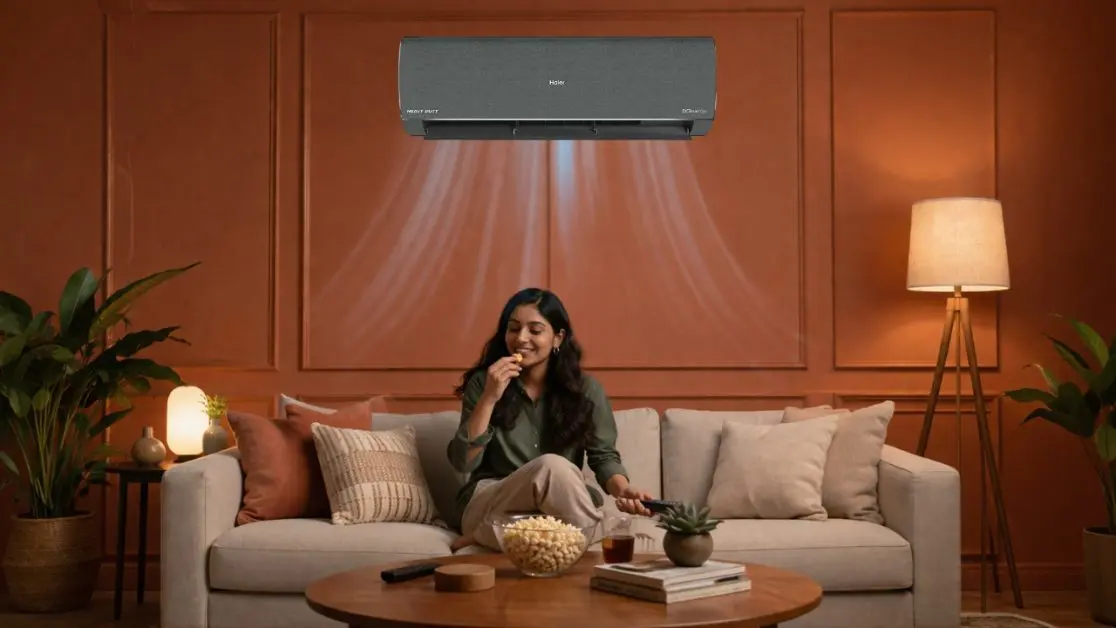
AI target cooling focuses airflow where it matters.
How it works
- Uses layout data and installation position
- Directs airflow to specific zones
- Adjusts based on seating position
According to the system, it delivers cooling exactly where needed, improving efficiency and reducing energy waste
Real-life moment
Watching cricket on the sofa.
AC directs airflow towards the seating area.
The kitchen remains untouched.
Benefits
- Faster cooling where needed
- Lower energy consumption
- Improved comfort accuracy
Insight:
Efficiency is not about doing less. It is about doing only what matters.
4. AI Human Detection: Cooling That Knows When to Pause
Empty rooms do not need cooling.
Yet traditional ACs keep running.
Sensor-based ACs change that.
How it works
- Detects human presence within range
- Reduces power when room is empty
- Switches off after inactivity
The system can shift to energy-saving mode within minutes and power off after inactivity, preventing energy waste
Practical scenario
You step out for groceries.
AC reduces power automatically.
Electricity is saved without effort.
Cost vs benefit
- Cost: Slightly higher upfront investment
- Benefit: Long-term electricity savings
Insight:
Energy efficiency is not discipline. It is automation.
5. AI Eco 2.0 Mode: Smart Energy Without Sacrificing Comfort
What if saving electricity did not mean compromising comfort?
AI Eco 2.0 mode adjusts cooling levels in stages.
How it works
- Detects temperature gap between room and set temperature
- Adjusts power levels across multiple stages
- Maintains optimal balance between cooling and energy use
For example:
- Large temperature gap triggers higher cooling
- Smaller gap shifts to lower energy mode
Benefits
- Up to significant energy savings over time
- Reduced compressor load
- Stable indoor temperature
Insight:
Smart systems do not cut performance. They remove waste.
6. Electricity monitoring 2.0: Visibility Changes Behavior
Most people see electricity bills once a month.
Too late to change anything.
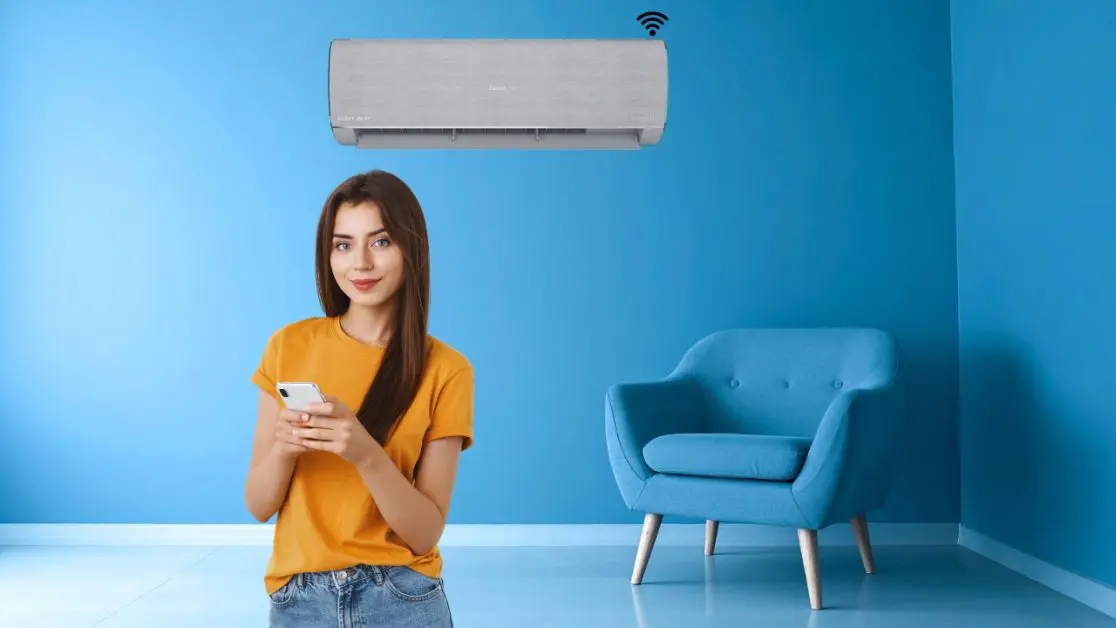
Sensor-based ACs make energy visible in real time.
What you can track
- Daily and monthly usage
- Cost in currency
- Mode-wise consumption
- Energy-saving targets
The system provides graphical and calendar-based tracking for better control
Why this matters
When you see usage daily, behavior shifts naturally.
Not forced. Just aware.
Insight:
What gets measured gets optimized.
7. Self-Cleaning Systems: Performance That Sustains Itself
Cooling efficiency drops when AC units accumulate dust.
Most people ignore cleaning.
Until performance drops.
Sensor-based ACs solve this quietly.
Features include
- Indoor frost self-cleaning cycles
- Outdoor unit dust removal through reverse airflow
- Automated cleaning reminders
Cleaner coils mean faster cooling and lower electricity bills
Benefits
- Better air quality
- Longer appliance life
- Reduced maintenance cost
Insight:
Systems fail slowly. Smart systems prevent failure before it starts.
Choosing the Right Level of Smart Cooling
Not every home needs every feature.
The decision is simpler when seen as options.
One option is basic automation
- Temperature sensors
- Standard inverter control
- Lower cost
The second option is adaptive intelligence
- AI climate control
- Target cooling
- Pre-cooling
The third option is full smart ecosystem
- Human detection
- Electricity monitoring 2.0
- Self-cleaning systems
Each step adds comfort and efficiency.
Each step reduces manual effort.
Where Haier Fits Into This Shift
Haier’s AI Atmox platform brings many of these features into a single system.
From AI climate control to pre-cooling, human detection, and power management, the goal is simple.
Make cooling invisible.
Not in presence.
In effort.
The Bigger Shift: Cooling Is Becoming a System, Not a Feature
We used to think of ACs as machines.
Switch on. Cool air. Done.
That model no longer fits.
Today, cooling systems:
- Learn behavior
- Predict usage
- Optimize energy
- Maintain themselves
This is not just an upgrade.
It is a shift in how homes function.
Final Thought: The Best Cooling Is the One You Stop Noticing
The real success of sensor-based ACs is not in features.
It is in what disappears.
No waiting.
No constant adjustments.
No energy anxiety.
Just comfort that works in the background.
When technology becomes invisible, life feels effortless.
And that is the point.
Frequently Asked Questions
I’m already spending a lot on an AC. Do I really need a sensor-based one?
If your current AC works fine but requires constant adjustments, a sensor-based AC reduces that mental load. You’re not just paying for cooling, you’re paying for automation, energy savings, and convenience over time.
Will I actually save money on electricity, or is that just marketing?
Yes, but gradually. Features like human detection, eco modes, and adaptive cooling reduce unnecessary usage. Over months, this can noticeably lower your electricity bill especially in high-usage seasons like Indian summers.
I don’t care about “smart features” I just want good cooling. Is this overkill?
Fair point. But sensor-based ACs don’t replace cooling, they improve it. You’ll still get strong cooling, just with fewer manual tweaks and more consistency.
Will the AC actually learn my preferences, or is that just hype?
It learns patterns like your preferred temperature, usage times, and duration. Over time, it adjusts automatically without you needing to intervene.
Do I need to use an app all the time to control it?
Only initially. Once set up, most features run automatically in the background.
What is electricity monitoring, and will I actually use it?
It shows real-time energy consumption and cost. Even occasional checks can help you adjust usage habits and reduce bills.