
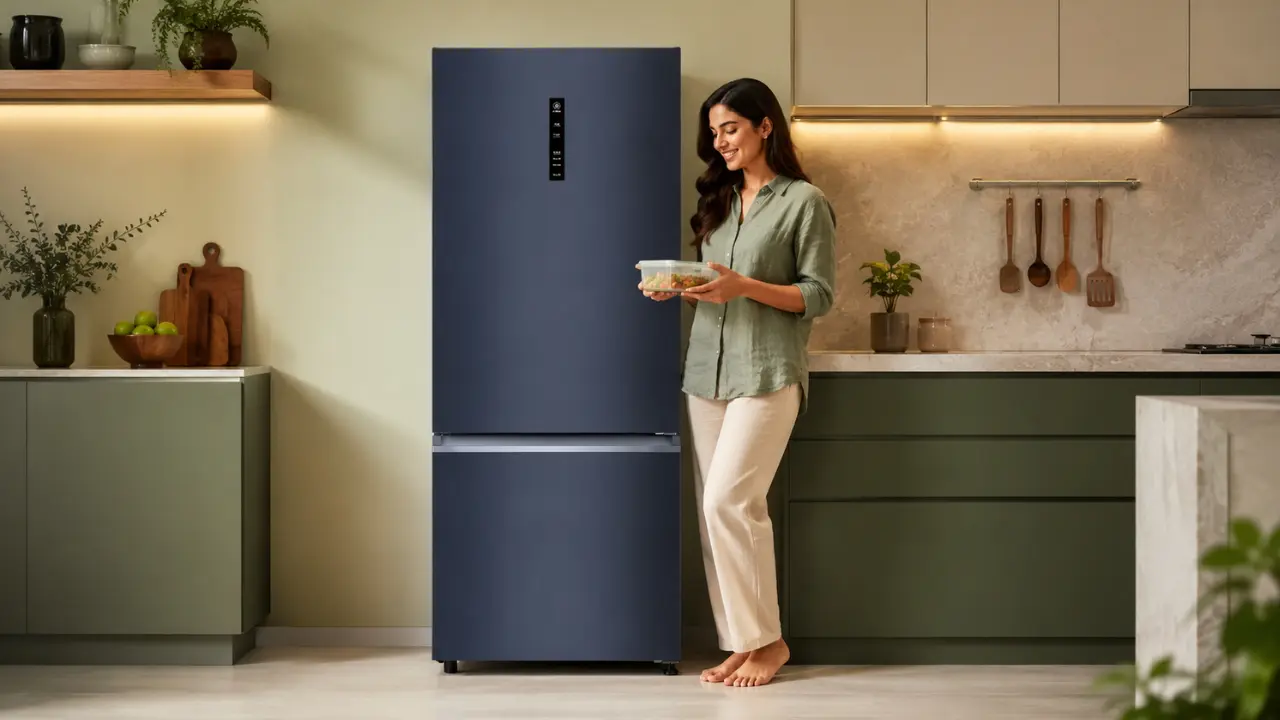

Fresh food storage matters more because most Indian households access fresh ingredients daily, not frozen ones.
A refrigerator is opened dozens of times a day for milk, vegetables, leftovers, fruits, curd, chutneys, and cooked meals. The freezer matters occasionally. The fresh food section shapes everyday life. That is why smarter fresh food storage changes kitchens more than larger freezer space ever does.
The assumption most people make is simple:
Bigger freezer = better refrigerator.
But step inside a real Indian kitchen and the pattern changes immediately.
The fridge is not a frozen-food machine.
It is a living system.
And living systems depend on freshness.
Most Indian kitchens are built around freshness, not freezing
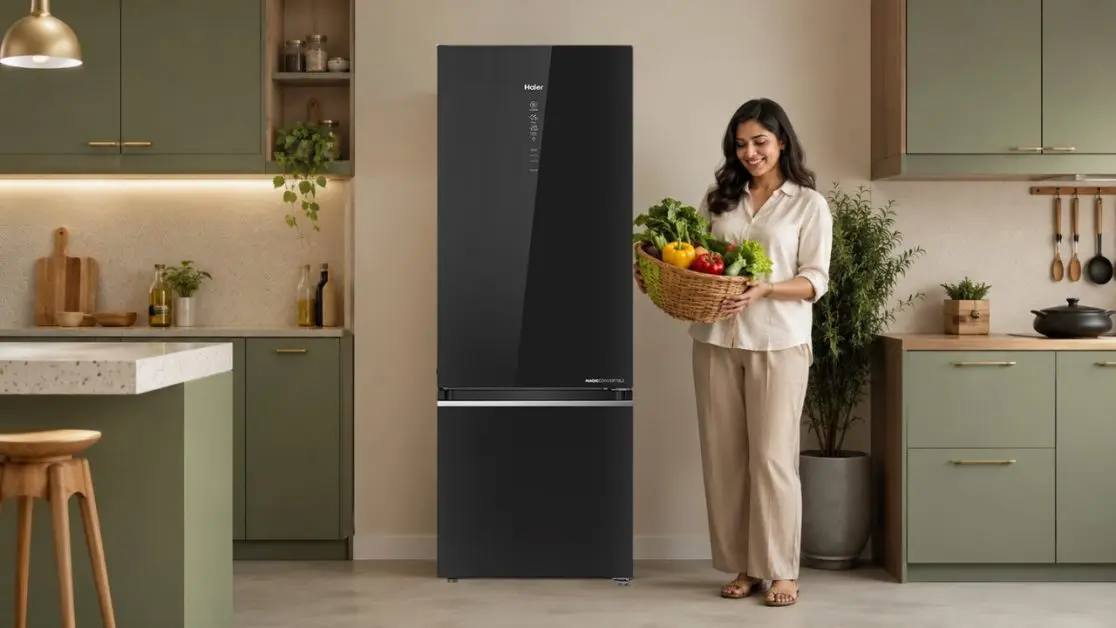
Walk into a modern Indian home on a Wednesday evening.
You will find coriander wrapped in newspaper.
Half-cut lemons.
Leftover dal.
Milk packets.
Curd bowls.
I bought tomatoes two days ago.
Maybe marinated paneer for Friday dinner.
Very little of this belongs in deep freeze storage.
That is the hidden truth appliance advertising rarely talks about.
Indian food culture revolves around active ingredients, not long-term frozen inventory.
Fresh food is accessed constantly.
Frozen food is accessed occasionally.
That changes how refrigerator design should work.
The freezer solves storage. Fresh food storage solves lifestyle friction.
Freezers are about preservation.
Fresh food sections are about rhythm.
One stores things for later.
The other supports everyday life.
And everyday life is where appliances either become invisible helpers or constant annoyances.
Think about bending repeatedly to access vegetables.
Think about overcrowded shelves.
Forgotten leftovers.
Wilted spinach.
The smell of coriander after three days.
These are not “minor inconveniences.”
They are repeated friction points.
Tiny inefficiencies repeated daily become lifestyle fatigue.
That is why bottom-mounted refrigerators are becoming more relevant in Indian homes.
Products like the Haier 445L 2 Star Graphite Black Bottom Mount Refrigerator HRB-4952BGKA-P place the refrigerator section at eye level while moving the freezer below.
Simple shift.
Big behavioral impact.
The refrigerator section is the real command center
Most people open the freezer intentionally.
They open the refrigerator automatically.
That difference matters.
Frequency changes design priorities
Here is what households actually access daily:
- Vegetables
- Water bottles
- Fruits
- Leftovers
- Dairy
- Sauces
- Lunch boxes
- Batter
- Snacks
- Cooked food
Now compare that with freezer usage:
- Ice cubes
- Ice cream
- Frozen peas
- Occasional frozen snacks
The ratio is not even close.
Yet many traditional refrigerator designs still prioritize freezer placement at the top.
That made sense years ago when refrigeration technology was simpler.
It makes less sense now.
Especially for families managing long workdays, school schedules, late-night meals, and weekly grocery cycles.
Good appliance design removes repeated physical effort
A smart home is not built on flashy features.
It is built on reduced friction.
Haier calls this philosophy “Jhukna Mat” in its bottom-mounted refrigerator range. The idea is practical: reduce bending while accessing frequently used fresh food storage.
That sounds small until you observe real usage patterns.
A parent cooking three meals daily bends toward the fresh food section constantly.
An older family member notices strain faster.
Working professionals rushing through mornings feel the difference immediately.
Convenience is not a luxury.
Convenience is accumulated energy savings.
Freshness is now a technology problem, not just a cooling problem
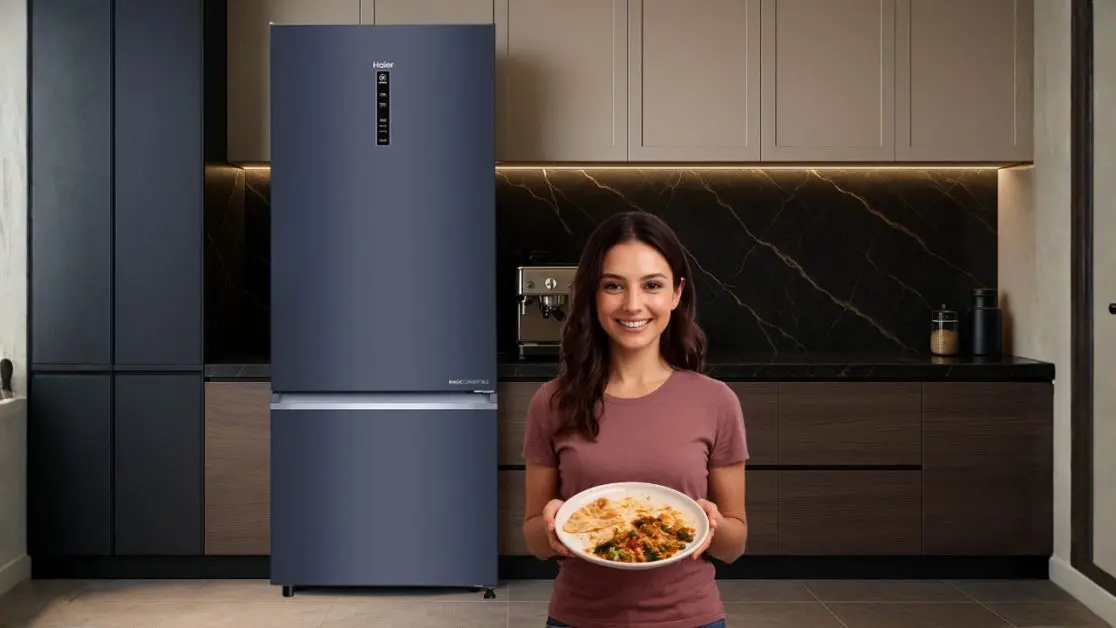
Most refrigerators cool.
Fewer preserve freshness intelligently.
That distinction matters more in India because climate pressure is harsher.
Summer temperatures in several Indian cities cross 40°C regularly. Humidity levels fluctuate dramatically. Frequent door openings increase internal temperature instability.
Freshness fails quietly.
Leafy vegetables lose texture.
Milk spoils faster.
Cooked food absorbs odor.
Fruits dehydrate.
The problem is not cooling alone.
The problem is consistent airflow and temperature management.
Why airflow matters more than raw cooling power
Many people assume colder is better.
It is not.
Uneven cooling damages food faster.
Modern refrigerators increasingly rely on airflow systems rather than brute-force cooling.
The Haier 445L Bottom Mount Refrigerator series uses Triple Inverter and Dual Fan Technology designed to maintain consistent freshness while improving energy efficiency.
That matters because vegetables do not just need cold temperatures.
They need stable environments.
Freshness depends on consistency.
Not aggression.
This is the same principle restaurants use in professional kitchens. Stable cooling preserves ingredients better than fluctuating temperatures.
Homes are now catching up to that logic.
Storage space is useless if food gets forgotten
Every Indian household has experienced this.
Something disappears into the back of the refrigerator.
Three days later it becomes a waste.
Food waste is often a visibility problem disguised as a storage problem.
The hidden cost of poor refrigerator design
India wastes millions of tonnes of food annually according to UNEP food waste estimates.
Not because people do not value food.
Because modern life creates cognitive overload.
People forget what exists.
Bad refrigerator layouts make this worse.
Overstacked shelves reduce visibility.
Tiny vegetable compartments crush produce.
Improper airflow creates inconsistent freshness zones.
Then households compensate by shopping more frequently.
More trips.
More expense.
More stress.
The better solution is not “more space.”
It is a better usable space.
Bigger vegetable storage changes household behavior
The Haier HRB-4952BGKA-P includes a 2X Bigger Veg Box designed for larger fresh produce storage.
That sounds like a specification.
It is actually a behavioral feature.
Because Indian households do not buy vegetables one item at a time.
They buy for the week.
Tomatoes.
Bhindi.
Cauliflower.
Green chillies.
Coriander.
Leafy greens.
Fresh storage capacity determines grocery flexibility.
Especially during monsoons, festivals, work-heavy weeks, or high summer temperatures.
A refrigerator that preserves vegetables longer quietly changes how a home functions.
Freezer obsession came from Western food habits
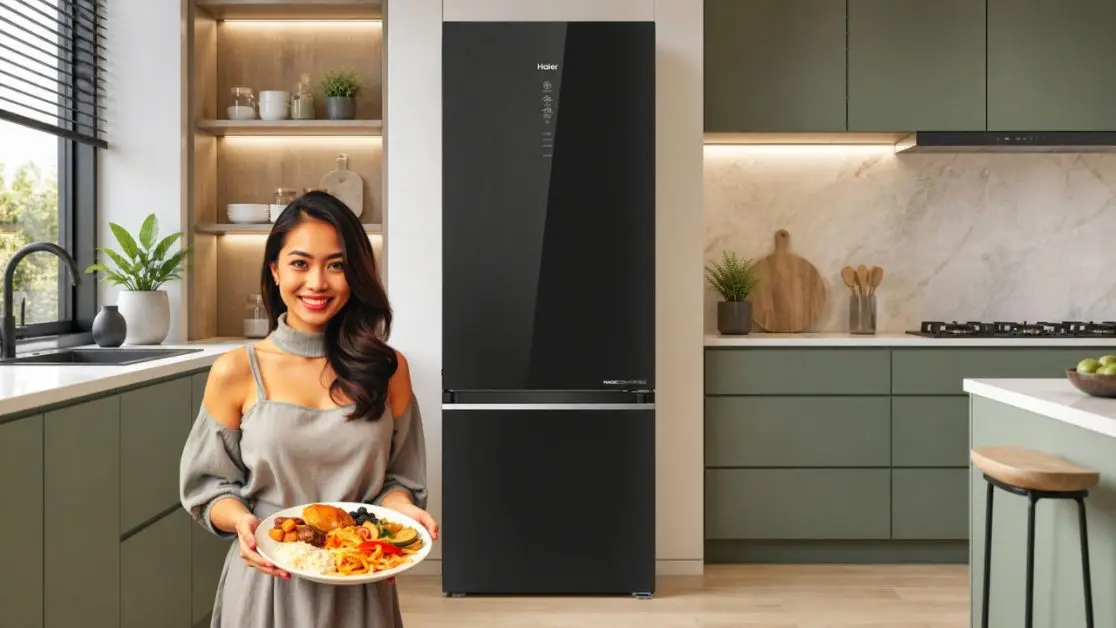
This is where many appliance conversations become disconnected from Indian reality.
In many Western households:
- Frozen meat storage is common
- Bulk frozen meals are routine
- Frozen bread and processed foods dominate weekly usage
- Grocery cycles are longer
That naturally increases freezer importance.
Indian households operate differently.
Cooking remains ingredient-driven.
Fresh meals still dominate daily routines.
Even leftovers are often reheated within 24 hours.
So blindly copying freezer-heavy refrigerator priorities misses cultural behavior.
Indian kitchens prioritize flexibility
One day the refrigerator stores festival sweets.
Another day meal prep containers.
Then marinated food for guests.
Then fruits during summer.
Fresh storage adapts faster.
That adaptability matters more than oversized frozen storage most households barely use.
The best appliances understand culture.
Not just engineering.
Modern refrigeration is becoming about energy rhythm
Electricity costs are rising.
Urban homes are shrinking.
Power fluctuations still affect many areas.
That means refrigeration systems must do more with less.
Efficiency now includes intelligence
The Haier bottom mount refrigerator range includes stabilizer-free operation and home inverter connectivity, helping maintain cooling during voltage fluctuations and power cuts.
Again, this is not just a technical feature.
It reflects a deeper truth about Indian households:
Infrastructure uncertainty shapes appliance expectations.
People do not simply want cooling.
They want continuity.
Fresh food storage becomes even more important during interruptions because fresh ingredients spoil faster than frozen items during unstable cooling conditions.
The freezer survives longer naturally.
Fresh food is more vulnerable.
Which makes fresh section reliability even more critical.
The refrigerator is slowly becoming a wellness appliance
This shift is subtle but important.
People once bought refrigerators for storage.
Now they buy them for food quality management.
That changes everything.
Fresh fruits visible at eye level increase healthy snacking.
Organized leftovers reduce food waste.
Better vegetable preservation improves meal quality.
Cleaner airflow systems improve hygiene confidence.
The refrigerator influences eating behavior more than most people realize.
Not directly.
Systemically.
Appliances shape routines quietly
A smart refrigerator does not announce itself every day.
It simply reduces friction repeatedly.
That is what meaningful technology looks like.
Quiet usefulness.
The Haier 445L Bottom Mount Refrigerator series combines this thinking through features like convertible modes, digital controls, inverter technology, larger vegetable storage, and bottom-mounted accessibility.
Not to look futuristic.
But to support how Indian homes actually function.
The future of refrigeration is not colder. It is a smarter freshness.
People remember dramatic technologies.
But daily life changes through invisible improvements.
Better vegetable freshness.
Less bending.
More usable space.
Consistent cooling.
Reduced waste.
Small changes.
Repeated thousands of times.
That is what creates lifestyle transformation.
The freezer will always matter.
But fresh food storage shapes daily experience more deeply because that is where life actually happens.
Inside the coriander drawer.
The leftover shelf.
The fruit compartment.
The milk rack opened six times a day.
A refrigerator is not judged by what it freezes.
It is judged by what it helps households preserve.
Freshness is not a feature anymore.
It is the infrastructure for modern living.
Frequently Asked Questions
Should I prioritize fresh food storage or freezer size when buying a refrigerator in India?
For most Indian households, fresh food storage is more important because vegetables, dairy, fruits, leftovers, and cooked meals are accessed daily, while freezer items are used less frequently.
Why do modern refrigerators focus more on fresh food sections than large freezers?
Daily usage patterns have changed. Families interact with fresh ingredients multiple times a day, making accessibility and freshness preservation more valuable than extra frozen storage.
Is a bigger freezer actually useful for an Indian family?
It depends on your habits. Families that primarily cook with fresh ingredients often gain more benefit from larger vegetable compartments and organized refrigerator storage.
How do I know if I really need a large freezer?
Track what you store for a week. If most of your refrigerator space is occupied by vegetables, milk, leftovers, fruits, and prepared meals, fresh food storage should be the priority.
Why does my refrigerator always feel full even though the freezer is mostly empty?
Fresh food items are typically bulkier, accessed more frequently, and require easier visibility than frozen items.