

Damp odour happens when moisture and detergent residue get trapped inside clothes and washing machine drums.
UltraFresh technology tackles this at the system level by improving rinsing, drum hygiene, moisture control, and post-wash freshness.
Laundry should end with confidence.
Not a second sniff.
Yet almost every Indian household knows this moment.
You open the washing machine.
The clothes look clean.
They feel soft.
And then there it is.
That faint damp odour you cannot ignore.
This is not a detergent problem.
It is not about skipping a wash cycle.
And it is definitely not about being careless.
It is about how moisture behaves in Indian homes.
And why freshness is a system problem, not a habit problem.
Why damp odour refuses to leave Indian homes
Damp odour is not caused by dirt.
It is caused by what gets left behind.
Leftover moisture in fabric fibres.
Leftover detergent in seams and folds.
Leftover humidity inside the washing machine drum.
Indian homes create the perfect conditions for this.
High humidity for most of the year.
Apartments with limited airflow.
Balconies that stay shut during monsoon.
Night-time laundry to save electricity or manage schedules.
Bathrooms that double as drying zones.
Studies on appliance hygiene show that moisture trapped inside washing machines and fabrics can allow odour-causing bacteria to multiply within hours. Once this cycle begins, even repeated washes only mask the smell instead of removing it.
That is why damp odour feels stubborn.
Because it is structural.
The instinctive fixes that quietly fail
When clothes smell damp, most people respond the same way.
They add more detergent.
They switch to stronger fragrances.
They run hotter washes.
Each choice feels sensible.
Each makes the system worse.
Here is why.
- Extra detergent leaves residue that traps moisture
- Heavy fragrance hides odour instead of removing bacteria
- Frequent hot washes stress fabrics and still leave moisture inside the drum
Odour is not a surface issue.
It lives inside the process.
And process problems need system-level solutions.
UltraFresh works because it fixes the system
UltraFresh is not a perfume.
It is not a coating.
It is not a single button feature.
It is a way of designing washing machines so odour does not get a chance to form in the first place.
Instead of asking users to constantly manage laundry hygiene, UltraFresh technology changes how washing, rinsing, and post-wash care work together.
This philosophy is clearly visible in advanced front-load washing machines like the Haier 10 Kg Fully Automatic Front Load Washing Machine (HW100-DM14F9BKU1) and the Haier 12 Kg F9 Front Load Washing Machine (HW120-DM14F9BKU1).
They are built to reduce the conditions that create odour.
Not just react to it.
Where damp odour actually begins
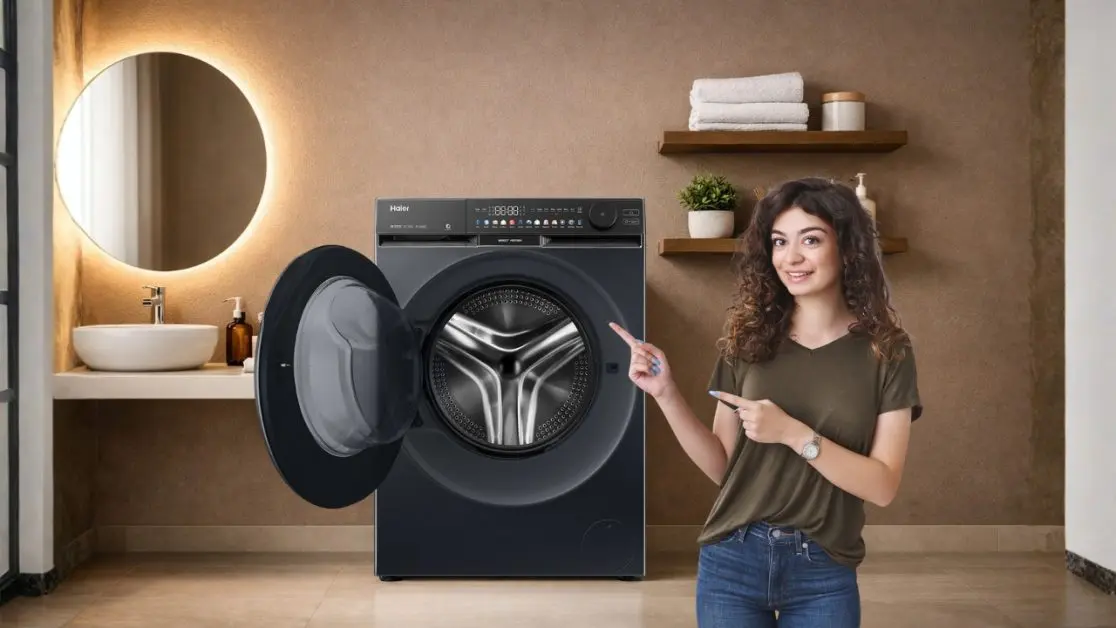
Odour rarely starts on clothes alone.
It begins in places most people never look.
1. Inside the drum
After a wash, microscopic moisture remains on the drum surface, rubber gasket, and internal walls. In humid weather, this moisture becomes a breeding ground for bacteria.
2. In detergent channels
Soap residue mixes with moisture and organic particles, creating a persistent source of odour over time.
3. Inside fabric fibres
Incomplete rinsing leaves behind detergent and body oils that react with moisture hours later.
UltraFresh addresses all three.
Together.
Not individually.
How UltraFresh keeps clothes smelling fresh for longer
UltraFresh is not about one dramatic feature.
It is about multiple quiet improvements working in sync.
1. Effective rinsing that removes residue
Better rinsing means less detergent left inside fabrics. Less residue means less moisture retention. And less moisture means fewer odour-causing bacteria.
2. Built-in drum hygiene thinking
Instead of relying only on manual drum cleaning reminders, UltraFresh systems are designed to reduce residue buildup between cycles.
3. Post-wash freshness support
Life gets busy. Clothes do not always come out the minute a cycle ends. UltraFresh systems help clothes stay fresh even if unloading is delayed.
This matters in real homes.
Because laundry rarely runs on perfect schedules.
Why steam refresh changes the freshness equation
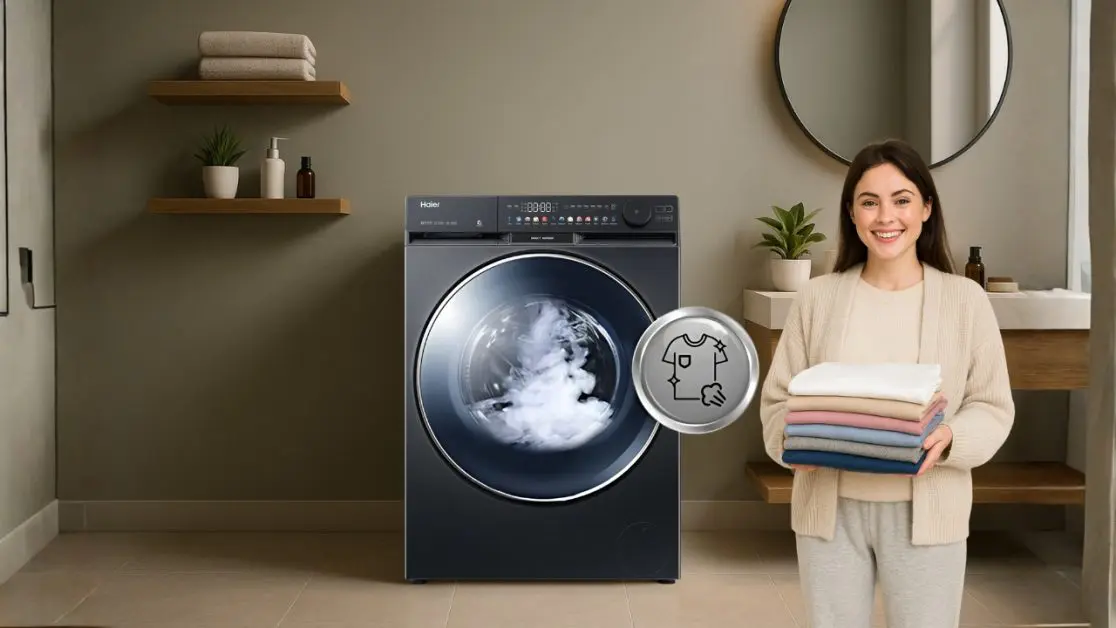
Steam is one of the most underrated tools in modern laundry.
Steam refresh does three things at once.
- Neutralises odour-causing bacteria
- Refreshes lightly worn clothes
- Reduces wrinkles without re-soaking fabrics
Instead of washing clothes that are not dirty but smell tired, steam refresh breaks the moisture-bacteria cycle gently.
In Haier front-load washing machines, features like steam care to reduce odour and revive clothes between washes. This helps preserve fabric quality while maintaining freshness.
Freshness without over-washing is not convenient.
It is care.
The Indian reality: freshness affects the whole home
In Indian households, laundry is deeply connected to daily life.
Office wear worn five days a week.
School uniforms are reused frequently.
Towels drying indoors.
Bedsheets washed less often but used daily.
When damp odour appears, it does not stay isolated.
It moves into cupboards.
It clings to wardrobes.
It transfers to freshly folded clothes.
Odour becomes environmental.
UltraFresh thinking recognises this truth.
Fresh laundry is not just about clothes.
It shapes how a home feels.
Quiet operation supports better hygiene
Noise and odour seem unrelated.
They are not.
Loud machines discourage frequent hygiene cycles.
Heavy vibration spreads moisture unevenly inside drums.
The Direct Motion Motor used in the Haier 10 Kg Fully Automatic Front Load Washing Machine (HW100-DM14F9BKU1) and the Haier 12 Kg F9 Front Load Washing Machine (HW120-DM14F9BKU1) connects directly to the drum, reducing vibration and operating quietly.
This allows users to run night washes and freshness cycles without disturbing the household.
When systems fit real schedules, hygiene improves naturally.
A simple comparison that explains UltraFresh
Think of laundry like food storage.
A refrigerator that cools but smells is not doing its job fully.
You do not blame the vegetables.
You blame the system.
Laundry works the same way.
Conventional approach
- Clothes look clean
- Short-lived freshness
- Odour returns in humidity
UltraFresh approach
- Clothes cleaned thoroughly
- Residue controlled
- Moisture managed
- Freshness lasts longer
Same effort.
Smarter outcome.
Why UltraFresh matters for new homes and new buyers
Millennial and Gen Z households value systems that work quietly.
They want:
- Less maintenance
- Fewer corrective habits
- More automation
- Reliable outcomes
UltraFresh fits this mindset perfectly.
You do not manage odour.
You stop thinking about it.
That is the upgrade.
Freshness is not luxury
Fresh-smelling laundry is not indulgence.
It is a daily comfort.
Especially in cities where space is limited and weather controls drying decisions.
UltraFresh is about reducing friction in everyday life.
Less rewashing.
Less guesswork.
Less frustration.
More trust in your appliance.
The real takeaway
Damp odour is not a personal failure.
It is a design gap.
UltraFresh closes that gap by understanding how Indian homes actually wash, dry, store, and live with clothes.
In washing machines like the Haier 10 Kg Fully Automatic Front Load Washing Machine (HW100-DM14F9BKU1) and the Haier 12 Kg F9 Front Load Washing Machine (HW120-DM14F9BKU1), freshness is not an add-on. It is the natural outcome of better systems.
Not louder washes.
Not stronger perfumes.
Just clothes that smell the way they should.
Clean.
Neutral.
Ready for the day ahead.
Frequently Asked Questions
Why do my clothes smell damp even after a full wash cycle?
Because damp odour is usually caused by trapped moisture and detergent residue, not visible dirt. In humid Indian homes, moisture lingers in fabrics and inside the drum, allowing odour-causing bacteria to grow within hours.
Am I using the wrong detergent if my laundry smells musty?
Not necessarily. Adding more detergent often makes the problem worse by leaving extra residue that traps moisture inside fabric fibres.
Should I switch to hot water washes to remove damp odour?
Hot washes may reduce bacteria temporarily, but they don’t solve residual moisture inside the drum or gasket. Frequent hot washes can also stress fabrics.
Is damp odour a sign that my washing machine is low quality?
Not always low quality but it may not be designed to manage humidity, rinsing efficiency, and post-wash freshness as a system.
Why is damp odour more common in Indian homes?
High humidity, limited airflow in apartments, indoor drying during monsoon, and bathrooms doubling as laundry zones create ideal conditions for moisture retention.
Why does the smell return even after rewashing?
Because the source may be inside the drum, gasket, or detergent channel, not just the clothes.
Can damp odour spread to cupboards and wardrobes?
Yes. Slightly damp-smelling fabrics can transfer odour to enclosed storage spaces.
How does better rinsing reduce odour?
Less detergent residue = less moisture retention = fewer bacteria.