


Holi colours are stubborn. Your laundry system should not be.
Holi stains are hard because they combine dry pigments, oil-based colours, sweat, and sun exposure. The solution is not scrubbing harder.
It is building a smarter washing routine that uses the right temperature, drum motion, detergent timing, and wash program. Tough stains need intelligence, not effort.
That is the short answer.
Now let us talk about what actually happens in Indian homes the morning after Holi.
The Morning After Holi Is Not About Colours. It Is About Consequences.
It is 9:30 am.
The balcony still has faint pink footprints. The bathroom bucket is half full of purple water. Your white kurta looks like abstract art. The kids’ T-shirts have neon green patches that refuse to leave.
Holi is a joy. Laundry is reality.
According to textile care experts cited by the American Cleaning Institute, nearly 70 percent of visible fabric stains become harder to remove after heat exposure or delayed washing. Add Indian summer heat, and the stain bonds deeper into the fibres.
Holi colours are not just surface-level powder.
They are:
- Dry pigments that settle into cotton threads
- Oil-based dyes that cling to synthetic fabrics
- Sweat and dust that lock everything in
This is not a stain problem.
It is a systems problem.
And systems need structure.
Why Holi Stains Feel Impossible

1. Dry colour is deceptive
Dry gulal looks harmless. But once mixed with sweat, it forms a paste. That paste seeps into fibres.
2. Sunlight fixes the stain
Many families dry clothes in the sun immediately. UV exposure can set certain dyes permanently.
3. Overloading the machine spreads the damage
When you wash five colour-soaked garments together, pigments transfer. One bright T-shirt becomes five pastel disasters.
The cost is not just fabric.
It is time. Water. Rewashes. Frustration.
Laundry done wrong multiplies effort. Laundry done right compounds relief.
The Smart Washing Routine After Holi
Let us make this practical.
There are three approaches to post-Holi laundry.
One option is: The Panic Wash
- Throw everything into the machine
- Use extra detergent
- Select the longest cycle
- Hope for the best
Cost: Water waste, fabric damage, colour transfer
Benefit: Emotional satisfaction for 20 minutes
The second option is: The Over-Scrub Strategy
- Hand scrub each garment
- Use hot water immediately
- Rub aggressively
Cost: Fabric wear, colour bleeding, time lost
Benefit: Temporary sense of control
The third option is: The Structured System
- Shake off dry colour before soaking
- Rinse separately in cold water
- Use a targeted program
- Adjust spin and temperature logically
Cost: Slightly more attention
Benefit: Cleaner clothes, preserved fabric, lower energy use
The third option wins.
Not because it works harder.
Because it works smarter.
Cold First. Heat Later. Always.
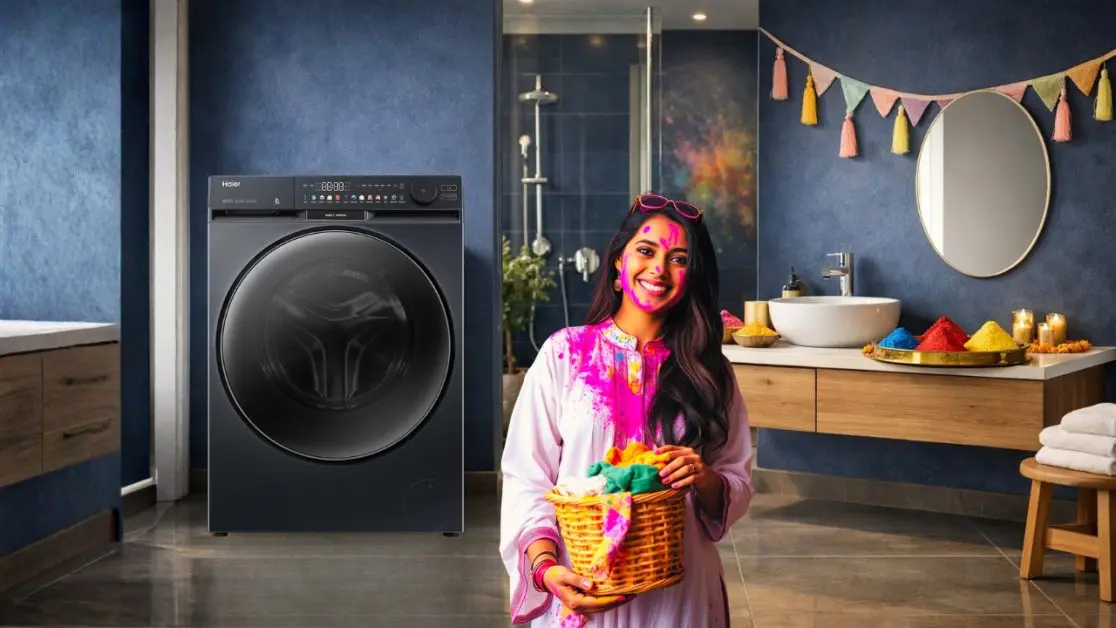
Most Holi stains respond better to cold rinsing initially.
The Textile Research Journal notes that protein and pigment-based stains bond faster under heat. Cold water slows that reaction.
So the rule is simple:
- Step 1: Shake and brush off dry powder
- Step 2: Rinse in cold water
- Step 3: Use the correct fabric program
- Step 4: Only increase temperature if needed
This sequence reduces rewash cycles.
And fewer rewashes mean lower electricity use.
In Indian homes, washing machines account for 8 to 12 percent of household electricity use according to Bureau of Energy Efficiency data. Efficiency compounds.
Every avoided rewash saves more than water. It saves patience.
Why Drum Technology Matters More During Festivals
Not all drums treat fabric equally.
Machines like the Haier 10 Kg Fully Automatic Front Load Washing Machine HW100-DM14F9BKU1 use a 525 mm Super Drum designed for better movement and less tangling.
That larger drum size matters when:
- Clothes are heavily stained
- Fabric is stiff from dried colour
- You want less friction damage
The pillow-shaped drum pattern helps lift and drop fabric more evenly. That improves wash quality while reducing fibre stress.
It is not about capacity alone.
It is about motion.
The hidden system in stain removal is agitation balance. Too little and stains stay. Too much and fabric weakens.
Precision wins.
AI Is Not a Buzzword in Laundry. It Is a Shortcut to Judgment
Here is where modern washing routines quietly change the game.
Features like One-Touch AI Wash automatically sense load weight, fabric type, and dirt level.
That matters after Holi.
Because no two loads are identical.
One kurta soaked in pink powder needs different handling than denim jeans with water balloon stains.
AI-based wash programs adjust:
- Water level
- Spin speed
- Wash time
The benefit is measurable.
Less guesswork reduces detergent overuse. Overuse causes residue. Residue traps dirt.
Systems thinking in laundry means removing human error from repetitive decisions.
Not replacing effort.
Refining it.
Noise Is a Hidden Cost in Festive Cleaning
Holi weekends are noisy enough.
Running laundry late at night should not add to the chaos.
Machines with a Direct Motion Motor reduce vibration and operate at around 50 dB during wash cycles.
That is close to normal conversation levels.
When you can run a Night Wash cycle without disturbing anyone , post-festival cleanup becomes flexible.
Flexibility is power in Indian homes where laundry often competes with kitchen prep, work calls, and family routines.
Convenience is not a luxury.
It is logistics.
Capacity Is Strategy
Holi means bulk laundry.
Family gatherings. Guests. Extra bedsheets.
The Haier 12 Kg F9P Front Load Washing Machine HW120-DM14F9BKU1 offers higher capacity for larger households.
Capacity is not just about fitting more clothes.
It reduces total wash cycles.
Let us compare:
| Load Size | Small Drum (6–7 Kg) | 10–12 Kg Drum |
| Family of 4 Post-Holi | 3–4 cycles | 1–2 cycles |
| Electricity use | Higher cumulative | Lower overall |
| Fabric friction | Increased transfer risk | Better separation |
Fewer cycles mean:
- Lower energy use
- Less water consumption
- Less time spent managing loads
Efficiency scales.
The right capacity turns festival chaos into a single structured task.
Stains Are Temporary. Fabric Is Long-Term.
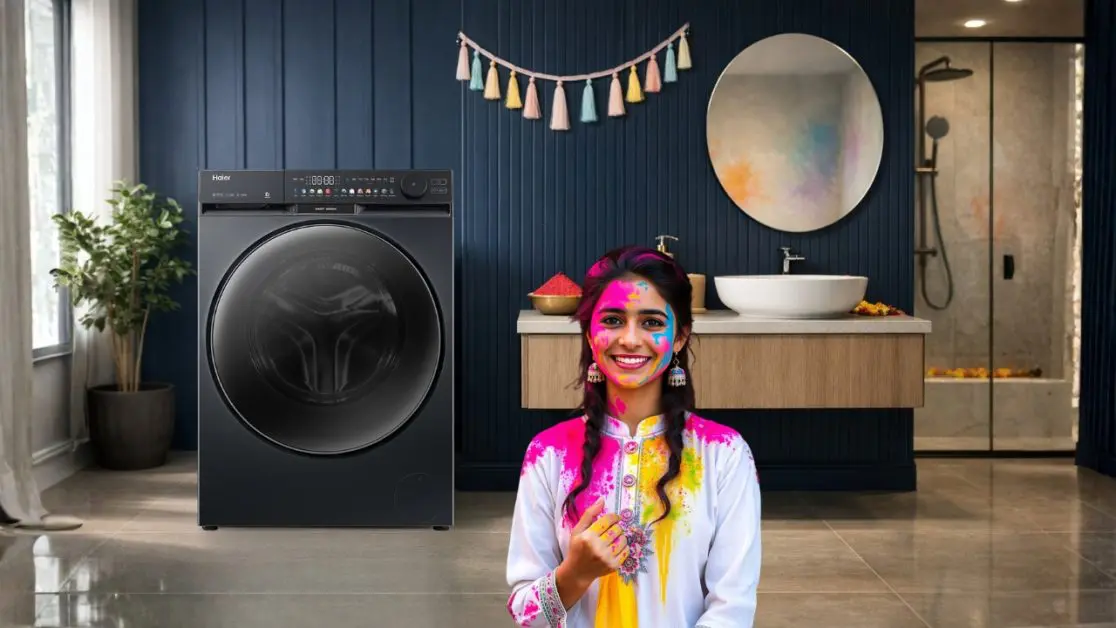
Holi stains fade.
Fabric damage does not.
That matters for:
- Lightly stained garments
- Party wear
- Fabrics that cannot handle aggressive scrubbing
Steam relaxes fibres. It lifts mild odours.
This avoids unnecessary wash cycles.
In systems language, it is targeted intervention instead of blanket reaction.
The Three Rules That Make Holi Laundry Effortless
Let us simplify this into principles you can repeat.
Rule 1: Separate Before You Soak
Do not let colour bleed become a group problem.
Rule 2: Match Program to Fabric
Cotton, denim, delicate, baby wear. They need different handling.
Modern machines offer 14 to 16 programs for a reason.
Rule 3: Trust Intelligent Systems
When AI senses load and adjusts automatically, it reduces decision fatigue.
Decision fatigue is real.
Urban professionals make thousands of micro-decisions daily. Removing laundry guesswork preserves mental energy for what matters.
The Bigger Insight
Holi is about celebration.
Laundry is about restoration.
The way you handle stains reveals how you handle systems.
One approach is reaction.
The other is design.
Homes today are evolving. Appliances are no longer passive tools. They are decision partners. They quietly optimize water levels. They reduce noise. They protect fabrics. They save electricity.
When your washing routine becomes structured, predictable, and intelligent, it changes more than laundry day.
It changes how calm your home feels on Monday morning.
And that matters.
Because festivals will come again.
Colours will spill again.
Joy will return again.
The only question is this:
Will your washing routine rise to the occasion?
Holi colours are tough.
Your system does not have to be.
Frequently Asked Questions
Why do Holi stains feel harder to remove than normal stains?
Holi colours combine dry pigments, oil-based dyes, sweat, and sun exposure. Heat and delay cause pigments to bond deeper into fibres, making removal harder.
Why did my clothes look worse after washing them once?
Likely causes, hot water setting the stain, overloading the drum causing colour transfer, or too much detergent leaving residue.
Does washing immediately really make a difference?
Yes. Around 70% of stains become harder after heat exposure or delay. Cold rinsing early prevents pigment bonding.
Is rewashing actually harmful to clothes?
Yes. Repeated cycles increase fibre stress, fade colours, and consume more electricity and water.
Why shouldn’t I dry Holi clothes directly in sunlight?
UV exposure can set certain dyes permanently, especially after they mix with sweat.
Should I soak Holi clothes in hot water immediately?
No. Always start with cold water. Heat accelerates stain bonding.
Can I wash all colour-soaked clothes together?
Not recommended. Pigment transfer turns one stained item into multiple damaged ones.
Is scrubbing better than machine washing for tough Holi stains?
Aggressive scrubbing weakens fibres and spreads oil-based colours. Structured machine programs are safer.