
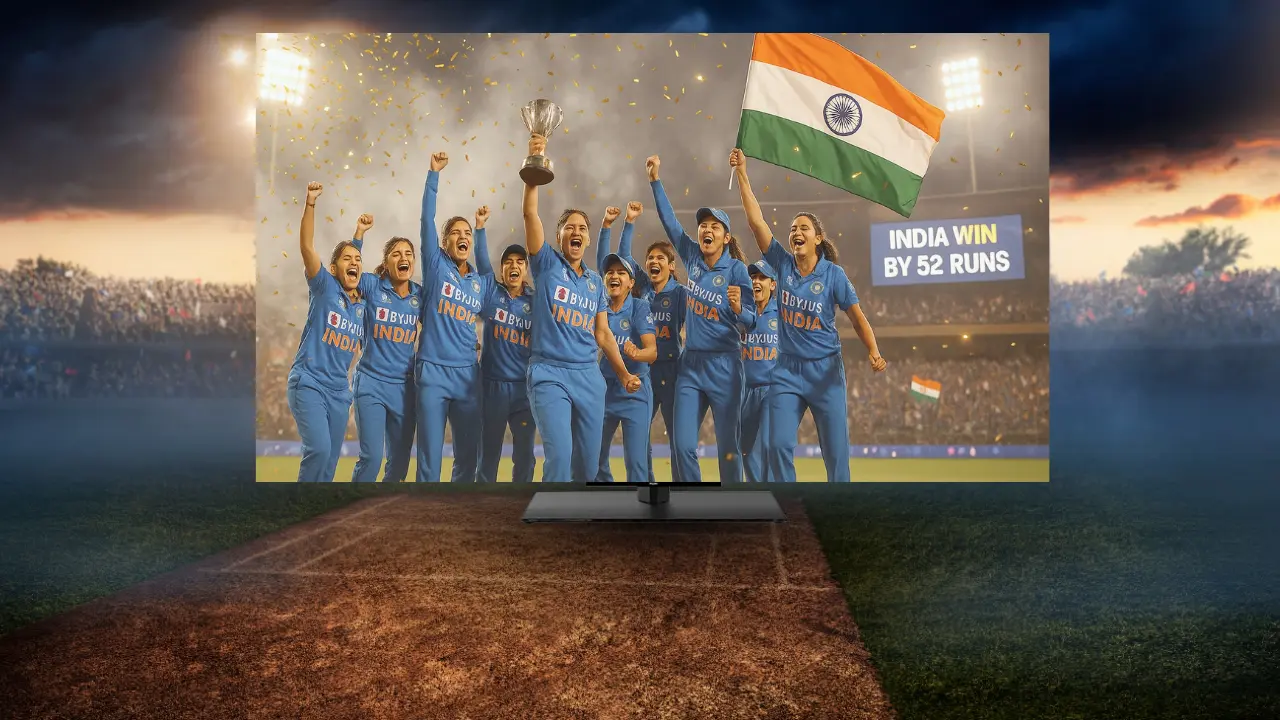

India’s first Women’s ODI World Cup win wasn’t just a sporting triumph it was a cultural shift.
A night when millions of Indian girls didn’t just see victory on screen, but possibility reflected back at them.
A win that felt personal
When Harmanpreet Kaur lifted that gleaming trophy under the Mumbai lights, it didn’t feel distant. It felt like your neighbour’s daughter, your cousin, or the girl who plays gully cricket in the next lane had finally arrived.
India’s 52-run victory over South Africa wasn’t only about numbers 298/7 on the board, five wickets for Deepti Sharma, chants of “Vande Mataram” echoing through DY Patil Stadium.
It was about something subtler. For the first time, young girls across India didn’t just watch their team win; they saw their story being rewritten.
Every Indian home became a stadium
Families stayed up late, phones on silent, snacks lined up like a mini buffet. From small-town living rooms to city apartments, the celebration spilled beyond boundaries.
It wasn’t just about cricket it was about belonging.
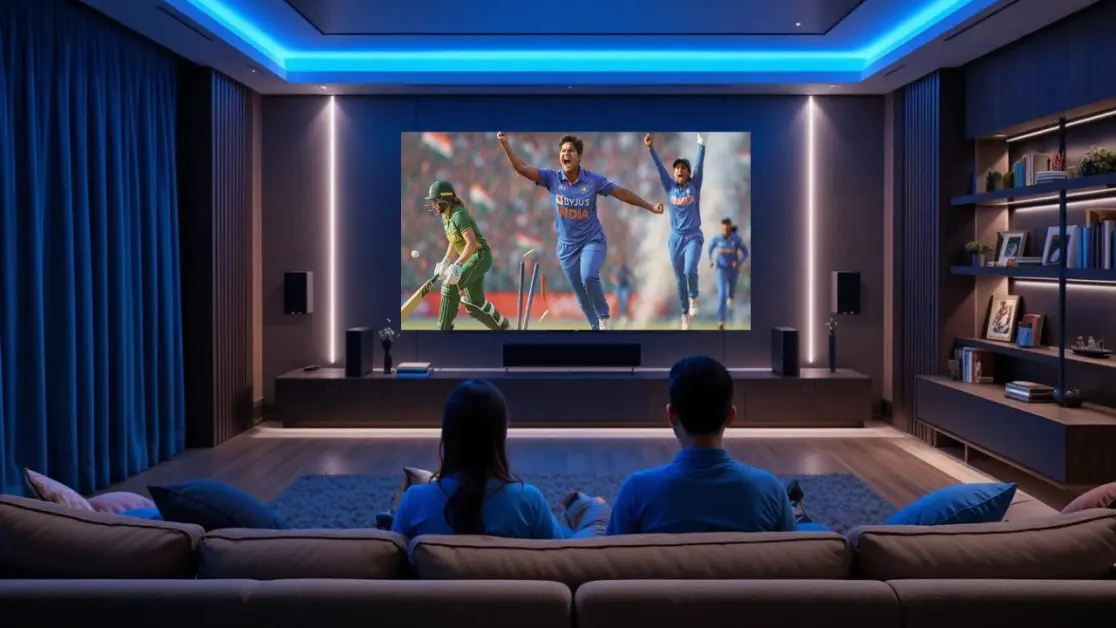
Moments like this blur the line between living room and stadium. The cheer of a crowd somehow carried through 4K screens, echoing in homes where daughters now looked up and thought, Why not me?
If you happened to watch it on a Haier 4K OLED TV, every frame from Deepti’s spinning delivery to Smriti Mandhana’s winning smile looked larger than life. Technology didn’t just broadcast history that night; it helped us feel it.
From kitchens to commentary boxes the sound of change

There’s something extraordinary about hearing women’s voices narrate a match that once belonged only to men. From Dinesh Karthik’s spirited commentary to Anjum Chopra’s steady insights, the conversation around women’s cricket has evolved not as a novelty, but as a norm.
The sound of applause in one room often started with something simple: a family gathering around a TV, snacks fresh from the Haier convection microwave, still warm from the last round of samosas. Because progress isn’t always built in stadiums; sometimes it’s baked quietly in everyday rituals.
Dreams don’t survive without systems
Behind every big win lies a pattern of practice, preparation, and persistence.
Just like the invisible systems that keep a home running smoothly.
Think of the Haier 12 Kg F9 Front-Load Washing Machine. It doesn’t just clean clothes; it anticipates, adapts, and performs. Its AI-powered one-touch wash senses load, fabric, and dirt levels no second guessing. The same intelligence defines every player in Team India: calm under pressure, precise when it matters.
Discipline, after all, isn’t loud. It’s consistent.
And that’s what carried this team from dreams to dominance.
Resilience is the real luxury
For years, Indian women cricketers played with limited visibility and smaller budgets, yet carried the same hunger. They waited through seasons, training in heat, adapting to failure quietly, persistently.
There’s a kind of grace in that patience, the same kind that defines the new Haier Lumiere 630 L 4-Door Refrigerator. It doesn’t just store freshness; it preserves rhythm. With Smart Sense AI that learns your habits and Deo Fresh Technology that keeps produce naturally crisp, it mirrors the same principle every athlete lives by consistency over chaos.
Because staying fresh, like staying relevant, takes intelligence.
Technology meets tenacity
We often mistake convenience for progress. But real progress is design meeting discipline when machines don’t just work harder, but smarter.
That’s what makes the Haier Gravity Series AI Smart AC more than an appliance. Its AI Climate Control studies your habits, adjusting temperature and energy use automatically much like a captain adjusting her field placements mid-over. It saves energy without sacrificing comfort, just as Team India saved effort by trusting strategy over speed.
Even the Haier Civic Pro Robot Vacuum Cleaner, with its laser navigation and voice control, reminds us of something this win taught the world: automation isn’t about replacing effort; it’s about giving time back to what truly matters.
The invisible infrastructure of confidence

What made this World Cup special wasn’t just talent. It was the ecosystem that finally worked coaching, fitness, analytics, technology, and most importantly, belief.
Homes play a similar role. The right systems create space for people to focus on what they love.
Smart appliances, like smart teams, make excellence repeatable.
That’s what Haier stands for: invisible support that makes visible dreams possible. Whether it’s AI in your living room or innovation in your kitchen, the goal is the same: give people time, freedom, and confidence to focus on what matters most.
A new chapter for India’s daughters
For every girl watching that night, this wasn’t just about cricket. It was about permission.
Permission to take up space. To fail and try again. To believe that ambition is not arrogance.
And maybe that’s the quiet revolution unfolding across India’s homes, parents cheering louder, brothers becoming practice partners, and mothers learning the match stats before dinner. The game has changed because the gaze has changed.
The real win
Trophies can be polished, but turning points stay lived. This one will be remembered not for its final score but for what started a new kind of confidence in every Indian household.
As the country moves forward from stadiums to screens, from aspiration to action this victory will keep reminding us of one thing: when women win, the nation doesn’t just celebrate; it evolves.
Because sometimes, progress looks like a trophy.
And sometimes, it looks like a home that’s finally ready for the future.