
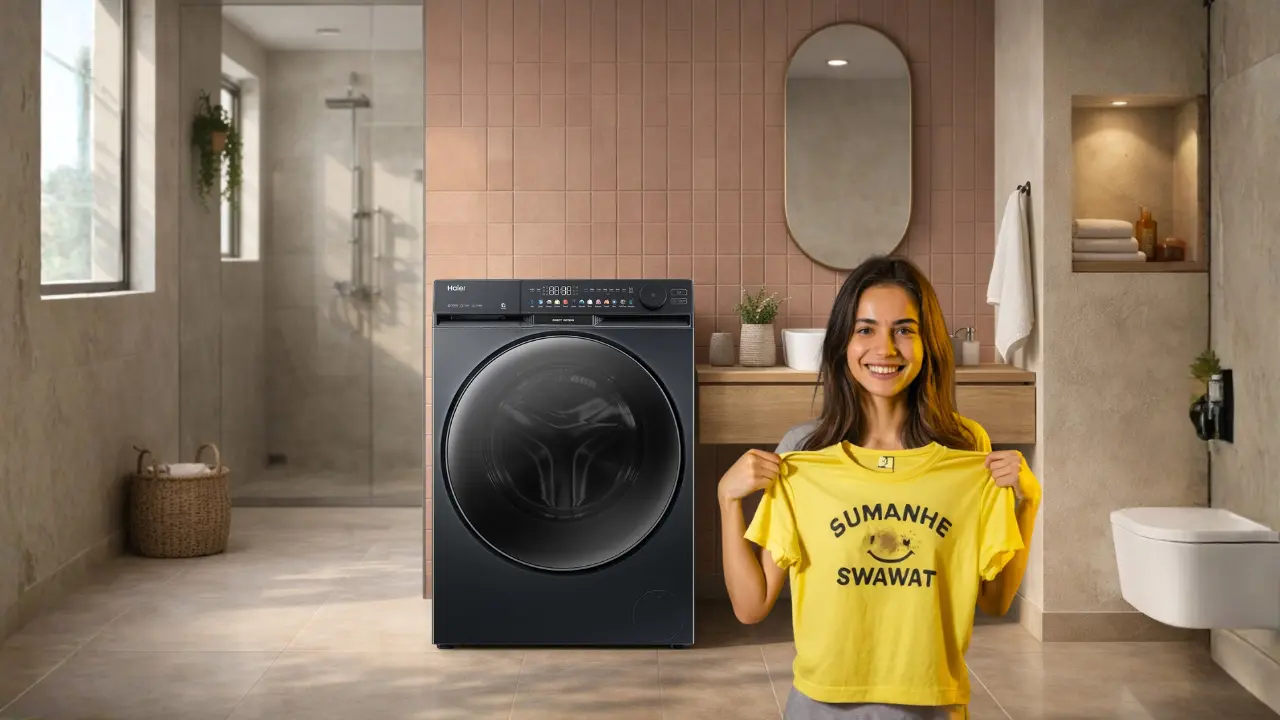

March heat and sweat stains need different wash care because sweat contains salts, oils, and bacteria that bond deeply with fabric fibres.
Removing them requires the right temperature, rinse strength, and wash motion. Intelligent washing systems that automatically detect fabric and dirt levels can adapt the cycle to clean sweaty clothes more effectively.
Laundry in Indian summers is not just about washing clothes.
It is about managing heat, humidity, and daily life.
And March is when the story begins.
Why March Laundry Feels Different in Indian Homes

Step outside around noon in March.
The air already feels heavier. The sun lingers longer. A simple walk to the market or office leaves a light patch of sweat on your back.
By evening, shirts carry faint underarm marks. Gym wear smells sharper. School uniforms return home looking tired.
March quietly changes laundry.
According to the India Meteorological Department, temperatures in many Indian cities begin crossing 32°C to 36°C by late March, pushing sweat production higher.
More sweat means more stains.
But sweat stains are not ordinary dirt.
They behave differently.
Sweat stains carry more than moisture
When sweat touches fabric, it brings three things with it.
- Salt
- Body oils
- Skin bacteria
As the fabric dries, these compounds bind to fibres. Over time they oxidise, leaving yellow marks around collars and underarms.
That is why a shirt washed quickly sometimes still smells faintly sour.
The stain did not disappear.
It simply stayed hidden.
Laundry insight
Heat does not just make us sweat.
It exposes weaknesses in how we wash clothes.
The March Laundry Moment Every Household Recognises
It is a weekday evening.
The laundry basket contains a mix of things.
Office shirts.
Gym wear.
A cotton kurta worn once.
School uniforms with playground dust.
This is not one type of laundry.
There are many.
Yet most homes run the same cycle repeatedly.
Cotton. Quick wash. Done.
The result is predictable.
| Laundry Habit | Hidden Result |
| Quick wash cycles | Sweat odours remain |
| Hot water for all clothes | Fabric damage |
| Cold wash for everything | Oils stay trapped |
| Overloading the machine | Poor stain removal |
The machine is working.
But the system is not.
Sweat stains demand a different approach.
What Makes Sweat Stains Harder to Remove
Sweat stains behave differently because of chemistry.
When sweat dries, the salt and protein compounds cling to fabric fibres. Body oils strengthen the bond, and bacteria amplify the odour.
Textile care research shows that protein-based and oil-based stains are among the most persistent stains on fabrics.
Three washing factors control the outcome.
1. Temperature
Warm water helps dissolve oils and salt.
2. Drum movement
Agitation loosens stain particles without damaging fibres.
3. Rinse strength
A strong rinse removes residue completely.
Miss one element and sweat stains slowly return.
Laundry becomes a guessing game.
Three Ways Indian Homes Usually Handle Sweat Stains
Most households follow one of three strategies.
Each comes with benefits and trade-offs.
Option 1: Manual pre-washing
Some families soak clothes before running the machine.
Steps usually include:
- Soaking in detergent solution
- Scrubbing collar and underarms
- Washing afterwards
Benefit
Better stain removal.
Cost
Time, effort, and inconsistent results.
Option 2: Trial-and-error machine cycles
This is the most common approach.
People switch between:
- Cotton mode
- Quick wash
- Mixed load
Benefit
Convenience.
Cost
Results vary with every load.
Option 3: Intelligent wash systems
Modern machines use sensors and algorithms to adapt the wash cycle.
Machines such as the Haier 10 Kg Fully Automatic Front Load Washing Machine HW100-DM14F9PBKU1 use One Touch AI Wash to automatically detect fabric type, load size, and dirt levels before choosing the appropriate wash settings.
Benefit
- Consistent cleaning
- Less decision making
- Better energy efficiency
Cost
Only the initial appliance investment.
Automation removes the guesswork.
And laundry becomes predictable again.
How Smart Washing Machines Handle Summer Laundry

Think of modern laundry systems as quiet decision-makers.
Instead of asking the user to choose settings every time, intelligent machines analyse the load.
They measure.
They adjust.
They optimize.
For example, the Haier 12 Kg F9 pro Front Load Washing Machine HW120-DM14F9PBKU1 uses advanced sensors to automatically match water level, wash time, and spin speed to the load, helping achieve efficient cleaning while saving water and energy.
The machine quietly calculates.
What the system detects
- Load weight
- Fabric density
- Soil level
- Drum balance
What the system adjusts
- Water quantity
- Wash duration
- Spin intensity
- Rinse cycles
The result feels simple.
Sweaty gym clothes receive stronger cleaning.
Delicate fabrics get gentler care.
One machine.
Different outcomes.
Why Drum Design Matters More Than People Think
Another overlooked factor in summer laundry is drum structure.
Sweat-heavy loads often clump together because moisture and salt cause fabrics to stick.
Modern drum designs solve this problem by allowing clothes to tumble freely and distribute detergent evenly.
Machines with larger drum capacities improve washing performance by creating more space for clothes to move, reducing tangling and improving wash quality.
Better drum motion creates three benefits.
- Improved stain removal
- Better detergent distribution
- Stronger rinsing
Laundry becomes more thorough without harsher chemicals.
The Quiet Advantage of Modern Laundry Systems

Night-time laundry is common in Indian homes.
Dinner is over.
The house grows quiet.
The washing machine starts.
Older machines vibrate loudly and disturb sleep.
Newer models solve this.
Machines with Direct Motion Motor technology operate with reduced vibration and quieter cycles, making late-night washing possible without disturbing the household.
For working professionals and families with early school mornings, this small improvement changes daily routines.
Laundry no longer interrupts life.
It blends into it.
Simple Wash Habits That Work Better in March
Seasonal laundry needs slightly different habits.
Small adjustments make a big difference.
Smart March laundry habits
- Wash sweaty clothes within 24 hours
- Separate gym wear from delicate fabrics
- Use warm wash cycles for sweat-heavy loads
- Avoid overloading the drum
- Add an extra rinse for stubborn odours
These changes reduce long-term fabric damage and prevent sweat marks from becoming permanent.
Laundry works best when machines and habits cooperate.
What Sweat Stains Actually Reveal About Modern Living
March laundry tells a deeper story.
More workouts.
More commuting.
More outdoor activity.
Urban households run washing machines more frequently than before.
Many families now run four to six washing cycles per week, especially during summer months.
That makes washing machines an everyday infrastructure.
Just like refrigerators.
Just like Wi-Fi.
Just like electricity.
The Real Lesson Behind Summer Laundry
Heat changes systems.
The same wash routine that works in winter may fail in summer.
Sweat stains behave differently.
Fabrics respond differently.
Machines must adapt differently.
Homes that feel effortless usually share one trait.
Small tasks run quietly in the background.
Laundry finishes on time.
Clothes come out fresh.
Energy use stays balanced.
No drama.
Just rhythm.
And when March heat begins to leave its marks on shirts and gym wear, the right wash care does not feel like a luxury.
It simply feels like a smarter way to live.
Frequently Asked Questions
Why do my shirts still smell sweaty even after a full wash cycle?
Sweat contains salts, oils, and bacteria that bind to fabric fibres. A quick wash often removes surface dirt but not the oils and bacteria that cause lingering odours.
Should I wash sweaty clothes in hot water or warm water during summer?
Warm water usually works best. It helps dissolve oils and salt without damaging delicate fabrics the way hot water sometimes can.
I keep using the same wash cycle for everything. Is that a bad idea?
It can be. Different fabrics and stains need different washing motions, temperatures, and rinse cycles. Using one cycle for all loads can leave sweat residues behind.
How do I decide between cotton mode, mixed load, or quick wash?
If clothes are sweat-heavy or gym wear, choose a longer cycle with stronger rinsing. Quick wash works better for lightly worn clothes.
I feel confused every time I start my washing machine. Is there a way to simplify this?
Machines with intelligent wash systems automatically detect load weight, fabric type, and dirt level, reducing the need to manually select cycles.
Why do sweat stains turn yellow on white shirts?
Sweat contains salts and proteins that oxidise when they dry. Over time, they react with fabric and detergent residues, leaving yellow marks.
Why do my collars and underarms smell even after washing?
Body oils and bacteria can remain trapped in fibres if the wash cycle does not include enough agitation or rinsing.
Is it okay if sweaty clothes sit in the laundry basket for a day or two?
It’s better to wash them within 24 hours. Bacteria multiply in damp fabric, making odours harder to remove later.
Do sweat stains permanently damage clothes?
Not always. But repeated buildup can weaken fibres and leave stubborn marks if clothes aren’t washed properly.