
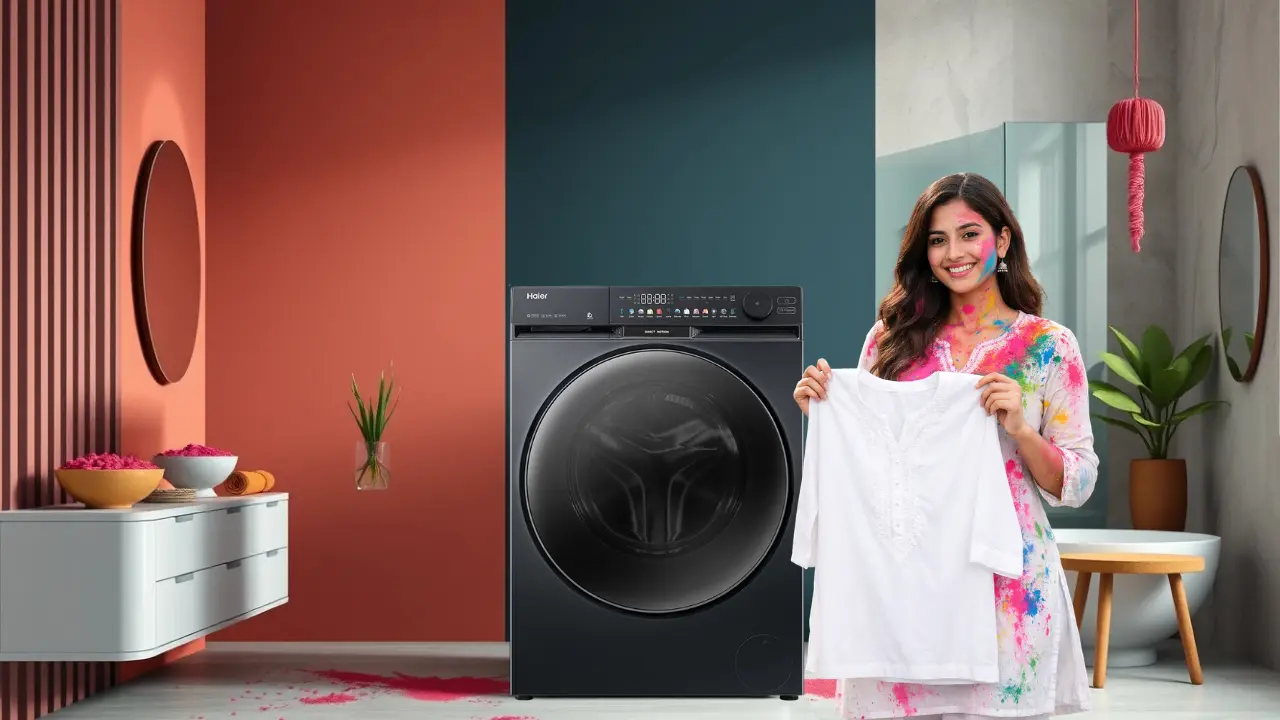

Act fast. Shake off the dry colour first. Rinse from the back with cold water. Use a mild detergent, not harsh bleach. Treat stains based on fabric type. Wash in a front load washing machine on a fabric specific cycle. Heat only after the stain is gone.
That is the short answer.
The longer answer begins on your balcony, late afternoon, staring at a white kurta that now looks like abstract art.
Holi stains are not the problem. Panic is.
Holi in India is a joy. Gulal in the air. Buckets on terraces. Children chasing each other in corridors. By evening, laughter fades and laundry reality arrives.
Fabric damage happens due to incorrect stain treatment, not the stain itself. Rubbing too hard. Using hot water too soon. Adding bleach on coloured cotton.
Damage often comes from urgency.
Stains respond to systems. Fabric responds to care.
Holi colours today are not just dry gulal. They include:
- Synthetic dyes
- Oil based pigments
- Metallic powders
- Water resistant sprays
Each reacts differently with cotton, silk, denim, or blends.
So the question is not “How do I remove Holi colours?”
The question is “What is the fabric telling me?”
Step One: Respect the Dry Stage
Why shaking is smarter than scrubbing
Before you add water, step outside and shake the garment thoroughly.
Dry gulal particles sit loosely on fibers. The moment you rub with water, pigments bind deeper.
Textile experts recommend removing as much loose pigment as possible before wet treatment. It reduces stain intensity by up to 30 percent.
One option is:
Shake and brush gently using a soft cloth.
The cost: 2 minutes of patience.
The benefit: Less deep staining later.
Step Two: Cold Water is Non Negotiable
Why hot water locks colour in
Heat sets stains. Especially synthetic dyes.
The Bureau of Energy Efficiency in India also highlights that cold water washing saves up to 30 percent electricity compared to hot cycles. So cold is not just fabric safe. It is energy efficient.
Rinse from the back of the stain. This pushes colour outward, not deeper into threads.
Never soak immediately in hot water. That is how Holi becomes a permanent art.
Temperature is a strategy.
Different Fabrics, Different Rules
Fabric is like personality. Each reacts differently under pressure.
For Cotton and Linen
These are durable. But they absorb fast.
- Apply liquid detergent directly on stains.
- Let it sit for 15 minutes.
- Gently dab. Do not twist.
Cotton fibers swell in water. Excess friction breaks them. That is why gentle action matters.
For Silk and Delicate Fabrics
Silk hates aggression.
- Use cold water only.
- Add mild baby shampoo instead of detergent.
- Dab softly with microfiber cloth.
According to textile care guides from brands like Woolmark, protein based fibers like silk can lose strength when exposed to alkaline detergents.
Less chemistry. More patience.
For Denim and Blends
Denim holds colour but hides stains well.
- Use diluted white vinegar for synthetic dye patches.
- Follow with a regular wash cycle.
Vinegar helps break dye bonds without harming indigo threads.
Here is a quick reference:
| Fabric Type | First Action | What to Avoid |
| Cotton | Mild detergent dab | Hot water |
| Silk | Baby shampoo rinse | Strong detergent |
| Denim | Vinegar treatment | Bleach |
| Polyester | Cold soak | Iron before wash |
Oil Based Colours Need a Different Approach
When Holi colours feel greasy
Some Holi powders mix with oil for brightness. These stains leave a dull shadow.
One option is:
- Sprinkle cornflour or talcum powder on the stain.
- Let it absorb oil for 30 minutes.
- Brush off before washing.
Oil needs absorption first. Water alone spreads it.
The cost: A little waiting.
The benefit: No oily halo later.
When It Is Time to Use the Washing Machine
Why machine settings matter more than brand names
Once pre-treatment is done, machine washing becomes the final step.
A modern front load washing machine uses tumbling action instead of harsh agitation. That protects fibers.
For example, the Haier 10 Kg Fully Automatic Front Load Washing Machine HW100 DM14F9BKU1 offers AI One Touch Wash and Direct Motion Motor technology.
What does that mean in real life?
- AI detects fabric type.
- It adjusts water level.
- It balances spin speed.
The machine thinks before it moves.
Less friction. Less damage.
Its 1400 RPM spin and pillow shaped drum design reduce tangling, which is crucial after Holi when clothes already feel stressed.
If you are washing family loads after Holi gatherings, larger capacity options like the Haier 12 Kg F9P Front Load Washing Machine HW120 DM14F9BKU1 handle bedding and heavy fabrics easily.
Capacity matters during festivals.
Overloading increases abrasion by nearly 25 percent, according to appliance testing studies.
Choose the Right Program. Not the Fastest One
Speed is tempting. Protection is smarter.
After Holi, time feels tight. Guests coming. Office the next day. Kids’ uniforms needed.
One option is Express 15 min.
The second option is Cotton or Mix cycle with extra rinse.
The third option is a dedicated stain or hygienic program if available.
Express saves time.
Cotton saves fabric.
Hygienic removes residue better.
Cost benefit thinking helps:
- Quick wash: Economically efficient and fast, but less deep cleaning.
- Standard wash: Balanced performance and fiber protection.
- Heavy wash: Maximum cleaning, slightly more energy.
According to energy star ratings in India, 5 Star washing machines significantly reduce power use annually. Both mentioned Haier models carry 5 Star ratings.
So the system supports your decision.
Do Not Iron Until You Are Sure
Heat confirms stains permanently
If a faint colour remains, avoid ironing.
Heat binds residual dye into fibers. Instead:
- Air dry first.
- Inspect under sunlight.
- Repeat cold wash if needed.
Sunlight itself acts as a mild natural bleach for cotton. But do not overexpose delicate fabrics.
What Most People Get Wrong
Three common mistakes
- Rubbing aggressively.
- Using bleach immediately.
- Washing without sorting.
Bleach weakens cotton by breaking cellulose chains. Textile research shows repeated bleach use can reduce fabric strength by up to 15 percent over time.
Sorting prevents colour transfer. Especially when multiple Holi shades mix in one drum.
Laundry is not random. It is system design.
Why Smart Appliances Matter During Festivals
Holi is chaotic. Laundry should not be.
When washing machines include features like:
- Direct Motion Motor for less vibration
- Night Wash for silent cycles
- AI One Touch detection
- Eco Wash for water savings
They reduce decision fatigue.
And decision fatigue is real. Studies in behavioural science show that repeated small decisions reduce accuracy later in the day.
After Holi, you have already made hundreds of micro decisions. What to cook. Who to invite. Which sweets to serve.
Let the machine decide the water level.
Let the drum adjust spin.
Let the cycle protect silk.
Comfort is not luxury. It is a smart delegation.
The Bigger Pattern: Care Over Control
Holi colours teach something deeper.
You cannot control the splash. You can control the response.
Fabric care is about sequence. Dry first. Cold next. Gentle always. Smart wash finally.
The same principle works in homes.
Act calmly. Follow a system. Use tools designed to reduce friction.
A washing machine is not just an appliance. It is infrastructure for peace.
Final Framework: The 5 Step Holi Fabric Reset
- Remove dry colour.
- Rinse cold from back.
- Treat based on fabric.
- Wash on the appropriate front load cycle.
- Dry naturally before heat.
Simple steps. Structured thinking.
Because stains are temporary. Fabric damage is not.
And in Indian homes, clothes carry stories. Wedding kurtas. Kids’ first white frocks. Office shirts worn for big meetings.
Holi ends in a day.
Care lasts for years.
If this Holi, your laundry feels less stressful and more sorted, that is not luck.
That is design.
And sometimes, the smartest homes are the ones where colour fades easily, but comfort stays.
Frequently Asked Questions
I just came back from Holi and my white kurta looks ruined. Where do I even start?
Start calm. Shake off all dry colour first. Do not add water immediately. Removing loose gulal reduces stain depth before treatment even begins.
I’m overwhelmed. Can you give me a simple system I can follow step by step?
Yes. Follow the 5-Step Holi Fabric Reset:
Shake off dry colour
Rinse cold from the back
Treat based on fabric type
Wash in a front load machine on fabric-specific cycle
Air dry before applying any heat
I have multiple clothes stained after a Holi party. How do I prioritize what to wash first?
Start with delicate fabrics (silk, blends), then light cottons, then heavier fabrics like denim. Delicates are less forgiving.
Should I just run everything on quick wash because I’m short on time?
Quick wash saves time, but standard Cotton/Mix cycles protect fibers better and rinse colour residue more effectively.
Is a front load washing machine better after Holi?
Yes. Tumbling action reduces fiber friction compared to top-load agitation.
What does AI One Touch Wash actually do in real life?
In models like the Haier 10 Kg Fully Automatic Front Load Washing Machine HW100 DM14F9BKU1, AI detects fabric type, adjusts water level, and balances spin automatically reducing guesswork.
We had a big Holi gathering. Is a larger machine better?
Yes. Overloading increases abrasion by nearly 25%. A higher capacity model like the Haier 12 Kg F9P Front Load Washing Machine HW120 DM14F9BKU1 handles bedding and bulk loads safely.