
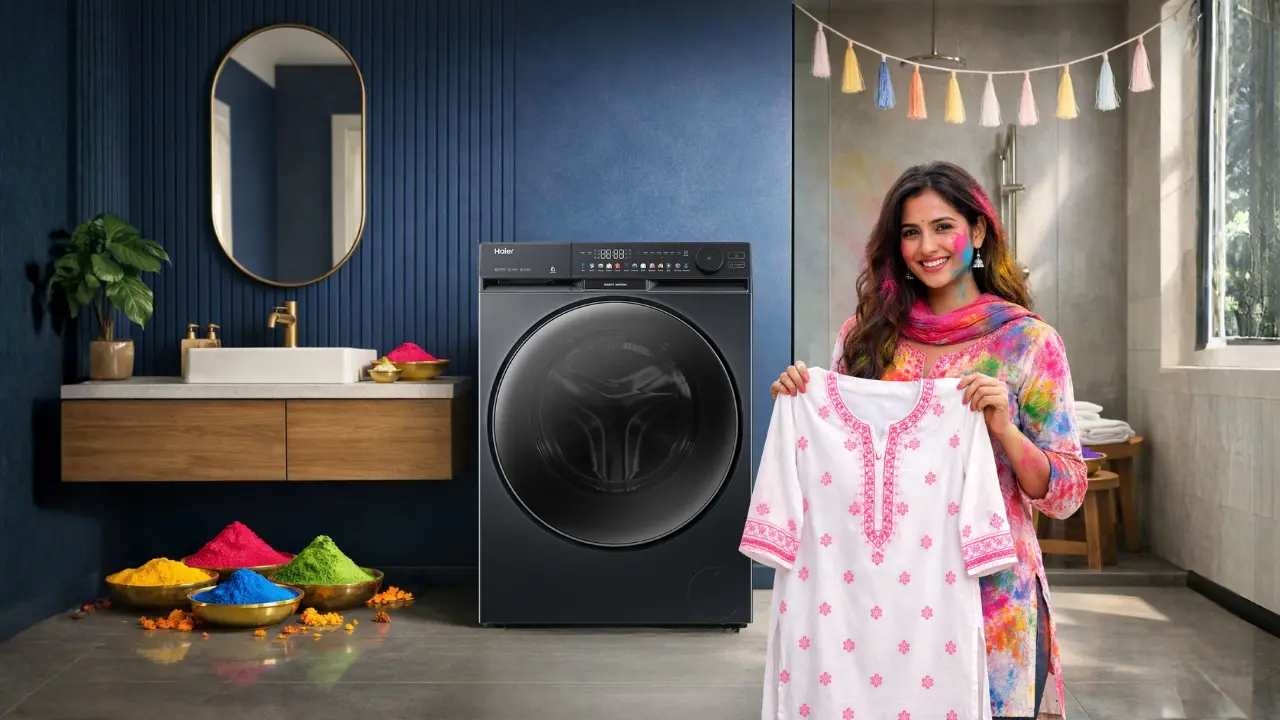

Wash Holi outfits by acting fast, separating fabrics, pre-rinsing in cold water, using the right detergent cycle, and avoiding heat until stains are gone.
The right wash method protects colour, prevents yellowing, and keeps whites from turning dull. Speed matters. Settings matter. Fabric care matters more than most people think.
Now let us talk about what actually happens after Holi.
The 7:30 PM reality nobody posts about.
The photos are done.
The reels are up.
The laughter is fading.
And then you look at the pile of Holi outfits in the corner.
Whites that are no longer white.
Kurtas are stiff with colour.
Kids’ clothes that look like abstract art projects.
Holi is joyful. Laundry after Holi is strategic.
In most Indian homes, Holi washing goes wrong for three reasons:
- Colours sit too long before washing
- Hot water gets used too early
- All fabrics go into one single cycle
That combination quietly damages fabric fibres.
And here is the truth.
Holi stains are not just surface colour. They bind to fabric when given time and heat.
So the right way to wash Holi outfits at home is not about scrubbing harder. It is about understanding the system.
Step One: Speed Is Your Biggest Advantage
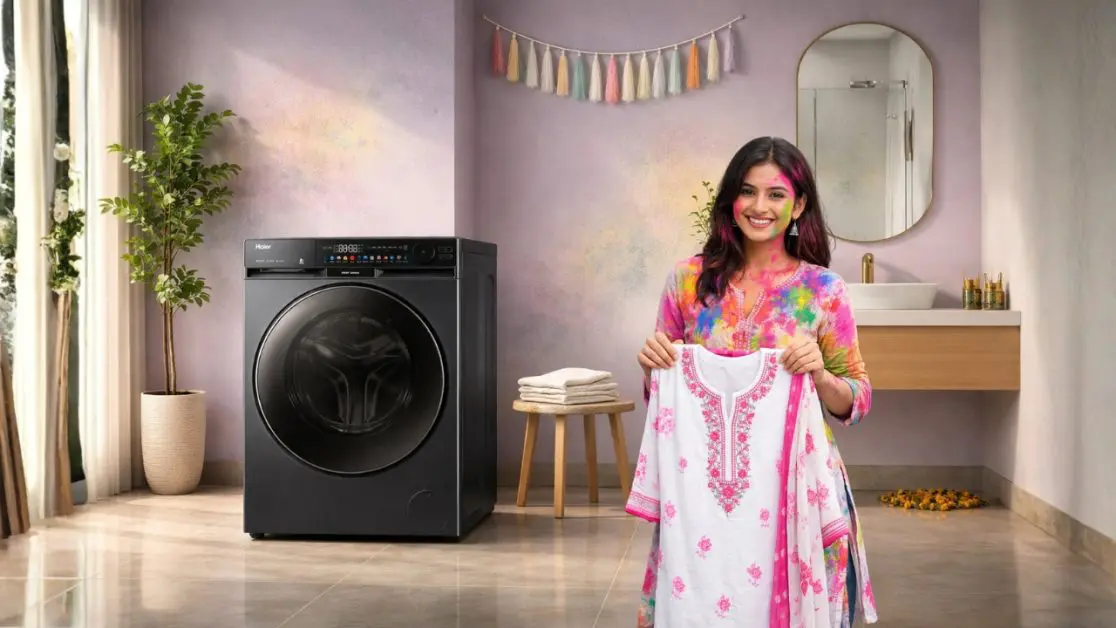
Why timing changes everything
Synthetic Holi colours often contain pigments that cling to cotton and polyester. The longer they sit, the deeper they settle.
One option is to wash immediately.
The second option is to rinse thoroughly and wash within 24 hours.
The third option is to let them sit for days.
Only one of these protects your clothes.
Cold rinse within 30 minutes reduces stain bonding. Waiting allows oxidation and fibre absorption.
Here is what to do first:
- Shake off dry colour outdoors
- Rinse under running cold water
- Avoid rubbing aggressively
Rubbing pushes colour deeper.
Water first. Detergent later.
This is the hidden system most people miss.
Step Two: Separate Like You Mean It
Why mixing loads ruins fabrics
Holi laundry is not a regular Sunday load.
Cotton behaves differently from silk.
Denim reacts differently from chiffon.
White absorbs differently from coloured fabric.
Sorting is not extra work. It is damage control.
Separate into at least three piles:
1. Whites and light fabrics
2. Dark or heavily stained items
3. Delicates like silk, dupattas, and embroidered pieces
Cost of skipping sorting:
- Colour bleeding
- Faded whites
- Shrunk fabrics
Benefit of sorting:
- Controlled stain removal
- Longer fabric life
- Better wash results
Laundry, like leadership, rewards those who slow down at the right moment.
Step Three: Choose Cold Water First
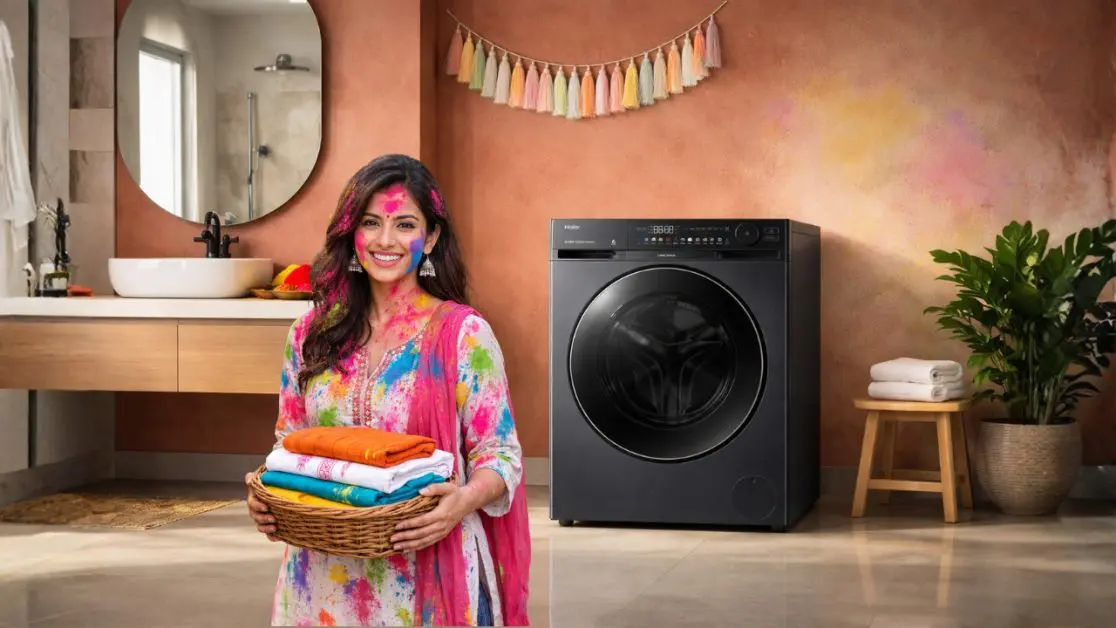
Why heat is the enemy of Holi stains
Heat sets stains. Especially colour-based stains.
The instinct after Holi is to use hot water for “deep cleaning.” That instinct backfires.
Start with a cold wash cycle.
If you are using a modern front load washing machine like the Haier 10 Kg Fully Automatic Front Load Washing Machine (HW100-DM14F9BKU1), the temperature control allows you to keep the first wash below 30°C.
That control matters.
Because once heat locks colour into fibres, even strong detergent struggles.
Step Four: Let the Machine Think for You
Why smart washing helps after festivals
After Holi, laundry loads are uneven.
Some clothes are soaked in colour.
Some are lightly stained.
Some are delicate.
Guessing the right wash setting is stressful.
Machines that use automatic sensing adjust water level, spin speed, and time based on load weight and fabric type. The Haier 12 Kg F9P Front Load Washing Machine (HW120-DM14F9BKU1) includes One-Touch AI Wash that auto-matches parameters.
What does that mean in real life?
- Less water wastage
- Balanced spin speed
- Better stain treatment
- Reduced fabric stress
It is not about automation for convenience.
It is about precision when the stakes are high.
Holi outfits are not everyday laundry. They need calibration.
Step Five: Understand the Fabric Before the Stain
Cotton vs Silk vs Denim
Different fabrics react differently to colour and detergent.
| Fabric Type | What Happens After Holi | Best Washing Approach |
| Cotton | Absorbs colour deeply | Cold pre-rinse + regular wash |
| Silk | Stains quickly, weak fibres | Gentle cycle + low spin |
| Denim | Holds surface colour | Separate dark wash |
| Polyester | Repels some colour but traps residue | Mild detergent + cold cycle |
If your washing machine offers multiple programs such as Cotton, Delicate, Baby Care, and Quick 15 min cycles, use them intentionally. The 16-program support in advanced models allows this kind of precision.
Settings are a strategy.
Step Six: Avoid the Overwashing Trap
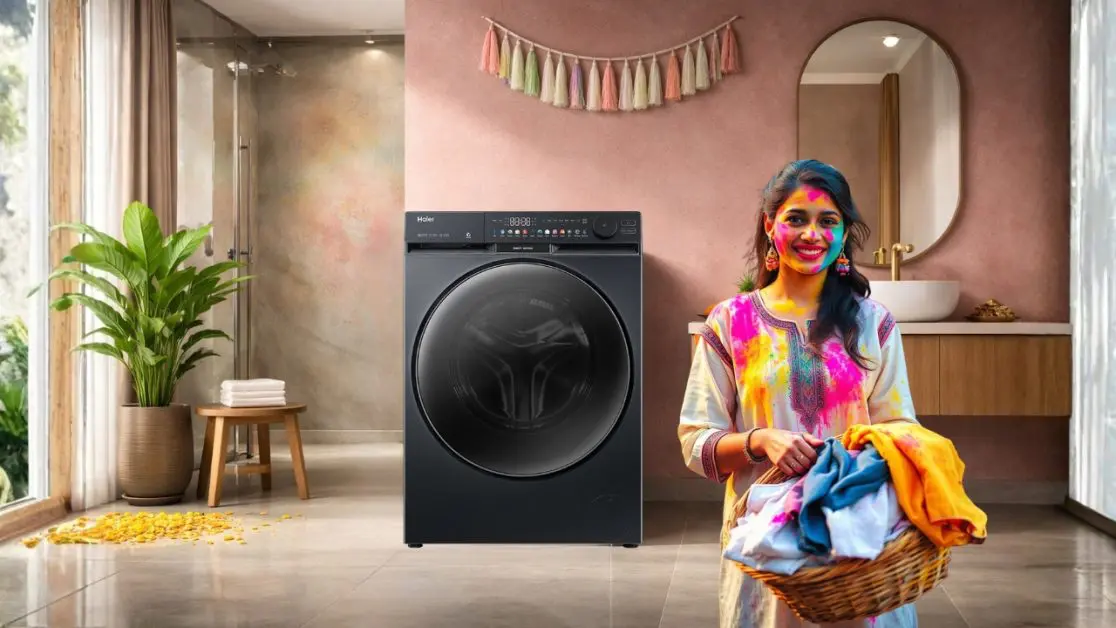
After Holi, many people rewash clothes multiple times.
That feels productive. It damages fibres.
Overwashing leads to:
- Colour fading
- Fabric thinning
- Increased electricity use
Instead:
- Wash once properly
- Check before drying
- Spot treat remaining stains
Remember this line:
Drying locks mistakes.
Never dry until stains are gone.
Step Seven: Silent Night Wash Is Underrated
Holi rarely ends early.
Guests stay late. Kids crash on sofas. You are tired.
Laundry feels like tomorrow’s problem.
But running a silent wash cycle at night solves that backlog. Machines with Direct Motion Motors operate quietly and reduce vibration.
What does that mean for real homes?
- Wash without disturbing sleep
- Avoid morning laundry chaos
- Start the week sorted
Smart homes reduce friction. Quietly.
Common Mistakes People Make After Holi
Quick reference checklist
- Using hot water first
- Mixing all clothes in one load
- Skipping pre-rinse
- Overusing detergent
- Drying in direct sunlight immediately
Each mistake compounds the next.
Laundry is not about effort. It is about order.
Energy, Water, and the Bigger Picture
Holi loads are heavier than regular washes.
A machine that adjusts water automatically saves resources. Smart Wash systems optimize water levels and spin cycles.
Why does this matter?
Because post-festival laundry often doubles water usage in households.
Energy-efficient cycles and 5 Star rated appliances reduce electricity impact during peak usage.
Festival joy should not create utility regret.
A Simple Framework for Washing Holi Outfits at Home
If you remember nothing else, remember this:
1. Act fast
2. Separate smartly
3. Start cold
4. Use the right cycle
5. Never dry before checking
That is it.
Simple systems prevent expensive damage.
The Hidden Lesson Behind Holi Laundry
Holi stains teach something deeper.
Colour spreads fast.
Heat fixes mistakes.
Speed reduces damage.
Sorting creates clarity.
Laundry mirrors decision making.
When homes adopt smarter systems, stress reduces quietly. You do not notice it in one wash. You notice it over seasons.
The right way to wash Holi outfits at home is not dramatic.
It is deliberate.
And in modern Indian households balancing work calls, school schedules, elderly care, and social commitments, deliberate systems matter.
Because festivals should leave memories.
Not permanent stains.
And when your washing machine understands fabric, load, and time better than guesswork ever could, post-Holi cleanup feels less like recovery and more like rhythm.
That is the difference.
Not louder appliances.
Smarter ones.
And sometimes, the smartest thing you can do after a festival is simply press one thoughtful button.
Frequently Asked Questions
I’m exhausted after Holi. Can I just throw all the clothes into one wash cycle?
You can but you shouldn’t. Mixing whites, darks, and delicates increases colour bleeding, fabric stress, and uneven stain removal. Holi stains behave differently on cotton, silk, and denim. Sorting first saves more effort later.
It’s already 10 PM and I’m tired. Should I wash tonight or deal with it tomorrow?
If you can’t do a full wash, at least cold rinse the clothes. The first 30–60 minutes matter most. Even a quick rinse reduces pigment bonding and prevents deep-set stains.
I left my Holi clothes in the basket overnight. Did I ruin them?
Not necessarily. But oxidation may have started. Cold rinse immediately and avoid heat. You may need mild spot treatment before the main wash.
Why do my whites turn yellow after Holi even if I wash them?
Because:
Heat was used too early
Colour wasn’t pre-rinsed
All fabrics were mixed
Heat locks pigment into fibres. It always starts cold
Is speed really that important after Holi?
Yes. Synthetic pigments bind deeper over time. A cold rinse within 30 minutes significantly reduces stain absorption. Waiting increases fibre bonding.
Can I use hot water for a deeper clean?
Not at first. Heat sets colour-based stains. Always begin with cold water. If stains remain after washing, treat specifically before any warm cycle.