

Technology simplifies life when it quietly removes friction instead of adding steps.
The best appliances do not demand attention, learning curves, or constant decision-making. They fade into the background, handle complexity on their own, and give people back time, mental space, and calm. In Indian homes today, that kind of technology matters more than ever.
The real problem with modern technology is not lack of features
It is excessive thinking.
Picture a weekday evening in an Indian home.
Office calls wrapping up.
Dinner halfway planned.
A school uniform needed by morning.
The TV is already on. The phone was buzzing.
Now add one more thing that needs instructions, modes, and supervision.
That is where technology stops helping.
Most households do not need more options.
They need fewer decisions.
The hidden system is simple.
When life speeds up, cognitive load becomes the real enemy.
Good technology reduces that load.
Bad technology multiplies it.
Simple technology is not basic. It is deeply considered
There is a common misunderstanding that simplicity means less innovation.
The opposite is true.
To make something feel effortless, the system underneath has to work harder.
Sensors. Pattern recognition. Smart defaults. Learning over time.
All so the user does not have to think.
In Indian homes, appliances are shared across generations. Parents, children, grandparents, guests. Everyone uses the same machine, often differently.
One appliance. Many users. No confusion.
That is not minimal design.
That is empathy built into engineering.
Laundry is where everyday complexity usually hides
Laundry seems simple until it is not.
Mixed fabrics in one load.
Different water pressure across cities.
Hard water in many regions.
Monsoon humidity.
Late-night washing to avoid peak hours.
Most machines pass these decisions back to the user.
Choose the cycle.
Set the temperature.
Adjust the spin.
Hope the clothes come out right.
A smarter system does the opposite.
It absorbs those decisions.
Modern washing machines now detect load weight, fabric type, and dirt levels to automate wash settings. One action replaces multiple choices. The machine thinks so the household does not have to.
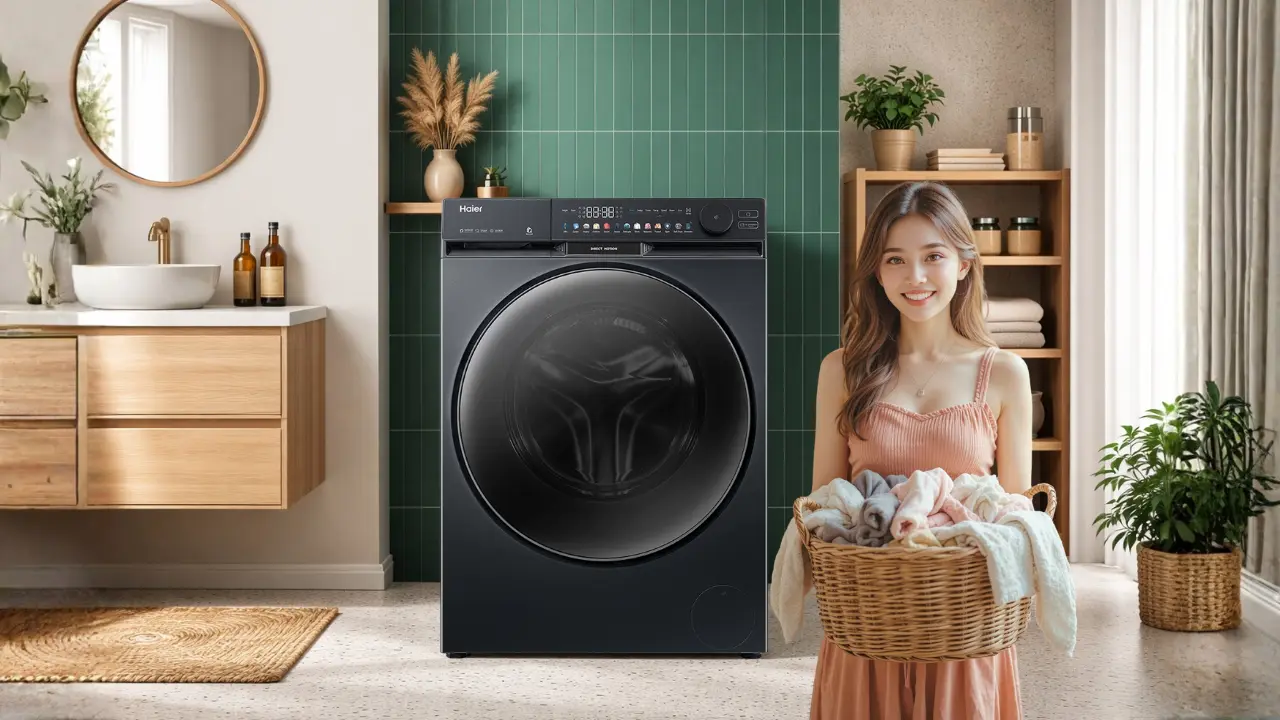
This approach is clearly visible in models like the Haier 10 Kg Fully Automatic Front Load Washing Machine HW100-DM14F9BKU1 and the Haier 12 Kg F9 Front Load Washing Machine HW120-DM14F9BKU1.
Both use one-touch AI wash logic that automatically adjusts water level, wash motion, and cycle duration based on what is actually inside the drum, not what the user guesses .
That is not convenience marketing.
That is real time saved.
When appliances adapt to people, not the other way around
The most useful technology does one thing exceptionally well.
It adapts.
Indian households are dynamic.
Usage changes with seasons, family size, and routines.
Summer means heavier AC usage and different power patterns.
Festive months mean fuller refrigerators and longer kitchen hours.
Monsoons demand better hygiene and moisture control.
Technology that simplifies life learns these rhythms instead of forcing manual adjustment.
There are three clear approaches appliances can take.
1. Manual control
Full control. Full responsibility.
Works only when time and patience exist.
2. Preset-based automation
Helpful, but assumes all homes behave the same way.
3. Adaptive intelligence
The system observes usage and adjusts quietly over time.
Only the third truly removes friction.
That is the direction smart appliances are moving toward. Not intelligence that shows off. Intelligence that stays invisible.
Energy saving works best when it is invisible
Most people want lower electricity bills.
Very few want to monitor energy constantly.
Efficiency only works when it requires no vigilance.
A washing machine that automatically weighs the load and adjusts water prevents waste without reminders.
A motor designed to reduce vibration and friction saves power without changing user behavior.
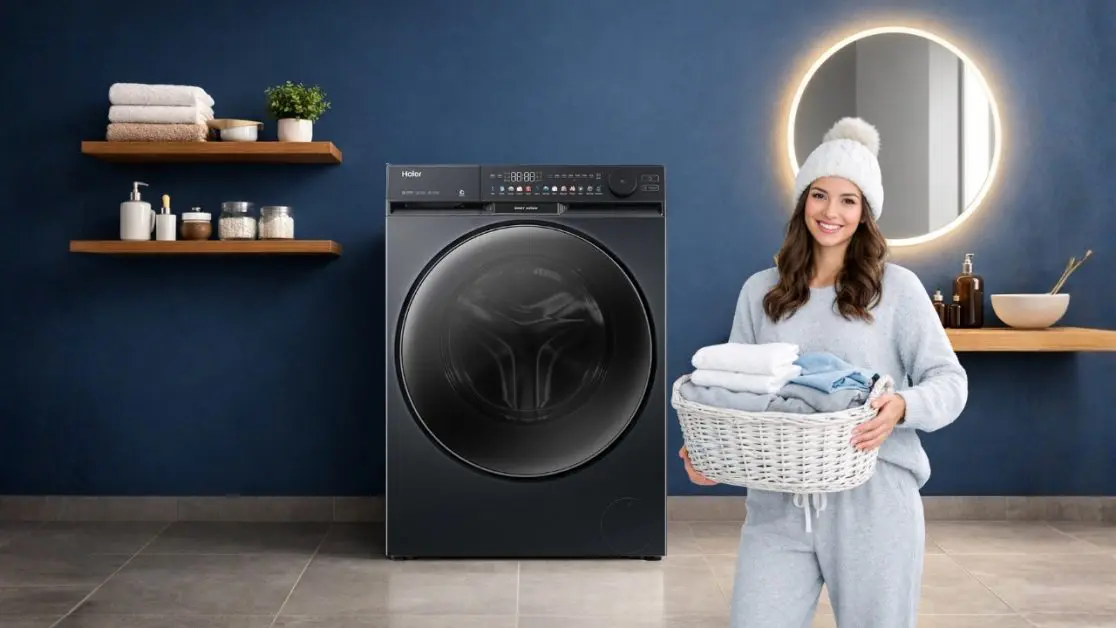
For example, both HW100-DM14F9BKU1 and HW120-DM14F9BKU1 use direct motion motor technology, where the motor connects directly to the drum. This reduces mechanical loss, lowers vibration, and improves long-term efficiency while staying quiet during operation .
The household does nothing differently.
The savings still happen.
That is how sustainable habits actually form.
Smart homes work best when they stay quiet
There is a reason fully automated homes often feel overwhelming.
Too many notifications.
Too many apps.
Too many control points.
A truly smart home does not announce itself.
Lights behave predictably.
Appliances respond consistently.
Controls feel familiar.
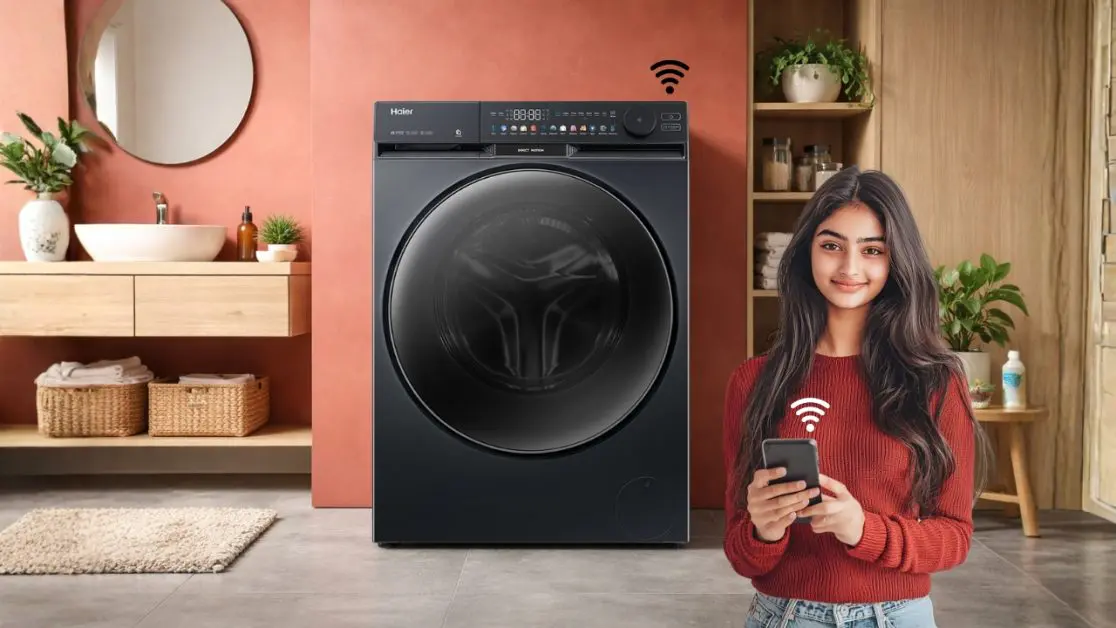
The system works even when the phone is not nearby.
In Indian homes, where multiple people share spaces and devices, this matters. Simplicity becomes inclusive design.
Technology that simplifies life works without explanation.
Design reduces mental friction more than we realize
Design is not decoration.
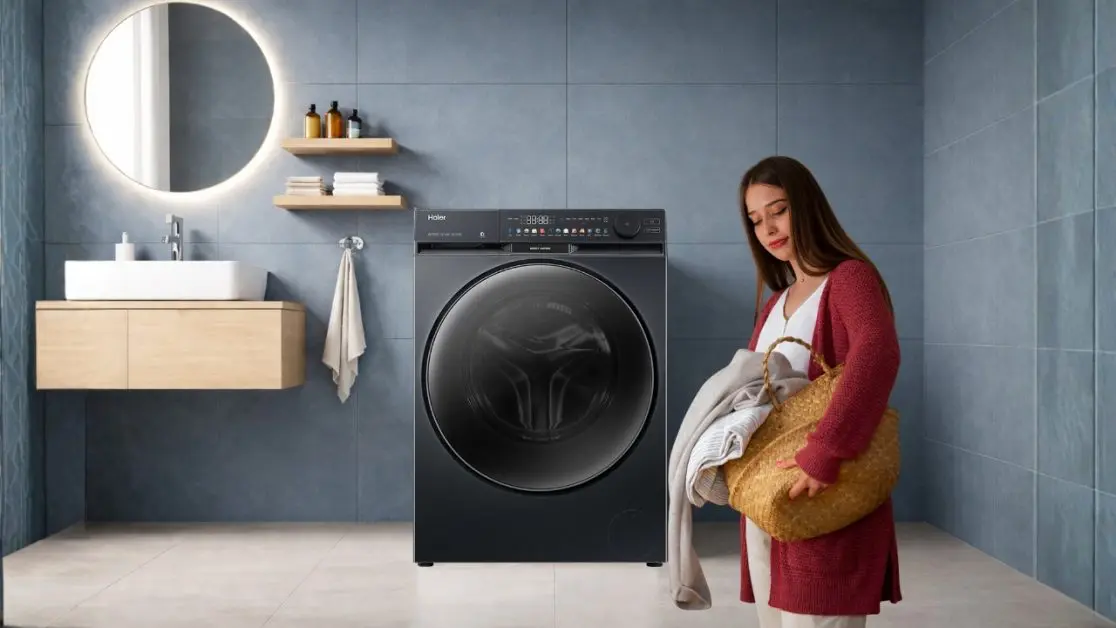
A well-designed appliance teaches usage without instructions.
Clear displays.
Logical layouts.
Intuitive touchpoints.
When design aligns with function, people make fewer mistakes.
When appliances look calm, spaces feel calmer.
That is why appliances today are part of interior planning, not hidden utilities.
Beauty here means clarity.
The pattern most people overlook
Across washing machines, ACs, refrigerators, and TVs, the same principle keeps repeating.
Technology should carry the complexity so people do not have to.
When appliances demand attention, life feels busier.
When appliances fade into the background, life feels lighter.
That is the real measure of innovation.
Not how advanced the feature list looks.
But how little you notice the technology doing its job.
What this means for Indian homes ahead
Indian households are evolving fast.
Smaller families.
More working professionals.
Less time.
Higher expectations.
The future of home technology is not louder or more complicated.
It is calmer.
More adaptive.
More respectful of time and attention.
Appliances like the HW100-DM14F9BKU1 and HW120-DM14F9BKU1 reflect this shift by focusing on automation that feels natural rather than intrusive.
Because the best technology does not feel like technology.
It feels like life, slightly easier than before.
And once people experience that, they rarely choose complexity again.
Frequently Asked Questions
I feel exhausted just choosing settings on appliances after work. Why does this feel so draining?
Because decision-making uses mental energy. After a full workday, even small choices, modes, temperatures, cycles add to cognitive overload. Appliances that automate decisions reduce this invisible exhaustion.
Do I really need appliances with so many modes and buttons?
Most households don’t. More options often mean more thinking. Simpler, adaptive appliances work better in busy homes because they remove choices instead of adding them.
My parents, kids, and house help all use the same washing machine. Why does it always get confusing?
Most machines assume a single, tech-comfortable user. Indian homes are shared across generations. Appliances designed with automation and smart defaults reduce confusion for everyone.
Why is simplicity actually more important in Indian homes than elsewhere?
Because appliances are communal. When one machine serves many users, clarity and automation become empathy, not luxury.
Laundry feels simple, but I’m always worried I chose the wrong cycle. Is that normal?
Yes. Laundry hides complexity mixed fabrics, hard water, monsoon humidity, late-night washes. Traditional machines push these decisions onto the user.
How do modern washing machines actually “think” for me?
They use sensors to detect load weight, fabric type, and dirt levels, then automatically adjust water, motion, and duration replacing guesswork with real data.
Is one-touch or AI wash really useful, or just marketing?
It’s useful when it genuinely removes steps. One action replacing five decisions saves time and mental effort every single wash.