
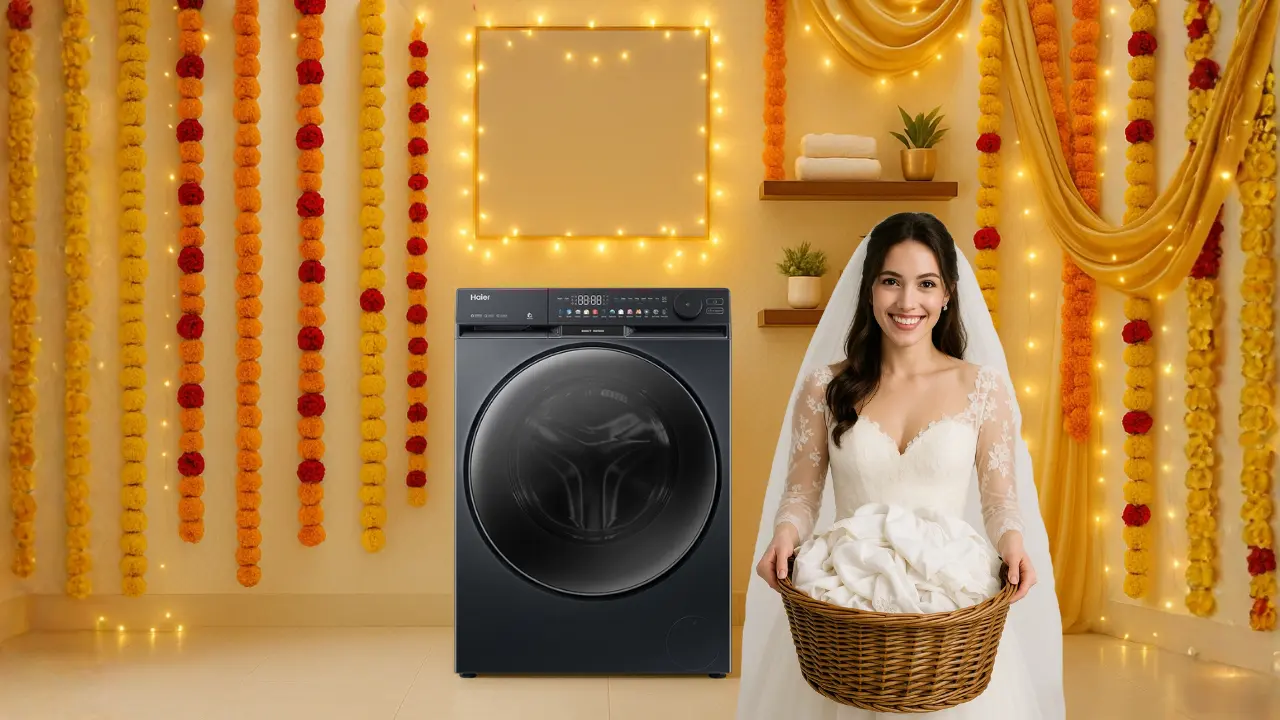

Yes, you can safely wash heavy wedding outfits at home. You just need controlled water movement, gentle cycles, and fabric-aware washing.
Modern front load machines make this easier and more reliable than ever. The trick is to protect the embroidery, not overpower it.
Why wedding outfits need a different kind of care

Picture this.
You unzip the cover of a lehenga or sherwani you wore last week. The fabric still carries a little shimmer from the sangeet lights. The embroidery feels grand. And then the thought hits you.
How on earth do I clean this without spoiling anything?
Indian wedding wear is built like a story. Layers of silk, zari borders, net dupattas, velvet panels, and handcrafted details that deserve respect. Traditional advice says “Dry clean everything.” But real life says weddings happen every three months, not once in a decade.
So the question becomes practical, not philosophical.
How do you keep these outfits fresh without spending half your year at the dry cleaner?
Gentle intelligence beats aggressive cleaning
Most damage happens because wedding outfits go through the wrong kind of stress.
- Too much rubbing
- Too much soaking
- Too much spinning
You don’t avoid washing. You avoid these stresses.
This is where modern laundry tech really helps.
A machine that senses fabric type and soil level reduces guesswork. Haier’s front load machines, especially the 12 Kg F9 model, use AI One Touch and Smart Wash to automatically pick the right settings for delicate, multi-layered clothes. The machine thinks before it washes, which is exactly what wedding fabrics need.
Step 1: Prep as if you’re dressing the outfit again
Great washing begins before the water even touches the fabric.
Do this first
- Turn the outfit inside out
- Place each piece in a large laundry bag
- Fasten hooks, chains, and latkans
- Separate dupattas from the main outfit
- Do a small colour-bleed test with cold water
If colours bleed, stop immediately. Some deep bridal shades are intentionally rich and should only be refreshed, not fully washed.
Step 2: Pick the wash cycle that respects embroidery
Wedding outfits don’t need heavy agitation. They need controlled flow.
Fabric-wise cycle guide
| Fabric | Best Cycle | Why it works |
| Silk | Delicate | Keeps fibre tension stable |
| Velvet | Handwash / Soft | Protects texture |
| Net / Organza | Delicate | Minimises snagging |
| Lehenga base fabric | Mix / Gentle | Safe for layered stitching |
| Sherwani lining | Delicate | Cold water stability |
The Haier 12 Kg F9 includes programs like Delicate, Mix, Refresh and Baby Care that use slower drum movements and gentler water patterns. These cycles reduce abrasion on embroidery and give the fabric space to breathe inside the drum.
Step 3: Cold water is your fabric insurance
Heat is the enemy of zari, sequins, velvet and silk. It weakens threads, distorts shape and fades dyes.
Cold water protects everything. It keeps the sheen alive and prevents shrinkage.
The F9’s temperature control allows low-heat and cold-water washing, which is exactly what wedding outfits need for safe, fabric-conscious cleaning.
Step 4: Use less detergent than you think
Detergent doesn’t clean these outfits. Water movement does.
Use mild liquid detergent. Use half the quantity you normally would. Avoid powders because they get trapped inside embroidery.
If you can smell detergent after rinsing, it’s too much.
Step 5: Let technology take over where your hands hesitate
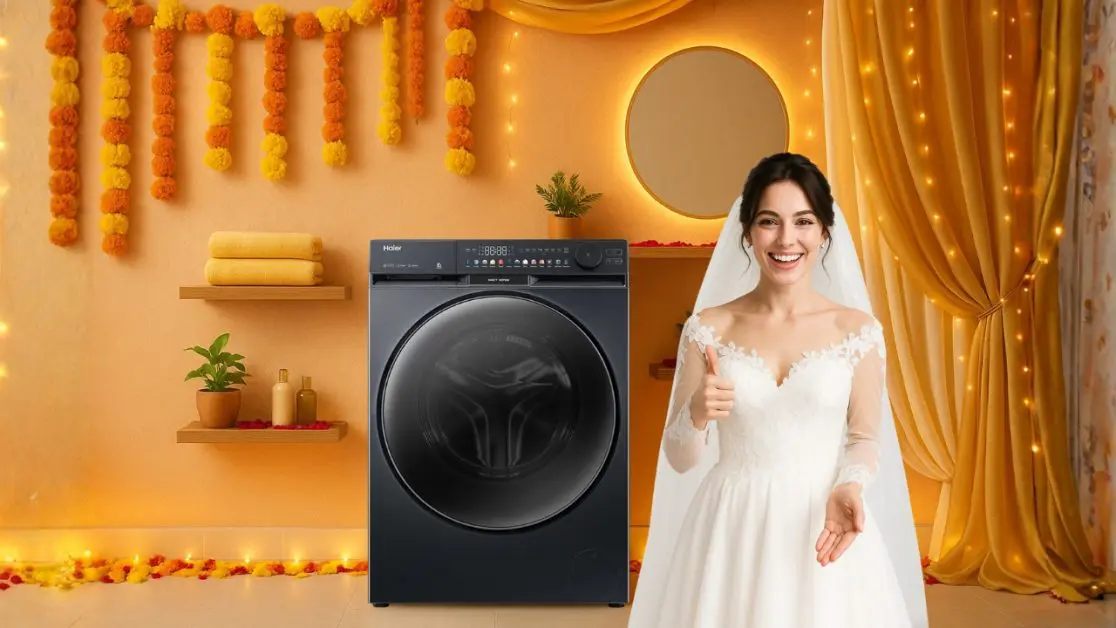
The Haier 12 Kg F9 model offers three meaningful advantages for washing heavy wedding pieces:
1. Large Super Drum
A wider drum gives heavier garments more space to spread out, reducing tangling and friction. Wedding pieces with can-can, layered panels or heavy borders benefit the most.
2. Direct Motion Motor
A direct-drive motor creates smoother drum movement. No jerks. No sudden shaking. This stability protects embroidery, sequins, beads and stitched motifs.
3. Dual Spray Cleaning
Two-way spray reduces detergent residue on zari or threadwork. It keeps delicate fabrics clean without harsh rinsing.
Together, these features provide a washing environment designed for sensitive textiles.
Step 6: Drying is where most people make mistakes
Drying wedding outfits incorrectly causes more damage than washing.
Avoid these
- Don’t hang the outfit by the shoulders
- Don’t expose it to direct sunlight
- Don’t wring it even slightly
Do this instead
- Lay the outfit on a clean bedsheet
- Place another dry cotton cloth on top
- Air dry in shade
- Use a low spin or no spin wash to reduce moisture
Wet embroidery behaves like wet clay. It bends and stretches if suspended incorrectly.
Step 7: Store the garment like a memory
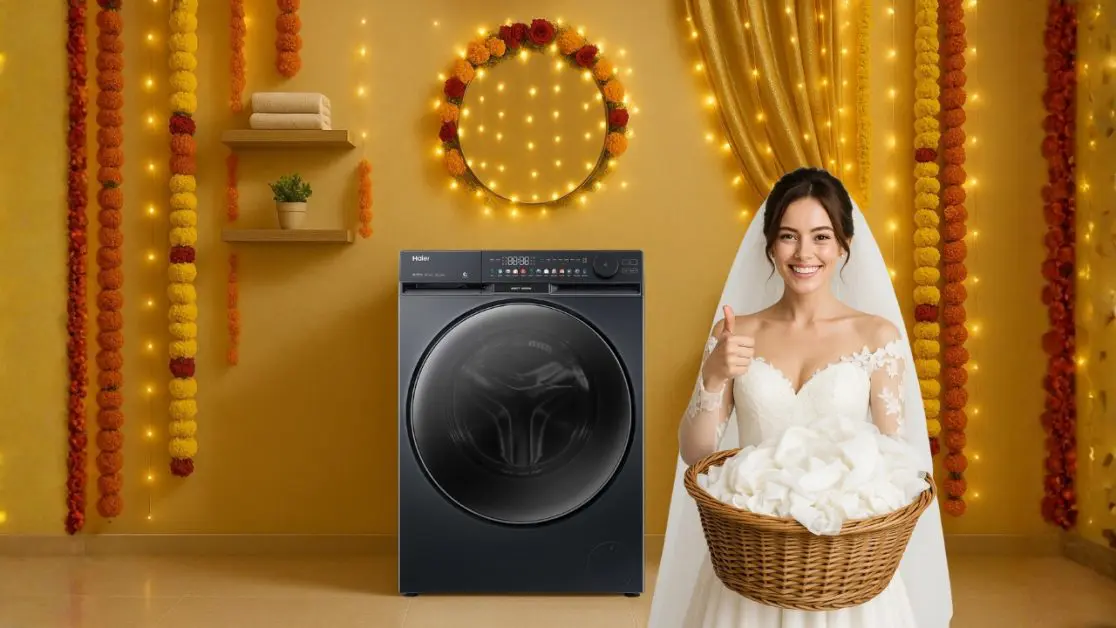
Once dry, wrap the outfit in muslin. Add a few silica gel pouches. Avoid plastic covers or tight packing. Fabrics need airflow to stay fresh.
Wedding outfits aren’t just clothes. They capture moments. They remind you of laughter, late-night dancing and emotional ceremonies. When you care for the outfit well, you protect the story attached to it.
The bigger shift: home care is becoming smarter
There was a time when washing delicate outfits at home felt risky.
Today, smart sensors, gentler drum technology, AI washing logic and smoother motors quietly change what’s possible. Machines like Haier’s F9 reduce the biggest threats to delicate fabric.
Human error.
Excessive stress.
When the appliance understands the fabric, the fear disappears. When the wash adapts itself, you don’t worry about what you might get wrong. Life feels lighter, sorted and more effortless.
And that’s really the promise of better home appliances. Not flash. Not features. Just the quiet confidence that even your most precious clothes are in safe hands.