
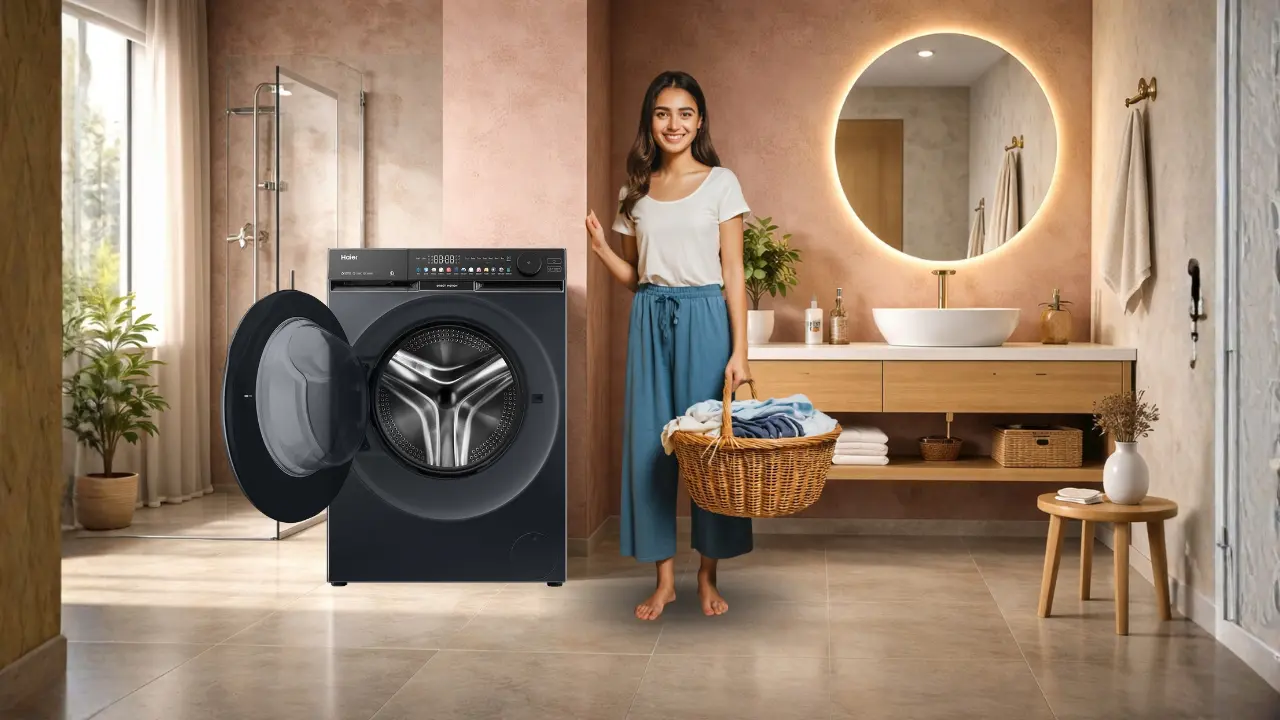

Built for Indian Weather & Laundry Habits means one simple thing
A washing machine designed for Indian weather and laundry habits understands three realities at once: heat, humidity, and heavy, diverse loads.
It adjusts water, spin, fabric care, and energy use to match monsoon dampness, summer sweat, winter bedding, and festive overload without manual guesswork.
That is the short answer.
Now let us talk about the real one.
Why is Indian laundry not like anywhere else?
Step into a typical Indian home on a Sunday morning.
One bucket has gym wear soaked in sweat.
Another holds school uniforms with ink stains.
There is a sari that needs gentle care.
And someone just added bedsheets from the guest room.
This is not minimal laundry.
This is layered laundry.
According to the India Meteorological Department, several Indian cities experience humidity levels above 70 percent during monsoon months.
High humidity slows drying and encourages odour buildup. Add summer temperatures crossing 40°C in many regions, and fabrics absorb sweat faster than they release it.
Laundry here is climate driven.
And climate changes how machines must behave.
A machine built for Indian weather and laundry habits cannot treat every load the same. It needs intelligence. And range.
What Makes Indian Weather So Tough on Clothes?
1. Heat That Pushes Sweat Deep Into Fabric
High temperatures mean:
- More perspiration
- Faster bacterial growth
- Stronger odours
If the washing temperature does not adjust properly, sweat residue lingers.
The cost of ignoring this:
- Clothes look clean but smell stale
- Re-washing increases water and power usage
- Fabric wears out faster
The benefit of smart temperature control:
- Better hygiene
- Fewer repeat cycles
- Lower long-term fabric damage
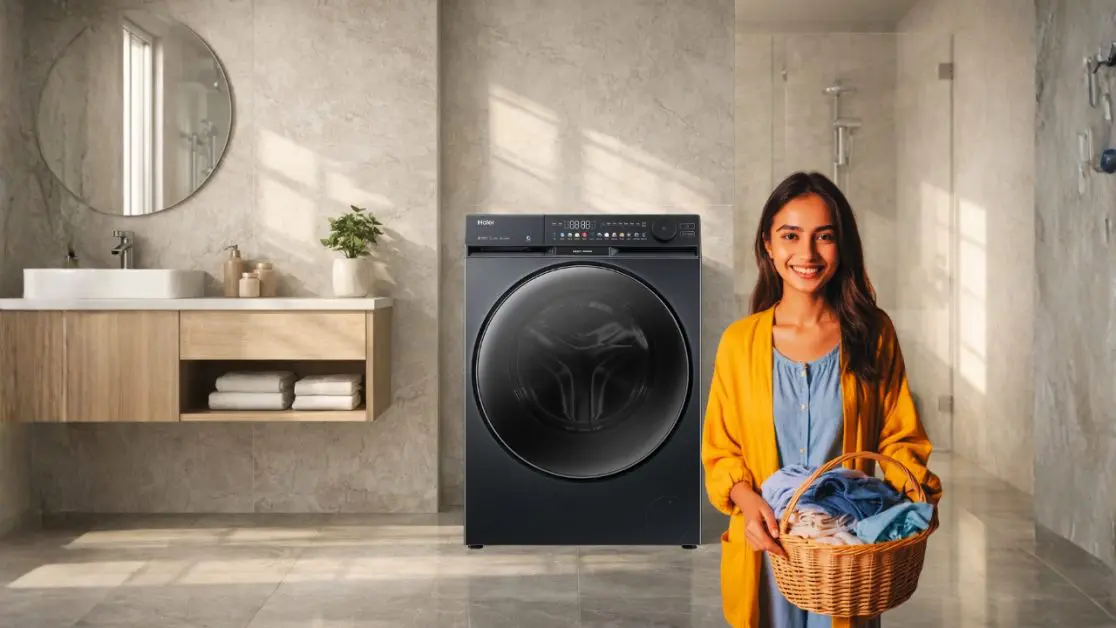
Machines like the Haier 10 Kg Fully Automatic Front Load Washing Machine use temperature settings up to 90°C and 16 dedicated programs to match fabric type precisely.
Heat requires precision. Not guesswork.
2. Monsoon Humidity That Refuses to Let Go
In cities like Mumbai, Kolkata, or Kochi, monsoon laundry smells different.
Even after washing.
Humidity slows drying and encourages musty odours. That is where steam refresh cycles matter. This is not about aesthetics.
It is about hygiene and time.
Because re-washing during monsoon wastes:
- Water
- Electricity
- Weekend hours
A washing machine built for Indian weather anticipates dampness. It reduces odour before it becomes a problem.
3. Winter Bedding and Festival Overload
Indian winters may be short in some regions, but blankets are not.
Add festive seasons and wedding functions, and the load doubles.
This is where capacity matters.
Compare two options:
| Feature | 10 Kg Model | 12 Kg F9 Model |
| Capacity | 10 Kg | 12 Kg |
| Spin Speed | 1400 RPM | 1400 RPM |
| Programs | 16 | 14 |
| Smart Features | Yes | Yes |
The 12 Kg variant handles bedding, wedding outfits, and bulk loads in one go.
The system principle is simple:
Capacity reduces friction.
Fewer cycles mean less water, less power, and fewer arguments about who forgot the second load.
Laundry Habits Are Cultural, Not Just Practical

Indian homes do not separate life from laundry.
A baby’s clothes need a hygienic cycle.
Sportswear needs sweat care.
Silk needs softness.
Jeans need strength.
This diversity is not optional. It is daily life.
The Haier F9 Pro series includes programs like Baby Care, Cotton, Mix, Delicate, Underwear, and Self Clean.
That range matters.
Because fabric types in Indian homes vary more than in minimalist wardrobes.
One machine must do it all.
Why “One-Touch” Matters More Than It Sounds
Here is what usually happens.
You stand in front of a washing machine.
You rotate the knob.
You second guess the setting.
You change it again.
Time goes.
Now imagine this instead.
One Touch AI Wash senses load, fabric, and dirt level automatically.
That is not convenience marketing.
That is decision fatigue removed.
Indian households already manage:
- Work deadlines
- School schedules
- Family logistics
- Rising energy bills
The fewer micro decisions required, the smoother life feels.
A smart appliance is not about luxury. It is about cognitive relief.
The Hidden Cost of Noise in Indian Homes
Evening in an apartment building.
TV on.
Pressure cooker whistles.
Neighbours talking.
Add a loud washing machine spin cycle.
It disrupts.
Direct Motion Motors operate beltless, reducing vibration and noise. Washing noise levels sit around 50 dB and spinning around 70 dB.
Night Wash cycles allow operation even late at night.
This matters in cities where space is tight and walls are thin.
Silence is not a feature.
It is respect.
Energy Efficiency Is No Longer Optional
India’s residential electricity demand continues to grow steadily each year, as noted by the Central Electricity Authority. Higher appliance usage adds pressure to bills.
Eco Wash systems automatically weigh loads and match water and wash time.
The benefit structure is clear:
- Saves water
- Saves energy
- Saves money
It also builds a habit.
When appliances are optimized automatically, households waste less without thinking about it.
That is how culture shifts.
Connectivity Reflects Modern Indian Life
Working professionals do not wait near machines.
They leave for the office.
They travel.
They manage errands.
WiFi-enabled washing machines allow cycle control and notifications through a smartphone.
This is not about technology for its own sake.
It is about rhythm.
Laundry must adapt to unpredictable schedules.
Not the other way around.
Three Choices Every Indian Household Faces
When choosing a washing machine built for Indian weather and laundry habits, the real decision is not brand first.
It is system fit.
One option is basic functionality
- Lower upfront cost
- Fewer programs
- Manual settings
- Higher long-term friction
The second option is capacity-focused
- Handles heavy bedding
- Reduces multiple cycles
- Better for joint families
The third option is intelligence-driven
- AI sensing
- Energy optimisation
- Smart control
- Lower decision fatigue
Each has costs and benefits.
But the direction of modern Indian homes is clear.
Smarter systems win over manual effort.
Laundry Is a Reflection of How We Live
Look at it closely.
Summer sweat loads.
Monsoon dampness.
Festival overflow.
Baby hygiene.
Office formals.
Laundry patterns mirror climate, culture, and aspiration.
Machines built for Indian weather and laundry habits understand that complexity.
They combine:
- High spin speeds up to 1400 RPM
- Large drum designs like Super Drum 525 for better capacity
- Direct Motion Motors for durability
- 4 years comprehensive and 12 years motor warranty
These are not just specifications.
They are structural decisions.
And structure defines long term ease.
The Bigger Insight
When appliances align with the environment, life feels lighter.
When they resist the environment, life feels heavier.
Indian weather is intense.
Indian wardrobes are diverse.
Indian homes are busy.
A washing machine built for Indian weather and laundry habits does not fight these realities.
It respects them.
And that changes everything.
Because the best appliances do not demand attention.
They quietly reduce friction.
And in modern Indian homes, reduced friction is the new luxury.
Frequently Asked Questions
Why do I feel confused every time I select a washing machine program?
Many washing machines offer multiple cycles (cotton, synthetic, delicate, quick wash, etc.). Without guidance, users often second-guess the correct setting for mixed loads. Smart machines reduce this confusion by sensing load weight, fabric type, and dirt level automatically.
Can my washing machine automatically choose the right wash cycle for my clothes?
Yes. Machines with AI or one-touch wash technology detect the laundry load and automatically adjust water level, wash duration, and temperature to match the fabric and dirt level.
I usually wash mixed laundry like jeans, shirts, and sportswear together. Is that a problem?
It can be. Different fabrics require different agitation and temperatures. Smart machines with mix-load programs or AI detection help prevent fabric damage while still cleaning effectively.
Do I really need so many wash programs on my washing machine?
In Indian households, yes. Daily laundry often includes delicates, baby clothes, cotton, sportswear, and heavy bedding, so specialized programs improve cleaning and fabric protection.
I’m always worried about choosing the wrong setting. What’s the easiest solution?
A washing machine with AI One-Touch Wash removes guesswork by automatically selecting the most suitable wash parameters.
My clothes look clean but still smell sweaty after washing. Why does this happen?
In hot climates, sweat penetrates deep into fabric fibers. If water temperature or wash intensity is too low, bacteria and odour can remain trapped.
How does Indian summer heat affect laundry hygiene?
High temperatures (often above 40°C) increase perspiration and bacterial growth in clothing. Machines that allow higher wash temperatures up to 90°C help eliminate odour-causing bacteria.
Do I need hot water washing for sweaty gym clothes?
Yes, especially for sportswear. Hot water or hygiene wash cycles help remove sweat residue and bacteria more effectively.
Is washing baby clothes separately really necessary?
It is recommended. Baby skin is sensitive, so machines with Baby Care or hygiene programs provide deeper cleaning and better rinsing.
How can I stop musty smells from clothes during monsoon season?
Use machines with steam refresh or hygiene cycles that eliminate odour-causing bacteria even when drying conditions are poor.