


A washing machine stays fresh after every wash when moisture, detergent residue, and trapped air are actively managed.
The real system is simple: clean water in, airflow out, and zero residue left behind. When these three work together, your machine smells neutral, your clothes feel cleaner, and your laundry routine stops fighting itself.
Why do washing machines smell even after cleaning?
It’s a familiar moment.
You open the washing machine door expecting the smell of clean clothes.
Instead, there’s a faint dampness. Sometimes stronger. Sometimes subtle.
But always there.
That smell isn’t random.
It’s a system failure.
Washing machines don’t just clean clothes. They manage water, heat, and airflow. When even one of these elements gets stuck, freshness disappears.
Here’s the pattern most homes miss:
- Moisture stays trapped after the wash
- Detergent residue builds up in corners
- Airflow never reaches the drum
The result is predictable.
Stale machine. Compromised wash.
Freshness is not about fragrance. It’s about flow.
The hidden system behind a “fresh” washing machine
Most people think freshness comes from detergent or softener.
It doesn’t.
It comes from how well the machine resets itself after every cycle.
Think of it like a kitchen sink.
If water drains properly, there is no smell.
If water stagnates, even the cleanest sink starts to feel off.
Washing machines follow the same rule.
A fresh machine does three things well:
- Removes all water after the cycle
- Prevents residue buildup inside the drum
- Allows continuous air circulation post-wash
Miss one, and the system weakens.
Miss all three, and no amount of cleaning products will fix it.
What actually causes bad odour inside washing machines?
Let’s break it down clearly.
1. Residue is the real culprit
Every wash leaves behind microscopic detergent and dirt particles.
Over time, these build up.
Especially in:
- Drum edges
- Rubber gaskets
- Detergent trays
This is why machines that “look clean” still smell.
2. Moisture creates the perfect environment
India’s climate adds complexity.
High humidity means moisture doesn’t evaporate easily.
So even after a wash:
- Water droplets remain
- Dampness stays trapped
- Bacteria quietly multiply
3. Lack of airflow completes the problem
Closed doors. Sealed drums. No ventilation.
It’s like locking wet clothes in a suitcase.
Freshness needs air.
No airflow, no reset.
Three ways people try to fix it and why they fail
Most households already try something.
But the approach often treats symptoms, not systems.
Let’s look at the common options.
One option is frequent manual cleaning
People wipe the drum. Clean the gasket. Use vinegar or baking soda.
Benefit:
- Immediate freshness boost
- Low cost
Cost:
- Time-consuming
- Needs consistency
- Doesn’t solve airflow issues
Result: Temporary relief.
The second option is using stronger detergents or fragrances
Some switch to more powerful cleaners or scented liquids.
Benefit:
- Masks odour quickly
Cost:
- Adds more residue over time
- Doesn’t remove root cause
Result: Smell improves, system worsens.
The third option is upgrading to machines that manage freshness automatically
This is where systems thinking changes the game.
Modern machines don’t just wash.
They maintain themselves.
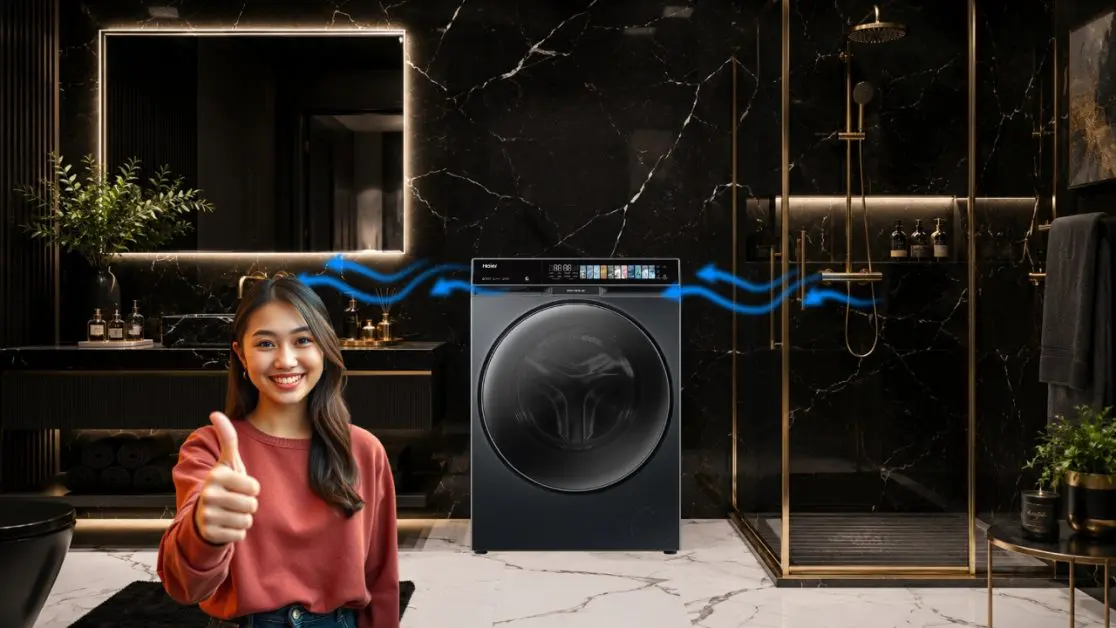
Take something like Ultra Fresh Air Technology, seen in advanced models like the Haier 12 Kg F11 Front Load Washer Washing Machine (HW120-DM14F11BKU1) and the Haier 12 Kg F11 Front Load Washer & Dryer Washing Machine (HWD120-DM14F11BKU1).
It does something fundamentally different.
Instead of trapping air, it circulates it.
- 360° micro-pressure airflow
- Drum refresh every 2 minutes
- Up to 12 hours of post-wash freshness
Benefit:
- Continuous airflow prevents moisture buildup
- Odour doesn’t form in the first place
Cost:
- Higher upfront investment
Result: Problem solved at the system level.
Why airflow is the most underrated feature in washing machines
Here’s a simple truth.
Freshness is not created during the wash. It’s preserved after it.
Most machines focus on washing performance.
Few focus on what happens next.
Airflow changes everything.
When air moves consistently inside the drum:
- Moisture evaporates faster
- Bacteria cannot settle
- Residue dries out instead of accumulating
This is why systems like Ultra Fresh Air feel different in daily use.
You open the door hours later.
Still neutral. Still fresh.
Not because of fragrance.
Because of design.
The role of intelligent washing in maintaining freshness
Freshness doesn’t just depend on post-wash airflow.
It starts during the wash itself.
Modern systems reduce the conditions that cause odour in the first place.
Smart washing reduces residue
Features like One Touch AI Wash adjust:
- Water level
- Detergent usage
- Wash intensity
Automatically.
This means:
- No excess detergent
- No leftover foam
- Cleaner rinse cycles
Less residue. Less smell later.
Targeted cleaning prevents buildup
Specialized programs for stains like:
- Sweat
- Oil
- Milk
- Mud
Ensure dirt is fully removed, not partially displaced.
Half-clean clothes often leave invisible residues behind.
Those residues feed odour.
Complete cleaning eliminates the source.
Advanced rinse systems make a difference
Technologies like Essence Wash and Dual Spray pre-mix detergent and rinse more effectively.
The result:
- Faster wash cycles
- Reduced foam residue
- Better fabric care
And most importantly.
A cleaner drum after every cycle.
What should you actually do to keep your washing machine fresh?
Not everything needs a new machine.
But everything needs the right system.
Here’s a practical framework.
Daily habits that matter
- Keep the door slightly open after every wash
- Wipe the rubber gasket once a week
- Use the right amount of detergent
Simple. Effective.
Weekly resets that work
- Run a drum clean cycle
- Use hot water cycles occasionally
- Clean the detergent drawer
Think of it like clearing your inbox.
Small resets prevent large problems.
Long-term decisions that change everything
- Choose machines with airflow systems
- Look for smart wash features
- Prioritize residue-free washing technologies
This is where effort reduces permanently.
The difference between clean clothes and a clean system
Here’s the insight most people miss.
A washing machine can clean clothes and still be dirty itself.
That’s the paradox.
We focus on output.
But ignore the system producing it.
A truly fresh laundry experience comes from alignment:
- Clean clothes
- Clean drum
- Continuous airflow
Miss one, and the experience feels incomplete.
Why this matters more in modern Indian homes
Homes have changed.
- Smaller spaces
- Higher humidity
- Faster routines
Laundry now happens:
- Late at night
- During work-from-home breaks
- Between daily tasks
Machines are expected to adapt.
Not the other way around.
That’s why features like:
- Silent operation
- Smart dosing
- Post-wash freshness
are no longer luxury.
They are practical design responses to real life.
The real takeaway: Freshness is a system, not a setting
Most people search for a solution.
What they need is a shift in perspective.
Freshness is not:
- A detergent choice
- A one-time cleaning fix
- A stronger fragrance
It’s a system working quietly in the background.
When that system is designed well:
- You stop noticing problems
- Laundry becomes predictable
- The machine feels effortless
And that’s the goal.
Not just clean clothes.
A clean experience.
So what should you remember?
Three simple truths:
- Residue creates odour
- Moisture sustains it
- Airflow eliminates it
Everything else is a variation of this system.
The best decisions come from understanding the pattern.
Because once you see the system, you stop chasing fixes.
And start choosing solutions that last.
Frequently Asked Questions
Why does my washing machine still smell even after I clean it?
Because cleaning alone doesn’t solve trapped moisture and poor airflow. Residue and dampness often stay hidden inside the drum, gasket, and detergent tray. If airflow never resets the machine after washing, odour returns quickly.
Is washing machine smell caused by detergent or bacteria?
Usually both. Excess detergent leaves residue behind, and moisture allows bacteria to grow on that residue. The smell is often a symptom of buildup plus trapped humidity.
Why do my clothes smell less fresh after washing?
Your machine may not be fully drying internally between cycles. A stale drum transfers that damp smell back onto clean clothes.
Does using more detergent make my washing machine cleaner?
Not necessarily. Too much detergent creates extra foam and residue, especially in front-load machines. Over time, this can worsen odour problems instead of fixing them.
Why does my washing machine smell worse during humid weather?
Humidity slows evaporation. Moisture stays trapped longer inside the drum and gasket, creating the ideal environment for bacteria and mildew.
What is post-wash airflow in a washing machine?
It’s a system that circulates air through the drum after the wash cycle ends. This helps moisture evaporate before bacteria and odour can develop.
Is automatic freshness technology worth paying extra for?
For many households, yes especially in humid climates or homes where laundry sits in the machine for hours after washing.
How does airflow technology keep washing machines fresh?
Continuous airflow dries hidden moisture inside the drum, gasket, and internal surfaces, reducing bacterial growth and damp smells.
What’s the benefit of systems like Ultra Fresh Air Technology?
They continuously refresh the drum after washing instead of trapping moisture inside a sealed space. This prevents odour at the source.
Can smart detergent dosing reduce washing machine odour?
Yes. Using only the required detergent amount reduces residue buildup and improves rinse performance.