
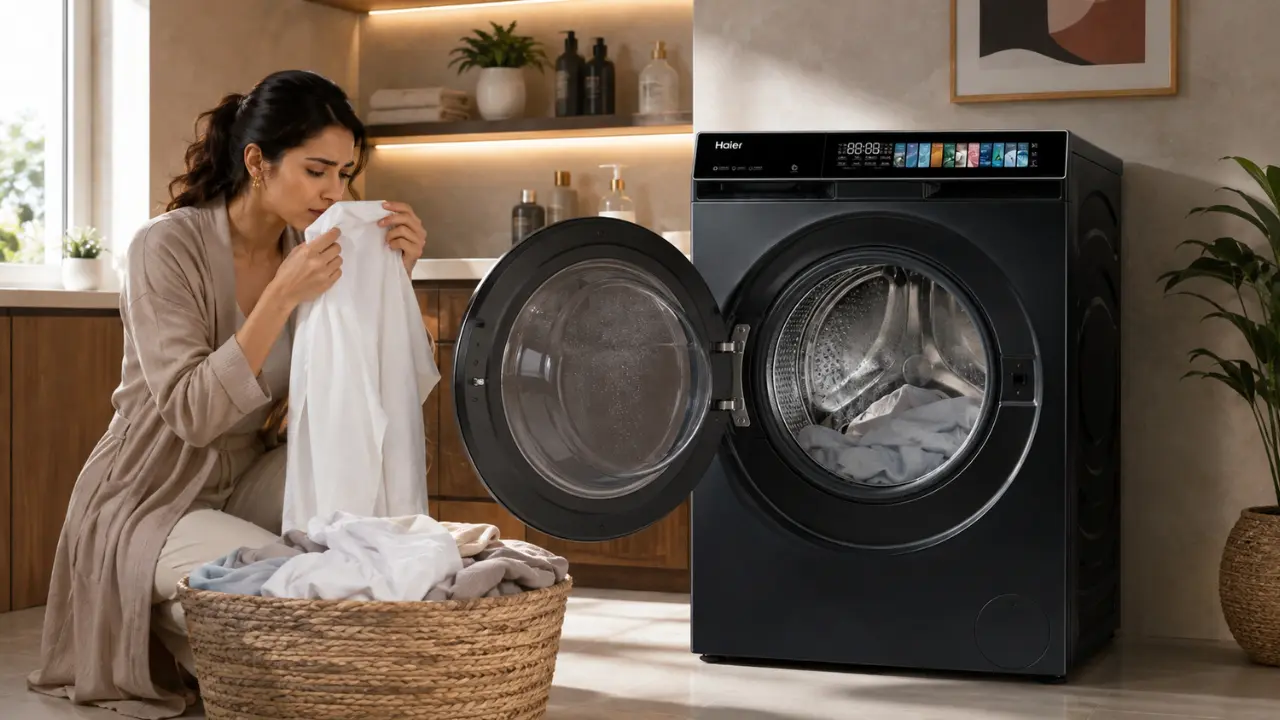

Your washing machine smells like a damp, musty smell when you open it to retrieve your laundry and you wonder if it will come out cleaner than when you put it in.
This occurs more frequently than people think.
A washing machine is used to wash clothes throughout its life, but it can itself be the wettest spot at home. If the appliance does not have a built-in mechanism to handle hidden water, bad smells can build up almost immediately in high humidity environments such as Indian homes, while people bathe everyday.
The good news? Cleaning habits are seldom the only culprit. Modern technology for washing machines has been developed to address this problem.
Why Does a Washing Machine Start Smelling?
A washing machine does not smell due to being “dirty” as in the normal sense of the word.
Generally the smell occurs due to accumulation of moisture, detergent residues, fabric fibers and bacteria over time in spaces you don’t see very often.
The most common sources are:
A gasket made of damp rubber is attached to the door.
When the detergent is still left in the drum.
- Fabric softener deposits
- Lint accumulation
- Standing water in hidden sections
- Poor ventilation after wash cycles
Over time, these conditions create the perfect environment for mould, mildew and bacteria to multiply.
The result?
That unpleasant “wet towel” smell many households eventually notice.
It’s Not Always Your Laundry Routine
People often blame themselves.
“Maybe I used too much detergent.”
“Maybe I forgot the clothes overnight.”
Sometimes that’s true.
But not always.
Many conventional washing machines simply seal the drum once the cycle finishes. Any moisture left inside stays trapped for hours or even days if the machine isn’t opened immediately.
This becomes even more noticeable during:
- Monsoon season
- Humid coastal regions
- Homes where multiple wash loads run daily
- Busy families that cannot remove clothes immediately after washing
Even perfectly clean laundry can begin absorbing unpleasant smells if the drum itself remains damp.
Hidden Areas Where Odours Begin
Most people only clean the visible drum.
The actual problem usually starts elsewhere.
Door Seal
The rubber gasket collects water, detergent residue and tiny fabric particles.
If not dried regularly, mould can begin growing around the folds.
Detergent Drawer
Liquid detergent and fabric softener leave residue that gradually hardens.
Moisture encourages bacterial growth.
Drain Filter
Coins, lint, hair and debris can accumulate over time.
Without periodic cleaning, unpleasant smells can travel back into the drum.
Internal Pipes
Tiny detergent deposits can remain inside circulation pathways, particularly when low-temperature wash cycles are used repeatedly.
Daily Habits That Increase Odour Problems
Sometimes the washing machine isn’t entirely responsible.
Certain habits unintentionally create ideal conditions for bacteria.
Closing the Door Immediately
The biggest mistake.
Without airflow, trapped moisture stays inside for hours.
Overusing Detergent
More detergent doesn’t mean cleaner clothes.
Instead, excess detergent leaves sticky residue.
Washing Only in Cold Water
Cold water protects fabrics, but using only cold cycles may allow detergent build-up to accumulate over time.
Leaving Wet Clothes Overnight
Even a few hours can encourage bacterial growth inside both fabrics and the drum.
Why Front Load Washing Machines Need Better Moisture Management
Front load washing machines are popular because they offer:
- Better cleaning performance
- Lower water consumption
- Improved energy efficiency
- Gentler fabric care
However, their sealed door design also means moisture can remain inside after every cycle unless managed properly.
This is exactly why newer washing machine technologies focus not only on cleaning clothes but also on keeping the machine itself fresh.
Modern Technology That Helps Prevent Bad Odours
Today’s premium washing machines are designed to reduce many of the conditions that allow odours to develop.
Instead of relying entirely on manual cleaning, they actively help maintain a healthier washing environment.
Some of the most effective innovations include:
- Continuous airflow after washing
- Better drum ventilation
- Intelligent wash programmes
- Efficient rinsing systems
- Precision detergent usage
Together, these features minimize moisture retention and reduce residue inside the appliance.
How Haier Addresses This Common Problem
Haier’s new high-end washing machine line is engineered to not only keep clothes clean, but to keep drum hygiene after washing as well.
The Haier 12 Kg F11 Front Load Washer (HW120-DM14F11BKU1) and the Haier 12 Kg F11 Front Load Washer & Dryer (HWD120-DM14F11BKU1) are both models with features that enhance freshness and user convenience.
Ultra Fresh Air Technology
It is, perhaps, the biggest innovation in the field of odour prevention.
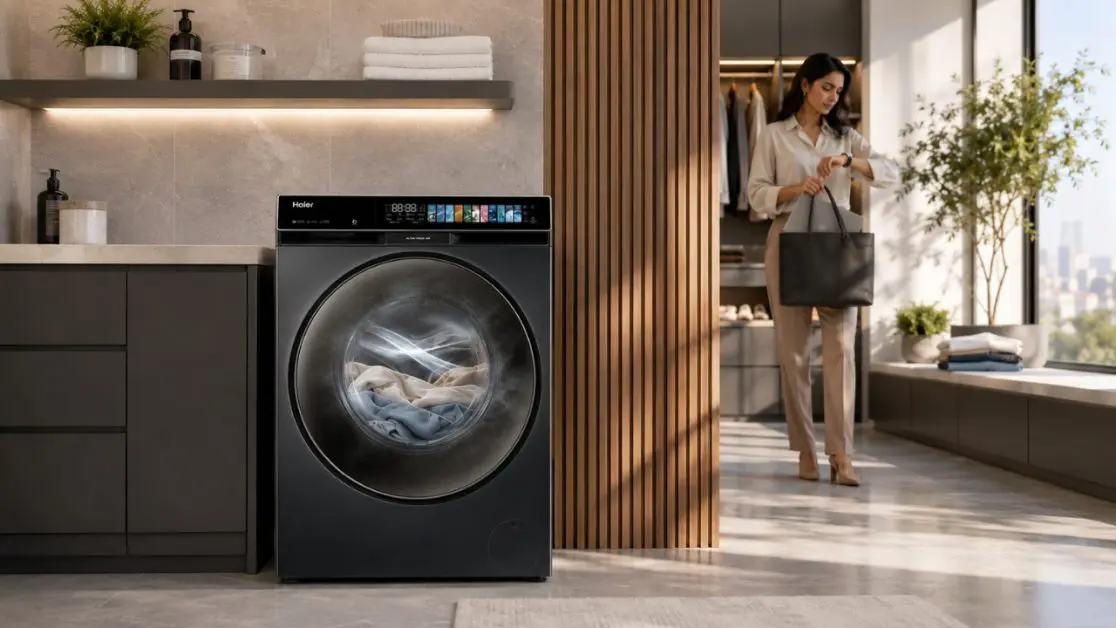
Unlike fresh air technology, Ultra Fresh Air Technology is able to keep refreshing the drum for up to 12 hours after the cycle.
The drum is circulated by 360° micro-pressure air, which can help reduce trapped moisture, and maintain freshness of clothes even if they are not removed in time.
For busy Indian households, that’s genuinely useful.
Life happens.
School runs.
Office meetings.
Unexpected calls.
Sometimes laundry simply has to wait.
One-Touch AI Wash
Another contributor to washing machine odours is incorrect programme selection.
Too little water.
Too much detergent.
Wrong cycle.
Haier’s One-Touch AI Wash automatically detects the fabric type, load size and dirt level before selecting suitable washing parameters. This helps optimize cleaning performance while reducing unnecessary detergent residue that can contribute to unpleasant smells over time.
Direct Motion Motor
A quieter engine isn’t just comfort.
The Direct Motion Motor is beltless, helping reduce vibration while improving energy efficiency and ensuring smoother operation. Less mechanical wear also contributes to consistent washing performance over the long term.
Dual Spray and Essence Wash
Residue inside the drum is one of the biggest reasons washing machines begin to smell.
Haier addresses this with:
- Dual Spray, which improves rinsing efficiency by spraying water directly onto fabrics.
- Essence Wash, which pre-mixes detergent before distributing it across clothes, while fresh-water rinsing helps remove foam residue more effectively.
Cleaner rinsing means fewer deposits left behind inside the machine.
Simple Maintenance Tips That Actually Work
Technology certainly helps.
Still, a few small habits can make a noticeable difference.
After Every Wash
- Leave the door slightly open
- Keep the detergent drawer ajar
- Wipe excess water from the gasket
Weekly
- Check for trapped lint
- Clean detergent compartments
- Inspect the rubber seal
Monthly
- Run a drum cleaning cycle
- Clean the drain filter
- Inspect water inlet filters if necessary
None of these jobs take long.
Yet together, they help maintain better hygiene and reduce odour build-up.
Choosing a Washing Machine That Stays Fresher
When buying a washing machine, most people compare:
- Capacity
- Spin speed
- Energy rating
- Price
Those matter.
But long-term hygiene deserves equal attention.
Moisture management, better rinsing and wash optimization automation are important features that can help minimize the risk of unwanted odors occurring over time.
The intelligent washing functions found in Haier’s F11 Series do not just improve wash performance, but also provide other intelligent features such as Ultra Fresh Air Technology, One-Touch AI Wash, Direct Motion Motor, Dual Spray, Essence Wash, specialised stain removal programmes and intelligent colour control via touch panel.
Final Thoughts
Dirty smelly washing machines are not formed in a single night. It is typically caused by bacteria and mould growing and developing over time due to moisture and detergent residue and inadequate ventilation.
Appliance design is also important, but routine maintenance is still crucial.
Investing in washing machines that include features that facilitate the removal of trapped moisture, better rinsing and freshness of the drum can make laundry tasks a bit easier every day. Practical benefits like Haier’s Ultra Fresh Air Technology and AI-based wash optimisation are especially beneficial for households with high washing frequency or for those in humid environments, helping to keep the washing machine cleaner after each wash.
Frequently Asked Questions
Why does my washing machine smell bad even after cleaning?
Odours can persist if hidden areas like the rubber gasket, drain filter or detergent drawer still contain residue or trapped moisture. Cleaning all these components is important.
Does using more detergent prevent bad smells?
No. Excess detergent often leaves residue inside the machine, which can contribute to bacterial growth and unpleasant odours.
How often should I clean my washing machine?
A drum cleaning cycle every month, along with regular cleaning of the gasket, detergent drawer and filter, is generally good practice. Always follow your appliance’s maintenance recommendations.
Can leaving wet clothes inside the machine cause odours?
Yes. Damp clothes left inside the drum for extended periods can encourage bacterial growth and create unpleasant smells.
Which Haier washing machine features help maintain freshness?
Haier’s F11 Series includes Ultra Fresh Air Technology, which circulates air inside the drum for up to 12 hours after washing, along with intelligent washing features such as One-Touch AI Wash and the Direct Motion Motor.